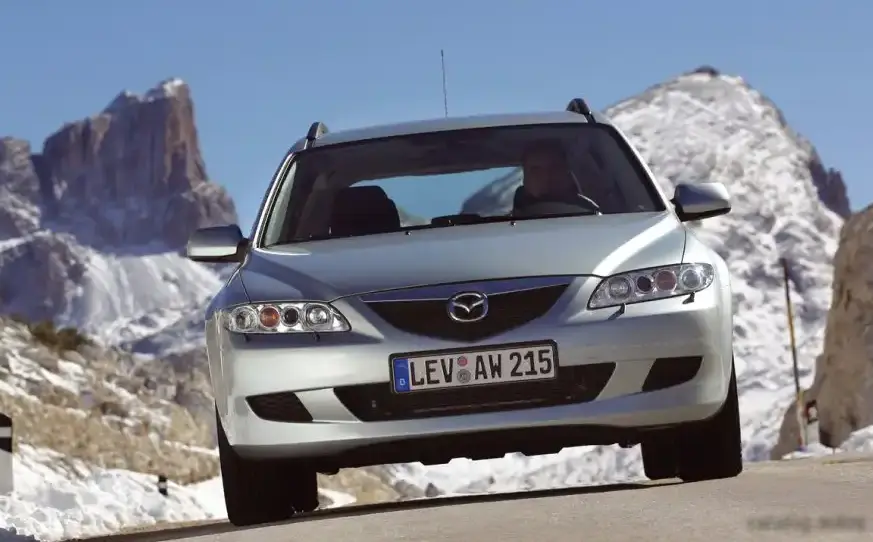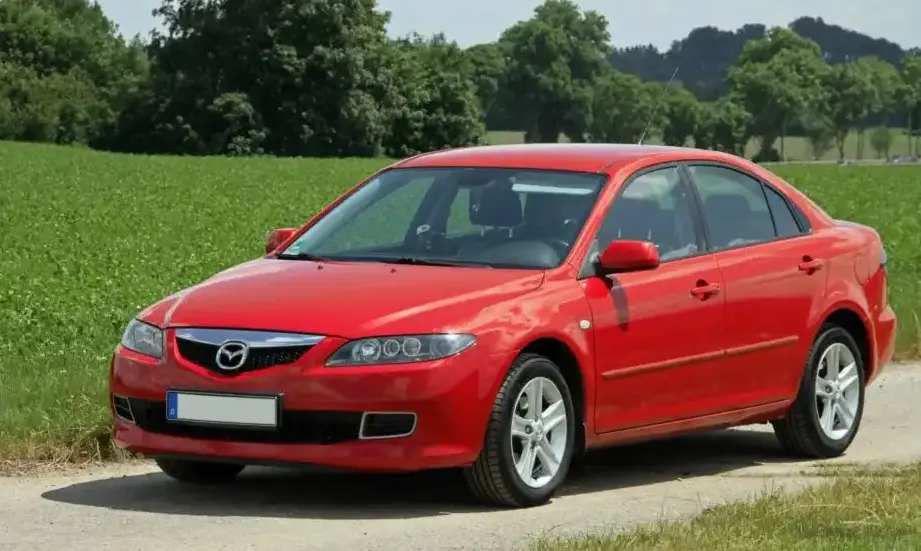
The Mazda 6 first generation (GG/GY/GG1) facelift, produced from 2005 to 2006, represented a significant step forward for Mazda in the mid-size segment. This iteration of the 6, available as a sedan, wagon, and hatchback, aimed to blend sporty handling with a more refined interior and a wider range of engine options. The 3.0 V6 variant, producing 215 horsepower, was positioned as the flagship model, offering a premium experience focused on performance and comfort. It was primarily sold in markets outside of North America, where Mazda focused on the 2.3L inline-four engine for the 6.
Technical Specifications
| Brand | Mazda |
| Model | 6 |
| Generation | 6 I Hatchback (Typ GG/GY/GG1 facelift 2005) |
| Type (Engine) | 3.0 V6 (215 Hp) |
| Start of production | September, 2005 |
| End of production | 2006 |
| Powertrain Architecture | Internal Combustion engine |
| Body type | Hatchback |
| Seats | 5 |
| Doors | 5 |
| Fuel consumption (urban) | 12.4 l/100 km (19 US mpg) |
| Fuel consumption (extra urban) | 8.7 l/100 km (27 US mpg) |
| Fuel Type | Petrol (Gasoline) |
| Weight-to-power ratio | 7.2 kg/Hp |
| Weight-to-torque ratio | 5.7 kg/Nm |
| Power | 215 Hp @ 6000 rpm |
| Power per litre | 72.5 Hp/l |
| Torque | 270 Nm @ 5000 rpm (199.14 lb.-ft. @ 5000 rpm) |
| Maximum engine speed | 6500 rpm |
| Engine layout | Front, Transverse |
| Engine Model/Code | AJ0N |
| Engine displacement | 2967 cm3 (181.06 cu. in.) |
| Number of cylinders | 6 |
| Engine configuration | V-engine |
| Cylinder Bore | 89 mm (3.5 in.) |
| Piston Stroke | 79.5 mm (3.13 in.) |
| Compression ratio | 10:1 |
| Number of valves per cylinder | 4 |
| Fuel injection system | Multi-port manifold injection |
| Engine aspiration | Naturally aspirated engine |
| Valvetrain | DOHC, VVT |
| Engine oil capacity | 5.7 l (6.02 US qt | 5.02 UK qt) |
| Coolant capacity | 8.5 l (8.98 US qt | 7.48 UK qt) |
| Kerb Weight | 1540 kg (3395.12 lbs.) |
| Max. weight | 2037 kg (4490.82 lbs.) |
| Max load | 497 kg (1095.7 lbs.) |
| Trunk (boot) space – minimum | 626 l (22.11 cu. ft.) |
| Trunk (boot) space – maximum | 1662 l (58.69 cu. ft.) |
| Fuel tank capacity | 68 l (17.96 US gal | 14.96 UK gal) |
| Length | 4745 mm (186.81 in.) |
| Width | 1780 mm (70.08 in.) |
| Height | 1440 mm (56.69 in.) |
| Wheelbase | 2675 mm (105.31 in.) |
| Front track | 1530 mm (60.24 in.) |
| Rear track | 1530 mm (60.24 in.) |
| Ride height (ground clearance) | 130 mm (5.12 in.) |
| Minimum turning circle | 11.8 m (38.71 ft.) |
| Drivetrain Architecture | Front wheel drive |
| Number of gears | 5 |
| Gearbox type | Manual transmission |
| Front suspension | Double wishbone, Transverse stabilizer |
| Rear suspension | Independent multi-link spring suspension with stabilizer |
| Front brakes | Ventilated discs, 300×25 mm |
| Rear brakes | Disc, 280×10 mm |
| Assisting systems | ABS (Anti-lock braking system) |
| Steering type | Steering rack and pinion |
| Power steering | Hydraulic Steering |
| Tires size | 215/50 R17; 215/45 R18 |
| Wheel rims size | 7J x 17; 7J x 18 |
Introduction
The 2005-2006 Mazda 6 Hatchback 3.0 V6 represented the pinnacle of performance for the first-generation 6. Built on the GG/GY/GG1 platform, this variant aimed to deliver a more engaging driving experience than its four-cylinder counterparts. The facelift brought subtle styling revisions, improved interior materials, and refinements to the suspension. While not a high-volume seller, the V6 model catered to drivers seeking a sporty and well-equipped mid-size hatchback, particularly in European and Asian markets.
Powertrain & Engine Architecture
The heart of the 3.0 V6 Mazda 6 is the AJ0N engine, a 2.967-liter naturally aspirated V6. This engine utilizes a 60-degree V-angle configuration for improved balance and smoothness. It features a multi-port fuel injection system, delivering fuel directly to each intake port. The engine also incorporates a Double Overhead Camshaft (DOHC) valvetrain with Variable Valve Timing (VVT) on the intake camshafts, optimizing performance and efficiency across the rev range. The 5-speed manual transmission was the only transmission option offered with this engine, providing direct control and enhancing the sporty character of the vehicle. The engine’s design prioritized smooth power delivery and a responsive throttle, rather than outright peak horsepower.
Driving Characteristics
The 3.0 V6 Mazda 6 offered a noticeable performance advantage over the base engine options. With 215 horsepower and 270 Nm (199 lb-ft) of torque, the hatchback could accelerate from 0 to 60 mph in around 7.5 seconds. The manual transmission allowed for precise gear selection, maximizing the engine’s power band. The gear ratios were tuned to provide a balance between acceleration and fuel economy. While not as nimble as some smaller hatchbacks, the Mazda 6 V6 offered a confident and stable driving experience, with well-weighted steering and predictable handling. Compared to the 2.0L or 2.3L models, the V6 provided significantly more effortless cruising ability and passing power.
Equipment & Trim Levels
The 3.0 V6 Mazda 6 typically came with a generous level of standard equipment. This included air conditioning, power windows and locks, a CD stereo system, and alloy wheels. Higher trim levels added features such as leather upholstery, a sunroof, automatic climate control, and upgraded audio systems. The interior design focused on a driver-centric layout with clear instrumentation and comfortable seating. Optional extras included navigation systems and premium sound systems. The overall interior ambiance was a step above the base models, reflecting the V6’s premium positioning.
Chassis & Braking
The Mazda 6 Hatchback featured a double wishbone front suspension and an independent multi-link rear suspension, providing a comfortable ride and responsive handling. A transverse stabilizer bar was fitted to both the front and rear axles to reduce body roll during cornering. The braking system consisted of ventilated discs at the front and solid discs at the rear, providing adequate stopping power for the vehicle’s weight and performance. Anti-lock Braking System (ABS) was standard, enhancing safety and control in emergency braking situations. The suspension tuning was slightly firmer on the V6 model compared to the four-cylinder versions, contributing to its more sporty feel.
Market Reception & Comparison
The Mazda 6 3.0 V6 was generally well-received by automotive critics, who praised its smooth engine, responsive handling, and well-equipped interior. However, some reviewers noted that the fuel economy was relatively high compared to the four-cylinder models. Compared to rivals like the Ford Mondeo and Volkswagen Passat, the Mazda 6 offered a more engaging driving experience and a more stylish design. The V6 variant was positioned as a more premium alternative to the base models, appealing to buyers who prioritized performance and refinement. Reliability was generally good, although the V6 engine required more frequent maintenance than the simpler four-cylinder options.
Legacy
The Mazda 6 3.0 V6, while not a mainstream success, remains a desirable model among enthusiasts. The AJ0N engine is known for its durability and smooth operation, although regular maintenance is essential. In the used car market, these models tend to command a premium price compared to the four-cylinder versions. The 3.0 V6 Mazda 6 represents a unique offering in the mid-size segment, combining sporty handling with a refined interior and a powerful V6 engine. It stands as a testament to Mazda’s commitment to driving enjoyment and its willingness to offer a more engaging alternative to the conventional family car.