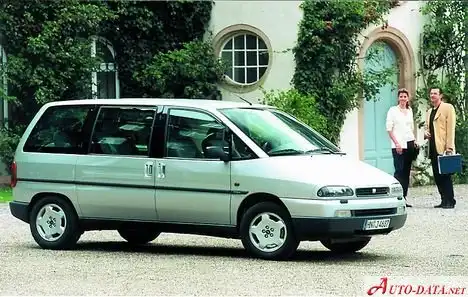
The Fiat Ulysse I (22/220) 2.0, produced between 1994 and 2002, represents Fiat’s entry into the European minivan and MPV (Multi-Purpose Vehicle) market. Developed in collaboration with PSA Peugeot Citroën – sharing its platform and many components with the Peugeot 806 and Citroën Evasion/Synergie – the Ulysse aimed to provide a spacious, comfortable, and practical vehicle for families and those requiring flexible passenger and cargo capacity. The 2.0-liter, 121 horsepower variant occupied a mid-range position within the Ulysse lineup, offering a balance between affordability and performance. It was positioned below the more powerful 2.1 TD diesel models and above the base 1.8-liter gasoline engine.
Technical Specifications
| Brand | Fiat |
| Model | Ulysse |
| Generation | Ulysse I (22/220) |
| Type (Engine) | 2.0 (121 Hp) |
| Start of production | 1994 |
| End of production | 2002 |
| Powertrain Architecture | Internal Combustion engine |
| Body type | Minivan, MPV |
| Seats | 5 |
| Doors | 4 |
| Fuel consumption (urban) | 13.2 l/100 km (17.8 US mpg, 21.4 UK mpg, 7.6 km/l) |
| Fuel consumption (extra urban) | 8.6 l/100 km (27.4 US mpg, 32.8 UK mpg, 11.6 km/l) |
| Fuel consumption (combined) | 10.9 l/100 km (21.6 US mpg, 25.9 UK mpg, 9.2 km/l) |
| Fuel Type | Petrol (Gasoline) |
| Acceleration 0 – 100 km/h | 13.1 sec |
| Acceleration 0 – 62 mph | 13.1 sec |
| Acceleration 0 – 60 mph | 12.4 sec |
| Maximum speed | 177 km/h (109.98 mph) |
| Weight-to-power ratio | 12.5 kg/Hp, 80.1 Hp/tonne |
| Weight-to-torque ratio | 8.9 kg/Nm, 112.6 Nm/tonne |
| Power | 121 Hp @ 5750 rpm |
| Power per litre | 60.6 Hp/l |
| Torque | 170 Nm @ 2650 rpm (125.39 lb.-ft. @ 2650 rpm) |
| Engine layout | Front, Transverse |
| Engine Model/Code | RFU XU10J2C |
| Engine displacement | 1998 cm3 (121.93 cu. in.) |
| Number of cylinders | 4 |
| Engine configuration | Inline |
| Cylinder Bore | 85 mm (3.35 in.) |
| Piston Stroke | 88 mm (3.46 in.) |
| Compression ratio | 9.5:1 |
| Number of valves per cylinder | 2 |
| Fuel injection system | Multi-port manifold injection |
| Engine aspiration | Naturally aspirated engine |
| Valvetrain | OHC |
| Engine oil capacity | 4.3 l (4.54 US qt | 3.78 UK qt) |
| Coolant | 8.5 l (8.98 US qt | 7.48 UK qt) |
| Kerb Weight | 1510 kg (3328.98 lbs.) |
| Max. weight | 2300 kg (5070.63 lbs.) |
| Max load | 790 kg (1741.65 lbs.) |
| Trunk (boot) space – minimum | 340 l (12.01 cu. ft.) |
| Trunk (boot) space – maximum | 3300 l (116.54 cu. ft.) |
| Fuel tank capacity | 80 l (21.13 US gal | 17.6 UK gal) |
| Length | 4454 mm (175.35 in.) |
| Width | 1834 mm (72.2 in.) |
| Height | 1714 mm (67.48 in.) |
| Wheelbase | 2824 mm (111.18 in.) |
| Front track | 1534 mm (60.39 in.) |
| Rear (Back) track | 1540 mm (60.63 in.) |
| Drivetrain Architecture | The Internal combustion engine (ICE) drives the front wheels of the vehicle. |
| Drive wheel | Front wheel drive |
| Number of gears and type of gearbox | 5 gears, manual transmission |
| Front suspension | Double wishbone |
| Rear suspension | Coil spring |
| Front brakes | Ventilated discs |
| Rear brakes | Drum |
| Assisting systems | ABS (Anti-lock braking system) |
| Steering type | Steering rack and pinion |
| Power steering | Hydraulic Steering |
| Tires size | 195/65 R15 |
Powertrain & Engine Architecture
The Fiat Ulysse 2.0 utilized the RFU (and sometimes RFK) XU10J2C engine, a 1.998-liter inline-four cylinder gasoline engine developed by Peugeot and used across various PSA and Fiat vehicles. This engine featured a single overhead camshaft (OHC) design with two valves per cylinder. Fuel delivery was managed by a multi-port fuel injection system, providing a reasonable balance between fuel efficiency and performance for the era. The engine’s 9.5:1 compression ratio contributed to its power output. The engine was transversely mounted in the front of the vehicle, driving the front wheels. The five-speed manual transmission was the standard offering for this variant, providing a relatively direct connection between the engine and the wheels. The transmission’s gear ratios were tuned for a blend of fuel economy and acceptable acceleration, though the Ulysse 2.0 was not known for being particularly sporty.
Driving Characteristics
The 121 horsepower and 170 Nm (125 lb-ft) of torque produced by the 2.0-liter engine provided adequate, but not exhilarating, performance for the Ulysse. Acceleration from 0-60 mph took around 12.4 seconds, and top speed was approximately 109.98 mph. The Ulysse 2.0 felt most comfortable during relaxed cruising on highways or city streets. The manual transmission allowed for some driver control, but the vehicle’s weight and aerodynamic profile limited its responsiveness. Compared to the diesel variants, the 2.0-liter engine offered a smoother and quieter driving experience, but at the expense of fuel economy and low-end torque. The gear ratios were spaced to prioritize fuel efficiency, meaning the engine often needed to be revved to access its full power potential, especially when fully loaded with passengers and luggage.
Equipment & Trim Levels
The 2.0-liter Ulysse typically came with a reasonable level of standard equipment, positioning it as a well-rounded family vehicle. Standard features often included power steering, central locking, electric front windows, and an adjustable steering column. Interior upholstery was typically cloth, with a functional and durable design. Optional extras included air conditioning, alloy wheels, a sunroof, and upgraded audio systems. Higher trim levels offered features like rear electric windows, upgraded interior trim, and additional safety equipment. The dashboard layout was straightforward and focused on practicality, with easy-to-read gauges and logically placed controls.
Chassis & Braking
The Ulysse I utilized a front-wheel-drive layout with a double wishbone suspension at the front and a coil spring suspension at the rear. This setup provided a comfortable ride quality, absorbing bumps and imperfections in the road surface effectively. The front brakes were ventilated discs, offering good stopping power, while the rear brakes were drums, a cost-saving measure common in this class of vehicle. Anti-lock Braking System (ABS) was included as standard, enhancing safety by preventing wheel lockup during hard braking. The steering was rack and pinion, providing reasonably precise control, although it lacked the feedback of more modern steering systems.
Market Reception & Comparison
The Fiat Ulysse 2.0 received generally positive reviews for its spacious interior, comfortable ride, and practicality. However, critics often noted its somewhat lackluster performance and relatively high fuel consumption compared to diesel alternatives. The 2.0-liter engine was seen as a good compromise for those who preferred the refinement of a gasoline engine but didn’t require the outright power of the larger diesel units. Compared to the 2.1 TD models, the 2.0 offered a quieter and smoother driving experience, but with significantly less torque and poorer fuel economy. The Ulysse competed with other MPVs such as the Renault Espace, Volkswagen Sharan, and Ford Galaxy.
Legacy
The Fiat Ulysse I, particularly the 2.0-liter variant, has proven to be a relatively reliable vehicle, although age and mileage are now significant factors. The XU10J2C engine is known for its durability, provided it has been regularly maintained. Common issues include oil leaks, corrosion (particularly in colder climates), and wear and tear on suspension components. In the used car market, the Ulysse I 2.0 represents an affordable and practical option for those seeking a spacious family vehicle. However, potential buyers should be aware of the vehicle’s age and potential maintenance requirements. The Ulysse’s collaborative development with Peugeot and Citroën highlights the increasing trend of platform sharing and joint ventures in the automotive industry.