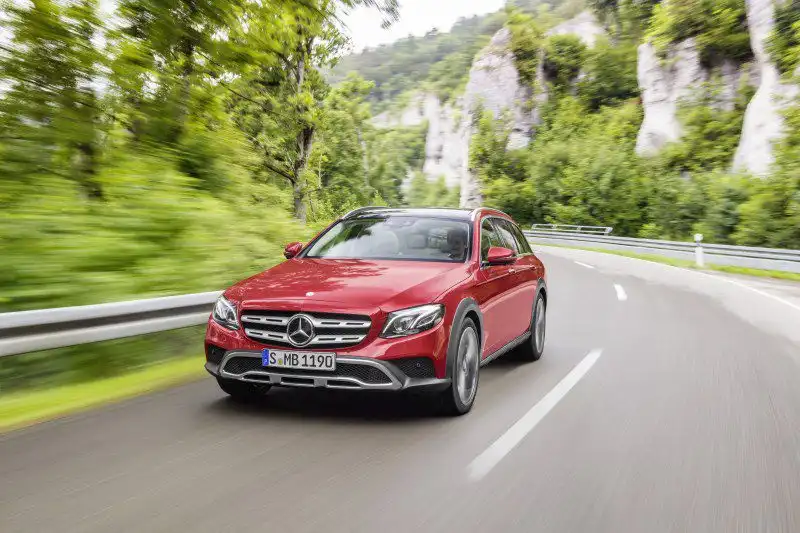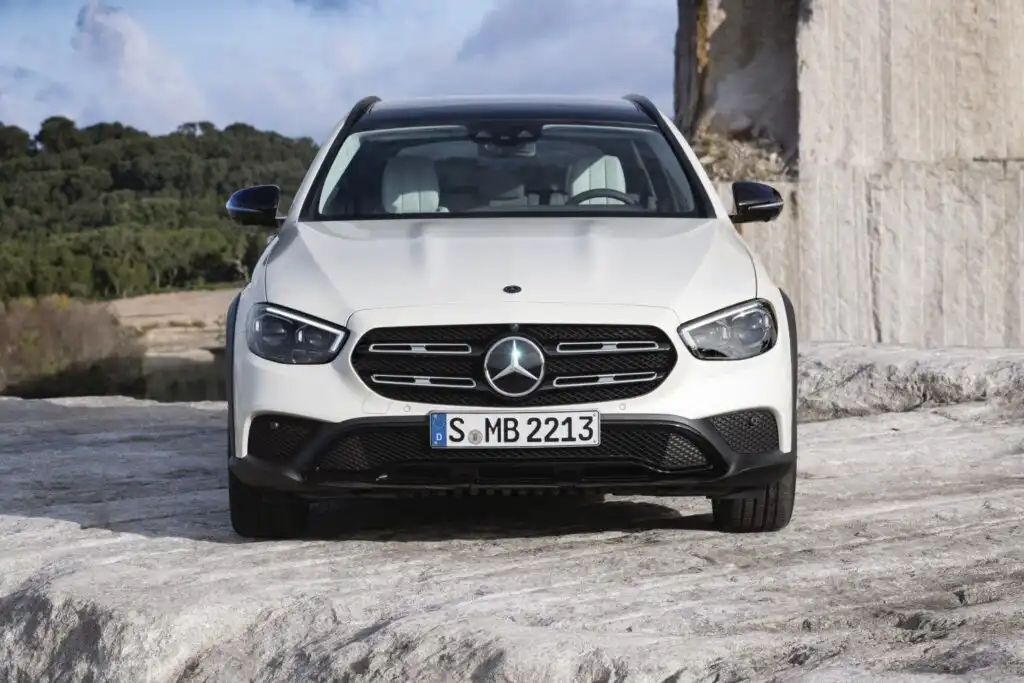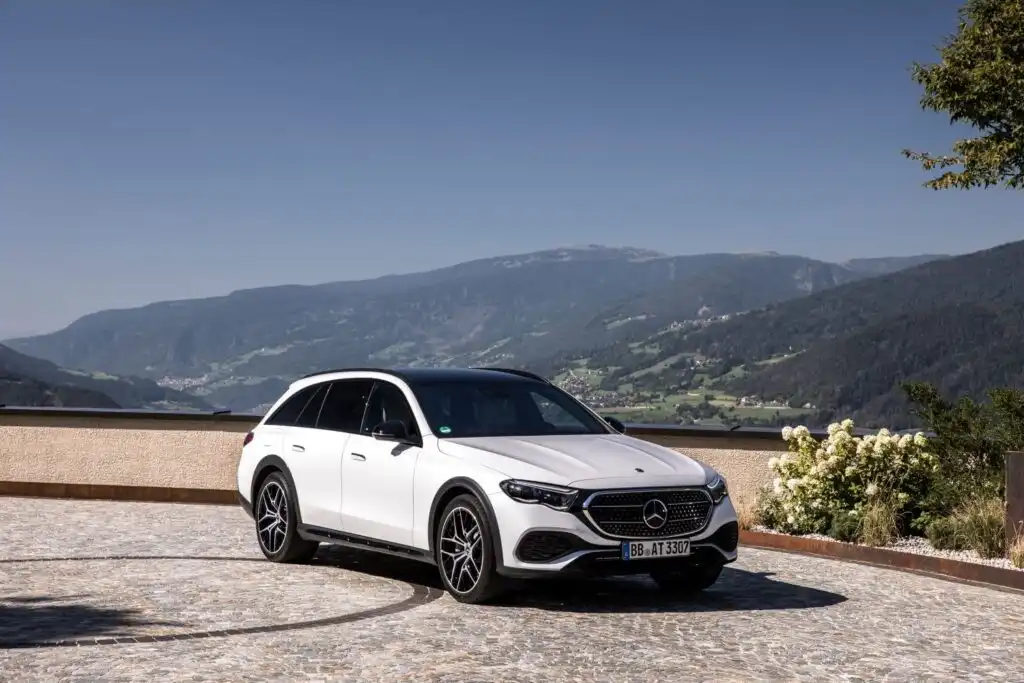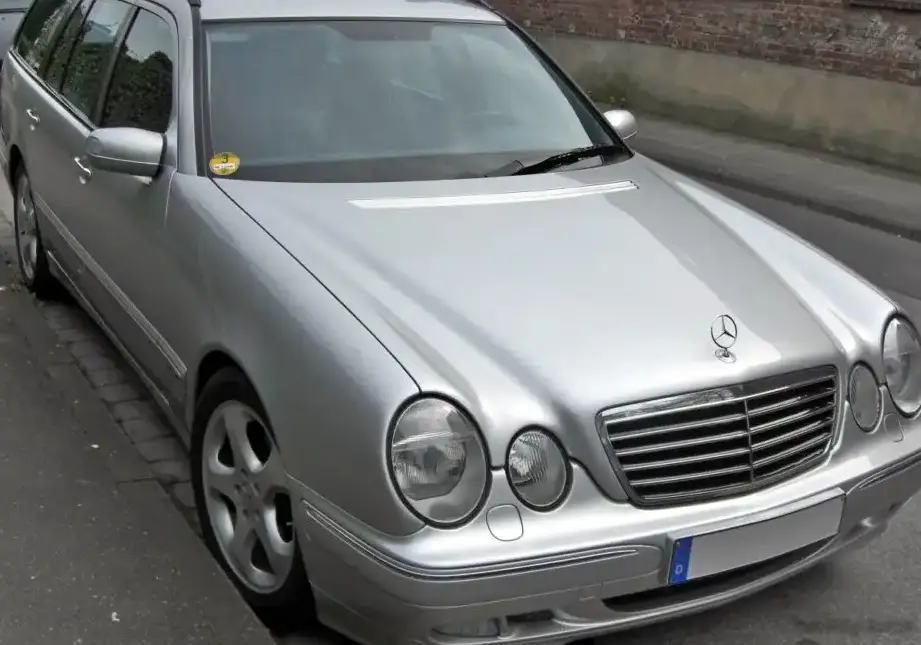
The Mercedes-Benz E-Class T-modell (S210) facelift, specifically the E 200 Kompressor variant with an automatic transmission, was produced from December 1999 to December 2000. This model represented a mid-cycle refresh of the S210 series, which was the wagon (estate) version of the highly successful W210 E-Class. The E 200 Kompressor Automatic occupied a middle ground in the T-modell lineup, offering a balance between performance, fuel economy, and comfort, aimed at buyers seeking a practical yet refined vehicle. It was positioned above the base E 180 models and below the more powerful E 230 and E 280 variants.
Technical Specifications
| Brand | Mercedes-Benz |
| Model | E-Class |
| Generation | E-Class T-modell (S210, facelift 1999) |
| Type (Engine) | E 200 Kompressor (163 Hp) Automatic |
| Start of production | December, 1999 |
| End of production | December, 2000 |
| Powertrain Architecture | Internal Combustion engine |
| Body type | Station wagon (estate) |
| Seats | 5 |
| Doors | 5 |
| Fuel consumption (urban) | 13.8 l/100 km (17 US mpg, 20.5 UK mpg, 7.2 km/l) |
| Fuel consumption (extra urban) | 7.6 l/100 km (30.9 US mpg, 37.2 UK mpg, 13.2 km/l) |
| Fuel consumption (combined) | 9.8 l/100 km (24 US mpg, 28.8 UK mpg, 10.2 km/l) |
| Fuel Type | Petrol (Gasoline) |
| Acceleration 0 – 100 km/h | 10.7 sec |
| Acceleration 0 – 62 mph | 10.7 sec |
| Acceleration 0 – 60 mph | 10.2 sec |
| Maximum speed | 209 km/h (129.87 mph) |
| Weight-to-power ratio | 10.1 kg/Hp, 99.4 Hp/tonne |
| Weight-to-torque ratio | 7.1 kg/Nm, 140.2 Nm/tonne |
| Power | 163 Hp @ 5300 rpm |
| Power per litre | 81.6 Hp/l |
| Torque | 230 Nm @ 2500-4800 rpm (169.64 lb.-ft. @ 2500-4800 rpm) |
| Engine layout | Front, Longitudinal |
| Engine Model/Code | 111 E 20 ML EVO / 111.957 |
| Engine displacement | 1998 cm3 (121.93 cu. in.) |
| Number of cylinders | 4 |
| Engine configuration | Inline |
| Cylinder Bore | 89.9 mm (3.54 in.) |
| Piston Stroke | 78.7 mm (3.1 in.) |
| Compression ratio | 10.4:1 |
| Number of valves per cylinder | 4 |
| Fuel injection system | Multi-port manifold injection |
| Engine aspiration | Supercharger, Intercooler |
| Valvetrain | DOHC |
| Engine oil capacity | 5.5 l (5.81 US qt | 4.84 UK qt) |
| Coolant | 8.5 l (8.98 US qt | 7.48 UK qt) |
| Kerb Weight | 1640 kg (3615.58 lbs.) |
| Max. weight | 2220 kg (4894.26 lbs.) |
| Max load | 580 kg (1278.68 lbs.) |
| Trunk (boot) space – minimum | 600 l (21.19 cu. ft.) |
| Trunk (boot) space – maximum | 1920 l (67.8 cu. ft.) |
| Fuel tank capacity | 70 l (18.49 US gal | 15.4 UK gal) |
| Length | 4839 mm (190.51 in.) |
| Width | 1799 mm (70.83 in.) |
| Height | 1505 mm (59.25 in.) |
| Wheelbase | 2833 mm (111.54 in.) |
| Front track | 1542 mm (60.71 in.) |
| Rear (Back) track | 1546 mm (60.87 in.) |
| Drivetrain Architecture | Rear wheel drive |
| Number of gears and type of gearbox | 5 gears, automatic transmission |
| Front suspension | Double wishbone |
| Rear suspension | Hydro-pneumatic element, Independent multi-link suspension |
| Front brakes | Ventilated discs |
| Rear brakes | Disc |
| Assisting systems | ABS (Anti-lock braking system) |
| Steering type | Steering rack and pinion |
| Power steering | Hydraulic Steering |
| Tires size | 205/65 R15 |
| Wheel rims size | 7J x 15 |
Powertrain & Engine Architecture
The heart of the E 200 Kompressor was the 111.957 2.0-liter inline-four cylinder engine. This engine was a significant evolution of Mercedes-Benz’s established four-cylinder design, featuring multi-port fuel injection and, crucially, a mechanically driven supercharger (Kompressor in Mercedes terminology). The supercharger, an Eaton V-series unit, provided increased torque at lower engine speeds, mitigating the typical turbo lag associated with forced induction. This resulted in a more responsive driving experience. The engine produced 163 horsepower at 5300 rpm and 230 Nm (169.64 lb-ft) of torque between 2500 and 4800 rpm. The engine utilized a double overhead camshaft (DOHC) valvetrain with four valves per cylinder, contributing to its efficient operation. The automatic transmission was a five-speed unit, designed to provide smooth and comfortable gear changes.
Driving Characteristics
The E 200 Kompressor Automatic offered a comfortable and refined driving experience. While not a sports car, the supercharger provided ample power for everyday driving and overtaking maneuvers. Acceleration from 0 to 60 mph took approximately 10.2 seconds, and the car had a top speed of 209 km/h (129.87 mph). The automatic transmission, while smooth, wasn’t particularly sporty, prioritizing comfort over aggressive shifting. Compared to the manual transmission version, the automatic offered less driver engagement but greater convenience. Compared to the E 230 Kompressor, the E 200 offered less outright performance, but it was more fuel-efficient and generally less expensive to maintain.
Equipment & Trim Levels
The E 200 Kompressor Automatic typically came standard with features such as automatic climate control, power windows, power mirrors, a multi-function steering wheel, and an audio system. Upholstery was typically cloth, but leather was available as an option. Optional extras included a sunroof, upgraded audio systems, navigation, and various driver assistance features. The facelifted S210 models also benefited from minor interior refinements compared to pre-facelift versions, including updated switchgear and trim materials.
Chassis & Braking
The S210 T-modell featured a double wishbone front suspension and an independent multi-link rear suspension, providing a comfortable ride and good handling characteristics. The E 200 Kompressor was equipped with ventilated disc brakes at the front and solid discs at the rear. Anti-lock braking system (ABS) was standard. The steering was a hydraulic power-assisted rack and pinion system, offering precise and responsive control.
Market Reception & Comparison
The E 200 Kompressor Automatic was generally well-received by critics as a practical and comfortable family wagon. It offered a good balance of performance and fuel economy, making it an attractive option for buyers who didn’t require the extra power of the larger-engined models. Fuel economy was rated at around 9.8 l/100 km (24 US mpg), which was competitive for its class. Reliability was generally good, although, like all Mercedes-Benz vehicles of this era, it could be susceptible to age-related issues with components such as the electronic systems and suspension.
Legacy
The E 200 Kompressor Automatic, while not the most sought-after variant of the S210 T-modell, remains a relatively common sight on the used car market. The 111 engine family is known for its durability, and well-maintained examples can still provide reliable service. However, potential buyers should be aware of the potential for age-related issues and the cost of maintaining a Mercedes-Benz of this vintage. The combination of a supercharged engine and an automatic transmission offered a unique blend of performance and convenience that appealed to a wide range of buyers, solidifying its place as a capable and comfortable family wagon.