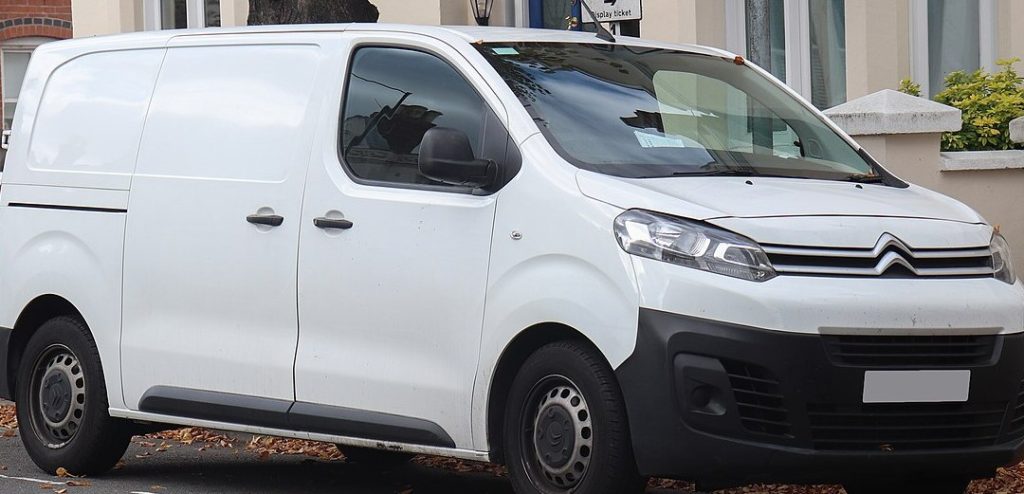
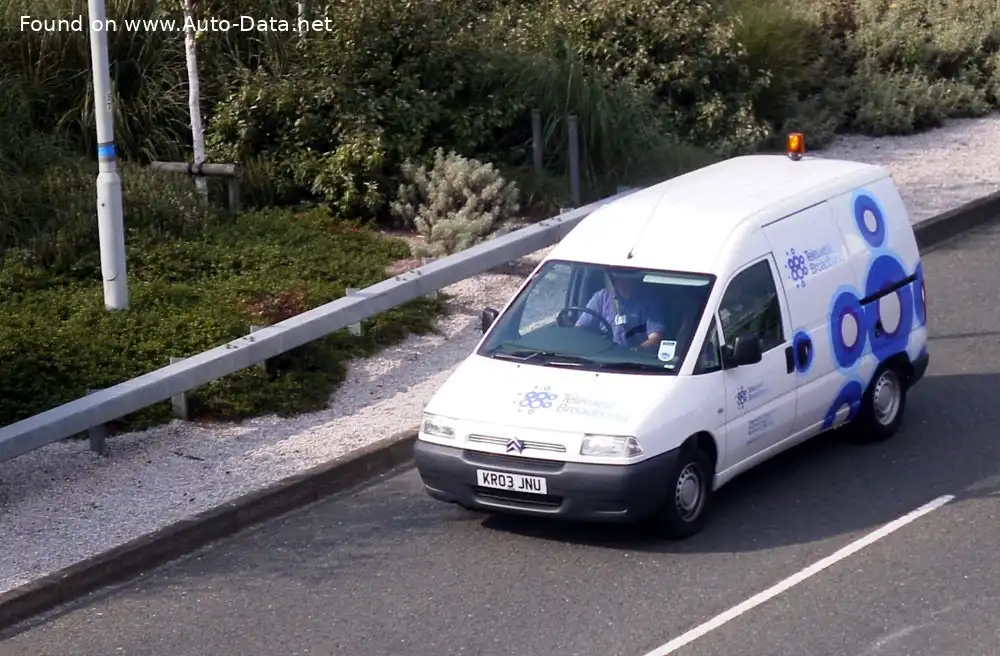
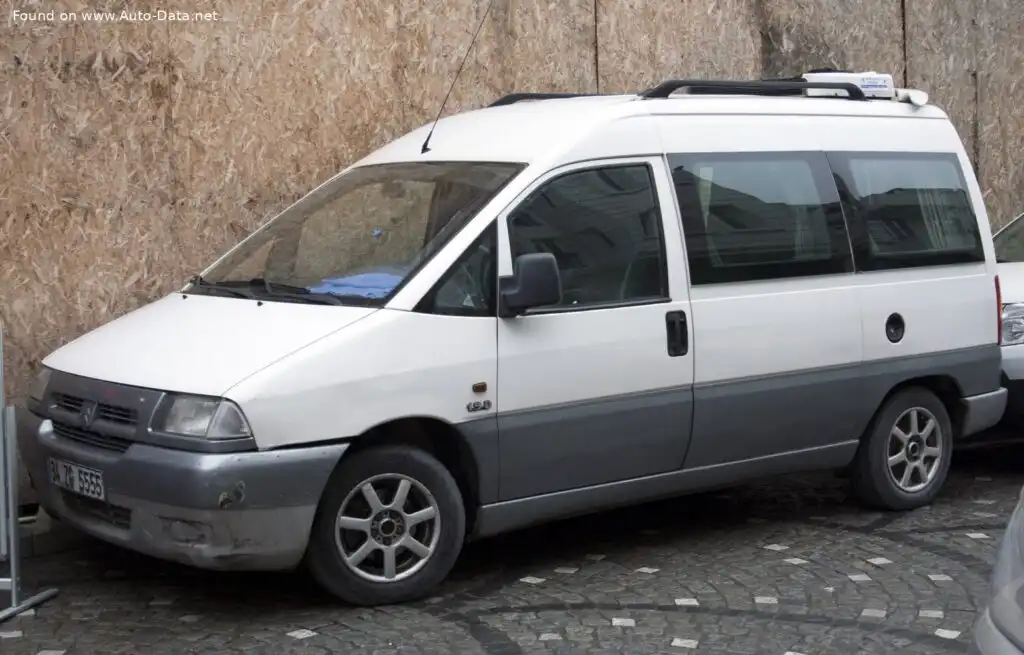
The Citroen Jumpy I Combi, specifically the facelifted version produced from 2004 to 2006, represented a practical and versatile people-carrying option within the European market. This variant, equipped with the 2.0 HDi 16V engine producing 109 horsepower, occupied a middle ground in the Jumpy lineup, offering a balance between fuel efficiency, reasonable performance, and affordability. The Jumpy I, launched in 1995 and based on the Peugeot 806 and Fiat Scudo, aimed to provide a spacious and functional alternative to traditional MPVs, catering to families and commercial users alike. The 2004 facelift brought subtle styling updates and refinements to the interior, enhancing its appeal.
Technical Specifications
| Brand | Citroen |
| Model | Jumpy |
| Generation | Jumpy I Combi (facelift 2004) |
| Type (Engine) | 2.0 HDi 16V (109 Hp) |
| Start of production | 2004 |
| End of production | 2006 |
| Powertrain Architecture | Internal Combustion engine |
| Body type | Minivan |
| Seats | 5 |
| Doors | 4 |
| Fuel consumption (urban) | 8.9 l/100 km (26.4 US mpg, 31.7 UK mpg, 11.2 km/l) |
| Fuel consumption (extra urban) | 6.0 l/100 km (39.2 US mpg, 47.1 UK mpg, 16.7 km/l) |
| Fuel consumption (combined) | 7.0 l/100 km (33.6 US mpg, 40.4 UK mpg, 14.3 km/l) |
| CO2 emissions | 186 g/km |
| Fuel Type | Diesel |
| Acceleration 0 – 100 km/h | 15.0 sec |
| Acceleration 0 – 62 mph | 15.0 sec |
| Acceleration 0 – 60 mph | 14.3 sec |
| Maximum speed | 165 km/h (102.53 mph) |
| Emission standard | Euro 3 |
| Weight-to-power ratio | 14 kg/Hp, 71.6 Hp/tonne |
| Weight-to-torque ratio | 5.6 kg/Nm, 177.3 Nm/tonne |
| Power | 109 Hp @ 4000 rpm |
| Power per litre | 54.6 Hp/l |
| Torque | 270 Nm @ 1750 rpm (199.14 lb.-ft. @ 1750 rpm) |
| Engine layout | Front, Transverse |
| Engine Model/Code | RHW DW10ATED |
| Engine displacement | 1997 cm3 (121.86 cu. in.) |
| Number of cylinders | 4 |
| Engine configuration | Inline |
| Cylinder Bore | 85 mm (3.35 in.) |
| Piston Stroke | 88 mm (3.46 in.) |
| Number of valves per cylinder | 4 |
| Fuel injection system | Diesel Commonrail |
| Engine aspiration | Turbocharger, Intercooler |
| Engine oil capacity | 4.7 l (4.97 US qt | 4.14 UK qt) |
| Coolant | 9 l (9.51 US qt | 7.92 UK qt) |
| Kerb Weight | 1523 kg (3357.64 lbs.) |
| Max. weight | 2505 kg (5522.58 lbs.) |
| Max load | 982 kg (2164.94 lbs.) |
| Fuel tank capacity | 80 l (21.13 US gal | 17.6 UK gal) |
| Max. roof load | 100 kg (220.46 lbs.) |
| Permitted trailer load with brakes (8%) | 1800 kg (3968.32 lbs.) |
| Permitted trailer load with brakes (12%) | 1300 kg (2866.01 lbs.) |
| Permitted trailer load without brakes | 750 kg (1653.47 lbs.) |
| Permitted towbar download | 60 kg (132.28 lbs.) |
| Length | 4522 mm (178.03 in.) |
| Width | 1844 mm (72.6 in.) |
| Height | 1936 mm (76.22 in.) |
| Wheelbase | 2824 mm (111.18 in.) |
| Front track | 1540 mm (60.63 in.) |
| Rear track | 1540 mm (60.63 in.) |
| Front overhang | 919 mm (36.18 in.) |
| Rear overhang | 779 mm (30.67 in.) |
| Drivetrain Architecture | Front wheel drive |
| Drive wheel | Front wheel drive |
| Number of gears and type of gearbox | 5 gears, manual transmission |
| Front suspension | Independent, type McPherson with coil spring and anti-roll bar |
| Rear suspension | Semi-dependent beam with stabilizer lateral stability, Coil spring |
| Front brakes | Ventilated discs |
| Rear brakes | Drum |
| Assisting systems | ABS (Anti-lock braking system) |
| Steering type | Steering rack and pinion |
| Power steering | Hydraulic Steering |
| Tires size | 205/65 R15 |
| Wheel rims size | 6.5J x 15 |
Powertrain & Engine Architecture
The heart of this Jumpy variant is the DW10ATED engine, a 2.0-liter, four-cylinder diesel engine. This engine, commonly found in Citroen and Peugeot vehicles of the era, utilizes a common rail direct injection system. The RHW engine code specifically denotes a version tuned to produce 109 horsepower at 4000 rpm and 270 Nm (199 lb-ft) of torque at 1750 rpm. The 16-valve cylinder head, coupled with a turbocharger and intercooler, contributes to its relatively efficient power delivery. The engine’s architecture is a conventional inline configuration, prioritizing durability and ease of maintenance. The 5-speed manual transmission was the standard offering, chosen for its simplicity and cost-effectiveness. The transmission’s gear ratios were geared towards maximizing fuel economy and providing adequate acceleration for everyday driving.
Driving Characteristics
The 109 hp 2.0 HDi engine in the Jumpy I Combi provided adequate, though not exhilarating, performance. Acceleration from 0-60 mph took around 14.3 seconds, and top speed was limited to 165 km/h (102.53 mph). Compared to higher-output versions of the Jumpy, such as those equipped with the 2.0 HDi 130 or 2.0 HDi 160 engines, this variant felt noticeably slower, particularly when fully loaded with passengers and luggage. However, the lower power output also translated to improved fuel economy. The manual transmission offered a reasonable level of control, but the gear ratios were spaced to prioritize fuel efficiency over sporty driving. The engine’s torque peak at 1750 rpm provided sufficient pulling power for most driving situations, making it suitable for both urban and highway use.
Equipment & Trim Levels
The 2.0 HDi 109 hp Jumpy I Combi typically came with a fairly basic level of equipment, reflecting its position as a value-oriented option. Standard features generally included power steering, central locking, and an adjustable steering column. Interior upholstery was typically cloth, and the dashboard featured a functional, if somewhat utilitarian, design. Optional extras included air conditioning, electric windows, and a radio/CD player. Higher trim levels offered upgrades such as alloy wheels, upgraded interior trim, and additional safety features. The Combi designation indicated a passenger-focused configuration with comfortable seating for five occupants.
Chassis & Braking
The Jumpy I Combi utilized a McPherson strut front suspension and a semi-independent beam rear suspension. This setup provided a reasonable balance between ride comfort and handling. The front suspension incorporated a stabilizer bar to reduce body roll during cornering. Braking duties were handled by ventilated discs at the front and drum brakes at the rear. ABS (Anti-lock Braking System) was standard, enhancing safety by preventing wheel lockup during emergency braking. The chassis was designed to accommodate the vehicle’s weight and provide a stable platform for carrying passengers and cargo.
Market Reception & Comparison
The Citroen Jumpy I Combi 2.0 HDi 109 hp was generally well-received as a practical and affordable MPV. Critics praised its spacious interior, fuel efficiency, and comfortable ride. However, some reviewers noted its relatively modest performance and somewhat basic interior appointments. Compared to other MPVs in its class, such as the Renault Scenic or Volkswagen Touran, the Jumpy offered a more utilitarian approach, prioritizing functionality over luxury. The 2.0 HDi 109 hp variant was often seen as a sensible choice for families and individuals who prioritized fuel economy and practicality over outright performance.
Legacy
The 2.0 HDi engine, in its various iterations, proved to be a durable and reliable powerplant. While not without its potential issues (such as occasional turbocharger or injector problems), the DW10ATED engine generally offered good longevity with proper maintenance. Today, the Jumpy I Combi 2.0 HDi 109 hp can be found on the used car market at relatively affordable prices. Its simplicity and robust construction make it a potentially appealing option for those seeking a practical and economical people carrier. However, potential buyers should be aware of the vehicle’s age and the possibility of requiring maintenance on aging components.