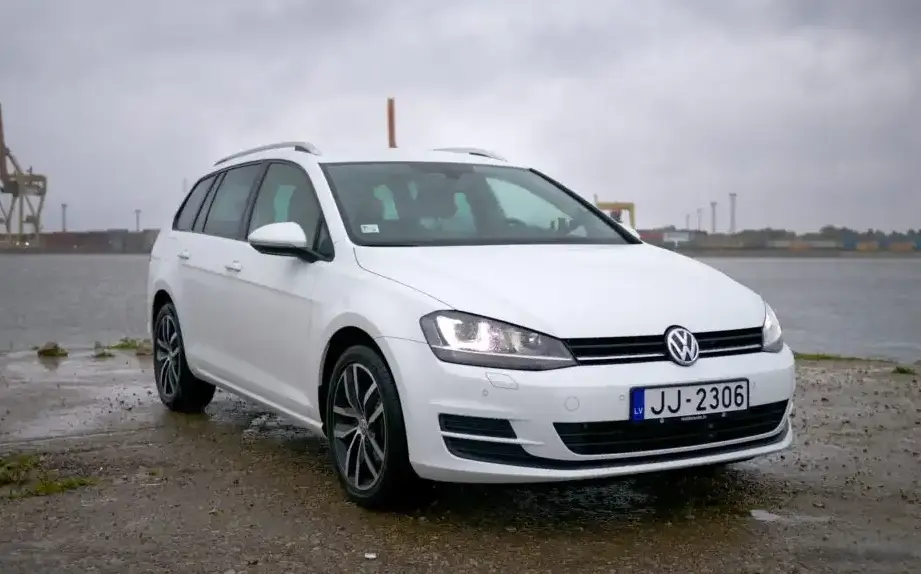
The Volkswagen Golf VII Variant 1.2 TSI (105 hp) was a front-wheel-drive, five-door station wagon produced between 2012 and 2014. Positioned as an entry-level offering within the broader Golf VII Variant lineup, it aimed to provide a balance of practicality, fuel efficiency, and affordability. This variant was primarily marketed in Europe, where the station wagon body style remains popular, offering a more spacious alternative to the standard hatchback. It represented Volkswagen’s attempt to broaden the appeal of the Golf VII Variant to budget-conscious buyers seeking a versatile family vehicle.
Technical Specifications
| Brand | Volkswagen |
| Model | Golf |
| Generation | Golf VII Variant |
| Type (Engine) | 1.2 TSI (105 Hp) |
| Start of production | 2012 |
| End of production | 2014 |
| Powertrain Architecture | Internal Combustion engine |
| Body type | Station wagon (estate) |
| Seats | 5 |
| Doors | 5 |
| Fuel consumption (urban) | 6 l/100 km (39.2 US mpg, 47.1 UK mpg, 16.7 km/l) |
| Fuel consumption (extra urban) | 4.4 l/100 km (53.5 US mpg, 64.2 UK mpg, 22.7 km/l) |
| Fuel consumption (combined) | 5 l/100 km (47 US mpg, 56.5 UK mpg, 20 km/l) |
| Fuel Type | Petrol (Gasoline) |
| Acceleration 0 – 100 km/h | 10.7 sec |
| Acceleration 0 – 62 mph | 10.7 sec |
| Acceleration 0 – 60 mph | 10.2 sec |
| Maximum speed | 193 km/h (119.92 mph) |
| Weight-to-power ratio | 12.4 kg/Hp, 81 Hp/tonne |
| Weight-to-torque ratio | 7.4 kg/Nm, 134.9 Nm/tonne |
| Power | 105 Hp @ 4500-5500 rpm |
| Power per litre | 87.7 Hp/l |
| Torque | 175 Nm @ 1400-4000 rpm (129.07 lb.-ft. @ 1400-4000 rpm) |
| Engine layout | Front, Transverse |
| Engine Model/Code | CJZA |
| Engine displacement | 1197 cm3 (73.05 cu. in.) |
| Number of cylinders | 4 |
| Engine configuration | Inline |
| Fuel injection system | Direct injection |
| Engine aspiration | Turbocharger, Intercooler |
| Engine oil capacity | 4 l (4.23 US qt | 3.52 UK qt) |
| Kerb Weight | 1297 kg (2859.4 lbs.) |
| Max. weight | 1830 kg (4034.46 lbs.) |
| Max load | 533 kg (1175.06 lbs.) |
| Trunk (boot) space – minimum | 605 l (21.37 cu. ft.) |
| Trunk (boot) space – maximum | 1620 l (57.21 cu. ft.) |
| Fuel tank capacity | 50 l (13.21 US gal | 11 UK gal) |
| Length | 4562 mm (179.61 in.) |
| Width | 1799 mm (70.83 in.) |
| Height | 1481 mm (58.31 in.) |
| Wheelbase | 2635 mm (103.74 in.) |
| Front track | 1549 mm (60.98 in.) |
| Rear (Back) track | 1520 mm (59.84 in.) |
| Minimum turning circle | 10.9 m (35.76 ft.) |
| Drivetrain Architecture | The Internal combustion engine (ICE) drives the front wheels of the vehicle. |
| Drive wheel | Front wheel drive |
| Number of gears and type of gearbox | 6 gears, manual transmission |
| Assisting systems | ABS (Anti-lock braking system) |
| Steering type | Steering rack and pinion |
Powertrain & Engine Architecture
The heart of the Golf VII Variant 1.2 TSI was the CJZA engine code, a 1.2-liter turbocharged inline-four cylinder gasoline engine. This engine was part of Volkswagen’s EA111 family, known for its compact size and efficiency. It featured direct fuel injection, delivering fuel directly into the combustion chamber for improved combustion efficiency and reduced emissions. The turbocharger, coupled with an intercooler, boosted power output despite the relatively small displacement. The engine utilized a timing chain, intended to offer greater durability compared to timing belts. The 105 hp variant was paired with a six-speed manual transmission, providing a balance between fuel economy and driver control. While a seven-speed dual-clutch transmission (DSG) was available on other Golf VII Variant models, it was not typically offered with this specific engine and trim combination.
Driving Characteristics
The 1.2 TSI 105 hp engine in the Golf VII Variant delivered adequate, but not exhilarating, performance. Acceleration from 0-60 mph took around 10.2 seconds, making it suitable for everyday driving but less ideal for spirited driving or frequent overtaking maneuvers. The turbocharger provided a noticeable boost in power at higher RPMs, but the engine could feel somewhat strained when fully loaded or climbing hills. The six-speed manual transmission offered precise shifts, and the gear ratios were well-suited for maintaining fuel efficiency at highway speeds. Compared to the more powerful 1.4 TSI or diesel variants, the 1.2 TSI felt noticeably slower, but it offered a more economical driving experience. The suspension was tuned for comfort, providing a relatively smooth ride, although it wasn’t as sporty as some of the higher-spec Golf models.
Equipment & Trim Levels
The 1.2 TSI variant typically represented the entry point into the Golf VII Variant range. Standard equipment generally included air conditioning, power windows, central locking, and a basic audio system. Safety features such as ABS, electronic stability control, and multiple airbags were also standard. Interior upholstery was typically cloth, and the dashboard featured a functional, if somewhat basic, design. Optional extras included alloy wheels, a touchscreen infotainment system, parking sensors, and cruise control. Higher trim levels, such as Trendline and Comfortline, added more features, but the base 1.2 TSI model focused on providing essential equipment at an affordable price point.
Chassis & Braking
The Golf VII Variant utilized a MacPherson strut front suspension and a multi-link rear suspension, providing a good balance of ride comfort and handling. The 1.2 TSI variant typically featured smaller diameter alloy wheels and narrower tires compared to higher-spec models. The braking system consisted of disc brakes on the front wheels and drum brakes on the rear wheels. While adequate for everyday use, the rear drum brakes were less effective than disc brakes, particularly under heavy braking. The steering was precise and well-weighted, providing good feedback to the driver. A stabilizer bar was fitted to both the front and rear axles to reduce body roll during cornering.
Market Reception & Comparison
The Golf VII Variant 1.2 TSI (105 hp) was generally well-received by automotive critics as a practical and fuel-efficient family car. However, some reviewers noted that the engine lacked the power and refinement of the more expensive variants. Fuel economy was a strong point, with combined fuel consumption figures around 5 liters per 100 kilometers (47 US mpg). Compared to the 1.4 TSI, the 1.2 TSI offered lower running costs but sacrificed performance. The diesel variants, such as the 1.6 TDI and 2.0 TDI, provided even better fuel economy and more torque, but at a higher purchase price. The 1.2 TSI appealed to buyers who prioritized affordability and fuel efficiency over outright performance.
Legacy
The 1.2 TSI engine, while generally reliable, has been known to exhibit some issues related to carbon buildup on the intake valves, particularly with infrequent oil changes or predominantly short-trip driving. The turbocharger can also be a potential point of failure over time. However, with regular maintenance and careful driving, the powertrain can prove to be durable. In the used car market, the Golf VII Variant 1.2 TSI represents an affordable entry point into Volkswagen ownership. Its fuel efficiency and practicality continue to make it a popular choice for budget-conscious buyers seeking a versatile family vehicle. While not the most powerful or refined Golf VII Variant, it remains a competent and reliable option for everyday transportation.