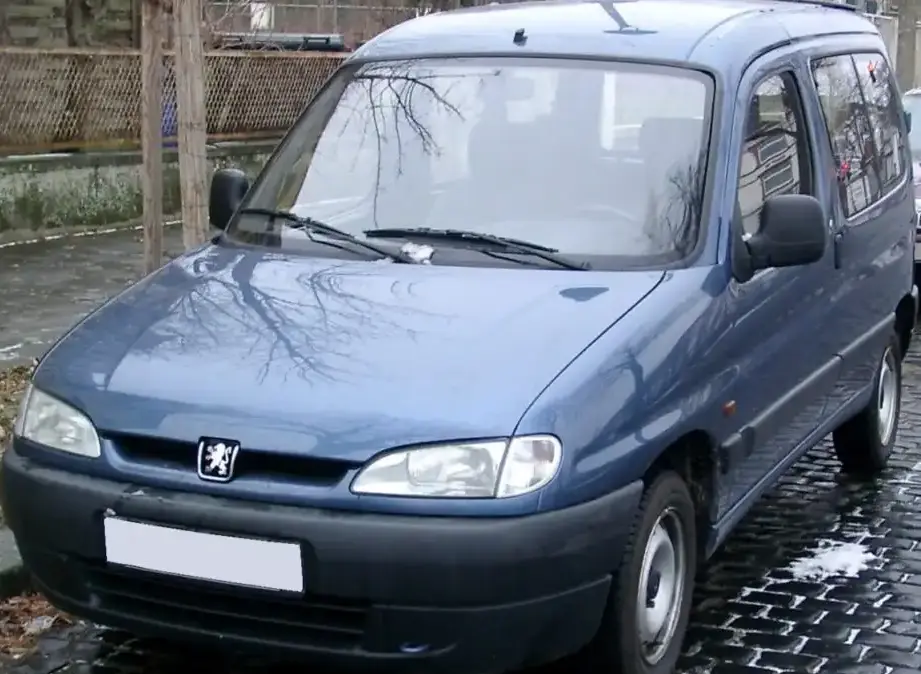
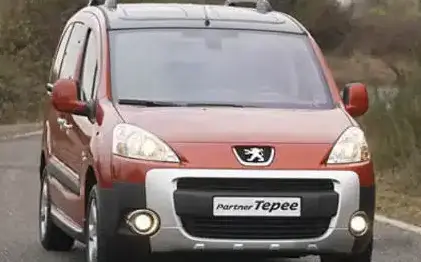
The Peugeot Partner I (Phase II), produced from 2002 to 2008, represents a significant iteration of Peugeot’s popular light commercial vehicle and multi-purpose vehicle. The 1.6 HDi 75 horsepower variant, introduced during this phase, was a key offering aimed at providing an economical and practical solution for both commercial users and families. Positioned as an entry-level engine option within the Partner I range, it served as a more affordable alternative to the higher-powered HDi variants and the petrol engines. This version was primarily sold in European markets, where compact vans and leisure activity vehicles were in high demand.
Technical Specifications
| Brand | Peugeot |
| Model | Partner |
| Generation | Partner I (Phase II, 2002) |
| Type (Engine) | 1.6 HDi (75 Hp) |
| Start of production | 2002 |
| End of production | 2008 |
| Powertrain Architecture | Internal Combustion engine |
| Body type | Minivan |
| Seats | 5 |
| Doors | 4 |
| Fuel consumption (urban) | 6.7 l/100 km (35.1 US mpg, 42.2 UK mpg, 14.9 km/l) |
| Fuel consumption (extra urban) | 4.7 l/100 km (50 US mpg, 60.1 UK mpg, 21.3 km/l) |
| Fuel consumption (combined) | 5.4 l/100 km (43.6 US mpg, 52.3 UK mpg, 18.5 km/l) |
| Fuel Type | Diesel |
| Acceleration 0 – 100 km/h | 17.8 sec |
| Acceleration 0 – 62 mph | 17.8 sec |
| Acceleration 0 – 60 mph | 16.9 sec |
| Maximum speed | 150 km/h (93.21 mph) |
| Weight-to-power ratio | 16.9 kg/Hp, 59.1 Hp/tonne |
| Weight-to-torque ratio | 6.9 kg/Nm, 145.8 Nm/tonne |
| Power | 75 Hp @ 4000 rpm |
| Power per litre | 48.1 Hp/l |
| Torque | 185 Nm @ 1750 rpm (136.45 lb.-ft. @ 1750 rpm) |
| Engine layout | Front, Transverse |
| Engine Model/Code | 9HW DV6ATED4 |
| Engine displacement | 1560 cm3 (95.2 cu. in.) |
| Number of cylinders | 4 |
| Engine configuration | Inline |
| Number of valves per cylinder | 4 |
| Fuel injection system | Diesel Commonrail |
| Engine aspiration | Turbocharger, Intercooler |
| Engine oil capacity | 4 l (4.23 US qt | 3.52 UK qt) |
| Coolant capacity | 11 l (11.62 US qt | 9.68 UK qt) |
| Kerb Weight | 1269 kg (2797.67 lbs.) |
| Max. weight | 1880 kg (4144.69 lbs.) |
| Max load | 611 kg (1347.02 lbs.) |
| Trunk (boot) space – minimum | 625 l (22.07 cu. ft.) |
| Trunk (boot) space – maximum | 2800 l (98.88 cu. ft.) |
| Fuel tank capacity | 60 l (15.85 US gal | 13.2 UK gal) |
| Length | 4140 mm (162.99 in.) |
| Width | 1720 mm (67.72 in.) |
| Height | 1810 mm (71.26 in.) |
| Wheelbase | 2690 mm (105.91 in.) |
| Front track | 1420 mm (55.91 in.) |
| Rear track | 1440 mm (56.69 in.) |
| Drivetrain Architecture | Front wheel drive |
| Number of gears | 5 |
| Gearbox type | Manual transmission |
| Front suspension | Wishbone |
| Rear suspension | Hydro-pneumatic element |
| Front brakes | Disc |
| Rear brakes | Drum |
| Tires size | 175/70 R14 |
INTRODUCTION
The Peugeot Partner I, launched in 1996 and receiving a significant facelift in 2002 (Phase II), was a collaborative effort with Citroën, resulting in the Citroën Berlingo. Designed as a versatile vehicle, it catered to both commercial and private buyers, offering a blend of practicality, affordability, and a relatively compact footprint. The 2002 Phase II update brought revised styling, improved safety features, and the introduction of more modern engine options, including the 1.6 HDi diesel. The 75 horsepower version of this engine became a popular choice, particularly for those prioritizing fuel efficiency and lower running costs over outright performance.
Powertrain & Engine Architecture
The heart of the Partner I 1.6 HDi 75 is the 9HW engine code, belonging to the DV6 family of diesel engines. This 1.6-liter inline-four cylinder engine utilizes a common rail direct injection system, delivering fuel directly into the combustion chamber at extremely high pressure. This technology, coupled with a turbocharger and intercooler, optimizes combustion for improved power and efficiency. The engine features four valves per cylinder (DOHC) and is known for its relatively quiet operation compared to older diesel designs. The five-speed manual transmission paired with this engine was a standard offering, chosen for its simplicity and cost-effectiveness. The gearbox ratios were geared towards maximizing fuel economy rather than providing rapid acceleration.
Driving Characteristics
The 1.6 HDi 75 hp engine in the Partner I delivers a functional, rather than exhilarating, driving experience. Acceleration is modest, with a 0-60 mph time of around 16.9 seconds. The engine’s torque peak of 185 Nm (136 lb-ft) at 1750 rpm provides adequate pulling power for everyday driving and moderate loads. However, when fully loaded or tackling steep inclines, the engine can feel strained, requiring frequent gear changes. The five-speed manual transmission is relatively smooth, but the long gearing emphasizes fuel economy over responsiveness. Compared to the more powerful 2.0 HDi variants, the 1.6 HDi 75 offers significantly less performance, but it compensates with superior fuel efficiency.
Equipment & Trim Levels
The Partner I 1.6 HDi 75 typically came with a fairly basic level of equipment, reflecting its position as an entry-level model. Standard features generally included power steering, a driver’s airbag, and central locking. Interior upholstery was typically hard-wearing cloth. Optional extras included air conditioning, electric windows, and a radio/CD player. Higher trim levels, if selected, might have added features like body-colored bumpers and upgraded interior trim. The focus was on practicality and durability rather than luxury.
Chassis & Braking
The Partner I utilizes a front-wheel-drive layout with a relatively simple suspension setup. The front suspension consists of independent wishbones, while the rear suspension employs a hydro-pneumatic element system, offering a comfortable ride quality, particularly when carrying a load. Braking is handled by front disc brakes and rear drum brakes. The braking system is adequate for the vehicle’s weight and performance, but it lacks the sophistication of more modern braking systems. Stabilizer bars were typically fitted to improve handling and reduce body roll.
Market Reception & Comparison
The Peugeot Partner I 1.6 HDi 75 was generally well-received by critics as a practical and economical workhorse. Its fuel efficiency was a major selling point, particularly in Europe where diesel fuel was often cheaper than petrol. Compared to the higher-powered HDi variants, the 1.6 HDi 75 offered a lower purchase price and reduced running costs, but at the expense of performance. Against competitors like the Renault Kangoo and Citroën Berlingo, the Partner I offered a comparable level of practicality and value. Reliability was generally good, although the common rail diesel injection system could be prone to issues if not properly maintained.
Legacy
The 1.6 HDi engine, in its various iterations, proved to be a durable and reliable powerplant. The Partner I 1.6 HDi 75 remains a relatively common sight on used car markets today. While not known for its speed or refinement, it continues to offer a cost-effective and practical transportation solution. Maintenance costs are generally reasonable, and parts availability is good. However, potential buyers should be aware of the potential for issues with the diesel particulate filter (DPF) and the common rail injection system, particularly on vehicles that have not been regularly serviced.