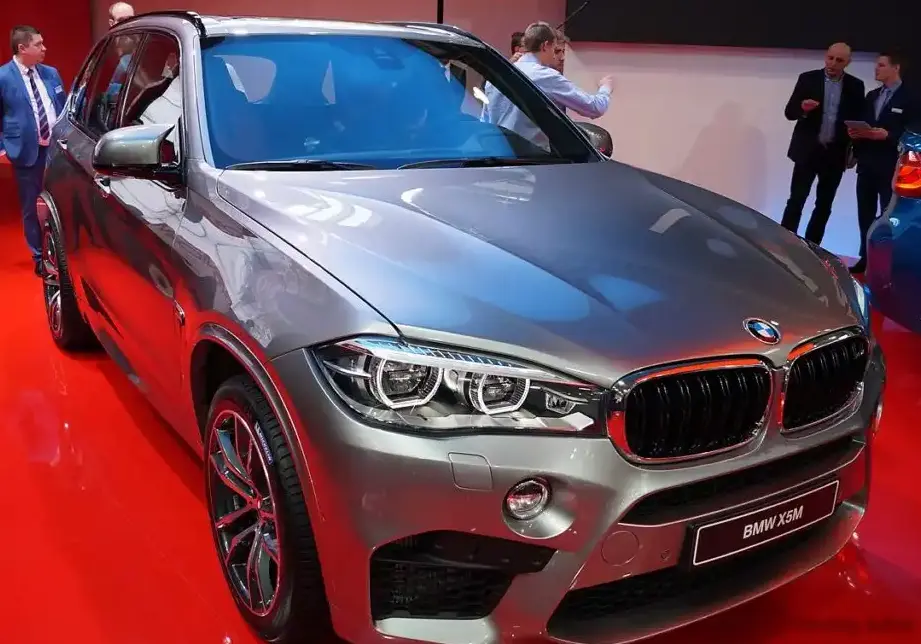
The BMW X5 (E70 LCI) 40d xDrive Steptronic, produced from 2010 to 2013, represents a mid-cycle refresh of the first-generation X5. This variant, powered by the N57D30B inline-six diesel engine, occupied a significant position in BMW’s lineup as a balance between performance, fuel efficiency, and luxury. The “LCI” (Life Cycle Impulse) facelift brought updated styling, improved interior materials, and crucially, advancements in engine technology. Positioned as a mid-range offering within the E70 X5 range, it sat above the xDrive30d and below the higher-performance xDrive40i and xDrive50i models. It was primarily marketed towards buyers seeking a premium SUV experience with strong towing capabilities and respectable fuel economy, particularly in European markets where diesel engines were favored.
Technical Specifications
| Brand | BMW |
| Model | X5 |
| Generation | X5 (E70 LCI, facelift 2010) |
| Type (Engine) | 40d (306 Hp) xDrive Steptronic |
| Start of production | 2010 |
| End of production | 2013 |
| Powertrain Architecture | Internal Combustion engine |
| Body type | SUV |
| Seats | 5 |
| Doors | 5 |
| Fuel consumption (urban) | 8.8 l/100 km (26.7 US mpg, 32.1 UK mpg, 11.4 km/l) |
| Fuel consumption (extra urban) | 6.8 l/100 km (34.6 US mpg, 41.5 UK mpg, 14.7 km/l) |
| Fuel consumption (combined) | 7.5 l/100 km (31.4 US mpg, 37.7 UK mpg, 13.3 km/l) |
| CO2 emissions | 198 g/km |
| Fuel Type | Diesel |
| Acceleration 0 – 100 km/h | 6.6 sec |
| Acceleration 0 – 62 mph | 6.6 sec |
| Acceleration 0 – 60 mph | 6.3 sec |
| Maximum speed | 236 km/h (146.64 mph) |
| Emission standard | Euro 5 |
| Weight-to-power ratio | 6.9 kg/Hp, 145 Hp/tonne |
| Weight-to-torque ratio | 3.5 kg/Nm, 284.4 Nm/tonne |
| Power | 306 Hp @ 4400 rpm |
| Power per litre | 102.2 Hp/l |
| Torque | 600 Nm @ 1500-2500 rpm (442.54 lb.-ft. @ 1500-2500 rpm) |
| Engine layout | Front, Longitudinal |
| Engine Model/Code | N57D30B |
| Engine displacement | 2993 cm3 (182.64 cu. in.) |
| Number of cylinders | 6 |
| Engine configuration | Inline |
| Cylinder Bore | 84 mm (3.31 in.) |
| Piston Stroke | 90 mm (3.54 in.) |
| Compression ratio | 16.5:1 |
| Number of valves per cylinder | 4 |
| Fuel injection system | Diesel Commonrail |
| Engine aspiration | Turbocharger, Intercooler |
| Engine oil capacity | 6.7 l (7.08 US qt | 5.9 UK qt) |
| Coolant | 10.4 l (10.99 US qt | 9.15 UK qt) |
| Kerb Weight | 2110 kg (4651.75 lbs.) |
| Max. weight | 2790 kg (6150.9 lbs.) |
| Max load | 680 kg (1499.14 lbs.) |
| Trunk (boot) space – minimum | 620 l (21.9 cu. ft.) |
| Trunk (boot) space – maximum | 1750 l (61.8 cu. ft.) |
| Fuel tank capacity | 85 l (22.45 US gal | 18.7 UK gal) |
| Max. roof load | 100 kg (220.46 lbs.) |
| Permitted trailer load with brakes (12%) | 3500 kg (7716.18 lbs.) |
| Permitted trailer load without brakes | 750 kg (1653.47 lbs.) |
| Permitted towbar download | 140 kg (308.65 lbs.) |
| Length | 4857 mm (191.22 in.) |
| Width | 1933 mm (76.1 in.) |
| Width including mirrors | 2197 mm (86.5 in.) |
| Height | 1776 mm (69.92 in.) |
| Wheelbase | 2933 mm (115.47 in.) |
| Front track | 1644 mm (64.72 in.) |
| Rear (Back) track | 1650 mm (64.96 in.) |
| Front overhang | 864 mm (34.02 in.) |
| Rear overhang | 1060 mm (41.73 in.) |
| Ride height (ground clearance) | 222 mm (8.74 in.) |
| Drag coefficient (Cd) | 0.34 |
| Minimum turning circle (turning diameter) | 12.8 m (41.99 ft.) |
| Approach angle | 25.5° |
| Departure angle | 22.7° |
| Ramp-over (brakeover) angle | 19.8° |
| Wading depth | 500 mm (19.69 in.) |
| Drive wheel | All wheel drive (4×4) |
| Number of gears and type of gearbox | 8 gears, automatic transmission |
| Front brakes | Ventilated discs |
| Rear brakes | Ventilated discs |
| Assisting systems | ABS (Anti-lock braking system) |
| Steering type | Steering rack and pinion |
| Tires size | 255/55 R18 |
| Wheel rims size | 8.5J x 18 |
Powertrain & Engine Architecture
The heart of the X5 40d is the N57D30B, a 3.0-liter inline-six diesel engine. This engine is a significant evolution of BMW’s diesel technology, featuring a common-rail direct injection system operating at extremely high pressures (up to 2,000 bar) for optimized combustion. The N57 engine family is known for its robust construction and relatively simple design, contributing to its longevity. A single variable geometry turbocharger (VGT) with intercooling provides ample boost, delivering strong torque across a wide RPM range. The engine also incorporates advanced features like piezo injectors for precise fuel delivery and a diesel particulate filter (DPF) to meet stringent emissions standards. The 8-speed automatic transmission (8HP70) is a crucial component, offering smooth and efficient gear changes. This transmission, developed in-house by BMW, features a high gear ratio spread, contributing to both fuel economy and performance. The transmission is electronically controlled and adapts to driving style, offering both automatic and manual shift modes.
Driving Characteristics
The X5 40d xDrive Steptronic delivers a refined and capable driving experience. The 600 Nm (442 lb-ft) of torque available from 1500-2500 rpm provides strong acceleration, making overtaking effortless. While not as overtly sporty as the gasoline-powered X5 variants, the 40d offers a more than adequate 0-60 mph time of around 6.3 seconds. The 8-speed automatic transmission contributes to a smooth power delivery, and the xDrive all-wheel-drive system provides excellent traction in various conditions. Compared to the xDrive30d, the 40d offers a noticeable performance boost, while remaining more fuel-efficient than the larger displacement engines. The gear ratios are tuned for a balance of acceleration and fuel economy, with taller gears for relaxed highway cruising.
Equipment & Trim Levels
The X5 40d xDrive Steptronic typically came well-equipped as standard. Features included leather upholstery, power-adjustable front seats with memory function, automatic climate control, a premium sound system, and BMW’s iDrive infotainment system with a central display screen. Optional extras were plentiful, including a panoramic sunroof, adaptive cruise control, navigation system, heated seats (front and rear), and upgraded interior trim options. The LCI facelift also brought improvements to interior materials and design, offering a more luxurious feel. Exterior options included various wheel designs, metallic paint finishes, and roof rails.
Chassis & Braking
The E70 X5 features a fully independent suspension system, with double wishbones at the front and an integral rear axle. This setup provides a comfortable ride while maintaining good handling characteristics. The xDrive system is a sophisticated all-wheel-drive system that intelligently distributes torque between the front and rear axles based on traction conditions. Braking duties are handled by ventilated disc brakes on all four wheels, providing ample stopping power. ABS (Anti-lock Braking System) and stability control are standard features, enhancing safety. The 40d variant typically featured slightly stiffer suspension components compared to the base models to handle the increased power and torque.
Market Reception & Comparison
The X5 40d xDrive Steptronic was generally well-received by automotive critics. It was praised for its strong performance, fuel efficiency, and luxurious interior. Compared to the xDrive30d, the 40d offered a significant performance upgrade without a substantial penalty in fuel economy. Against the gasoline-powered X5 models, the 40d provided a more economical option, particularly for drivers who covered long distances. However, some critics noted that the diesel engine could be slightly noisy compared to the smoother gasoline engines. Reliability was generally good, although the diesel particulate filter (DPF) could require occasional maintenance, especially for drivers who primarily undertook short trips.
Legacy
The N57D30B engine has proven to be a remarkably durable and reliable powerplant. The X5 40d (E70 LCI) remains a popular choice in the used car market, offering a compelling combination of luxury, performance, and fuel efficiency. While older examples may require some maintenance, particularly related to the DPF and turbocharger, the engine itself is known for its longevity. The 8-speed automatic transmission is also highly regarded for its reliability. The E70 X5 40d represents a significant step forward in BMW’s SUV offerings, establishing a benchmark for performance and refinement in the luxury SUV segment.