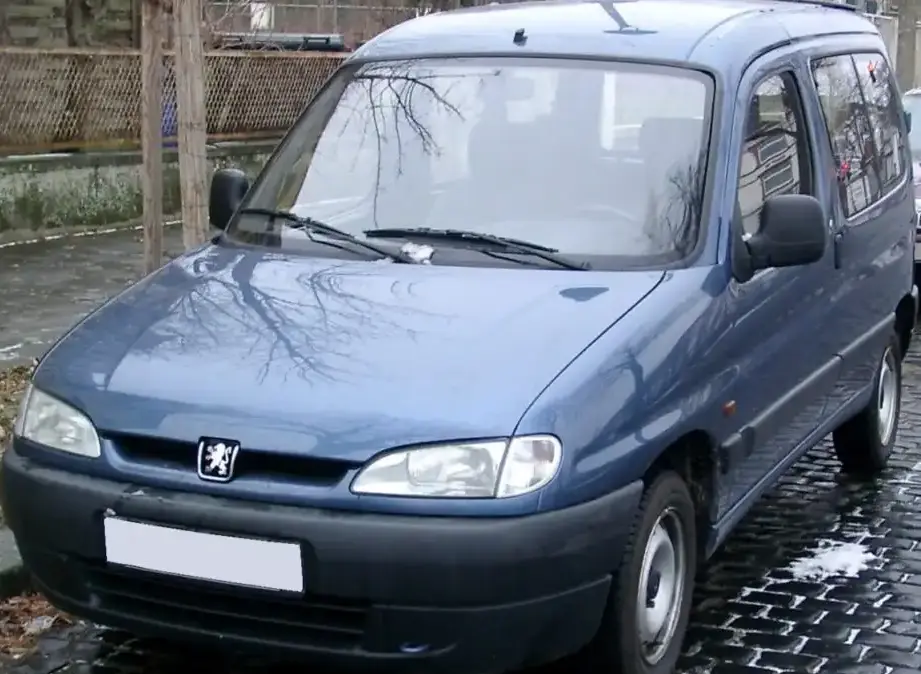
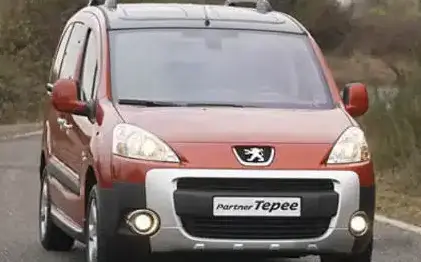
The Peugeot Partner I (Phase II), specifically the 1.6 HDi 90 horsepower variant produced between 2006 and 2008, represents a popular choice within the compact van segment in Europe. Positioned as a workhorse vehicle, the Partner I served as Peugeot’s entry-level offering in the leisure activity and small business sectors. This Phase II update brought refinements to the original Partner design, focusing on improved efficiency and a more modern aesthetic. It falls within the first generation of the Partner, built on the shared Peugeot-Citroën platform, and was a key competitor to vehicles like the Renault Kangoo and Fiat Doblo.
Technical Specifications
| Brand | Peugeot |
| Model | Partner |
| Generation | Partner I (Phase II, 2002) |
| Type (Engine) | 1.6 HDi (90 Hp) |
| Start of production | 2006 |
| End of production | 2008 |
| Powertrain Architecture | Internal Combustion engine |
| Body type | Minivan |
| Seats | 5 |
| Doors | 5 |
| Fuel consumption (urban) | 6.7 l/100 km (35.1 US mpg, 42.2 UK mpg, 14.9 km/l) |
| Fuel consumption (extra urban) | 4.7 l/100 km (50 US mpg, 60.1 UK mpg, 21.3 km/l) |
| Fuel consumption (combined) | 5.4 l/100 km (43.6 US mpg, 52.3 UK mpg, 18.5 km/l) |
| Fuel Type | Diesel |
| Acceleration 0 – 100 km/h | 12.5 sec |
| Acceleration 0 – 62 mph | 12.5 sec |
| Acceleration 0 – 60 mph | 11.9 sec |
| Maximum speed | 160 km/h (99.42 mph) |
| Emission standard | Euro 4 |
| Weight-to-power ratio | 15.6 kg/Hp |
| Weight-to-torque ratio | 6.5 kg/Nm |
| Power | 90 Hp @ 4000 rpm |
| Power per litre | 57.7 Hp/l |
| Torque | 215 Nm @ 1750 rpm (158.58 lb.-ft. @ 1750 rpm) |
| Engine layout | Front, Transverse |
| Engine Model/Code | 9HX DV6BTED4 |
| Engine displacement | 1560 cm3 (95.2 cu. in.) |
| Number of cylinders | 4 |
| Engine configuration | Inline |
| Cylinder Bore | 75 mm (2.95 in.) |
| Piston Stroke | 88.3 mm (3.48 in.) |
| Compression ratio | 17.6:1 |
| Number of valves per cylinder | 4 |
| Fuel injection system | Diesel Commonrail |
| Engine aspiration | Turbocharger, Intercooler |
| Valvetrain | OHC |
| Engine oil capacity | 4 l (4.23 US qt | 3.52 UK qt) |
| Coolant capacity | 11 l (11.62 US qt | 9.68 UK qt) |
| Kerb Weight | 1407 kg (3101.9 lbs.) |
| Max. weight | 2040 kg (4497.43 lbs.) |
| Max load | 633 kg (1395.53 lbs.) |
| Trunk (boot) space – minimum | 625 l (22.07 cu. ft.) |
| Trunk (boot) space – maximum | 2800 l (98.88 cu. ft.) |
| Fuel tank capacity | 60 l (15.85 US gal | 13.2 UK gal) |
| Length | 4140 mm (162.99 in.) |
| Width | 1720 mm (67.72 in.) |
| Height | 1810 mm (71.26 in.) |
| Wheelbase | 2690 mm (105.91 in.) |
| Front track | 1420 mm (55.91 in.) |
| Rear track | 1440 mm (56.69 in.) |
| Drivetrain Architecture | Front wheel drive |
| Number of gears | 5 |
| Gearbox type | Manual transmission |
| Front brakes | Disc |
| Rear brakes | Drum |
| Assisting systems | ABS (Anti-lock braking system) |
| Tires size | 205/65 R15H |
| Wheel rims size | 15 |
INTRODUCTION
The Peugeot Partner I Phase II 1.6 HDi 90 hp model, launched in 2006, was a crucial variant within the Partner range. It represented a balance between affordability and practicality, targeting small business owners, tradespeople, and families needing a versatile vehicle. Built on the shared Peugeot-Citroën platform (often referred to as the X28 platform), the Partner I competed directly with other compact vans like the Renault Kangoo, Citroën Berlingo (its sister vehicle), and Fiat Doblo. The Phase II facelift brought subtle styling changes and, importantly, the introduction of more efficient and refined HDi diesel engines, including this 1.6-liter unit.
Powertrain & Engine Architecture
At the heart of this Partner variant lies the 9HX DV6BTED4 engine, a 1.6-liter inline-four cylinder diesel engine. This engine is a member of the DW/DV family of engines developed by PSA Peugeot Citroën. It utilizes a common rail direct injection system, delivering fuel at extremely high pressure for improved combustion efficiency and reduced emissions. The turbocharger, coupled with an intercooler, forces more air into the engine, boosting power output. The engine features an overhead camshaft (OHC) valvetrain with four valves per cylinder. The 90 horsepower output is achieved at 4000 rpm, while peak torque of 215 Nm (158.58 lb-ft) is available from just 1750 rpm, providing good low-end grunt for hauling loads. This specific model was paired with a five-speed manual transmission, chosen for its simplicity and fuel efficiency. The transmission’s gear ratios were optimized for both urban driving and highway cruising, though it wasn’t designed for particularly sporty performance.
Driving Characteristics
The 1.6 HDi 90 hp Partner offers a practical, rather than exhilarating, driving experience. Acceleration from 0-60 mph takes around 11.9 seconds, and top speed is limited to 99.42 mph. The engine’s strong low-end torque makes it well-suited for carrying loads, and the five-speed gearbox allows for comfortable cruising at highway speeds. Compared to higher-output versions of the Partner (such as those with the 1.6 HDi 110 hp engine), this variant feels noticeably less powerful, especially when fully loaded. The manual transmission provides more driver control than the optional automated manual gearbox available on some models. The suspension is tuned for comfort and load-carrying capacity, resulting in a slightly softer ride than some of its competitors. Steering is light and easy, making it maneuverable in urban environments.
Equipment & Trim Levels
The Partner I Phase II 1.6 HDi 90 hp typically came with a fairly basic level of equipment, reflecting its positioning as a work-focused vehicle. Standard features generally included power steering, a driver’s airbag, and central locking. Interior upholstery was typically hard-wearing cloth. Optional extras included air conditioning, electric windows, and a radio/CD player. Higher trim levels, if selected, might add features like body-colored bumpers and door mirrors. The dashboard layout was functional and straightforward, prioritizing practicality over aesthetics. The rear seats could be folded or removed to maximize cargo space.
Chassis & Braking
The Partner I utilized a front-wheel-drive layout with a MacPherson strut front suspension and a torsion beam rear suspension. This setup provided a good balance between ride comfort and handling. Braking duties were handled by disc brakes at the front and drum brakes at the rear. Anti-lock Braking System (ABS) was standard, enhancing safety during emergency braking. The suspension was designed to cope with varying load weights, ensuring stable handling even when the vehicle was fully loaded. The 15-inch wheels were typically fitted with 205/65 R15 tires.
Market Reception & Comparison
The Peugeot Partner I 1.6 HDi 90 hp was generally well-received by critics as a practical and economical van. Its fuel economy – around 43.6 US mpg combined – was a major selling point. Compared to the more powerful 1.6 HDi 110 hp version, the 90 hp model offered lower running costs but sacrificed some performance. The 1.9-liter diesel options, while offering more power, were less fuel-efficient and often more expensive to maintain. The Partner’s versatility and spacious interior were also praised. However, some critics noted the relatively basic interior and the lack of refinement compared to some of its competitors.
Legacy
The 9HX DV6BTED4 engine proved to be a relatively reliable unit, although, like all diesel engines, it is susceptible to issues related to the diesel particulate filter (DPF) if not properly maintained. The Partner I 1.6 HDi 90 hp remains a popular choice in the used car market, particularly among those seeking an affordable and practical van. Its simplicity and relatively low maintenance costs make it an attractive option for small businesses and individuals. While newer vans offer more advanced features and improved fuel economy, the Partner I continues to provide a dependable and versatile transportation solution.