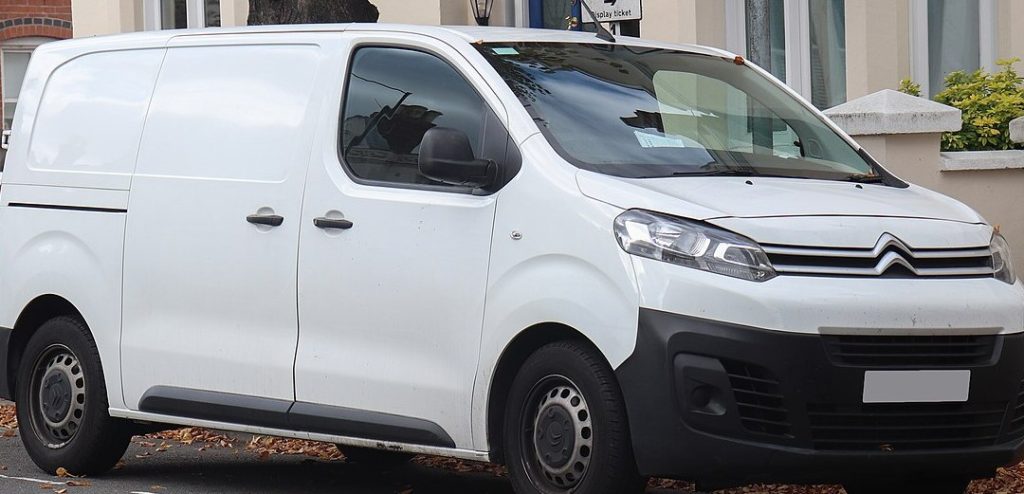
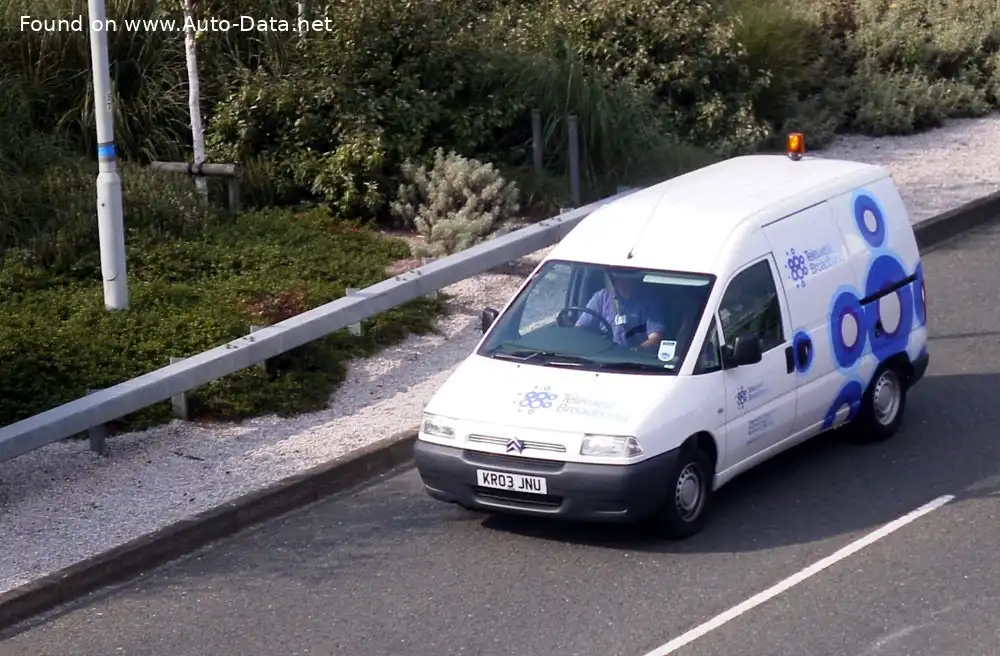
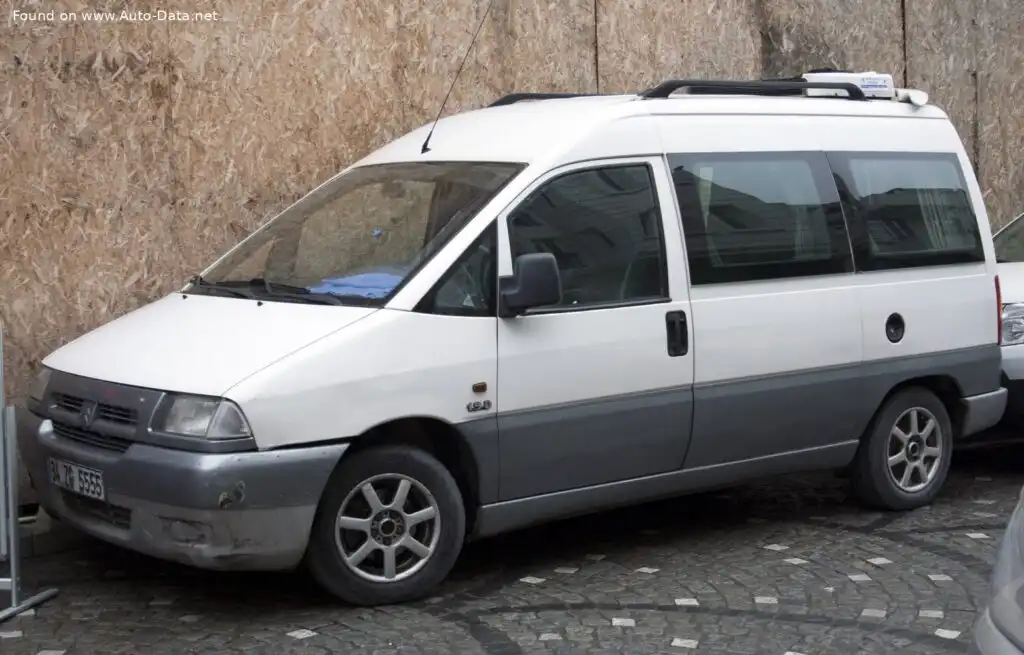
The Citroen Jumpy I (facelifted in 2004) 1.9D, producing 70 horsepower, represents an entry-level variant within the first generation of the Jumpy line. Introduced as part of the post-2004 refresh, this version of the Jumpy catered to commercial users and those seeking a basic, economical workhorse. It occupied the lower end of the Jumpy spectrum, positioned below more powerful diesel options and aimed at buyers prioritizing fuel efficiency and low running costs over outright performance. Production of this specific configuration ran from 2004 to 2006.
Technical Specifications
| Brand | Citroen |
| Model | Jumpy |
| Generation | Jumpy I (facelift 2004) |
| Type (Engine) | 1.9D (70 Hp) |
| Start of production | 2004 |
| End of production | 2006 |
| Powertrain Architecture | Internal Combustion engine |
| Body type | Minivan |
| Seats | 2 |
| Doors | 4 |
| Fuel consumption (urban) | 10.1 l/100 km (23.3 US mpg, 28 UK mpg, 9.9 km/l) |
| Fuel consumption (extra urban) | 6.6 l/100 km (35.6 US mpg, 42.8 UK mpg, 15.2 km/l) |
| Fuel consumption (combined) | 7.9 l/100 km (29.8 US mpg, 35.8 UK mpg, 12.7 km/l) |
| CO2 emissions | 211 g/km |
| Fuel Type | Diesel |
| Acceleration 0 – 100 km/h | 27.5 sec |
| Acceleration 0 – 62 mph | 27.5 sec |
| Acceleration 0 – 60 mph | 26.1 sec |
| Maximum speed | 138 km/h (85.75 mph) |
| Weight-to-power ratio | 19.3 kg/Hp, 51.7 Hp/tonne |
| Weight-to-torque ratio | 10.8 kg/Nm, 92.3 Nm/tonne |
| Power | 70 Hp @ 4600 rpm |
| Power per litre | 37.5 Hp/l |
| Torque | 125 Nm @ 2500 rpm (92.2 lb.-ft. @ 2500 rpm) |
| Engine layout | Front, Transverse |
| Engine Model/Code | WJY DW8B |
| Engine displacement | 1868 cm3 (113.99 cu. in.) |
| Number of cylinders | 4 |
| Engine configuration | Inline |
| Cylinder Bore | 82.2 mm (3.24 in.) |
| Piston Stroke | 88 mm (3.46 in.) |
| Number of valves per cylinder | 2 |
| Fuel injection system | Precombustion chamber injection |
| Engine aspiration | Naturally aspirated engine |
| Valvetrain | SOHC |
| Engine oil capacity | 4.5 l (4.76 US qt | 3.96 UK qt) |
| Coolant | 8.5 l (8.98 US qt | 7.48 UK qt) |
| Kerb Weight | 1354 kg (2985.06 lbs.) |
| Max. weight | 2205 kg (4861.19 lbs.) |
| Max load | 851 kg (1876.13 lbs.) |
| Trunk (boot) space – maximum | 4000 l (141.26 cu. ft.) |
| Fuel tank capacity | 80 l (21.13 US gal | 17.6 UK gal) |
| Max. roof load | 100 kg (220.46 lbs.) |
| Permitted trailer load with brakes (8%) | 1600 kg (3527.4 lbs.) |
| Permitted trailer load with brakes (12%) | 1100 kg (2425.08 lbs.) |
| Permitted trailer load without brakes | 750 kg (1653.47 lbs.) |
| Permitted towbar download | 60 kg (132.28 lbs.) |
| Length | 4522 mm (178.03 in.) |
| Width | 1844 mm (72.6 in.) |
| Height | 1936 mm (76.22 in.) |
| Wheelbase | 2824 mm (111.18 in.) |
| Front track | 1540 mm (60.63 in.) |
| Rear (Back) track | 1540 mm (60.63 in.) |
| Front overhang | 919 mm (36.18 in.) |
| Rear overhang | 779 mm (30.67 in.) |
| Drivetrain Architecture | The Internal combustion engine (ICE) drives the front wheels of the vehicle. |
| Drive wheel | Front wheel drive |
| Number of gears and type of gearbox | 5 gears, manual transmission |
| Front suspension | Independent, type McPherson with coil spring and anti-roll bar |
| Rear suspension | Semi-dependent beam with stabilizer lateral stability, Coil spring |
| Front brakes | Ventilated discs |
| Rear brakes | Drum |
| Assisting systems | ABS (Anti-lock braking system) |
| Steering type | Steering rack and pinion |
| Power steering | Hydraulic Steering |
| Tires size | 195/70 R14 |
| Wheel rims size | 6J x 14 |
Powertrain & Engine Architecture
The 1.9D engine, identified by the WJY/DW8B engine code, is a naturally aspirated, inline-four cylinder diesel engine. This engine utilizes a precombustion chamber injection system, a common technology for diesel engines of this era. This system involves injecting fuel into a precombustion chamber, where it partially ignites, then ignites the main combustion chamber. The DW8 engine family is known for its robustness and simplicity. The 70 horsepower output is achieved at 4600 rpm, while peak torque of 125 Nm (92.2 lb-ft) is delivered at 2500 rpm. The engine’s relatively low compression ratio and basic mechanical design contribute to its durability, but also limit its performance potential. The Jumpy 1.9D was typically paired with a five-speed manual transmission, optimized for fuel economy rather than rapid acceleration.
Driving Characteristics
The Jumpy 1.9D with the five-speed manual transmission offers a utilitarian driving experience. Acceleration is slow, with a 0-60 mph time of around 26.1 seconds. The engine’s torque delivery is relatively flat, providing adequate pulling power for loaded operation, but lacking the responsiveness of more powerful engines. The gear ratios are spaced to prioritize fuel efficiency, meaning the engine often needs to be worked hard, especially when climbing hills or carrying a full load. Compared to higher-output versions of the Jumpy, such as those with the 2.0HDi engine, the 1.9D feels significantly underpowered. However, its simplicity and lower stress levels contribute to its longevity.
Equipment & Trim Levels
The 1.9D Jumpy was typically offered in a basic trim level, focused on functionality. Standard equipment generally included power steering, a driver’s airbag, and basic instrumentation. Interior upholstery was typically hard-wearing vinyl or cloth. Options were limited, but could include upgrades to the audio system, electric windows, and central locking. The emphasis was on providing a practical and affordable van for commercial use, rather than luxury or comfort.
Chassis & Braking
The Jumpy I utilizes a McPherson strut front suspension and a semi-independent beam rear suspension. This setup provides a reasonable balance between ride comfort and load-carrying capacity. The front brakes are ventilated discs, while the rear brakes are drums. ABS (Anti-lock Braking System) was standard, enhancing safety during emergency braking. The suspension components are robustly built to withstand the demands of commercial use. The relatively simple braking system is adequate for the vehicle’s weight and performance, but lacks the sophistication of more advanced systems.
Market Reception & Comparison
The Citroen Jumpy 1.9D was well-received in the commercial vehicle market as a cost-effective and reliable option. Critics acknowledged its lack of performance but praised its fuel efficiency and low running costs. Compared to other vans in its class, such as the Renault Kangoo or the Volkswagen Caddy, the Jumpy offered a larger cargo capacity and a more robust construction. However, it lacked the refinement and features of some of its competitors. The 1.9D variant was particularly popular with businesses and individuals who prioritized practicality and affordability over driving pleasure.
Legacy
The 1.9D engine, while not known for its performance, has proven to be remarkably durable. Many examples are still in service today, testament to its robust design and relatively simple mechanicals. The Jumpy I 1.9D remains a popular choice in the used commercial vehicle market, particularly for those seeking an affordable and reliable workhorse. Maintenance costs are generally low, and spare parts are readily available. While it may not offer the same level of comfort or performance as more modern vans, the Jumpy 1.9D continues to provide a practical and economical solution for a wide range of commercial applications.