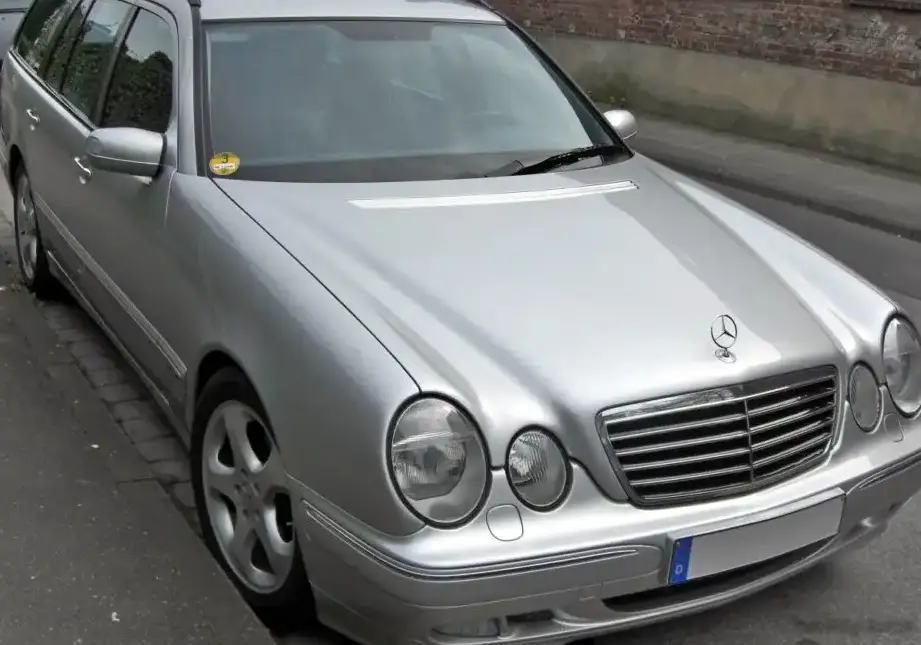
The Mercedes-Benz E-Class T-modell (S210) facelift, produced from 1999 to 2002, represented a significant evolution of the W210 series, offering a refined blend of luxury, practicality, and performance in a station wagon (estate) body style. The E 240 2.6 V6 variant, equipped with a 2.6-liter V6 engine producing 170 horsepower, occupied a middle ground within the lineup, appealing to buyers seeking a balance between economy and capability. This model aimed to provide a more accessible entry point into the E-Class range while still delivering the brand’s hallmark comfort and build quality. It was positioned below the more powerful E 320 and E 430 models, and above the four-cylinder E 200 and E 220 variants.
Technical Specifications
| Brand | Mercedes-Benz |
| Model | E-Class |
| Generation | E-Class T-modell (S210, facelift 1999) |
| Type (Engine) | E 240 2.6 V6 (170 Hp) |
| Start of production | November, 1999 |
| End of production | December, 2002 |
| Powertrain Architecture | Internal Combustion engine |
| Body type | Station wagon (estate) |
| Seats | 5 |
| Doors | 5 |
| Fuel consumption (urban) | 16.3 l/100 km (14.4 US mpg, 17.3 UK mpg, 6.1 km/l) |
| Fuel consumption (extra urban) | 8.5 l/100 km (27.7 US mpg, 33.2 UK mpg, 11.8 km/l) |
| Fuel consumption (combined) | 11.2 l/100 km (21 US mpg, 25.2 UK mpg, 8.9 km/l) |
| Fuel Type | Petrol (Gasoline) |
| Acceleration 0 – 100 km/h | 9.5 sec |
| Acceleration 0 – 62 mph | 9.5 sec |
| Acceleration 0 – 60 mph | 9 sec |
| Maximum speed | 219 km/h (136.08 mph) |
| Weight-to-power ratio | 9.9 kg/Hp, 101.2 Hp/tonne |
| Weight-to-torque ratio | 7 kg/Nm, 142.9 Nm/tonne |
| Power | 170 Hp @ 5500 rpm |
| Power per litre | 65.5 Hp/l |
| Torque | 240 Nm @ 4500 rpm (177.01 lb.-ft. @ 4500 rpm) |
| Engine layout | Front, Longitudinal |
| Engine Model/Code | M 112 E 26 / 112.914 |
| Engine displacement | 2597 cm3 (158.48 cu. in.) |
| Number of cylinders | 6 |
| Engine configuration | V-engine |
| Cylinder Bore | 89.9 mm (3.54 in.) |
| Piston Stroke | 68.2 mm (2.69 in.) |
| Compression ratio | 10.5:1 |
| Number of valves per cylinder | 3 |
| Fuel injection system | Multi-port manifold injection |
| Engine aspiration | Naturally aspirated engine |
| Valvetrain | SOHC |
| Engine oil capacity | 8 l (8.45 US qt | 7.04 UK qt) |
| Coolant | 10 l (10.57 US qt | 8.8 UK qt) |
| Kerb Weight | 1680 kg (3703.77 lbs.) |
| Max. weight | 2260 kg (4982.45 lbs.) |
| Max load | 580 kg (1278.68 lbs.) |
| Trunk (boot) space – minimum | 600 l (21.19 cu. ft.) |
| Trunk (boot) space – maximum | 1920 l (67.8 cu. ft.) |
| Fuel tank capacity | 70 l (18.49 US gal | 15.4 UK gal) |
| Length | 4839 mm (190.51 in.) |
| Width | 1799 mm (70.83 in.) |
| Height | 1505 mm (59.25 in.) |
| Wheelbase | 2833 mm (111.54 in.) |
| Front track | 1542 mm (60.71 in.) |
| Rear (Back) track | 1546 mm (60.87 in.) |
| Drag coefficient (Cd) | 0.31 |
| Drivetrain Architecture | Rear wheel drive |
| Drive wheel | Rear wheel drive |
| Number of gears and type of gearbox | 6 gears, manual transmission |
| Front suspension | Double wishbone |
| Rear suspension | Hydro-pneumatic element, Independent multi-link suspension |
| Front brakes | Ventilated discs |
| Rear brakes | Disc |
| Assisting systems | ABS (Anti-lock braking system) |
| Steering type | Steering rack and pinion |
| Power steering | Hydraulic Steering |
| Tires size | 205/65 R15 |
| Wheel rims size | 7J x 15 |
INTRODUCTION
The E 240 2.6 V6 T-modell, introduced as part of the S210 facelift in late 1999, built upon the foundation of the preceding W210 generation. The facelift brought with it revised styling, improved safety features, and refinements to the interior. The S210 platform was known for its spaciousness, comfortable ride, and robust build quality. This variant aimed to offer a compelling package for families and individuals needing a versatile vehicle without sacrificing the prestige associated with the Mercedes-Benz brand. It represented a sweet spot in the lineup, balancing performance, fuel efficiency, and price.
Powertrain & Engine Architecture
At the heart of the E 240 T-modell lay the M112 E 26 engine, a 2.6-liter naturally aspirated V6. This engine, designated with the code 112.914, was a significant departure from the inline-six engines previously used in the E-Class. The M112 featured all-aluminum construction, three valves per cylinder (two intake, one exhaust), and a single overhead camshaft (SOHC) design. Fuel delivery was handled by a multi-port fuel injection system, ensuring precise fuel metering for optimal combustion. The engine produced 170 horsepower at 5500 rpm and 240 Nm (177 lb-ft) of torque at 4500 rpm. The engine was paired with a 6-speed manual transmission, offering precise gear changes and contributing to a more engaging driving experience. While an automatic transmission was available, the manual was favored by enthusiasts for its responsiveness.
Driving Characteristics
The E 240 2.6 V6 T-modell offered a comfortable and refined driving experience. While not overtly sporty, the engine provided adequate power for everyday driving and highway cruising. Acceleration from 0 to 60 mph took approximately 9 seconds, and the car could reach a top speed of 219 km/h (136 mph). The manual transmission allowed for greater control over the engine’s power band, making it feel more responsive than the automatic versions. The gear ratios were well-chosen, providing good acceleration in lower gears and relaxed cruising at highway speeds. Compared to the more powerful E 320, the E 240 felt less urgent, but it offered a more fuel-efficient and affordable alternative. The suspension, tuned for comfort, absorbed bumps and imperfections in the road effectively, providing a smooth and stable ride.
Equipment & Trim Levels
The E 240 T-modell came standard with a comprehensive list of features, including automatic climate control, power windows and locks, a multi-function steering wheel, and a high-quality audio system. Interior upholstery typically consisted of cloth or leatherette, with leather being an optional upgrade. The dashboard featured a classic Mercedes-Benz design, with wood trim and analog gauges. Optional extras included a sunroof, navigation system, heated seats, and upgraded audio systems. The T-modell also benefited from the estate’s practical features, such as a large cargo area and folding rear seats, offering exceptional versatility.
Chassis & Braking
The S210 chassis featured a double wishbone front suspension and an independent multi-link rear suspension, providing a comfortable and controlled ride. The E 240 was equipped with ventilated disc brakes at the front and solid discs at the rear. Anti-lock braking system (ABS) was standard, enhancing safety and stability during braking. The steering was a rack-and-pinion system with hydraulic power assistance, providing precise and responsive steering feel. The standard tire size was 205/65 R15, mounted on 7J x 15 alloy wheels.
Market Reception & Comparison
The E 240 2.6 V6 T-modell was generally well-received by automotive critics. It was praised for its comfortable ride, spacious interior, and refined driving experience. However, some critics noted that the engine lacked the outright performance of the larger V6 and V8 engines available in the E-Class range. Compared to the E 320, the E 240 offered better fuel economy, with combined fuel consumption of around 11.2 l/100 km (21 US mpg). The E 240 also tended to be more reliable than some of the more complex and technologically advanced models in the lineup. It appealed to buyers who prioritized comfort, practicality, and reliability over outright performance.
Legacy
The M112 engine family, including the 2.6-liter version found in the E 240, proved to be remarkably durable and reliable. With proper maintenance, these engines can easily exceed 200,000 miles. Today, the E 240 T-modell is a popular choice among enthusiasts and collectors seeking a classic Mercedes-Benz estate car. The combination of its comfortable ride, spacious interior, and reliable powertrain makes it a practical and enjoyable vehicle to own. While parts availability can be a concern for older models, the M112 engine is well-supported by aftermarket suppliers. The E 240 T-modell represents a high point in Mercedes-Benz estate car design, offering a blend of luxury, practicality, and enduring quality.