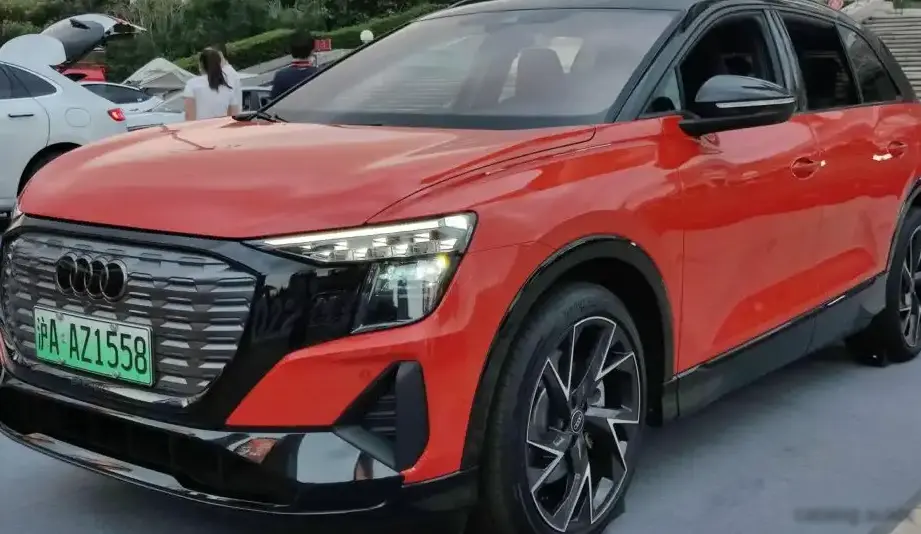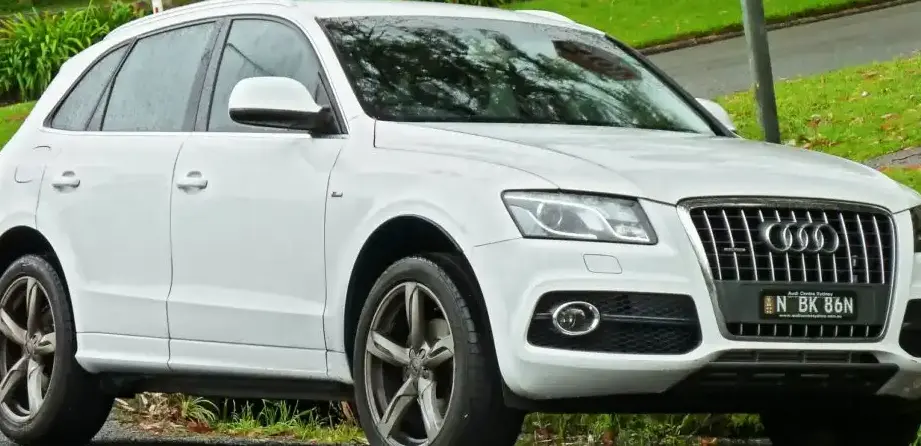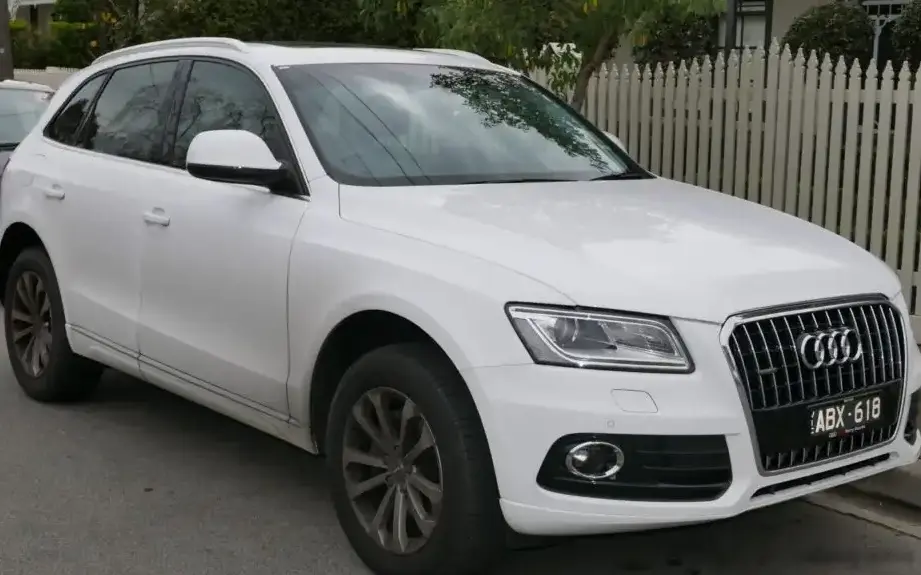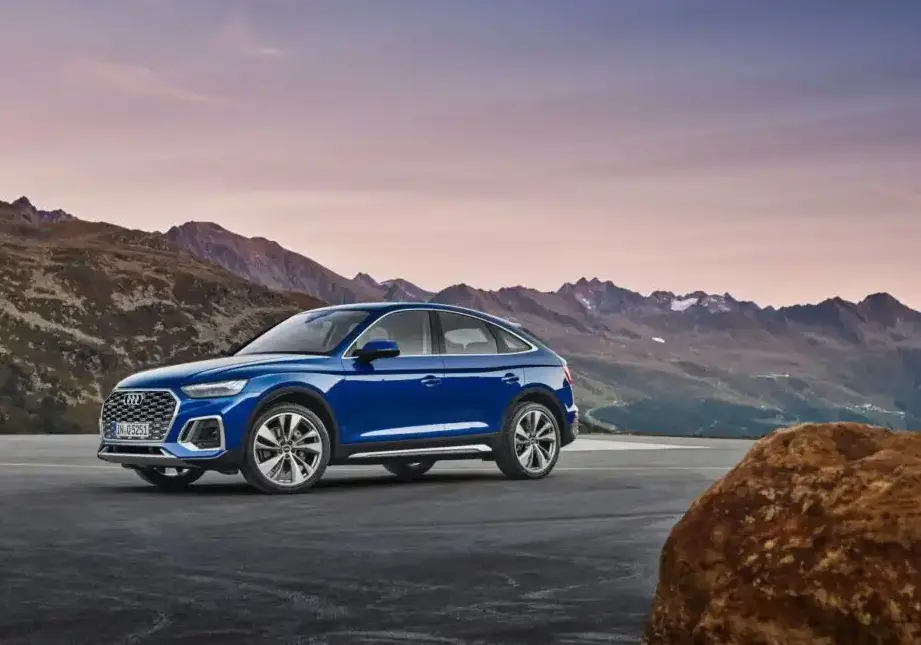
The Audi Q5 II Sportback 40 TFSI, produced from December 2021 through November 2024, represents a compelling blend of practicality, performance, and efficiency within the Audi Q5 lineup. This variant, part of the FY facelift generation, positions itself as a mid-range offering, bridging the gap between the entry-level models and the more potent performance-oriented trims. It features a 2.0-liter turbocharged four-cylinder engine paired with a mild hybrid system and Audi’s renowned quattro ultra all-wheel-drive system, channeled through a seven-speed S tronic dual-clutch transmission. The Sportback body style, characterized by its sloping roofline, adds a touch of coupe-like elegance to the Q5’s traditionally SUV form.
Technical Specifications
| Brand | Audi |
| Model | Q5 |
| Generation | Q5 II Sportback (FY, facelift 2020) |
| Type (Engine) | 40 TFSI (204 Hp) Mild Hybrid quattro ultra S tronic |
| Start of production | December, 2021 |
| End of production | November, 2024 |
| Powertrain Architecture | MHEV (Mild Hybrid Electric Vehicle) |
| Body type | SUV |
| Seats | 5 |
| Doors | 5 |
| Combined fuel consumption (WLTP) | 7.6-8.6 l/100 km (30.9 – 27.4 US mpg) |
| CO2 emissions (WLTP) | 173-196 g/km |
| Fuel consumption (urban – NEDC) | 7.9-8.2 l/100 km (29.8 – 28.7 US mpg) |
| Fuel consumption (extra urban – NEDC) | 5.8-6.2 l/100 km (40.6 – 37.9 US mpg) |
| Fuel consumption (combined – NEDC) | 6.6-6.9 l/100 km (35.6 – 34.1 US mpg) |
| CO2 emissions (NEDC) | 150-158 g/km |
| Fuel Type | Petrol (Gasoline) |
| Acceleration 0 – 100 km/h | 7.3 sec |
| Acceleration 0 – 62 mph | 7.3 sec |
| Acceleration 0 – 60 mph | 6.9 sec |
| Maximum speed | 223 km/h (138.57 mph) |
| Emission standard | Euro 6d-ISC-FCM |
| Weight-to-power ratio | 8.7 kg/Hp |
| Weight-to-torque ratio | 5.5 kg/Nm |
| Power | 204 Hp @ 4475-6000 rpm |
| Torque | 320 Nm @ 1450-4375 rpm (236.02 lb.-ft.) |
| Engine layout | Front, Longitudinal |
| Engine displacement | 1984 cm3 (121.07 cu. in.) |
| Number of cylinders | 4 |
| Engine configuration | Inline |
| Cylinder Bore | 82.5 mm (3.25 in.) |
| Piston Stroke | 92.8 mm (3.65 in.) |
| Number of valves per cylinder | 4 |
| Fuel injection system | Direct injection |
| Engine aspiration | Turbocharger, Intercooler |
| Valvetrain | DOHC |
| Kerb Weight | 1770 kg (3902.18 lbs.) |
| Max. weight | 2440 kg (5379.28 lbs.) |
| Max load | 670 kg (1477.1 lbs.) |
| Trunk (boot) space – minimum | 510 l (18.01 cu. ft.) |
| Trunk (boot) space – maximum | 1480 l (52.27 cu. ft.) |
| Fuel tank capacity | 70 l (18.49 US gal) |
| Max. roof load | 75 kg (165.35 lbs.) |
| Permitted trailer load with brakes (12%) | 2400 kg (5291.09 lbs.) |
| Permitted trailer load without brakes | 750 kg (1653.47 lbs.) |
| Permitted towbar download | 100 kg (220.46 lbs.) |
| Length | 4689 mm (184.61 in.) |
| Width | 1893 mm (74.53 in.) |
| Width including mirrors | 2140 mm (84.25 in.) |
| Height | 1660 mm (65.35 in.) |
| Wheelbase | 2819 mm (110.98 in.) |
| Front track | 1616 mm (63.62 in.) |
| Rear track | 1609 mm (63.35 in.) |
| Front overhang | 910 mm (35.83 in.) |
| Rear overhang | 960 mm (37.8 in.) |
| Minimum turning circle | 11.8 m (38.71 ft.) |
| Drivetrain Architecture | All wheel drive (4×4). MHEV. |
| Number of gears | 7 |
| Type of gearbox | Automatic transmission S tronic |
| Front suspension | Independent multi-link suspension, Transverse stabilizer |
| Rear suspension | Independent multi-link suspension, Transverse stabilizer |
| Front brakes | Ventilated discs |
| Rear brakes | Ventilated discs |
| Assisting systems | ABS (Anti-lock braking system) |
| Steering type | Steering rack and pinion |
| Power steering | Electric Steering |
| Tires size | 235/65 R17; 235/60 R18; 235/55 R19; 255/45 R20; 255/40 R21 |
| Wheel rims size | 8J x 17; 8J x 18; 8J x 19; 8J x 20; 8J x 21 |
Powertrain & Engine Architecture
At the heart of the Q5 40 TFSI Sportback lies the EA888 2.0-liter turbocharged four-cylinder engine. Specifically, this engine utilizes direct fuel injection and a sophisticated turbocharging system to deliver a balance of power and efficiency. The engine code is typically associated with variations of the EA888 family. The mild hybrid system, a 48-volt system, incorporates a belt starter generator (BSG) that enables features like extended engine-off coasting, regenerative braking, and a smoother start-stop function. This contributes to improved fuel economy and reduced emissions. The seven-speed S tronic dual-clutch transmission provides rapid and seamless gear changes, enhancing both performance and driving comfort. The transmission’s quick shifts are a key component of the Q5’s responsive feel.
Driving Characteristics
The 204 horsepower and 320 Nm (236 lb-ft) of torque produced by the 40 TFSI powertrain provide adequate performance for everyday driving and highway cruising. Acceleration from 0 to 60 mph takes approximately 6.9 seconds. While not as exhilarating as the higher-output variants, the 40 TFSI offers a smooth and refined driving experience. The S tronic transmission is well-tuned, providing quick and decisive shifts. The quattro ultra all-wheel-drive system intelligently distributes torque between the front and rear axles as needed, enhancing traction and stability in various driving conditions. Compared to the manual transmission options, the S tronic offers greater convenience, particularly in urban environments. The power delivery is linear and predictable, making it easy to modulate throttle inputs.
Equipment & Trim Levels
The Q5 40 TFSI Sportback typically came standard with features such as Audi’s MMI touch response infotainment system with a 10.1-inch touchscreen display, Audi virtual cockpit, leather upholstery, three-zone automatic climate control, and a suite of advanced driver-assistance systems including lane departure warning and forward collision warning. Optional extras included features like a panoramic sunroof, adaptive cruise control, a premium sound system, and various interior trim upgrades. The Sportback trim level itself adds a more stylish and dynamic appearance with its sloping roofline and unique rear design.
Chassis & Braking
The Q5 II Sportback features a sophisticated chassis design with independent multi-link suspension at both the front and rear axles. This setup provides a comfortable ride quality while maintaining good handling characteristics. The suspension is tuned to balance comfort and control, offering a composed ride even on uneven surfaces. Braking duties are handled by ventilated discs on all four wheels, providing ample stopping power. The anti-lock braking system (ABS) and electronic stability control (ESC) further enhance safety and stability.
Market Reception & Comparison
The Audi Q5 40 TFSI Sportback was generally well-received by automotive critics. It was praised for its comfortable ride, refined interior, and efficient powertrain. Compared to the Q5 45 TFSI (which offered more power), the 40 TFSI provided a more affordable entry point into the Q5 lineup without sacrificing too much in terms of performance. Fuel economy was also a strong point, with the mild hybrid system contributing to lower emissions and improved MPG figures. The Q5 Sportback competed with other luxury compact SUVs such as the BMW X3, Mercedes-Benz GLC Coupe, and Acura RDX.
Legacy
The EA888 engine family, including the 2.0-liter turbocharged unit found in the Q5 40 TFSI, has a reputation for reliability when properly maintained. The S tronic transmission is also generally durable, although regular servicing is crucial. As a used car, the Q5 40 TFSI Sportback represents a good value proposition, offering a blend of luxury, practicality, and efficiency. The mild hybrid system adds a layer of future-proofing, and the quattro all-wheel-drive system provides confidence in all weather conditions. However, potential buyers should be aware of the importance of following the manufacturer’s recommended maintenance schedule to ensure long-term reliability.