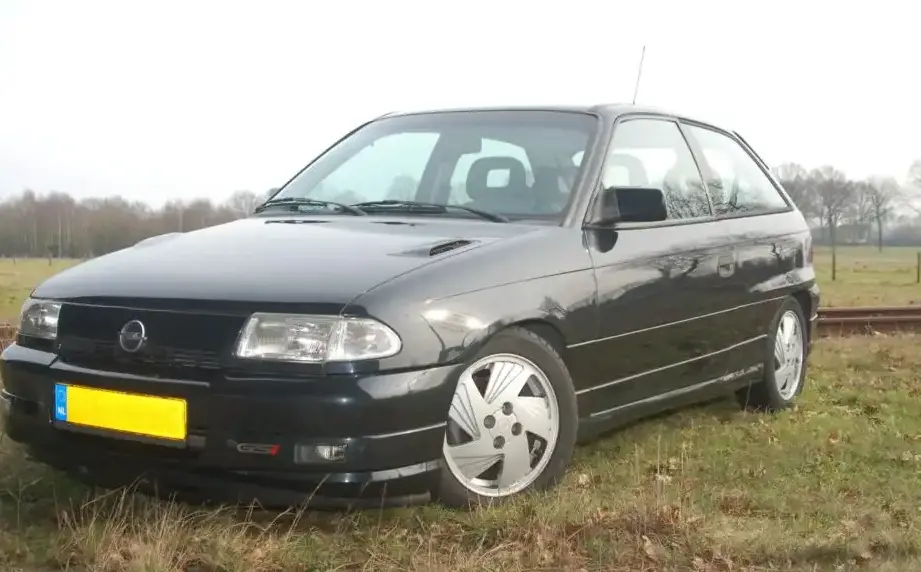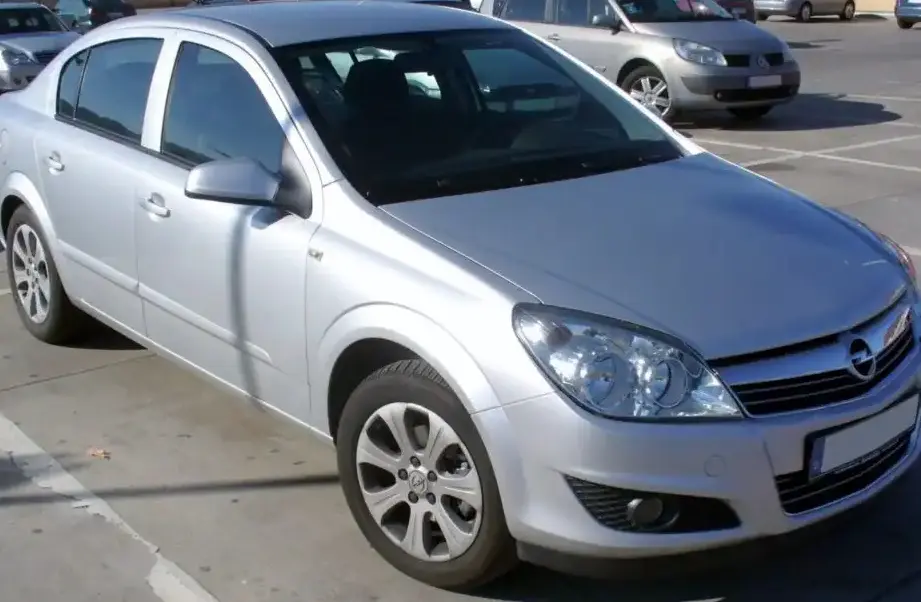
The Opel Astra H Sedan 1.6i 16V, produced from 2007 to 2010, represented a key entry point into the Astra H Sedan range for European buyers. Positioned as a practical and affordable family car, this variant offered a balance between fuel efficiency and acceptable performance. It was part of the broader Astra H generation (2004-2009), which saw Opel aiming to improve build quality and offer a more refined driving experience compared to its predecessors. The 1.6i 16V model occupied the lower-mid range of the sedan lineup, slotting below the more powerful 1.8 and 2.0-liter options, and above the base 1.4-liter engine.
Technical Specifications
| Brand | Opel |
| Model | Astra |
| Generation | Astra H Sedan |
| Type (Engine) | 1.6i 16V (115 Hp) |
| Start of production | 2007 |
| End of production | 2010 |
| Powertrain Architecture | Internal Combustion engine |
| Body type | Sedan |
| Seats | 5 |
| Doors | 4 |
| Fuel consumption (urban) | 8.8 – 8.9 l/100 km (26.7 – 26.4 US mpg) |
| Fuel consumption (extra urban) | 5.3 – 5.4 l/100 km (44.4 – 43.6 US mpg) |
| Fuel consumption (combined) | 6.6 – 6.7 l/100 km (35.6 – 35.1 US mpg) |
| CO2 emissions | 158 – 159 g/km |
| Fuel Type | Petrol (Gasoline) |
| Acceleration 0 – 100 km/h | 11.7 sec |
| Acceleration 0 – 62 mph | 11.7 sec |
| Acceleration 0 – 60 mph | 11.1 sec |
| Maximum speed | 191 km/h (118.68 mph) |
| Emission standard | Euro 4 |
| Weight-to-power ratio | 10.7 kg/Hp |
| Weight-to-torque ratio | 7.9 kg/Nm |
| Power | 115 Hp @ 6000 rpm |
| Torque | 155 Nm @ 4000 rpm (114.32 lb.-ft. @ 4000 rpm) |
| Engine layout | Front, Transverse |
| Engine Model/Code | Z16XER |
| Engine displacement | 1598 cm3 (97.52 cu. in.) |
| Number of cylinders | 4 |
| Engine configuration | Inline |
| Cylinder Bore | 79 mm (3.11 in.) |
| Piston Stroke | 81.5 mm (3.21 in.) |
| Compression ratio | 10.8:1 |
| Number of valves per cylinder | 4 |
| Fuel injection system | Multi-port manifold injection |
| Engine aspiration | Naturally aspirated engine |
| Valvetrain | DOHC |
| Engine oil capacity | 4.5 l (4.76 US qt | 3.96 UK qt) |
| Coolant capacity | 6.9 l (7.29 US qt | 6.07 UK qt) |
| Kerb Weight | 1231 kg (2713.89 lbs.) |
| Max. weight | 1750 kg (3858.09 lbs.) |
| Max load | 519 kg (1144.2 lbs.) |
| Trunk (boot) space – maximum | 490 l (17.3 cu. ft.) |
| Fuel tank capacity | 52 l (13.74 US gal | 11.44 UK gal) |
| Max. roof load | 75 kg (165.35 lbs.) |
| Length | 4587 mm (180.59 in.) |
| Width | 1753 mm (69.02 in.) |
| Width with mirrors folded | 1804 mm (71.02 in.) |
| Width including mirrors | 2033 mm (80.04 in.) |
| Height | 1458 mm (57.4 in.) |
| Wheelbase | 2703 mm (106.42 in.) |
| Front track | 1488 mm (58.58 in.) |
| Rear track | 1479 mm (58.23 in.) |
| Ride height (ground clearance) | 170 mm (6.69 in.) |
| Drag coefficient (Cd) | 0.30 |
| Minimum turning circle | 11.50 m (37.73 ft.) |
| Drivetrain Architecture | Front wheel drive |
| Number of gears | 5 |
| Gearbox type | Manual transmission |
| Front suspension | Independent, McPherson with coil spring and anti-roll bar |
| Rear suspension | Rigid axle suspension |
| Front brakes | Ventilated discs |
| Rear brakes | Disc |
| Assisting systems | ABS (Anti-lock braking system) |
| Steering type | Steering rack and pinion |
| Tires size | 195/65 R15 |
| Wheel rims size | 15 |
INTRODUCTION
The Opel Astra H Sedan 1.6i 16V (115 hp) was a significant offering in the compact sedan segment, particularly within the European market. Introduced in 2007 as part of the Astra H facelift, this variant aimed to provide a balance of affordability, practicality, and reasonable performance. The Astra H generation, built on the GM Delta platform, represented a step forward for Opel in terms of interior quality and overall refinement. The sedan body style was particularly popular in markets where traditional three-box designs were favored. This 1.6-liter engine and five-speed manual transmission combination was designed to appeal to buyers seeking a cost-effective and fuel-efficient vehicle for daily commuting and family use.
Powertrain & Engine Architecture
At the heart of the Astra H Sedan 1.6i 16V lies the Z16XER engine, a 1.6-liter inline-four cylinder gasoline engine. This engine is a member of Opel’s ‘Ecotec’ family, known for its focus on efficiency and reduced emissions. The Z16XER features a dual overhead camshaft (DOHC) valvetrain with four valves per cylinder, contributing to improved breathing and power delivery. Fuel is delivered via a multi-port fuel injection system, carefully calibrated for optimal combustion. The engine produces 115 horsepower at 6000 rpm and 155 Nm (114 lb-ft) of torque at 4000 rpm. The five-speed manual transmission was the standard offering, providing a relatively direct connection between the engine and the front wheels. The gear ratios were tuned for a balance of acceleration and fuel economy, prioritizing usability over outright performance.
Driving Characteristics
The driving experience in the Astra H Sedan 1.6i 16V is best described as competent and predictable. Acceleration from 0 to 60 mph takes around 11.1 seconds, and the top speed is approximately 118.68 mph. While not particularly sporty, the engine provides sufficient power for everyday driving situations, including highway merging and overtaking. The five-speed manual transmission offers a reasonably precise shift feel, although it lacks the refinement of more modern gearboxes. The suspension setup, featuring McPherson struts at the front and a rigid axle at the rear, provides a comfortable ride quality, absorbing most road imperfections effectively. However, it’s not designed for enthusiastic cornering, exhibiting noticeable body roll when pushed hard. Compared to the 1.8-liter and 2.0-liter variants, the 1.6i 16V feels noticeably less powerful, requiring more downshifting to maintain speed on inclines or during overtaking maneuvers.
Equipment & Trim Levels
The Astra H Sedan 1.6i 16V typically came equipped with a reasonable level of standard features. These included power windows, central locking, air conditioning, and an audio system with CD player. Safety features such as ABS (Anti-lock Braking System) and front airbags were also standard. Higher trim levels, such as the ‘Enjoy’ or ‘Cosmo’ variants, added features like alloy wheels, upgraded upholstery, cruise control, and a multi-function steering wheel. Optional extras included a sunroof, parking sensors, and a more advanced audio system. The interior design was functional and well-built, with a focus on ergonomics and practicality. Upholstery was typically cloth, with higher trims offering partial leather options.
Chassis & Braking
The Astra H Sedan’s chassis was designed to provide a balance of comfort and handling. The front suspension utilizes independent McPherson struts, while the rear employs a more cost-effective rigid axle setup. This configuration prioritizes ride comfort over ultimate handling precision. The braking system consists of ventilated discs at the front and solid discs at the rear, providing adequate stopping power for the vehicle’s weight and performance. ABS (Anti-lock Braking System) is standard, enhancing safety during emergency braking situations. The steering is a rack and pinion system, offering reasonable precision and feedback.
Market Reception & Comparison
The Astra H Sedan 1.6i 16V was generally well-received by automotive critics as a practical and affordable family car. It was praised for its fuel efficiency, comfortable ride, and reasonable price point. However, it was also criticized for its lack of outright performance and somewhat uninspired driving dynamics. Compared to the more powerful Astra variants, the 1.6i 16V offered significantly better fuel economy, making it a popular choice for budget-conscious buyers. Its fuel consumption figures of around 35.6 mpg combined were competitive within its class. Compared to rivals like the Ford Focus and Volkswagen Golf, the Astra H Sedan offered a similar level of practicality and affordability, but often lagged slightly behind in terms of driving engagement.
Legacy
The Opel Astra H Sedan 1.6i 16V has proven to be a relatively reliable vehicle in the long term, with the Z16XER engine generally considered durable and dependable. Common issues are typically related to age and mileage, such as wear and tear on suspension components and potential oil leaks. The availability of spare parts remains good, and maintenance costs are generally reasonable. In the used car market today, these Astras represent a very affordable option for buyers seeking a practical and economical sedan. While not a particularly exciting vehicle, its reliability and low running costs make it a sensible choice for those prioritizing value and dependability.