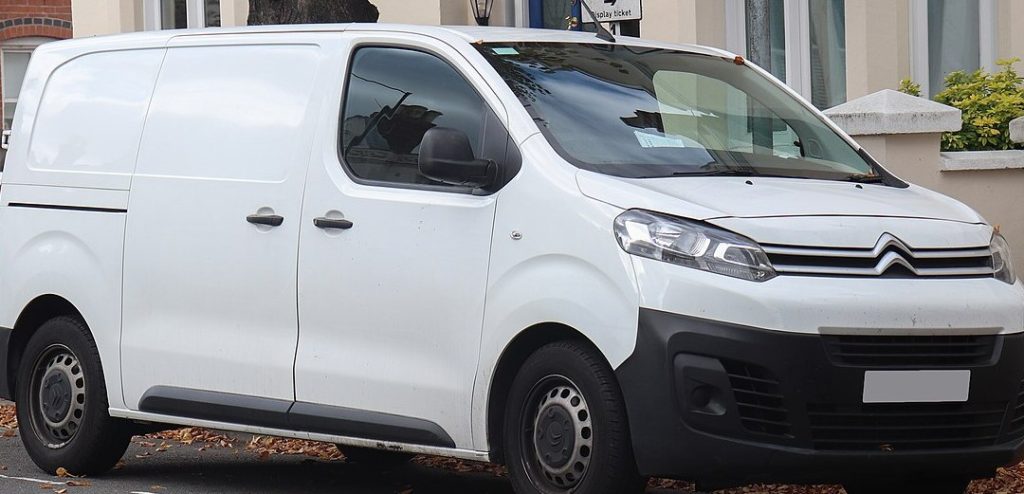
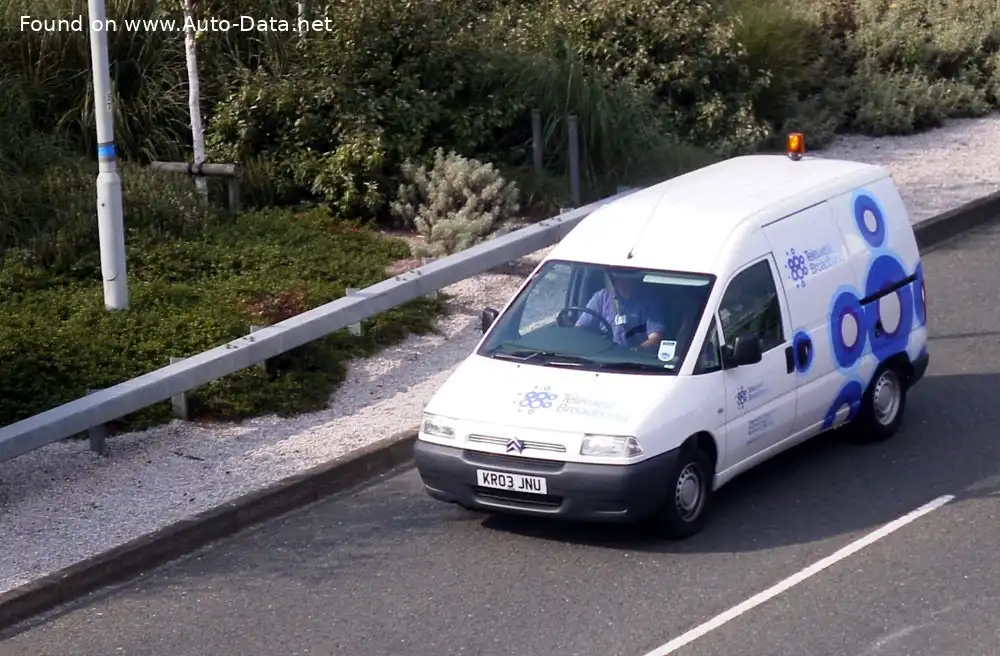
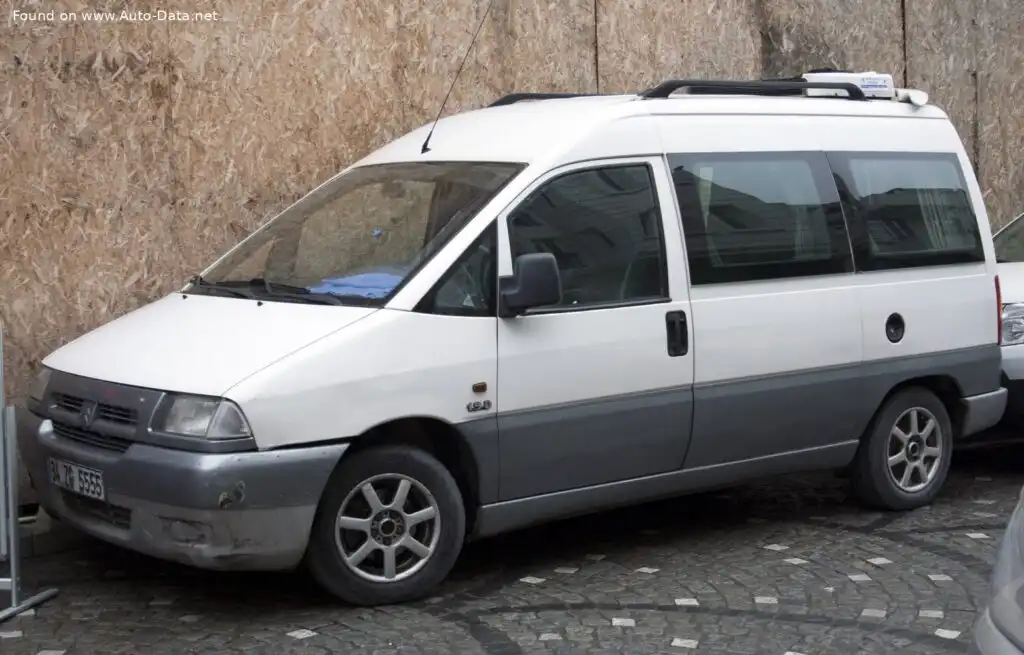
The Citroen Jumpy I, specifically the facelifted version produced from 2004 to 2006, represented Citroen’s entry into the mid-size van segment. This generation, built in collaboration with Peugeot and Fiat (resulting in the Peugeot Expert and Fiat Scudo respectively), aimed to provide a practical and versatile vehicle for both commercial and family use. The 2.0 HDi (109 hp) Long variant occupied a middle ground within the Jumpy lineup, offering a balance between fuel efficiency, payload capacity, and affordability. It was positioned as a step up from the base engine options, targeting users who required more power for regular, fully-loaded operation, but didn’t necessitate the higher performance of the more powerful HDi variants.
Technical Specifications
| Brand | Citroen |
| Model | Jumpy |
| Generation | Jumpy I (facelift 2004) |
| Type (Engine) | 2.0 HDi (109 Hp) Long |
| Start of production | 2004 |
| End of production | 2006 |
| Powertrain Architecture | Internal Combustion engine |
| Body type | Minivan |
| Seats | 2 |
| Doors | 4 |
| Fuel consumption (urban) | 8.9 l/100 km (26.4 US mpg, 31.7 UK mpg, 11.2 km/l) |
| Fuel consumption (extra urban) | 6.0 l/100 km (39.2 US mpg, 47.1 UK mpg, 16.7 km/l) |
| Fuel consumption (combined) | 7.0 l/100 km (33.6 US mpg, 40.4 UK mpg, 14.3 km/l) |
| CO2 emissions | 187 g/km |
| Fuel Type | Diesel |
| Acceleration 0 – 100 km/h | 15 sec |
| Acceleration 0 – 62 mph | 15 sec |
| Acceleration 0 – 60 mph | 14.3 sec |
| Maximum speed | 165 km/h (102.53 mph) |
| Weight-to-power ratio | 13.3 kg/Hp, 75.4 Hp/tonne |
| Weight-to-torque ratio | 5.8 kg/Nm, 173 Nm/tonne |
| Power | 109 Hp @ 4000 rpm |
| Power per litre | 54.6 Hp/l |
| Torque | 250 Nm @ 1750 rpm (184.39 lb.-ft. @ 1750 rpm) |
| Engine layout | Front, Transverse |
| Engine Model/Code | RHZ DW10ATED |
| Engine displacement | 1997 cm3 (121.86 cu. in.) |
| Number of cylinders | 4 |
| Engine configuration | Inline |
| Cylinder Bore | 85 mm (3.35 in.) |
| Piston Stroke | 88 mm (3.46 in.) |
| Number of valves per cylinder | 2 |
| Fuel injection system | Diesel Commonrail |
| Engine aspiration | Turbocharger, Intercooler |
| Valvetrain | SOHC |
| Engine oil capacity | 4.5 l (4.76 US qt | 3.96 UK qt) |
| Coolant | 9 l (9.51 US qt | 7.92 UK qt) |
| Kerb Weight | 1445 kg (3185.68 lbs.) |
| Max. weight | 2330 kg (5136.77 lbs.) |
| Max load | 885 kg (1951.09 lbs.) |
| Trunk (boot) space – maximum | 5000 l (176.57 cu. ft.) |
| Fuel tank capacity | 80 l (21.13 US gal | 17.6 UK gal) |
| Max. roof load | 100 kg (220.46 lbs.) |
| Permitted trailer load with brakes (8%) | 1800 kg (3968.32 lbs.) |
| Permitted trailer load with brakes (12%) | 1300 kg (2866.01 lbs.) |
| Permitted trailer load without brakes | 750 kg (1653.47 lbs.) |
| Permitted towbar download | 60 kg (132.28 lbs.) |
| Length | 4922 mm (193.78 in.) |
| Width | 1844 mm (72.6 in.) |
| Height | 1936 mm (76.22 in.) |
| Wheelbase | 3224 mm (126.93 in.) |
| Front track | 1540 mm (60.63 in.) |
| Rear (Back) track | 1540 mm (60.63 in.) |
| Front overhang | 919 mm (36.18 in.) |
| Rear overhang | 779 mm (30.67 in.) |
| Drivetrain Architecture | The Internal combustion engine (ICE) drives the front wheels of the vehicle. |
| Drive wheel | Front wheel drive |
| Number of gears and type of gearbox | 5 gears, manual transmission |
| Front suspension | Independent, type McPherson with coil spring and anti-roll bar |
| Rear suspension | Semi-dependent beam with stabilizer lateral stability, Coil spring |
| Front brakes | Ventilated discs |
| Rear brakes | Drum |
| Assisting systems | ABS (Anti-lock braking system) |
| Steering type | Steering rack and pinion |
| Power steering | Hydraulic Steering |
| Tires size | 205/65 R15 |
| Wheel rims size | 6.5J x 15 |
Powertrain & Engine Architecture
The heart of the Jumpy 2.0 HDi was the DW10ATED engine, a 1997cc four-cylinder diesel. This engine, designated with the RHZ code in some markets, utilized a common rail direct injection system, a technology that significantly improved fuel efficiency and reduced noise compared to older diesel injection methods. The engine featured a single overhead camshaft (SOHC) valvetrain operating two valves per cylinder. A turbocharger with an intercooler was employed to boost power output, delivering 109 horsepower at 4000 rpm and 250 Nm (184 lb-ft) of torque at a relatively low 1750 rpm. This torque curve made the engine quite usable for everyday driving and hauling loads. The engine was transversely mounted in the front of the vehicle, driving the front wheels.
Driving Characteristics
The 109 hp 2.0 HDi engine, paired with a five-speed manual transmission, provided adequate performance for the Jumpy. Acceleration was not its strong suit, with a 0-60 mph time of around 14.3 seconds. However, the engine’s strong low-end torque made it feel more responsive in real-world driving situations, particularly when carrying a load. Compared to the more powerful HDi variants, the 109 hp version offered a more relaxed driving experience, prioritizing fuel economy over outright speed. The gear ratios were well-suited for maintaining comfortable cruising speeds on highways, but required more frequent downshifts when tackling steep inclines or overtaking.
Equipment & Trim Levels
The Jumpy 2.0 HDi Long typically came with a fairly basic level of equipment, reflecting its commercial vehicle origins. Standard features generally included power steering, ABS brakes, a driver’s airbag, and a basic audio system. The interior was functional and durable, with hard-wearing plastics and cloth upholstery. Optional extras included air conditioning, electric windows, a passenger airbag, and upgraded audio systems. The “Long” designation indicated an extended wheelbase, providing increased cargo space compared to the standard-length Jumpy.
Chassis & Braking
The Jumpy I utilized a McPherson strut independent suspension setup at the front, providing a reasonable level of ride comfort and handling. The rear suspension employed a semi-independent beam axle with coil springs and a stabilizer bar, which helped to control body roll during cornering. The braking system consisted of ventilated discs at the front and drum brakes at the rear. While adequate for most driving conditions, the drum brakes on the rear could feel less progressive under heavy braking.
Market Reception & Comparison
The Citroen Jumpy 2.0 HDi Long was generally well-received by critics as a practical and versatile van. It was praised for its fuel efficiency, spacious interior, and competitive pricing. Compared to the more powerful HDi variants, the 109 hp version offered a lower purchase price and better fuel economy, making it an attractive option for businesses and families on a budget. However, some reviewers noted that the engine could feel underpowered when fully loaded or driving on steep hills. Compared to competitors like the Volkswagen Transporter and Ford Transit, the Jumpy offered a good balance of features and value.
Legacy
The Citroen Jumpy I, particularly the 2.0 HDi variants, proved to be a reliable and durable vehicle. The DW10ATED engine, while not without its quirks, is generally considered to be a robust unit when properly maintained. Today, these vans can still be found in use, often with high mileage. Common issues include wear and tear on suspension components, corrosion in certain areas of the body, and potential problems with the turbocharger. However, spare parts are readily available, and the relatively simple mechanical design makes them relatively easy to repair. The Jumpy I laid the foundation for the continued success of Citroen’s van lineup, and remains a popular choice for those seeking a practical and affordable workhorse.