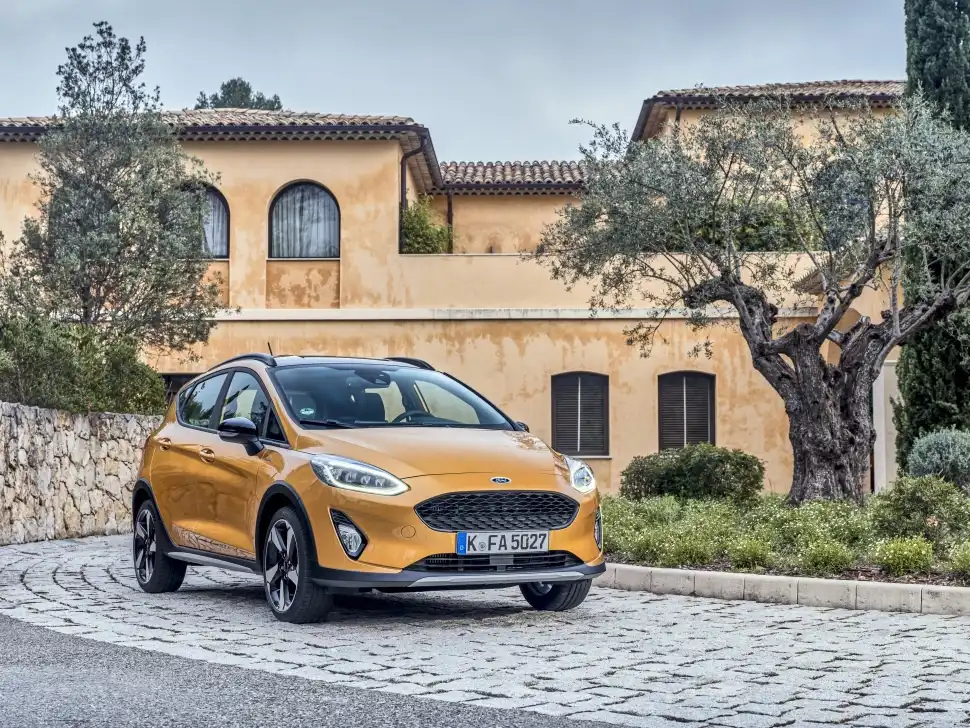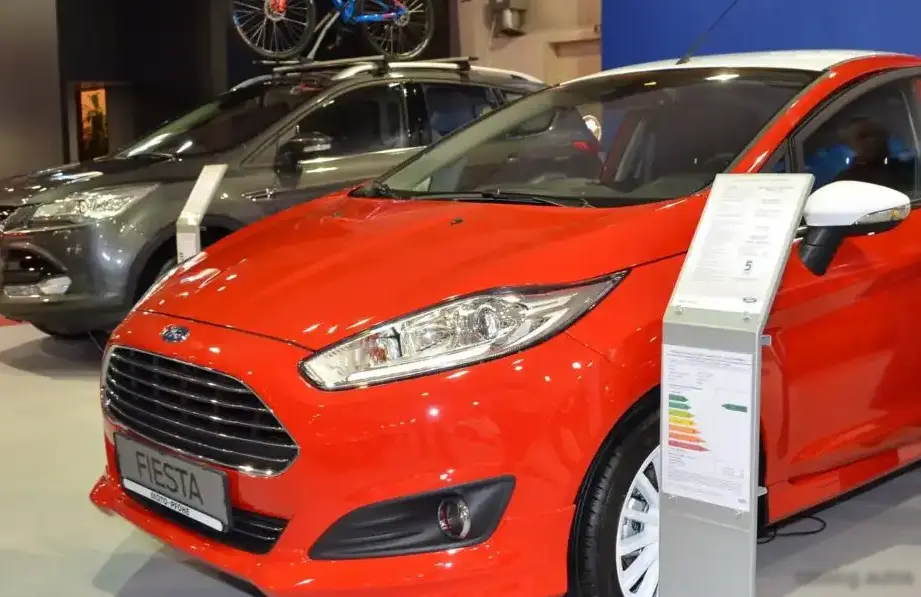
The Ford Fiesta VII, specifically the 5-door 1.6 TDCi (95 hp) ECOnetic model produced from 2013 to 2017, represented a key offering in Ford’s European small car lineup. This variant was part of the Mk7 Fiesta’s facelift, building upon the already successful sixth-generation model. Positioned as a fuel-efficient option, the ECOnetic trim aimed to deliver low running costs without sacrificing practicality. It played a significant role in Ford’s strategy to offer a diverse range of Fiesta models catering to various customer needs, particularly those prioritizing economy and reduced emissions. The Fiesta, in general, has been a mainstay of the European automotive market for decades, and the Mk7 continued this tradition, offering a blend of affordability, reliability, and modern features.
Technical Specifications
| Brand | Ford |
| Model | Fiesta |
| Generation | Fiesta VII (Mk7, facelift 2013) 5 door |
| Type (Engine) | 1.6 TDCi (95 Hp) ECOnetic |
| Start of production | 2013 year |
| End of production | 2017 year |
| Powertrain Architecture | Internal Combustion engine |
| Body type | Hatchback |
| Seats | 5 |
| Doors | 5 |
| Fuel consumption (economy) – urban | 3.8 l/100 km (61.9 US mpg, 74.3 UK mpg, 26.3 km/l) |
| Fuel consumption (economy) – extra urban | 3.1 l/100 km (75.9 US mpg, 91.1 UK mpg, 32.3 km/l) |
| Fuel consumption (economy) – combined | 3.3 l/100 km (71.3 US mpg, 85.6 UK mpg, 30.3 km/l) |
| CO2 emissions | 87 g/km |
| Fuel Type | Diesel |
| Acceleration 0 – 100 km/h | 12.9 sec |
| Acceleration 0 – 62 mph | 12.9 sec |
| Acceleration 0 – 60 mph | 12.3 sec |
| Maximum speed | 178 km/h (110.6 mph) |
| Emission standard | Euro 5 |
| Weight-to-power ratio | 10.9 kg/Hp, 92 Hp/tonne |
| Weight-to-torque ratio | 5.2 kg/Nm, 193.6 Nm/tonne |
| Power | 95 Hp @ 3800 rpm |
| Power per litre | 60.9 Hp/l |
| Torque | 200 Nm @ 1750-3000 rpm (147.51 lb.-ft. @ 1750-3000 rpm) |
| Engine layout | Front, Transverse |
| Engine Model/Code | TZJA, T3DA, T3DB |
| Engine displacement | 1560 cm3 (95.2 cu. in.) |
| Number of cylinders | 4 |
| Engine configuration | Inline |
| Number of valves per cylinder | 4 |
| Fuel injection system | Diesel Commonrail |
| Engine aspiration | Turbocharger, Intercooler |
| Engine oil capacity | 3.85 l (4.07 US qt | 3.39 UK qt) |
| Kerb Weight | 1033 kg (2277.38 lbs.) |
| Max. weight | 1565 kg (3450.23 lbs.) |
| Max load | 532 kg (1172.86 lbs.) |
| Trunk (boot) space – minimum | 281 l (9.92 cu. ft.) |
| Trunk (boot) space – maximum | 965 l (34.08 cu. ft.) |
| Fuel tank capacity | 40 l (10.57 US gal | 8.8 UK gal) |
| Length | 3969 mm (156.26 in.) |
| Width | 1722 mm (67.8 in.) |
| Width with mirrors folded | 1787 mm (70.35 in.) |
| Width including mirrors | 1973 mm (77.68 in.) |
| Height | 1495 mm (58.86 in.) |
| Wheelbase | 2489 mm (97.99 in.) |
| Minimum turning circle | 10.2 m (33.46 ft.) |
| Drivetrain Architecture | The Internal combustion engine (ICE) drives the front wheels of the vehicle. |
| Drive wheel | Front wheel drive |
| Number of gears and type of gearbox | 5 gears, manual transmission |
| Front suspension | Independent, type McPherson with coil spring and anti-roll bar |
| Rear suspension | Coil spring, Torsion |
| Front brakes | Ventilated discs |
| Rear brakes | Drum |
| Assisting systems | ABS (Anti-lock braking system) |
| Steering type | Steering rack and pinion |
| Power steering | Electric Steering |
| Tires size | 175/65 R14; 195/55 R15 |
| Wheel rims size | 5.5J x 14; 6J x 15 |
Powertrain & Engine Architecture
The heart of the Fiesta 1.6 TDCi ECOnetic is the 1.6-liter Duratorq diesel engine, specifically utilizing engine codes TZJA, T3DA, or T3DB depending on the exact production date and market. This engine is a four-cylinder, inline configuration with four valves per cylinder. It employs a turbocharger with an intercooler to boost power and efficiency. The fuel injection system is a common rail direct injection system, allowing for precise fuel delivery and optimized combustion. This technology contributes significantly to the engine’s fuel economy and reduced emissions. The engine produces 95 horsepower at 3800 rpm and 200 Nm (147.51 lb-ft) of torque between 1750 and 3000 rpm. The ECOnetic variant was paired with a five-speed manual transmission, chosen for its efficiency and cost-effectiveness. While an automatic transmission was available on other Fiesta models, it wasn’t offered with the ECOnetic specification, prioritizing fuel savings over convenience.
Driving Characteristics
The 1.6 TDCi 95 hp ECOnetic Fiesta offered a practical and economical driving experience. Acceleration was adequate for everyday driving, with a 0-60 mph time of around 12.3 seconds, but it wasn’t designed for spirited performance. The engine’s torque delivery, peaking at 1750 rpm, provided sufficient pulling power for overtaking and navigating hills. The five-speed manual transmission was well-matched to the engine’s characteristics, allowing drivers to keep the engine in its optimal power band. Compared to higher-output Fiesta variants like the 1.0 EcoBoost, the 1.6 TDCi felt less responsive, but it excelled in fuel efficiency. The gear ratios were tuned for economy, resulting in a slightly higher engine speed at highway cruising speeds. The ECOnetic trim also featured specific aerodynamic enhancements and rolling resistance-optimized tires to further improve fuel economy.
Equipment & Trim Levels
The ECOnetic trim level was generally considered a mid-range offering within the Fiesta lineup. Standard equipment included air conditioning, power steering, electric front windows, and a basic audio system. Safety features such as ABS, electronic stability control (ESC), and multiple airbags were also standard. The interior typically featured cloth upholstery and a functional, if somewhat basic, dashboard layout. Optional extras included alloy wheels, upgraded audio systems, parking sensors, and a trip computer. The ECOnetic trim focused on providing essential features while minimizing weight and maximizing fuel efficiency. It was aimed at buyers who prioritized practicality and running costs over luxury or performance.
Chassis & Braking
The Fiesta 1.6 TDCi ECOnetic utilized a McPherson strut front suspension and a torsion beam rear suspension. This setup provided a good balance between ride comfort and handling. The front brakes were ventilated discs, offering adequate stopping power, while the rear brakes were drums, a cost-saving measure common in this segment. The ECOnetic variant often featured slightly stiffer suspension settings compared to other Fiesta models to improve handling and reduce body roll. The steering was electrically assisted, providing light and precise control. Tire sizes typically ranged from 175/65 R14 to 195/55 R15, depending on the trim level and optional equipment.
Market Reception & Comparison
The Ford Fiesta 1.6 TDCi ECOnetic was generally well-received by critics for its exceptional fuel economy and low emissions. It was praised as a practical and affordable small car, ideal for urban commuting and long-distance journeys. Compared to other Fiesta trims, such as the 1.0 EcoBoost, the ECOnetic offered lower running costs but less exciting performance. The 1.0 EcoBoost, while slightly less fuel-efficient, provided a more engaging driving experience. The 1.6 TDCi was also compared to rival diesel hatchbacks from Volkswagen, Peugeot, and Renault, consistently performing well in fuel economy tests. However, some critics noted that the engine could be somewhat noisy and lacked the refinement of some competitors.
Legacy
The 1.6 TDCi engine, while generally reliable, has been known to exhibit some common issues, such as potential problems with the diesel particulate filter (DPF) and the fuel injectors, particularly if not properly maintained. Regular servicing and the use of high-quality diesel fuel are crucial for ensuring the longevity of this powertrain. In the used car market, the Fiesta 1.6 TDCi ECOnetic remains a popular choice for buyers seeking an economical and practical small car. Its reputation for fuel efficiency and low running costs continues to attract buyers, making it a relatively sought-after model. Despite its age, the Fiesta Mk7 remains a competent and reliable vehicle, offering a good value proposition for budget-conscious drivers.