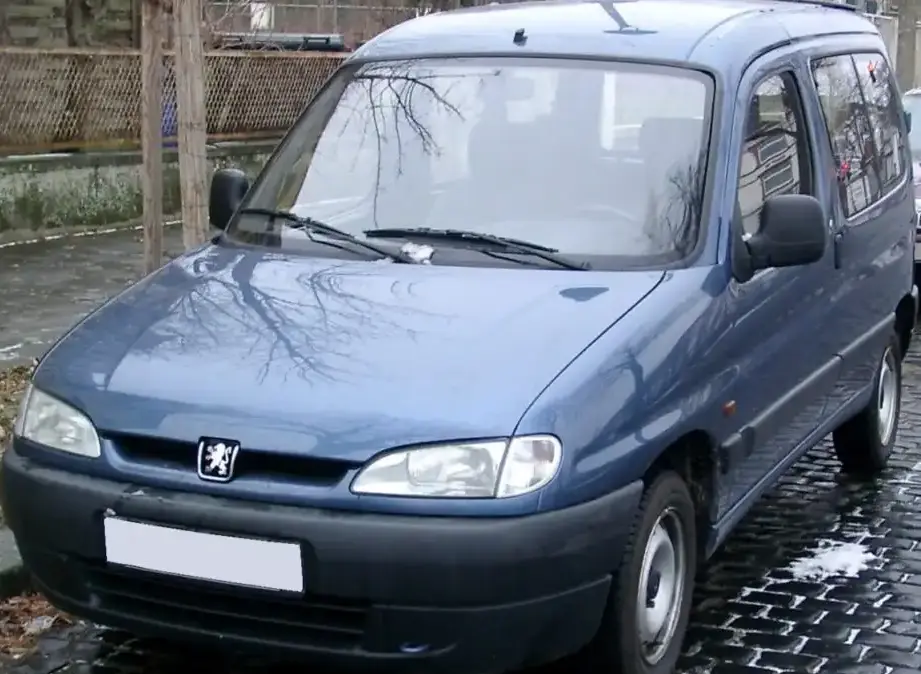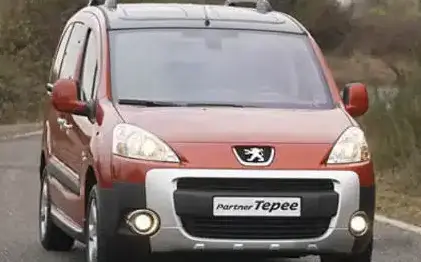
The Peugeot Partner II Tepee 1.6 HDi, producing 110 horsepower, was a popular configuration of the second-generation Partner Tepee, manufactured between 2008 and 2012. Positioned as a mid-range offering within the Partner Tepee lineup, it aimed to balance fuel efficiency with adequate performance for family and commercial use. This variant was primarily sold in European markets, where compact vans and leisure activity vehicles (LAVs) were – and continue to be – in high demand. The Partner II Tepee, and its Citroën Berlingo First counterpart, represented Peugeot’s entry into the increasingly popular segment of multi-purpose vehicles, offering a practical and versatile alternative to traditional station wagons or small MPVs.
Technical Specifications
| Brand | Peugeot |
| Model | Partner |
| Generation | Partner II Tepee |
| Type (Engine) | 1.6 HDi (110 Hp) |
| Start of production | 2008 |
| End of production | 2012 |
| Powertrain Architecture | Internal Combustion engine |
| Body type | Minivan |
| Seats | 5 |
| Doors | 5 |
| Fuel consumption (urban) | 6.8 l/100 km (34.6 US mpg) |
| Fuel consumption (extra urban) | 4.9 l/100 km (48 US mpg) |
| Fuel consumption (combined) | 5.6 l/100 km (42 US mpg) |
| Fuel Type | Diesel |
| Acceleration 0 – 100 km/h | 12.5 sec |
| Acceleration 0 – 62 mph | 12.5 sec |
| Acceleration 0 – 60 mph | 11.9 sec |
| Maximum speed | 173 km/h (107.5 mph) |
| Emission standard | Euro 4 |
| Weight-to-power ratio | 13 kg/Hp |
| Weight-to-torque ratio | 6 kg/Nm |
| Power | 110 Hp @ 4000 rpm |
| Torque | 240 Nm @ 1750 rpm (177.01 lb.-ft. @ 1750 rpm) |
| Engine layout | Front, Transverse |
| Engine Model/Code | 9HZ DV6ATED4 |
| Engine displacement | 1560 cm3 (95.2 cu. in.) |
| Number of cylinders | 4 |
| Engine configuration | Inline |
| Number of valves per cylinder | 4 |
| Fuel injection system | Diesel Commonrail |
| Engine aspiration | Turbocharger, Intercooler |
| Engine oil capacity | 3.75 l (3.96 US qt | 3.3 UK qt) |
| Coolant capacity | 6.25 l (6.6 US qt | 5.5 UK qt) |
| Kerb Weight | 1429 kg (3150.41 lbs.) |
| Max. weight | 2065 kg (4552.55 lbs.) |
| Max load | 636 kg (1402.14 lbs.) |
| Trunk (boot) space – minimum | 505 l (17.83 cu. ft.) |
| Fuel tank capacity | 60 l (15.85 US gal | 13.2 UK gal) |
| Length | 4380 mm (172.44 in.) |
| Width | 1810 mm (71.26 in.) |
| Height | 1803 mm (70.98 in.) |
| Wheelbase | 2728 mm (107.4 in.) |
| Front track | 1505 mm (59.25 in.) |
| Rear track | 1554 mm (61.18 in.) |
| Drivetrain Architecture | Front wheel drive |
| Number of gears | 5 |
| Gearbox type | Manual transmission |
| Front brakes | Ventilated discs |
| Rear brakes | Disc |
| Assisting systems | ABS (Anti-lock braking system) |
| Tires size | 205/65 R15H |
Powertrain & Engine Architecture
The heart of the Partner II Tepee 1.6 HDi (110) is the DV6ATED4 engine, a 1.6-liter inline-four cylinder diesel. This engine, identified by the code 9HZ, was a member of the PSA Group’s (Peugeot Citroën) DV6 family, known for its relatively compact size and efficiency. The engine utilizes a common rail direct injection system, delivering fuel at extremely high pressure for optimized combustion. A turbocharger with an intercooler is employed to increase power output and improve torque across a wider RPM range. The engine features four valves per cylinder, contributing to improved breathing and overall performance. The 110 horsepower variant was achieved through specific engine mapping and turbocharger calibration. The engine is transversely mounted at the front of the vehicle, driving the front wheels. The five-speed manual transmission was the standard offering for this trim level, providing a balance between fuel economy and drivability.
Driving Characteristics
The 1.6 HDi 110 hp engine, paired with the five-speed manual gearbox, provided adequate, though not exhilarating, performance for the Partner II Tepee. Acceleration from 0-60 mph took approximately 11.9 seconds, and top speed was around 107.5 mph. The engine’s 240 Nm (177 lb-ft) of torque, available from 1750 rpm, provided sufficient pulling power for everyday driving and carrying loads. The gear ratios were tuned for fuel efficiency, meaning the engine could feel somewhat strained when climbing hills or accelerating quickly with a full load. Compared to the more powerful 1.6 HDi 112 hp version, or the petrol variants, the 110 hp model offered a more economical driving experience, but at the expense of outright performance. The manual transmission allowed for greater driver control compared to the optional automated manual transmission available on some trims.
Equipment & Trim Levels
The Partner II Tepee 1.6 HDi (110) typically came equipped with a reasonable level of standard features. These included power steering, central locking, electric front windows, and an adjustable steering column. Interior upholstery was typically cloth, with a durable and practical design. Dashboard configuration was functional and straightforward, prioritizing usability over aesthetics. Optional extras included air conditioning, rear parking sensors, a CD player with radio, and upgraded upholstery. Higher trim levels, such as the ‘Outdoor’ or ‘Look’ variants, added features like alloy wheels, fog lights, and more luxurious interior trim.
Chassis & Braking
The Partner II Tepee utilized a conventional front-wheel-drive chassis with MacPherson strut suspension at the front and a torsion beam axle at the rear. The suspension was tuned for comfort and practicality, rather than sporty handling. Braking duties were handled by ventilated discs at the front and solid discs at the rear. Anti-lock Braking System (ABS) was standard, providing enhanced braking performance and stability. The vehicle’s relatively modest weight, around 1429 kg (3150 lbs), helped to compensate for the lack of high-performance braking components.
Market Reception & Comparison
The Peugeot Partner II Tepee 1.6 HDi (110) was generally well-received by critics as a practical and economical vehicle. Its fuel economy, averaging around 42 US mpg, was a major selling point. Compared to the higher-output 1.6 HDi variants, the 110 hp model offered a lower purchase price and slightly better fuel economy, making it an attractive option for budget-conscious buyers. However, some reviewers noted that the engine could feel underpowered when fully loaded or driving on steep inclines. Compared to petrol-powered versions, the diesel offered significantly better fuel economy and torque, but at the cost of increased engine noise and vibration.
Legacy
The DV6 engine family, including the 9HZ variant found in the Partner II Tepee 1.6 HDi (110), has proven to be relatively reliable, although some issues with the diesel particulate filter (DPF) and turbocharger have been reported. In the used car market, these vehicles are often sought after for their practicality, fuel efficiency, and affordability. Maintenance costs are generally reasonable, although regular servicing is essential to ensure long-term reliability. The Partner II Tepee remains a popular choice for families, small businesses, and tradespeople looking for a versatile and economical vehicle.