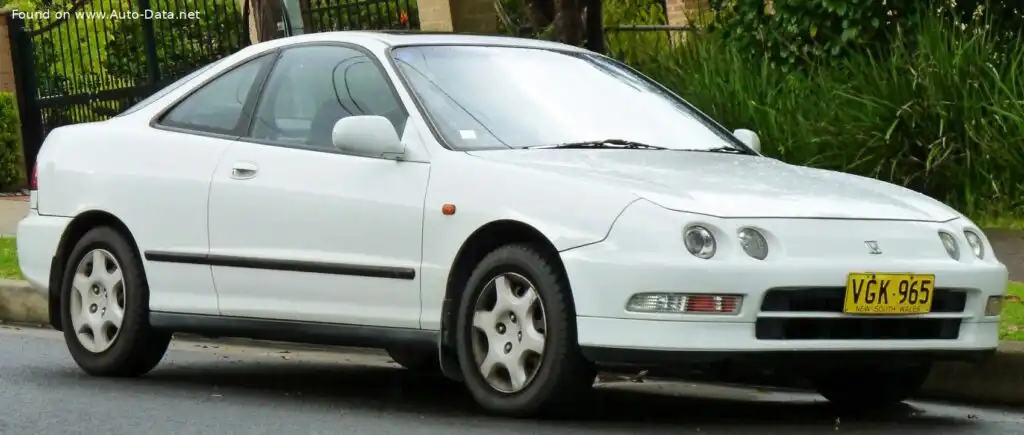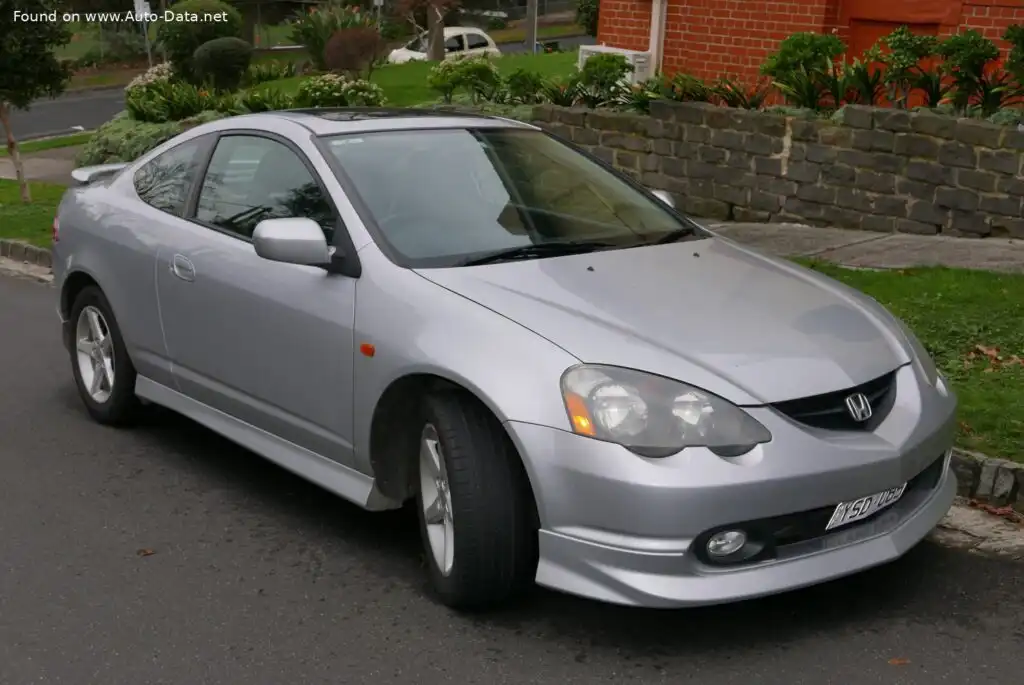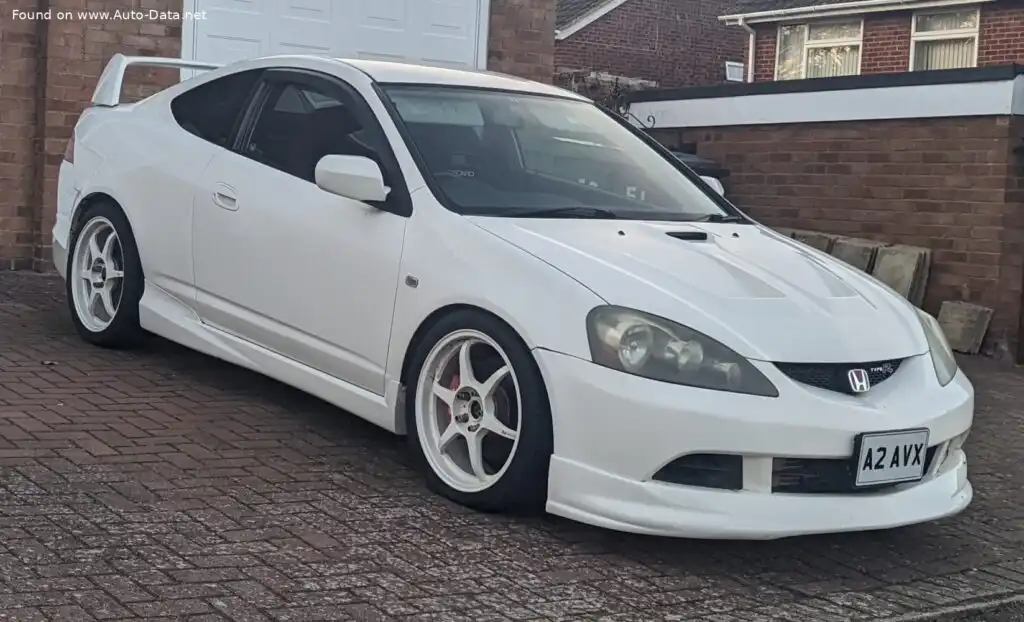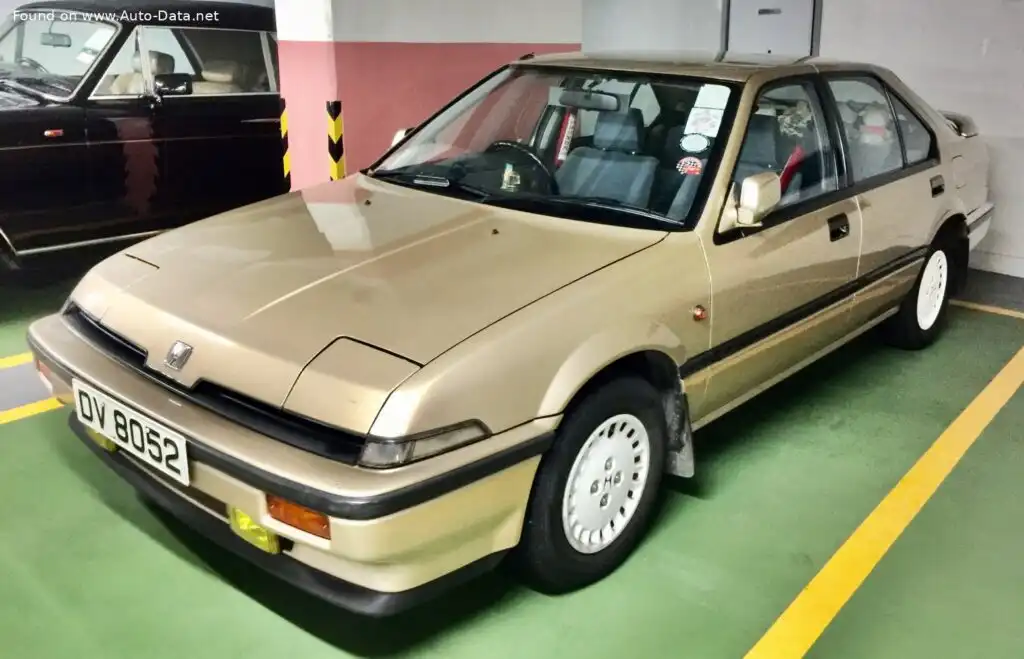
The Honda Integra I (DA) 5-door 1.5, produced between 1985 and 1989, represented Honda’s entry into the increasingly popular compact liftback market. Positioned as a practical and affordable option within the first generation Integra (DA) lineup, this variant offered a balance of fuel efficiency and usability. It served as the base model for the 5-door body style, slotting below the more performance-oriented 1.6-liter variants. The Integra DA series, built on the Honda Civic platform, aimed to bridge the gap between economy cars and more sporting coupes, offering a more refined experience than the Civic while remaining accessible to a broad customer base.
Technical Specifications
| Brand | Honda |
| Model | Integra |
| Generation | Integra I (DA) 5-door |
| Type (Engine) | 1.5 (85 Hp) |
| Start of production | 1985 |
| End of production | 1989 |
| Powertrain Architecture | Internal Combustion engine |
| Body type | Liftback |
| Seats | 5 |
| Doors | 5 |
| Fuel consumption (urban) | 8.9 l/100 km (26.4 US mpg) |
| Fuel consumption (extra urban) | 5.7 l/100 km (41.3 US mpg) |
| Fuel Type | Petrol (Gasoline) |
| Acceleration 0 – 100 km/h | 11.4 sec |
| Acceleration 0 – 62 mph | 11.4 sec |
| Acceleration 0 – 60 mph | 10.8 sec |
| Maximum speed | 168 km/h (104.39 mph) |
| Weight-to-power ratio | 11.1 kg/Hp |
| Weight-to-torque ratio | 7.5 kg/Nm |
| Power | 85 Hp @ 6000 rpm |
| Power per litre | 57.1 Hp/l |
| Torque | 126 Nm @ 3750 rpm (92.93 lb.-ft. @ 3750 rpm) |
| Engine layout | Front, Transverse |
| Engine Model/Code | D15A1 |
| Engine displacement | 1488 cm3 (90.8 cu. in.) |
| Number of cylinders | 4 |
| Engine configuration | Inline |
| Cylinder Bore | 74 mm (2.91 in.) |
| Piston Stroke | 86.5 mm (3.41 in.) |
| Compression ratio | 8.7:1 |
| Number of valves per cylinder | 3 |
| Fuel injection system | Carburettor |
| Engine aspiration | Naturally aspirated engine |
| Valvetrain | SOHC |
| Engine oil capacity | 3.4 l (3.59 US qt | 2.99 UK qt) |
| Coolant capacity | 5.6 l (5.92 US qt | 4.93 UK qt) |
| Kerb Weight | 945 kg (2083.37 lbs.) |
| Max. weight | 1460 kg (3218.75 lbs.) |
| Max load | 515 kg (1135.38 lbs.) |
| Trunk (boot) space – minimum | 292 l (10.31 cu. ft.) |
| Trunk (boot) space – maximum | 538 l (19 cu. ft.) |
| Fuel tank capacity | 50 l (13.21 US gal | 11 UK gal) |
| Max. roof load | 50 kg (110.23 lbs.) |
| Permitted trailer load with brakes (12%) | 900 kg (1984.16 lbs.) |
| Permitted trailer load without brakes | 460 kg (1014.13 lbs.) |
| Permitted towbar download | 50 kg (110.23 lbs.) |
| Length | 4350 mm (171.26 in.) |
| Width | 1665 mm (65.55 in.) |
| Height | 1345 mm (52.95 in.) |
| Wheelbase | 2520 mm (99.21 in.) |
| Front track | 1420 mm (55.91 in.) |
| Rear (Back) track | 1415 mm (55.71 in.) |
| Front overhang | 885 mm (34.84 in.) |
| Rear overhang | 945 mm (37.2 in.) |
| Ride height (ground clearance) | 165 mm (6.5 in.) |
| Minimum turning circle (turning diameter) | 10.8 m (35.43 ft.) |
| Drivetrain Architecture | Front wheel drive |
| Number of gears and type of gearbox | 5 gears, manual transmission |
| Front suspension | Transverse stabilizer, Torsion |
| Rear suspension | Semi-dependent beam with stabilizer lateral stability, Trailing arm |
| Front brakes | Ventilated discs |
| Rear brakes | Drum |
| Steering type | Steering rack and pinion |
| Tires size | 185/70 R13 |
| Wheel rims size | 5J x 13 |
Powertrain & Engine Architecture
The 1985-1989 Honda Integra 5-door 1.5 was powered by the D15A1 engine, a 1.5-liter inline-four cylinder engine. This engine featured a single overhead camshaft (SOHC) valvetrain with three valves per cylinder – two intake and one exhaust. Unlike later Honda engines that embraced multi-point fuel injection, the D15A1 utilized a carburetor for fuel delivery, a cost-saving measure for the base model. The carburetor, while simpler, resulted in slightly lower fuel efficiency and performance compared to fuel-injected counterparts. The engine produced 85 horsepower at 6000 rpm and 126 Nm (93 lb-ft) of torque at 3750 rpm. The engine was transversely mounted, driving the front wheels. The standard transmission was a 5-speed manual, offering a relatively engaging driving experience for its class.
Driving Characteristics
The Integra 1.5 with the 5-speed manual transmission offered adequate, though not exhilarating, performance. Acceleration to 60 mph took around 10.8 seconds, and top speed was approximately 104 mph. The carburetor-fed engine delivered a relatively flat torque curve, making it reasonably drivable in everyday traffic. However, compared to the 1.6-liter versions of the Integra, the 1.5 felt noticeably less powerful, especially when fully loaded or climbing hills. The 5-speed manual transmission was well-matched to the engine’s characteristics, providing reasonable gear spacing. The suspension, while basic, offered a comfortable ride, prioritizing practicality over sporty handling.
Equipment & Trim Levels
The 1.5-liter 5-door Integra was typically the base trim level. Standard features included cloth upholstery, a basic AM/FM radio, and manual windows and locks. Air conditioning and a more advanced stereo system were often optional extras. The interior was functional and durable, prioritizing practicality over luxury. The dashboard layout was straightforward, with clearly marked gauges and controls. The 5-door configuration provided excellent access to the rear seats and a reasonably spacious cargo area, making it a practical choice for families or those needing to transport larger items.
Chassis & Braking
The Integra 5-door utilized a front-wheel-drive layout with a MacPherson strut front suspension and a semi-independent torsion beam rear suspension. The front suspension incorporated a transverse stabilizer bar to reduce body roll. Braking duties were handled by ventilated discs at the front and drum brakes at the rear. The braking system was adequate for normal driving conditions, but lacked the stopping power of the disc brakes found on higher-spec Integra models. The steering was a rack-and-pinion system, providing reasonably precise steering feel.
Market Reception & Comparison
The Integra 1.5 5-door was generally well-received as an affordable and practical compact car. Critics praised its fuel efficiency, reliability, and spacious interior. However, the 1.5-liter engine was often criticized for its lack of power compared to the 1.6-liter alternatives. The 1.6-liter models, such as the Integra 1.6 GL, offered significantly improved performance and were popular among drivers seeking a more engaging driving experience. The 1.5-liter model appealed to buyers prioritizing economy and practicality over outright performance.
Legacy
The D15A1 engine, while not known for its high performance, proved to be remarkably durable and reliable. Many examples of the Integra 1.5 5-door are still on the road today, a testament to Honda’s engineering quality. In the used car market, these Integras are often sought after as affordable and dependable transportation. Maintenance is relatively straightforward, and parts availability is generally good. However, due to their age, potential buyers should be aware of common issues such as rust and wear and tear on suspension components. The Integra 1.5 5-door represents a significant chapter in Honda’s history, establishing the Integra as a popular and versatile compact car.