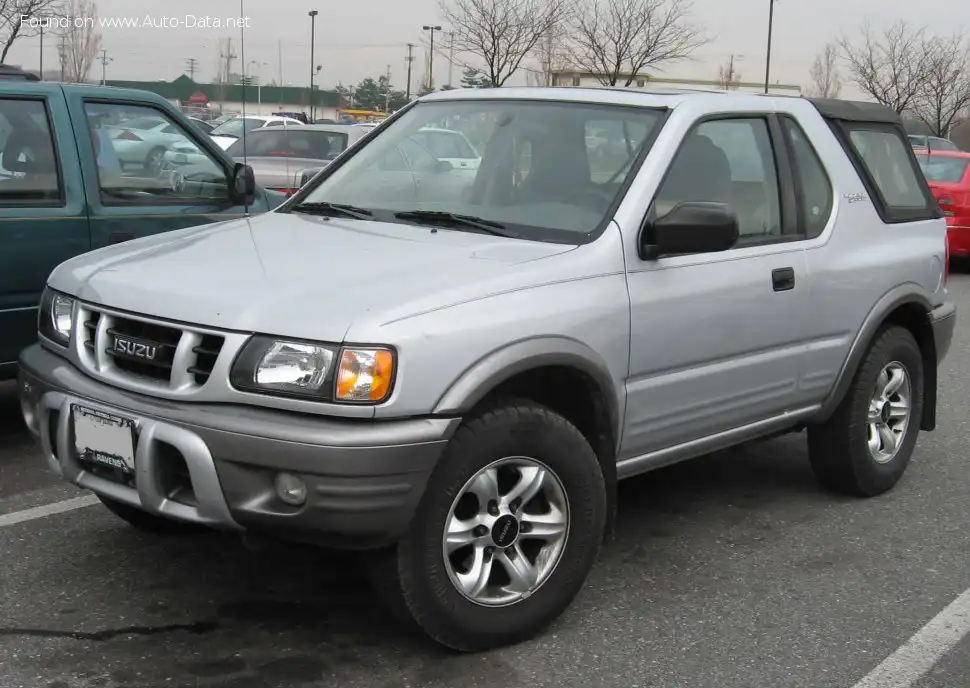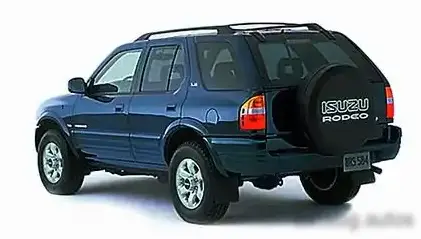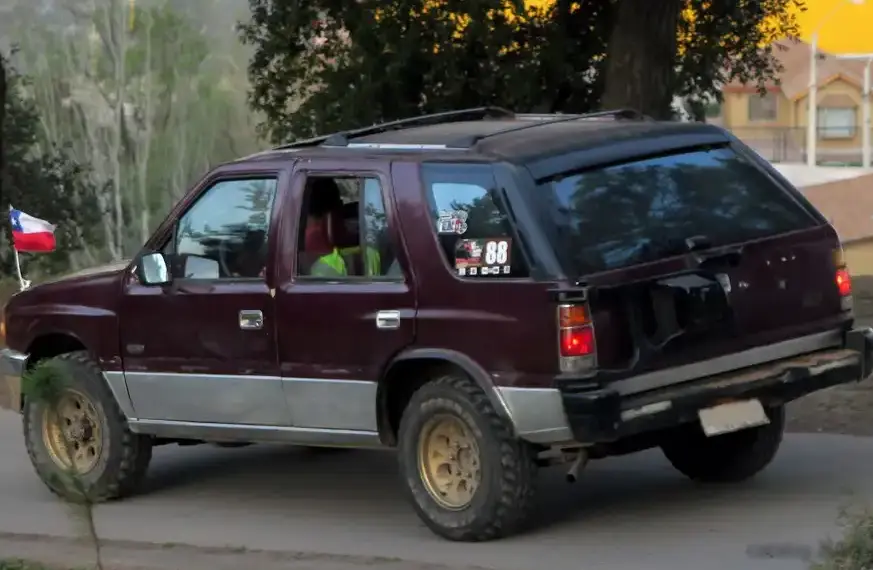
The Isuzu Rodeo 3.2 i S 2WD, produced from 1989 to 2000, represents a significant offering in Isuzu’s lineup during that period. This variant, powered by a 3.2-liter V6 engine and featuring a rear-wheel drive configuration, was positioned as a capable and relatively affordable SUV aimed at buyers seeking a blend of utility and on-road comfort. It formed part of the first generation Rodeo (known as the Amigo in some markets), built on a body-on-frame chassis and sharing components with the Chevrolet S-10 and GMC Sonoma. The 3.2 i S 2WD trim sat within a broader range of Rodeo models, offering a step up in performance from the base 2.6-liter four-cylinder engine, but remaining more accessible than the four-wheel drive versions.
Technical Specifications
| Brand | Isuzu |
| Model | Rodeo |
| Type | 3.2 i S 2WD (177 Hp) |
| Start of production | 1989 |
| End of production | 2000 |
| Powertrain Architecture | Internal Combustion engine |
| Body type | SUV |
| Seats | 6 |
| Doors | 4 |
| Fuel consumption (combined) | 13.2 l/100 km (17.8 US mpg, 21.4 UK mpg, 7.6 km/l) |
| Fuel Type | Petrol (Gasoline) |
| Weight-to-power ratio | 9.7 kg/Hp, 103.4 Hp/tonne |
| Weight-to-torque ratio | 6.6 kg/Nm, 151.9 Nm/tonne |
| Power | 177 Hp @ 5200 rpm |
| Power per litre | 55.9 Hp/l |
| Torque | 260 Nm @ 3750 rpm (191.77 lb.-ft. @ 3750 rpm) |
| Engine layout | Front, Longitudinal |
| Engine displacement | 3165 cm3 (193.14 cu. in.) |
| Number of cylinders | 6 |
| Engine configuration | V-engine |
| Cylinder Bore | 93.4 mm (3.68 in.) |
| Piston Stroke | 77 mm (3.03 in.) |
| Compression ratio | 9.3:1 |
| Number of valves per cylinder | 4 |
| Fuel injection system | Multi-port manifold injection |
| Engine aspiration | Naturally aspirated engine |
| Valvetrain | OHC |
| Engine oil capacity | 4.7 l (4.97 US qt | 4.14 UK qt) |
| Coolant capacity | 11 l (11.62 US qt | 9.68 UK qt) |
| Kerb Weight | 1712 kg (3774.31 lbs.) |
| Max. weight | 2111 kg (4653.96 lbs.) |
| Max load | 399 kg (879.64 lbs.) |
| Fuel tank capacity | 83 l (21.93 US gal | 18.26 UK gal) |
| Length | 4480 mm (176.38 in.) |
| Width | 1690 mm (66.54 in.) |
| Height | 1660 mm (65.35 in.) |
| Wheelbase | 2760 mm (108.66 in.) |
| Front track | 1440 mm (56.69 in.) |
| Rear track | 1445 mm (56.89 in.) |
| Drivetrain | Rear wheel drive |
| Number of gears | 5 |
| Gearbox type | Manual transmission |
| Front suspension | Double wishbone |
| Rear suspension | Coil spring |
| Front brakes | Ventilated discs |
| Rear brakes | Ventilated discs |
| Assisting systems | ABS (Anti-lock braking system) |
| Tires size | 225/75 R15 P |
Powertrain & Engine Architecture
The heart of the Rodeo 3.2 i S 2WD is the 6VD1 engine, a 3.2-liter (3165 cc) naturally aspirated V6. This engine utilizes a 90-degree V-configuration, contributing to a smoother power delivery. It features a single overhead camshaft (OHC) valvetrain with four valves per cylinder. Fuel delivery is managed by a multi-port fuel injection system, providing precise fuel metering for improved efficiency and performance. The engine’s 9.3:1 compression ratio strikes a balance between power output and fuel quality requirements. The 5-speed manual transmission was the standard offering for this trim, providing drivers with direct control over gear selection. The transmission’s gear ratios were tuned for a blend of acceleration and highway cruising, though it wasn’t particularly optimized for fuel economy.
Driving Characteristics
The 177 horsepower and 260 Nm (191.77 lb-ft) of torque offered by the 3.2-liter V6 provided adequate performance for everyday driving. Acceleration was respectable, but not particularly brisk, with a 0-60 mph time estimated around 9-10 seconds. Compared to the base 2.6-liter four-cylinder Rodeo, the 3.2 i S offered a noticeable improvement in both acceleration and towing capacity. However, it lagged behind the performance of the four-wheel drive models, which often featured slightly different gearing and a more robust drivetrain. The rear-wheel drive configuration provided a more traditional driving feel, but also limited traction in slippery conditions. The manual transmission allowed for greater driver engagement, but required more skill and effort than the available automatic option.
Equipment & Trim Levels
The “S” designation in the 3.2 i S 2WD trim indicated a step up in standard features compared to the base Rodeo. Standard equipment typically included air conditioning, power steering, a basic audio system, and cloth upholstery. Depending on the year and specific package options, features like cruise control, upgraded audio systems, and alloy wheels could be added. The interior was functional and durable, prioritizing practicality over luxury. The dashboard layout was straightforward, with easy-to-read gauges and logically placed controls.
Chassis & Braking
The Rodeo 3.2 i S 2WD utilized a traditional body-on-frame construction, providing a robust and durable platform. The front suspension featured a double wishbone design, while the rear suspension employed coil springs. This setup offered a reasonable balance between ride comfort and handling. Braking duties were handled by ventilated discs on all four wheels, providing adequate stopping power. An Anti-lock Braking System (ABS) was included as standard equipment, enhancing safety by preventing wheel lockup during hard braking. The rear-wheel drive configuration and relatively modest weight (1712 kg / 3774.31 lbs) contributed to a stable and predictable handling experience.
Market Reception & Comparison
The Isuzu Rodeo 3.2 i S 2WD was generally well-received by automotive critics as a competent and affordable SUV. It was praised for its spacious interior, comfortable ride, and capable V6 engine. However, some reviewers noted its somewhat dated styling and lack of refinement compared to newer SUVs on the market. Fuel economy was also a point of criticism, with the 3.2-liter V6 consuming a significant amount of gasoline. Compared to the four-wheel drive Rodeo models, the 2WD version offered a lower price point but sacrificed off-road capability. It competed with other mid-size SUVs such as the Ford Explorer, Chevrolet S-10 Blazer, and Nissan Pathfinder.
Legacy
The Isuzu Rodeo 3.2 i S 2WD has proven to be a relatively reliable vehicle, particularly when properly maintained. The 6VD1 V6 engine is known for its durability, although it can be prone to oil leaks as it ages. The manual transmission is also generally reliable, but clutch replacement may be necessary after extended use. Today, these Rodeos are often found as affordable used vehicles, appealing to buyers seeking a rugged and capable SUV for light-duty tasks. While not as popular as some of its competitors, the Rodeo 3.2 i S 2WD remains a viable option for those seeking a classic body-on-frame SUV with a dependable V6 engine.