Technical Specifications
| Brand | Peugeot |
| Model | Partner |
| Generation | Partner II Tepee (Phase II, 2012) |
| Type (Engine) | 1.6 HDi (115 Hp) |
| Start of production | 2012 |
| End of production | 2018 |
| Powertrain Architecture | Internal Combustion engine |
| Body type | Minivan |
| Seats | 5 |
| Doors | 5 |
| Fuel consumption (urban) | 6.1 l/100 km (38.6 US mpg, 46.3 UK mpg, 16.4 km/l) |
| Fuel consumption (extra urban) | 4.9 l/100 km (48 US mpg, 57.6 UK mpg, 20.4 km/l) |
| Fuel consumption (combined) | 5.3 l/100 km (44.4 US mpg, 53.3 UK mpg, 18.9 km/l) |
| CO2 emissions | 134 g/km |
| Fuel Type | Diesel |
| Acceleration 0 – 100 km/h | 12.1 sec |
| Acceleration 0 – 62 mph | 12.1 sec |
| Acceleration 0 – 60 mph | 11.5 sec |
| Maximum speed | 172 km/h (106.88 mph) |
| Emission standard | Euro 5 |
| Weight-to-power ratio | 12.8 kg/Hp, 77.9 Hp/tonne |
| Weight-to-torque ratio | 6.2 kg/Nm, 162.6 Nm/tonne |
| Power | 115 Hp @ 3600 rpm |
| Power per litre | 73.7 Hp/l |
| Torque | 240 Nm @ 1500 rpm (177.01 lb.-ft. @ 1500 rpm) |
| Engine layout | Front, Transverse |
| Engine Model/Code | 9HL DV6C |
| Engine displacement | 1560 cm3 (95.2 cu. in.) |
| Number of cylinders | 4 |
| Engine configuration | Inline |
| Cylinder Bore | 75 mm (2.95 in.) |
| Piston Stroke | 88.3 mm (3.48 in.) |
| Number of valves per cylinder | 2 |
| Fuel injection system | Diesel Commonrail |
| Engine aspiration | Turbocharger, Intercooler |
| Engine oil capacity | 3.75 l (3.96 US qt | 3.3 UK qt) |
| Kerb Weight | 1476 kg (3254.02 lbs.) |
| Max. weight | 2065 kg (4552.55 lbs.) |
| Max load | 589 kg (1298.52 lbs.) |
| Trunk (boot) space – minimum | 675 l (23.84 cu. ft.) |
| Trunk (boot) space – maximum | 3000 l (105.94 cu. ft.) |
| Fuel tank capacity | 60 l (15.85 US gal | 13.2 UK gal) |
| Length | 4380 mm (172.44 in.) |
| Width | 1810 mm (71.26 in.) |
| Height | 1862 mm (73.31 in.) |
| Wheelbase | 2728 mm (107.4 in.) |
| Front track | 1505 mm (59.25 in.) |
| Rear (Back) track | 1554 mm (61.18 in.) |
| Minimum turning circle | 11 m (36.09 ft.) |
| Drivetrain Architecture | Front wheel drive |
| Number of gears and type of gearbox | 5 gears, manual transmission |
| Front suspension | Independent, type McPherson with coil spring and anti-roll bar |
| Rear suspension | Independent coil spring |
| Front brakes | Ventilated discs |
| Rear brakes | Disc |
| Assisting systems | ABS (Anti-lock braking system) |
| Steering type | Steering rack and pinion |
| Tires size | 205/65 R15 |
| Wheel rims size | 15 |
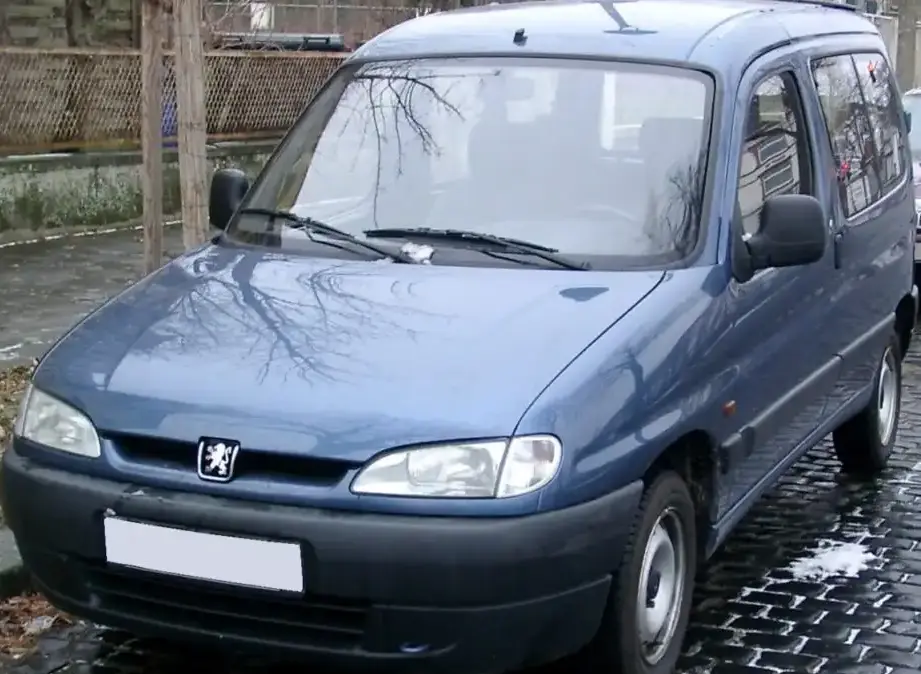
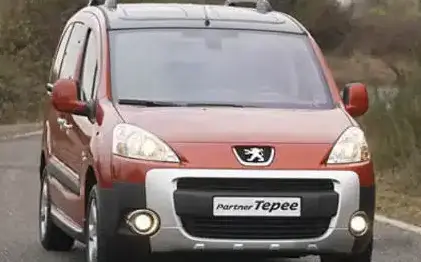
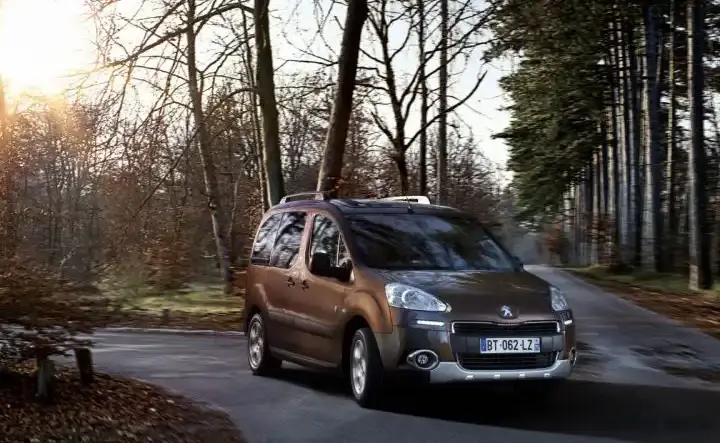
The Peugeot Partner II Tepee, specifically the Phase II model produced from 2012 to 2018, represented a significant evolution of Peugeot’s popular leisure activity vehicle (LAV). This variant, equipped with the 1.6 HDi diesel engine producing 115 horsepower, occupied a middle ground within the Partner Tepee lineup, offering a balance between fuel efficiency, practicality, and affordability. It was designed to appeal to families and individuals needing a versatile vehicle for both passenger transport and light commercial duties. The Partner II Tepee, and its Citroën Berlingo First counterpart, were key models for the PSA Group (now Stellantis) in the European market, providing a competitive alternative to other compact MPVs.
Powertrain & Engine Architecture
The heart of this Partner Tepee variant is the 1.6 HDi (High-Pressure Direct Injection) diesel engine, specifically the 9HL (DV6C) engine code. This engine is a four-cylinder, inline configuration, displacing 1560cc. It utilizes a common rail direct injection system, delivering fuel at extremely high pressure for optimized combustion. A turbocharger with an intercooler is employed to boost power and torque, providing 115 horsepower at 3600 rpm and a substantial 240 Nm (177 lb-ft) of torque at just 1500 rpm. The engine features two valves per cylinder and is known for its relatively robust construction. The 9HL engine was a mainstay in many PSA vehicles during this period. The transmission is a five-speed manual gearbox, chosen for its simplicity and fuel efficiency. While an automated manual transmission was available on some Partner Tepee models, the 1.6 HDi 115 hp was primarily offered with the manual.
Driving Characteristics
The 1.6 HDi 115 hp engine, paired with the five-speed manual transmission, provides adequate performance for everyday driving. Acceleration from 0-100 km/h (0-62 mph) takes around 12.1 seconds, and top speed is rated at 172 km/h (107 mph). The engine’s strong low-end torque makes it well-suited for carrying passengers and cargo, offering good responsiveness in urban environments and on winding roads. Compared to the more powerful 1.6 HDi 110 hp engine with a six-speed gearbox, this variant feels slightly less refined and has a narrower power band. However, it offers better fuel economy and a simpler, more affordable driving experience. The gear ratios are tuned for efficiency rather than outright performance, meaning the engine can feel strained at higher speeds or when fully loaded.
Equipment & Trim Levels
The Partner Tepee Phase II 1.6 HDi 115 hp typically came with a reasonable level of standard equipment. This included power steering, central locking, electric front windows, and an audio system with USB connectivity. Safety features such as ABS, driver and passenger airbags, and seatbelt pretensioners were also standard. Higher trim levels, such as the Outdoor or XTR, added features like air conditioning, alloy wheels, rear parking sensors, and upgraded interior trim. Interior upholstery was typically cloth, with a durable and practical design. Optional extras included a panoramic sunroof, navigation system, and various comfort and convenience packages.
Chassis & Braking
The Partner Tepee utilizes a McPherson strut front suspension and an independent coil spring rear suspension. This setup provides a comfortable ride quality, although it’s not particularly sporty. The front brakes are ventilated discs, while the rear brakes are solid discs. ABS (Anti-lock Braking System) is standard. The suspension is tuned to prioritize comfort and load-carrying capacity, rather than sharp handling. Stabilizer bars are fitted to both the front and rear axles to reduce body roll. The 15-inch wheels, typically fitted with 205/65 R15 tires, contribute to the comfortable ride.
Market Reception & Comparison
The Peugeot Partner Tepee 1.6 HDi 115 hp was generally well-received by critics as a practical and economical family vehicle. It was praised for its spacious interior, versatility, and fuel efficiency. However, some reviewers noted that the engine could feel underpowered when fully loaded or on steep inclines. Compared to the more expensive 2.0 HDi variants, the 1.6 HDi offered a more affordable entry point into the Partner Tepee range. Its fuel economy was comparable to other diesel-powered MPVs in its class, and its reliability was generally considered good, although diesel particulate filter (DPF) issues could occur with infrequent long-distance driving.
Legacy
The 1.6 HDi engine, in various iterations, became a staple in the PSA Group’s lineup for many years. The Partner Tepee 1.6 HDi 115 hp remains a popular choice on the used car market, offering a good balance of practicality, affordability, and fuel efficiency. While the DPF can be a potential maintenance concern, regular servicing and occasional long journeys can help to mitigate this risk. The Partner Tepee’s robust construction and readily available parts contribute to its long-term reliability and make it a sensible option for budget-conscious buyers seeking a versatile family vehicle.