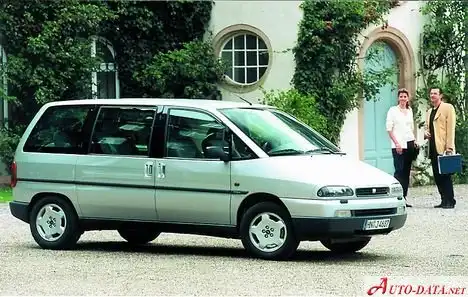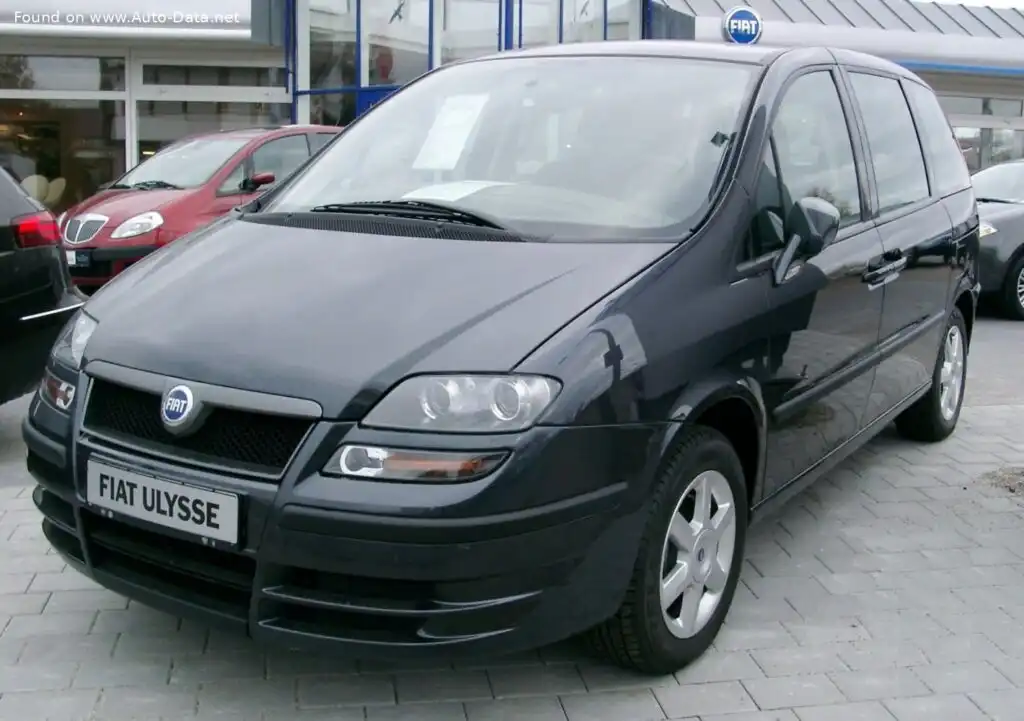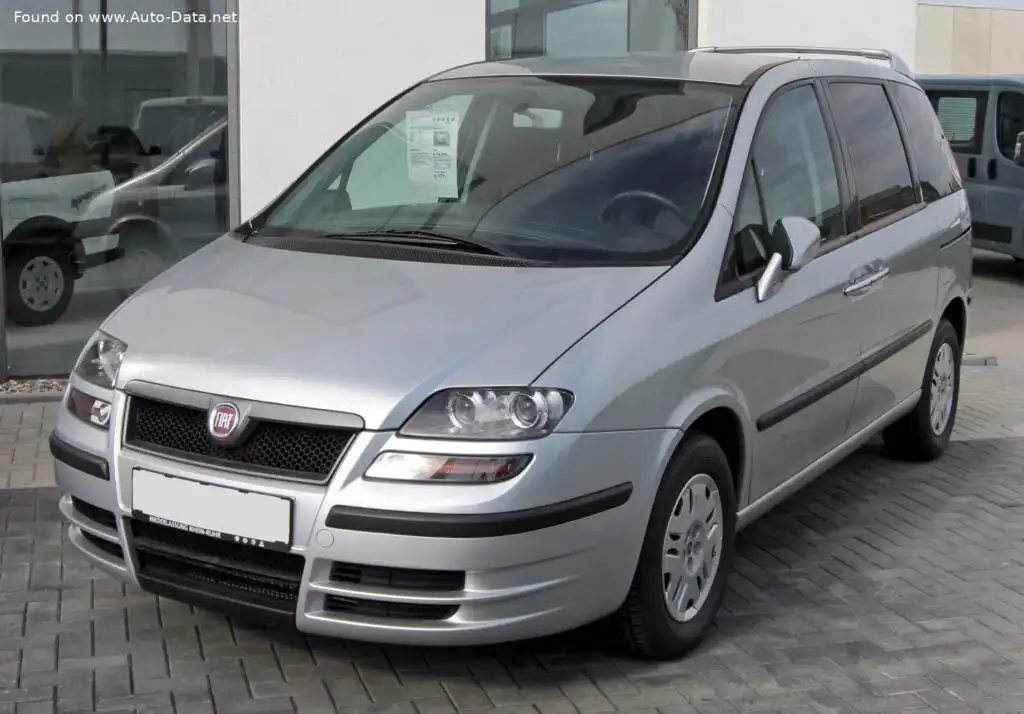
The Fiat Ulysse II, specifically the 2.2 JTD Multijet 16V (170 hp) variant produced from 2008 to 2010, represents a significant iteration of Fiat’s large MPV offering. This version, designated internally as type 179 and benefitting from a 2008 facelift, was positioned as a mid-to-upper range option within the Ulysse lineup, offering a balance of performance, space, and features aimed at families and those requiring a versatile passenger vehicle. It shared its platform and much of its mechanical underpinnings with the Peugeot 807 and Citroën C8, a result of the joint venture between the three manufacturers. The Ulysse II aimed to compete with established MPVs like the Renault Espace and Volkswagen Sharan in the European market.
Technical Specifications
| Brand | Fiat |
| Model | Ulysse |
| Generation | Ulysse II (179, facelift 2008) |
| Type (Engine) | 2.2 JTD Multijet 16V (170 Hp) |
| Start of production | January, 2008 |
| End of production | 2010 |
| Powertrain Architecture | Internal Combustion engine |
| Body type | Minivan, MPV |
| Seats | 5-8 |
| Doors | 5 |
| Fuel consumption (economy) – urban (NEDC) | 9.2 l/100 km (25.6 US mpg, 30.7 UK mpg, 10.9 km/l) |
| Fuel consumption (economy) – extra urban (NEDC) | 6.1-6.2 l/100 km (38.6 – 37.9 US mpg, 46.3 – 45.6 UK mpg, 16.4 – 16.1 km/l) |
| Fuel consumption (economy) – combined (NEDC) | 7.2 l/100 km (32.7 US mpg, 39.2 UK mpg, 13.9 km/l) |
| CO2 emissions (NEDC) | 191 g/km |
| Fuel Type | Diesel |
| Acceleration 0 – 100 km/h | 10 sec |
| Acceleration 0 – 62 mph | 10 sec |
| Acceleration 0 – 60 mph | 9.5 sec |
| Maximum speed | 200 km/h (124.27 mph) |
| Emission standard | Euro 4 |
| Weight-to-power ratio | 10.5 kg/Hp, 95 Hp/tonne |
| Weight-to-torque ratio | 4.8 kg/Nm, 206.7 Nm/tonne |
| Power | 170 Hp @ 4000 rpm |
| Power per litre | 78 Hp/l |
| Torque | 370 Nm @ 1500 rpm (272.9 lb.-ft. @ 1500 rpm) |
| Engine layout | Front, Transverse |
| Engine Model/Code | 4HT |
| Engine displacement | 2179 cm3 (132.97 cu. in.) |
| Number of cylinders | 4 |
| Engine configuration | Inline |
| Cylinder Bore | 85 mm (3.35 in.) |
| Piston Stroke | 96 mm (3.78 in.) |
| Compression ratio | 16.6:1 |
| Number of valves per cylinder | 4 |
| Fuel injection system | Diesel Commonrail |
| Engine aspiration | BiTurbo, Intercooler |
| Valvetrain | DOHC |
| Engine oil capacity | 4.75 l (5.02 US qt, 4.18 UK qt) |
| Coolant | 9 l (9.51 US qt, 7.92 UK qt) |
| Kerb Weight | 1790-1942 kg (3946.27 – 4281.38 lbs.) |
| Max. weight | 2570 kg (5665.88 lbs.) |
| Max load | 628-780 kg (1384.5 – 1719.61 lbs.) |
| Trunk (boot) space – minimum | 183 l (6.46 cu. ft.) |
| Trunk (boot) space – maximum | 2948 l (104.11 cu. ft.) |
| Fuel tank capacity | 80 l (21.13 US gal, 17.6 UK gal) |
| Max. roof load | 100 kg (220.46 lbs.) |
| Permitted trailer load with brakes (12%) | 1850 kg (4078.55 lbs.) |
| Permitted trailer load without brakes | 750 kg (1653.47 lbs.) |
| Permitted towbar download | 75 kg (165.35 lbs.) |
| Length | 4719 mm (185.79 in.) |
| Width | 1863 mm (73.35 in.) |
| Width including mirrors | 2205 mm (86.81 in.) |
| Height | 1759 mm (69.25 in.) |
| Wheelbase | 2823 mm (111.14 in.) |
| Front track | 1570 mm (61.81 in.) |
| Rear (Back) track | 1548 mm (60.94 in.) |
| Front overhang | 1009 mm (39.72 in.) |
| Rear overhang | 887 mm (34.92 in.) |
| Minimum turning circle (turning diameter) | 11.6 m (38.06 ft.) |
| Drivetrain Architecture | The Internal combustion engine (ICE) drives the front wheels of the vehicle. |
| Drive wheel | Front wheel drive |
| Number of gears and type of gearbox | 6 gears, manual transmission |
| Front suspension | Independent, type McPherson with coil spring and anti-roll bar |
| Rear suspension | Coil spring, Torsion |
| Front brakes | Ventilated discs, 310 mm |
| Rear brakes | Disc, 272 mm |
| Assisting systems | ABS (Anti-lock braking system) |
| Steering type | Steering rack and pinion |
| Power steering | Hydraulic Steering |
| Tires size | 215/65 R15; 215/60 R16 |
| Wheel rims size | 6.5J x 15; 7J x 16 |
Powertrain & Engine Architecture
The heart of this Ulysse variant is the 2.2 JTD Multijet 16V engine, identified by the code 4HT. This is a four-cylinder, inline diesel engine utilizing common rail direct injection and a bi-turbocharger setup with an intercooler. The bi-turbo system employs two turbochargers of different sizes – a smaller one for quicker response at low engine speeds and a larger one for increased power at higher RPMs. This configuration helps to mitigate turbo lag and deliver a broader torque curve. The engine features a double overhead camshaft (DOHC) valvetrain with four valves per cylinder, contributing to its efficient breathing and power output. The high compression ratio of 16.6:1 is typical for diesel engines, maximizing combustion efficiency. The 6-speed manual transmission was the standard offering, providing a good balance between fuel economy and driver control.
Driving Characteristics
The 170 hp and 370 Nm (273 lb-ft) of torque provided by the 2.2 JTD Multijet engine delivered respectable performance for a large MPV. Acceleration from 0-100 km/h (0-62 mph) took around 10 seconds, making it adequately quick for everyday driving and highway merging. The bi-turbo setup ensured a relatively linear power delivery, with strong torque available from low engine speeds. This made it easy to manage in urban environments and provided sufficient pulling power when fully loaded with passengers and luggage. Compared to the lower-powered 1.8-liter petrol versions, the 2.2 JTD offered significantly improved fuel economy and a more relaxed driving experience, particularly on long journeys. However, it didn’t possess the outright acceleration of the more expensive petrol variants.
Equipment & Trim Levels
The 2.2 JTD Multijet 16V typically came equipped with a reasonable level of standard features. These included air conditioning, power windows, central locking, and an audio system. Higher trim levels added features such as alloy wheels, rear parking sensors, automatic climate control, and upgraded interior upholstery. Optional extras included a navigation system, panoramic sunroof, and leather seats. The interior generally featured a functional and durable design, prioritizing practicality over luxury. Seating configurations varied, with options for five, seven, or eight seats, depending on the specific configuration chosen by the buyer.
Chassis & Braking
The Ulysse II utilized a McPherson strut front suspension and a torsion beam rear suspension. This setup provided a comfortable ride quality, although it wasn’t particularly sporty in handling. The front brakes were ventilated discs, while the rear brakes were solid discs, providing adequate stopping power for the vehicle’s weight. Anti-lock Braking System (ABS) was standard, enhancing safety during emergency braking situations. Stabilizer bars were fitted to both the front and rear axles to reduce body roll during cornering.
Market Reception & Comparison
The 2.2 JTD Multijet 16V variant of the Fiat Ulysse II was generally well-received by critics for its blend of performance, fuel economy, and practicality. It was considered a strong contender in the MPV segment, offering a compelling alternative to rivals like the Renault Espace and Volkswagen Sharan. Fuel economy was a key strength, with combined cycle figures around 7.2 l/100 km (32.7 US mpg). Compared to the petrol-powered Ulysse models, the diesel version offered significantly lower running costs. However, some reviewers noted that the interior quality wasn’t quite as refined as some of its competitors.
Legacy
The 2.2 JTD Multijet engine proved to be a relatively reliable unit, although, like all diesel engines, it’s susceptible to issues related to the diesel particulate filter (DPF) if not properly maintained. Regular servicing and the use of high-quality diesel fuel are crucial for ensuring long-term reliability. In the used car market, the Ulysse II 2.2 JTD Multijet 16V remains a popular choice for families and those needing a spacious and versatile vehicle. Its affordability, combined with its fuel efficiency and practicality, make it a compelling option for budget-conscious buyers. Parts availability is generally good, thanks to the shared platform with Peugeot and Citroën.