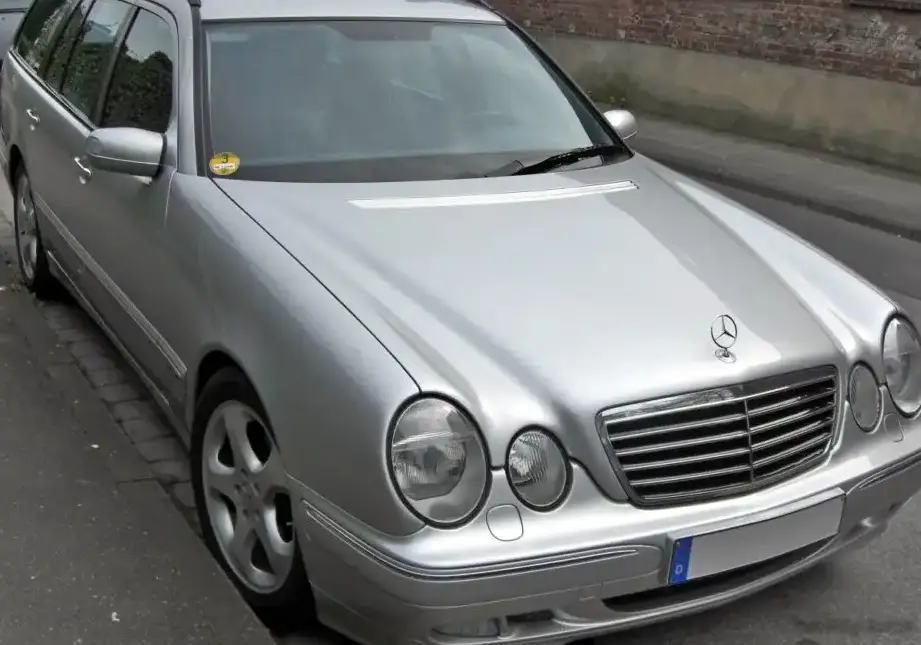
The Mercedes-Benz E-Class T-modell (S210) facelift E 280, produced from February 1999 to November 2002, represents a refined iteration of the popular W210-series wagon. Positioned as a mid-range offering within the T-modell lineup, it bridged the gap between the more economical four-cylinder variants and the high-performance E 430 and E 55 AMG models. This variant was primarily aimed at buyers seeking a balance of luxury, practicality, and respectable performance in a spacious, family-oriented vehicle. The S210 facelift brought significant updates to the W210, addressing criticisms of the earlier models and enhancing overall refinement.
Technical Specifications
| Brand | Mercedes-Benz |
| Model | E-Class |
| Generation | E-Class T-modell (S210, facelift 1999) |
| Type (Engine) | E 280 (204 Hp) Automatic |
| Start of production | February, 1999 |
| End of production | November, 2002 |
| Powertrain Architecture | Internal Combustion engine |
| Body type | Station wagon (estate) |
| Seats | 5 |
| Doors | 5 |
| Fuel consumption (urban) | 15.9 l/100 km (14.8 US mpg, 17.8 UK mpg, 6.3 km/l) |
| Fuel consumption (extra urban) | 8.5 l/100 km (27.7 US mpg, 33.2 UK mpg, 11.8 km/l) |
| Fuel consumption (combined) | 11.2 l/100 km (21 US mpg, 25.2 UK mpg, 8.9 km/l) |
| Fuel Type | Petrol (Gasoline) |
| Acceleration 0 – 100 km/h | 9.5 sec |
| Acceleration 0 – 62 mph | 9.5 sec |
| Acceleration 0 – 60 mph | 9 sec |
| Maximum speed | 223 km/h (138.57 mph) |
| Weight-to-power ratio | 8.3 kg/Hp, 120 Hp/tonne |
| Weight-to-torque ratio | 6.3 kg/Nm, 158.8 Nm/tonne |
| Power | 204 Hp @ 5700 rpm |
| Power per litre | 72.9 Hp/l |
| Torque | 270 Nm @ 3000 rpm (199.14 lb.-ft. @ 3000 rpm) |
| Engine layout | Front, Longitudinal |
| Engine Model/Code | M 112 E 28 / 112.921 |
| Engine displacement | 2799 cm3 (170.81 cu. in.) |
| Number of cylinders | 6 |
| Engine configuration | V-engine |
| Cylinder Bore | 89.9 mm (3.54 in.) |
| Piston Stroke | 73.5 mm (2.89 in.) |
| Compression ratio | 10:1 |
| Number of valves per cylinder | 3 |
| Fuel injection system | Multi-port manifold injection |
| Engine aspiration | Naturally aspirated engine |
| Valvetrain | SOHC |
| Engine oil capacity | 8 l (8.45 US qt | 7.04 UK qt) |
| Coolant | 10 l (10.57 US qt | 8.8 UK qt) |
| Kerb Weight | 1700 kg (3747.86 lbs.) |
| Max. weight | 2280 kg (5026.54 lbs.) |
| Max load | 580 kg (1278.68 lbs.) |
| Trunk (boot) space – minimum | 600 l (21.19 cu. ft.) |
| Trunk (boot) space – maximum | 1975 l (69.75 cu. ft.) |
| Fuel tank capacity | 70 l (18.49 US gal | 15.4 UK gal) |
| Length | 4839 mm (190.51 in.) |
| Width | 1799 mm (70.83 in.) |
| Height | 1505 mm (59.25 in.) |
| Wheelbase | 2833 mm (111.54 in.) |
| Front track | 1534 mm (60.39 in.) |
| Rear (Back) track | 1538 mm (60.55 in.) |
| Drag coefficient (Cd) | 0.33 |
| Drivetrain Architecture | The Internal combustion engine (ICE) drives the rear wheels of the vehicle. |
| Drive wheel | Rear wheel drive |
| Number of gears and type of gearbox | 5 gears, automatic transmission |
| Front suspension | Double wishbone |
| Rear suspension | Hydro-pneumatic element, Independent multi-link suspension |
| Front brakes | Ventilated discs |
| Rear brakes | Disc |
| Assisting systems | ABS (Anti-lock braking system) |
| Steering type | Steering rack and pinion |
| Power steering | Hydraulic Steering |
| Tires size | 215/55 R16 |
| Wheel rims size | 7.5J x 16 |
Powertrain & Engine Architecture
The E 280 T-modell utilized the M112 E 28 engine, a 2.8-liter naturally aspirated V6. This engine, part of Mercedes-Benz’s modular V-engine family, featured all-aluminum construction, a three-valve per cylinder (three intake, two exhaust) design, and a relatively high 10:1 compression ratio. Fuel delivery was handled by a multi-port fuel injection system. The engine produced 204 horsepower at 5700 rpm and 270 Nm (199 lb-ft) of torque at 3000 rpm. The engine code 112.921 is specific to this configuration. Paired with the M112 was the 5G-Tronic automatic transmission, a five-speed unit known for its smooth shifting and adaptability. This transmission offered both fully automatic operation and a manual shift mode for greater driver control.
Driving Characteristics
The E 280 Automatic offered a comfortable and refined driving experience. While not overtly sporty, the 2.8-liter V6 provided adequate power for everyday driving and highway cruising. Acceleration from 0 to 60 mph took approximately 9 seconds, and top speed was electronically limited to 138.57 mph. The automatic transmission’s gear ratios were tuned for fuel efficiency and smooth transitions, rather than outright performance. Compared to the more powerful E 430, the E 280 felt less urgent in its acceleration, but it offered a more relaxed and economical driving experience. The automatic transmission, while smooth, didn’t offer the responsiveness of a manual gearbox, and some drivers found it could be hesitant during quick overtaking maneuvers.
Equipment & Trim Levels
The E 280 T-modell came standard with a comprehensive list of features, including automatic climate control, power windows and locks, a multi-function steering wheel, and a high-quality audio system. Interior upholstery was typically cloth, but leather was available as an option. Common optional extras included a sunroof, heated seats, a navigation system, and upgraded audio options. The facelift models also benefited from improved interior trim materials and a more modern dashboard design compared to pre-facelift W210s. Wood trim was a popular option, adding to the luxurious feel of the cabin.
Chassis & Braking
The S210 chassis featured a double wishbone front suspension and an independent multi-link rear suspension, providing a comfortable ride and good handling characteristics. The E 280 typically came equipped with ventilated disc brakes at the front and solid discs at the rear. Anti-lock braking system (ABS) was standard. The suspension was tuned to prioritize comfort over sporty handling, but it still offered a stable and predictable driving experience. Stabilizer bars were fitted front and rear to reduce body roll during cornering.
Market Reception & Comparison
The E 280 T-modell was generally well-received by automotive critics. It was praised for its spacious interior, comfortable ride, and refined engine. However, some reviewers noted that the automatic transmission could feel sluggish at times, and the overall driving experience wasn’t as engaging as some of its competitors. Fuel economy was considered reasonable for a vehicle of its size and class, averaging around 21 mpg in combined driving. Compared to the E 320, the E 280 offered a lower price point but with slightly less power and performance. The E 280 was often seen as a sensible choice for families who needed a practical and reliable wagon without the expense of the higher-end models.
Legacy
The M112 engine family, including the 2.8-liter variant found in the E 280, is known for its durability and reliability. While maintenance costs can be higher than some other engines due to its complexity, the M112 is generally considered a robust and long-lasting powerplant. Today, well-maintained E 280 T-modell examples are sought after by enthusiasts who appreciate their classic Mercedes-Benz styling, comfortable ride, and practical wagon body style. Common issues include age-related wear and tear on suspension components and potential leaks from cooling system hoses. However, with proper maintenance, these vehicles can continue to provide years of reliable service.