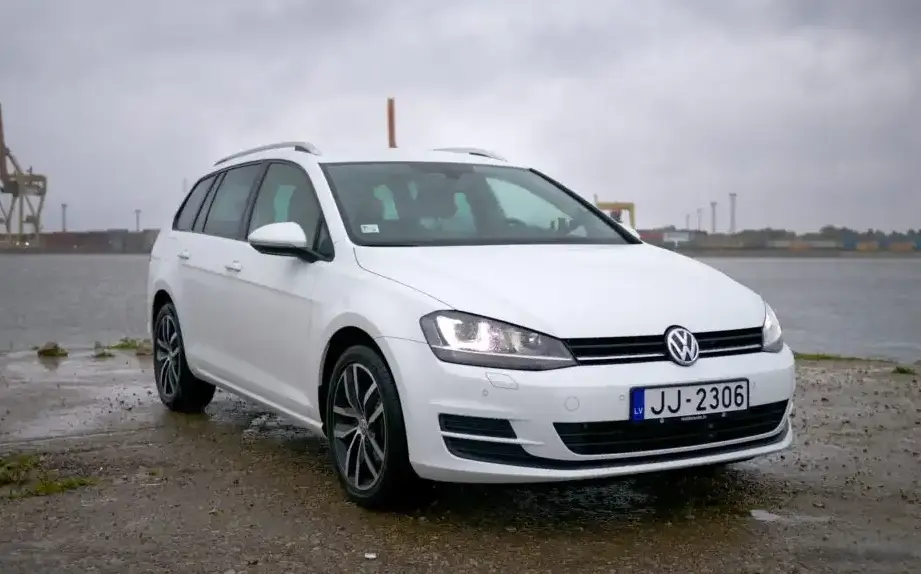
The Volkswagen Golf VII Variant 1.4 TSI (140 hp) was a popular configuration within the seventh generation of Volkswagen’s iconic Golf model line, produced from 2012 to 2014. This variant, a station wagon (estate) body style, offered a practical and efficient option for families and individuals seeking a versatile vehicle. It occupied a mid-range position in the Golf VII Variant lineup, bridging the gap between the more economical base models and the higher-performance trims. The Golf VII generation, built on the MQB (Modular Transverse Matrix) platform, represented a significant leap forward in terms of technology, fuel efficiency, and overall refinement compared to its predecessor.
Technical Specifications
| Brand | Volkswagen |
| Model | Golf |
| Generation | Golf VII Variant |
| Type (Engine) | 1.4 TSI (140 Hp) |
| Start of production | 2012 |
| End of production | 2014 |
| Powertrain Architecture | Internal Combustion engine |
| Body type | Station wagon (estate) |
| Seats | 5 |
| Doors | 5 |
| Fuel consumption (urban) | 6.6 l/100 km (35.6 US mpg, 42.8 UK mpg, 15.2 km/l) |
| Fuel consumption (extra urban) | 4.5 l/100 km (52.3 US mpg, 62.8 UK mpg, 22.2 km/l) |
| Fuel consumption (combined) | 5.3 l/100 km (44.4 US mpg, 53.3 UK mpg, 18.9 km/l) |
| Fuel Type | Petrol (Gasoline) |
| Acceleration 0 – 100 km/h | 8.9 sec |
| Acceleration 0 – 62 mph | 8.9 sec |
| Acceleration 0 – 60 mph | 8.5 sec |
| Maximum speed | 213 km/h (132.35 mph) |
| Weight-to-power ratio | 9.7 kg/Hp, 103.4 Hp/tonne |
| Weight-to-torque ratio | 5.4 kg/Nm, 184.6 Nm/tonne |
| Power | 140 Hp @ 4500-6000 rpm |
| Power per litre | 100.4 Hp/l |
| Torque | 250 Nm @ 1500-3500 rpm (184.39 lb.-ft. @ 1500-3500 rpm) |
| Engine layout | Front, Transverse |
| Engine Model/Code | CHPA |
| Engine displacement | 1395 cm3 (85.13 cu. in.) |
| Number of cylinders | 4 |
| Engine configuration | Inline |
| Fuel injection system | Direct injection |
| Engine aspiration | Turbocharger, Intercooler |
| Engine oil capacity | 4 l (4.23 US qt | 3.52 UK qt) |
| Kerb Weight | 1354 kg (2985.06 lbs.) |
| Max. weight | 1880 kg (4144.69 lbs.) |
| Max load | 526 kg (1159.63 lbs.) |
| Trunk (boot) space – minimum | 605 l (21.37 cu. ft.) |
| Trunk (boot) space – maximum | 1620 l (57.21 cu. ft.) |
| Fuel tank capacity | 50 l (13.21 US gal | 11 UK gal) |
| Length | 4562 mm (179.61 in.) |
| Width | 1799 mm (70.83 in.) |
| Height | 1481 mm (58.31 in.) |
| Wheelbase | 2635 mm (103.74 in.) |
| Front track | 1549 mm (60.98 in.) |
| Rear (Back) track | 1520 mm (59.84 in.) |
| Minimum turning circle | 10.9 m (35.76 ft.) |
| Drivetrain Architecture | The Internal combustion engine (ICE) drives the front wheels of the vehicle. |
| Drive wheel | Front wheel drive |
| Number of gears | 6 gears, manual transmission |
| Assisting systems | ABS (Anti-lock braking system) |
Powertrain & Engine Architecture
At the heart of the Golf VII Variant 1.4 TSI (140 hp) lies the CHPA engine code, a 1.4-liter turbocharged inline-four cylinder gasoline engine. This engine was a member of Volkswagen’s EA111 family, known for its compact size and efficiency. The CHPA featured direct fuel injection, delivering fuel directly into the combustion chamber for improved combustion efficiency and reduced emissions. A single turbocharger, coupled with an intercooler, provided forced induction, boosting power output. The engine utilized a timing chain rather than a belt, contributing to lower maintenance costs over the long term. The six-speed manual transmission was standard, offering precise gear changes and a more engaging driving experience. The engine’s control unit (ECU) managed fuel delivery, ignition timing, and turbocharger boost pressure to optimize performance and fuel economy.
Driving Characteristics
The 140 hp output of the 1.4 TSI engine, combined with the six-speed manual transmission, provided a balanced driving experience. Acceleration from 0 to 60 mph took approximately 8.5 seconds, making it adequately quick for everyday driving situations. The turbocharger provided a noticeable boost in power during acceleration, but turbo lag was present, particularly at lower engine speeds. The manual transmission allowed drivers to maintain optimal engine speed for efficient cruising or spirited driving. Compared to the more powerful Golf VII Variant models, such as those equipped with the 2.0 TSI engine, the 1.4 TSI offered less outright performance. However, it excelled in fuel economy, making it a practical choice for drivers prioritizing efficiency. The gear ratios were well-matched to the engine’s torque curve, providing good in-gear acceleration.
Equipment & Trim Levels
The Golf VII Variant 1.4 TSI (140 hp) typically came equipped with a respectable level of standard features. These included air conditioning, power windows, power mirrors, a multi-function steering wheel, and an infotainment system with a touchscreen display. Safety features such as ABS, electronic stability control, and multiple airbags were also standard. Higher trim levels offered additional features such as alloy wheels, fog lights, parking sensors, and upgraded interior upholstery. Optional extras included a panoramic sunroof, navigation system, and advanced driver-assistance systems like adaptive cruise control.
Chassis & Braking
The Golf VII Variant’s chassis featured independent suspension at the front, typically utilizing MacPherson struts, and a multi-link rear suspension. This setup provided a comfortable ride and good handling characteristics. The front brakes were typically ventilated discs, while the rear brakes were often solid discs, depending on the specific trim level and market. The steering system employed a rack-and-pinion setup with electric power assistance, providing precise steering feel. Stabilizer bars were fitted to both the front and rear axles to reduce body roll during cornering.
Market Reception & Comparison
The Golf VII Variant 1.4 TSI (140 hp) was generally well-received by automotive critics. It was praised for its fuel efficiency, comfortable ride, and practical interior space. However, some critics noted that the engine could feel strained when fully loaded or driving uphill. Compared to the diesel-powered Golf VII Variant models, such as the 1.6 TDI and 2.0 TDI, the 1.4 TSI offered less torque but a smoother and quieter engine experience. The 1.4 TSI also offered a more affordable price point compared to the higher-performance gasoline variants.
Legacy
The 1.4 TSI engine, in various iterations, proved to be a reliable and durable powertrain. While some early versions of the EA111 engine experienced issues with carbon buildup on the intake valves, these were generally addressed in later revisions. The Golf VII Variant 1.4 TSI (140 hp) remains a popular choice in the used car market today, offering a good balance of practicality, efficiency, and affordability. Its relatively simple mechanical design and readily available parts contribute to its continued appeal. The Golf VII Variant, as a whole, cemented the Golf’s reputation as a versatile and well-rounded family vehicle.