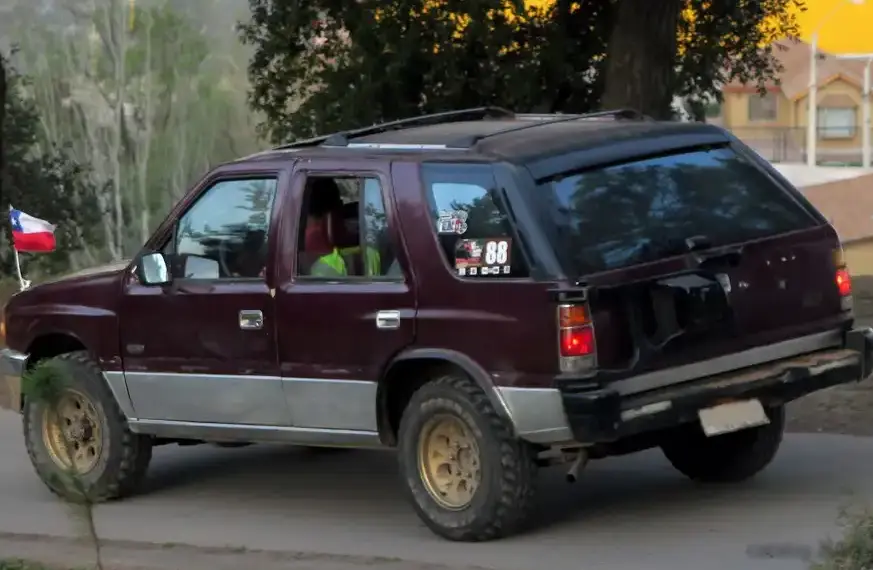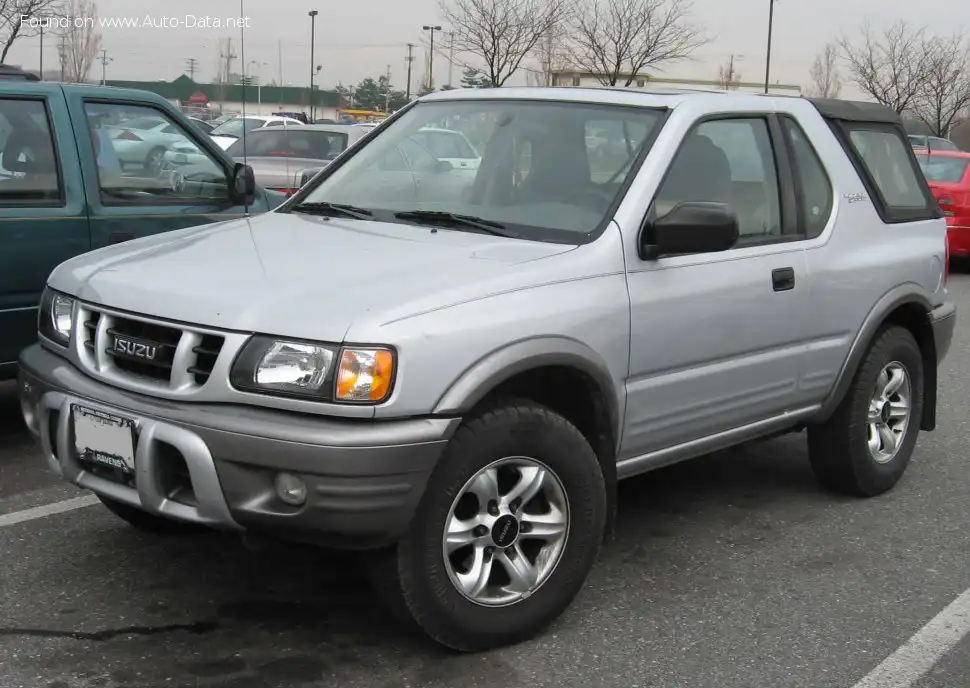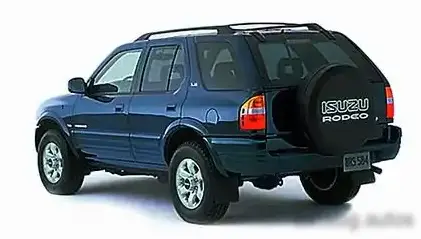
The Isuzu Rodeo Sport (UTS-145) 2.2 i 16V 2WD, manufactured between 1998 and 2004, served as the entry-level variant within the Isuzu Rodeo family. Positioned as a compact, three-door SUV, it aimed to attract buyers desiring a stylish and maneuverable vehicle. This model featured a 2.2-liter inline-four engine coupled with a five-speed manual transmission, striking a balance between fuel efficiency and adequate performance for its target demographic. The Rodeo Sport was designed to appeal to younger drivers or those seeking a smaller, more economical SUV alternative to the larger, four-door Rodeo models.
Technical Specifications
| Brand | Isuzu |
| Model | Rodeo |
| Generation | Rodeo Sport (UTS-145) |
| Type (Engine) | 2.2 i 16V 2WD (131 Hp) |
| Start of production | 1998 |
| End of production | 2004 |
| Powertrain Architecture | Internal Combustion engine |
| Body type | SUV |
| Seats | 5 |
| Doors | 3 |
| Fuel consumption (urban) | 11.8 l/100 km (19.9 US mpg) |
| Fuel consumption (extra urban) | 9.8 l/100 km (24 US mpg) |
| Fuel Type | Petrol (Gasoline) |
| Weight-to-power ratio | 12.9 kg/Hp |
| Weight-to-torque ratio | 8.7 kg/Nm |
| Power | 131 Hp @ 5200 rpm |
| Power per litre | 59.6 Hp/l |
| Torque | 195 Nm @ 4000 rpm (143.82 lb.-ft. @ 4000 rpm) |
| Engine layout | Front, Longitudinal |
| Engine displacement | 2198 cm3 (134.13 cu. in.) |
| Number of cylinders | 4 |
| Engine configuration | Inline |
| Cylinder Bore | 86 mm (3.39 in.) |
| Piston Stroke | 94.6 mm (3.72 in.) |
| Compression ratio | 9.6:1 |
| Number of valves per cylinder | 2 |
| Fuel injection system | Multi-port manifold injection |
| Engine aspiration | Naturally aspirated |
| Engine oil capacity | 4.5 l (4.76 US qt | 3.96 UK qt) |
| Coolant capacity | 6.9 l (7.29 US qt | 6.07 UK qt) |
| Kerb Weight | 1690 kg (3725.81 lbs.) |
| Max. weight | 2110 kg (4651.75 lbs.) |
| Max load | 420 kg (925.94 lbs.) |
| Trunk (boot) space – minimum | 569 l (20.09 cu. ft.) |
| Trunk (boot) space – maximum | 1770 l (62.51 cu. ft.) |
| Fuel tank capacity | 59 l (15.59 US gal | 12.98 UK gal) |
| Length | 4277 mm (168.39 in.) |
| Width | 1814 mm (71.42 in.) |
| Height | 1704 mm (67.09 in.) |
| Wheelbase | 2462 mm (96.93 in.) |
| Front track | 1514 mm (59.61 in.) |
| Rear track | 1519 mm (59.8 in.) |
| Drivetrain Architecture | Rear wheel drive |
| Number of gears | 5 |
| Gearbox type | Manual transmission |
| Front suspension | Torsion |
| Rear suspension | Coil spring |
| Front brakes | Ventilated discs |
| Rear brakes | Drum |
| Assisting systems | ABS (Anti-lock braking system) |
| Tires size | 225/70 R15 |
Powertrain & Engine Architecture
The Rodeo Sport 2.2 i’s engine was the 4ZE1, a 2.2-liter inline-four cylinder gasoline engine. This engine employed a single overhead camshaft (SOHC) configuration with two valves per cylinder. A multi-port fuel injection system delivered fuel directly to each intake port, optimizing combustion. The engine generated 131 horsepower at 5200 rpm and 195 Nm (143.82 lb-ft) of torque at 4000 rpm. The longitudinal engine mounting facilitated a rear-wheel-drive setup, contributing to the vehicle’s handling. The five-speed manual transmission offered drivers precise gear control, enhancing the driving experience. While not exceptionally powerful, the 4ZE1 engine was known for its relative reliability and straightforward maintenance.
Driving Characteristics
The combination of the 2.2-liter engine and five-speed manual transmission in the Rodeo Sport provided a reasonably engaging driving experience. Acceleration was sufficient for daily commutes, though it wasn’t a particularly fast vehicle. The five-speed gearbox allowed drivers to maintain the engine within its optimal power range, improving responsiveness. Compared to the larger engines available in other Rodeo models, the 2.2-liter prioritized fuel economy over outright performance. The rear-wheel-drive layout offered a more direct connection to the road, appealing to drivers who preferred a traditional driving feel. The Rodeo Sport’s shorter wheelbase also contributed to its nimble handling characteristics.
Equipment & Trim Levels
The Rodeo Sport 2.2 i typically came with a basic equipment package, emphasizing functionality and affordability. Standard features generally included air conditioning, a basic audio system, and cloth upholstery. Power windows and door locks were often optional extras. The interior design was simple and durable, prioritizing practicality over luxury. The three-door body style limited rear passenger space, making it best suited for individuals or small families. Available optional extras included alloy wheels, upgraded audio systems, and a sunroof.
Chassis & Braking
The Rodeo Sport utilized a body-on-frame construction, providing a robust and durable chassis. The front suspension consisted of torsion bars, while the rear suspension employed coil springs. This setup delivered a comfortable ride, although it wasn’t as refined as more modern independent suspension systems. The braking system featured ventilated discs on the front wheels and drum brakes on the rear. An anti-lock braking system (ABS) was included as a standard safety feature. The standard tire size was 225/70 R15, offering a balance between grip and ride comfort.
Market Reception & Comparison
The Isuzu Rodeo Sport 2.2 i 16V 2WD was generally well-received as an affordable and versatile SUV. Critics praised its sporty handling and fuel efficiency, but noted its lower power output compared to larger-engined models. Compared to the four-door Rodeo, the Sport offered a more compact and maneuverable package, appealing to buyers who didn’t require the extra space. The 4ZE1 engine proved reasonably dependable in terms of reliability, though regular maintenance was crucial. Fuel economy was a key strength, providing a competitive advantage over larger SUVs.
Legacy
The Isuzu Rodeo Sport 2.2 i 16V 2WD has become a relatively affordable option in the used car market. The 4ZE1 engine is known for its durability, but, like any older vehicle, requires consistent maintenance for long-term reliability. Parts availability can be a concern, as the Rodeo has been discontinued for some time. However, the vehicle’s simple design and robust construction make it relatively easy to repair and maintain. Today, the Rodeo Sport appeals to enthusiasts seeking a classic, affordable SUV with a distinctive character.