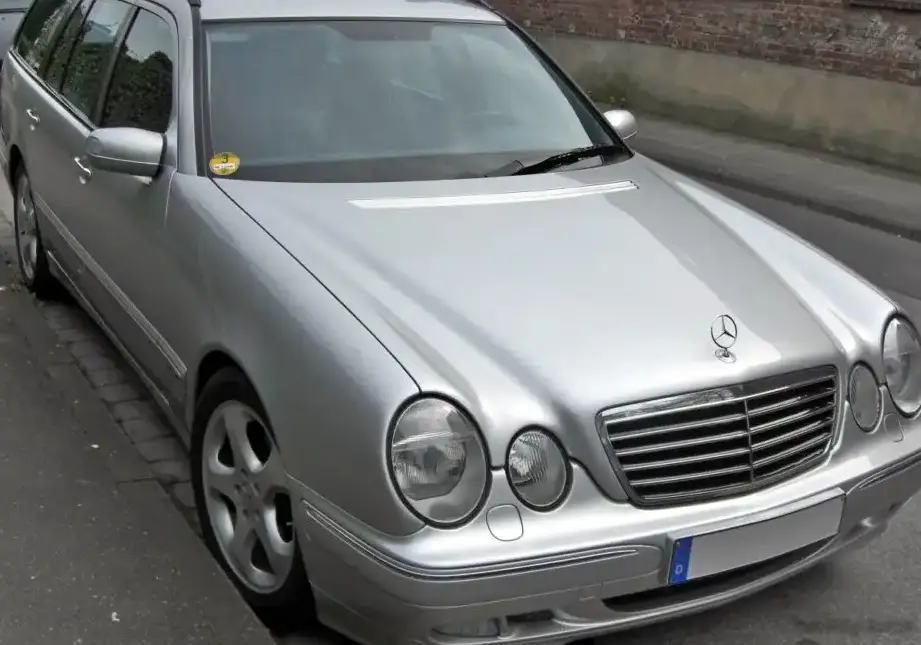
The Mercedes-Benz E 320 4MATIC T-modell (S210), produced from July 1999 to September 2002, represents a compelling blend of luxury, practicality, and all-weather capability within the W210 facelifted E-Class range. Positioned as a mid-to-upper tier offering, the E 320 4MATIC wagon catered to buyers seeking a refined estate car with strong performance and the added security of Mercedes-Benz’s all-wheel-drive system. This variant occupied a space between the more economical E 240 and the higher-performance E 430, appealing to those prioritizing a balance of power, comfort, and versatility. The S210 designation refers to the estate (wagon) body style of the W210 generation, and the “facelift” denotes the cosmetic and mechanical updates introduced in 1999.
Technical Specifications
| Brand | Mercedes-Benz |
| Model | E-class |
| Generation | E-class T-modell (S210, facelift 1999) |
| Type (Engine) | E 320 (224 Hp) 4MATIC Automatic |
| Start of production | July, 1999 |
| End of production | September, 2002 |
| Powertrain Architecture | Internal Combustion engine |
| Body type | Station wagon (estate) |
| Seats | 5 |
| Doors | 5 |
| Fuel consumption (urban) | 16.8 l/100 km (14 US mpg, 16.8 UK mpg, 6 km/l) |
| Fuel consumption (extra urban) | 8.7 l/100 km (27 US mpg, 32.5 UK mpg, 11.5 km/l) |
| Fuel consumption (combined) | 11.5 l/100 km (20.5 US mpg, 24.6 UK mpg, 8.7 km/l) |
| Fuel Type | Petrol (Gasoline) |
| Acceleration 0 – 100 km/h | 9.2 sec |
| Acceleration 0 – 62 mph | 9.2 sec |
| Acceleration 0 – 60 mph | 8.7 sec |
| Maximum speed | 225 km/h (139.81 mph) |
| Weight-to-power ratio | 8.1 kg/Hp, 123.8 Hp/tonne |
| Weight-to-torque ratio | 5.7 kg/Nm, 174 Nm/tonne |
| Power | 224 Hp @ 5600 rpm |
| Power per litre | 70 Hp/l |
| Torque | 315 Nm @ 3000-4800 rpm (232.33 lb.-ft. @ 3000-4800 rpm) |
| Engine layout | Front, Longitudinal |
| Engine Model/Code | M 112 E 32 / 112.941 |
| Engine displacement | 3199 cm3 (195.21 cu. in.) |
| Number of cylinders | 6 |
| Engine configuration | V-engine |
| Cylinder Bore | 89.9 mm (3.54 in.) |
| Piston Stroke | 84 mm (3.31 in.) |
| Compression ratio | 10:1 |
| Number of valves per cylinder | 3 |
| Fuel injection system | Multi-port manifold injection |
| Engine aspiration | Naturally aspirated engine |
| Valvetrain | SOHC |
| Engine oil capacity | 8 l (8.45 US qt | 7.04 UK qt) |
| Coolant | 10 l (10.57 US qt | 8.8 UK qt) |
| Kerb Weight | 1810 kg (3990.37 lbs.) |
| Max. weight | 2360 kg (5202.91 lbs.) |
| Max load | 550 kg (1212.54 lbs.) |
| Trunk (boot) space – minimum | 600 l (21.19 cu. ft.) |
| Trunk (boot) space – maximum | 1920 l (67.8 cu. ft.) |
| Fuel tank capacity | 70 l (18.49 US gal | 15.4 UK gal) |
| Length | 4839 mm (190.51 in.) |
| Width | 1799 mm (70.83 in.) |
| Height | 1505 mm (59.25 in.) |
| Wheelbase | 2833 mm (111.54 in.) |
| Front track | 1528 mm (60.16 in.) |
| Rear (Back) track | 1538 mm (60.55 in.) |
| Drag coefficient (Cd) | 0.32 |
| Drivetrain Architecture | The Internal combustion engine (ICE) drives permanently the four wheels of the vehicle. |
| Drive wheel | All wheel drive (4×4) |
| Number of gears and type of gearbox | 5 gears, automatic transmission |
| Front suspension | Double wishbone |
| Rear suspension | Hydro-pneumatic element, Independent multi-link suspension |
| Front brakes | Ventilated discs |
| Rear brakes | Disc |
| Assisting systems | ABS (Anti-lock braking system) |
| Steering type | Steering rack and pinion |
| Power steering | Hydraulic Steering |
| Tires size | 215/55 R16 |
| Wheel rims size | 7.5J x 16 |
Powertrain & Engine Architecture
The E 320 4MATIC T-modell is powered by the M112 E 32 engine, a 3.2-liter naturally aspirated V6. This engine, part of Mercedes-Benz’s modular V-engine family, features all-aluminum construction, a silicon-aluminum alloy block, and three valves per cylinder (two intake, one exhaust). The M112 employed a short-runner intake manifold for improved torque at lower engine speeds and a multi-port fuel injection system. The engine’s code, 112.941, identifies specific variations in its calibration and equipment. The engine produces 224 horsepower at 5600 rpm and 315 Nm (232 lb-ft) of torque between 3000 and 4800 rpm. Paired with the engine is a 5-speed automatic transmission (typically the 722.6), known for its smooth operation and reliability. This transmission features electronically controlled shifting and adaptive learning to optimize gear selection based on driving style.
Driving Characteristics
The E 320 4MATIC offered a refined and capable driving experience. The 3.2-liter V6 provided ample power for comfortable highway cruising and confident acceleration. While not a sports car, the E 320 could reach 0-60 mph in approximately 8.7 seconds and achieve a top speed of 139.81 mph. The automatic transmission, while smooth, wasn’t as quick to downshift as some contemporary transmissions, but it provided seamless gear changes during normal driving. The 4MATIC all-wheel-drive system distributed power between the front and rear axles, enhancing traction in adverse weather conditions and providing a more secure feel on slippery surfaces. The weight distribution, combined with the sophisticated suspension, resulted in predictable handling and a comfortable ride.
Equipment & Trim Levels
The E 320 4MATIC T-modell came standard with a comprehensive list of features, reflecting its position as a premium vehicle. Standard equipment typically included leather upholstery, automatic climate control, power-adjustable front seats with memory function, a premium sound system, and a sunroof. Optional extras included navigation system, heated front seats, rear sunshades, and upgraded wood trim. The interior design was characterized by its elegant simplicity and high-quality materials. The wagon’s rear seats could be folded down to expand cargo capacity, and a self-leveling suspension system helped maintain a consistent ride height even when heavily loaded.
Chassis & Braking
The S210 E-Class featured a double wishbone front suspension and a multi-link independent rear suspension. The rear suspension utilized a hydro-pneumatic element to provide a comfortable ride and self-leveling capabilities. The E 320 4MATIC was equipped with ventilated disc brakes at the front and solid discs at the rear. Anti-lock braking system (ABS) was standard, enhancing braking performance and stability. The steering system was a rack-and-pinion setup with hydraulic power assistance, providing precise and responsive steering feel.
Market Reception & Comparison
The E 320 4MATIC T-modell was generally well-received by automotive critics. It was praised for its comfortable ride, spacious interior, and the added security of all-wheel drive. Compared to the E 240, the E 320 offered significantly more power and a more refined driving experience. However, it was less fuel-efficient. Compared to the E 430, the E 320 provided a better balance of performance and economy, making it a more practical choice for many buyers. Fuel economy figures averaged around 20.5 US mpg combined, which was typical for a vehicle of its size and class at the time.
Legacy
The M112 engine family, including the 3.2-liter variant found in the E 320, is known for its durability and reliability. While maintenance costs can be higher than some other engines due to its complexity, the M112 is generally considered a robust and long-lasting powerplant. The 5-speed automatic transmission is also relatively reliable, although regular fluid changes are essential. Today, well-maintained E 320 4MATIC T-modells are sought after by enthusiasts who appreciate their blend of luxury, practicality, and all-weather capability. They represent a compelling alternative to more modern wagons, offering a classic Mercedes-Benz experience with a touch of timeless style.