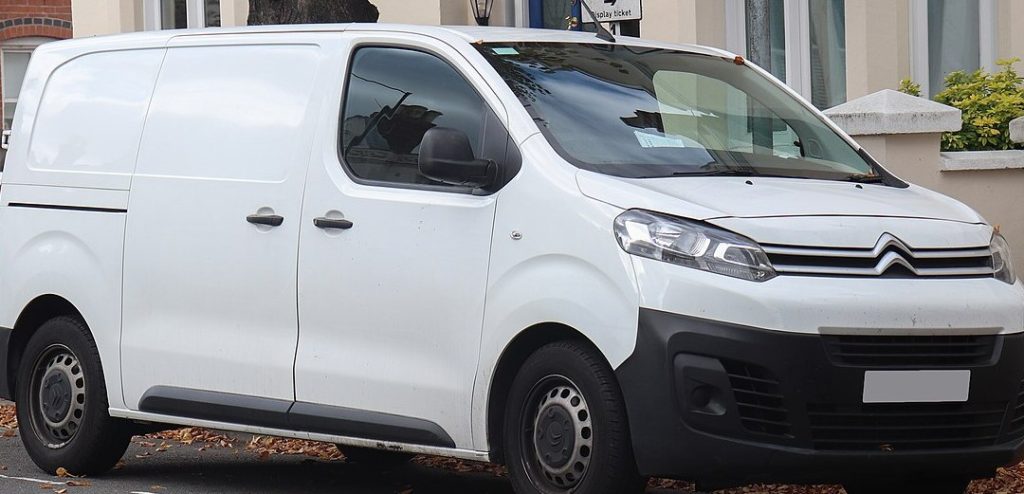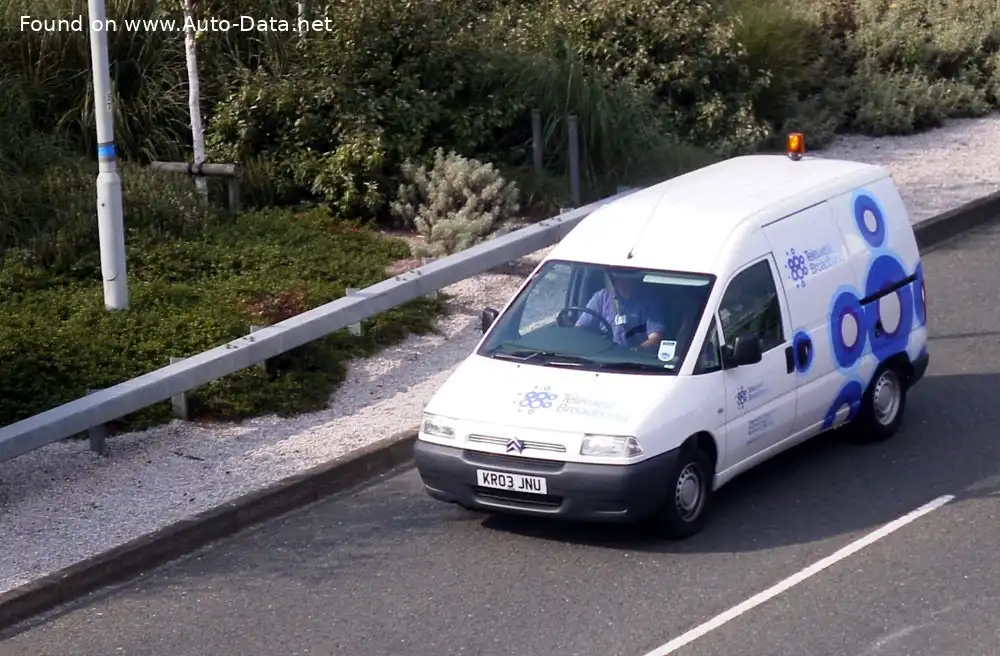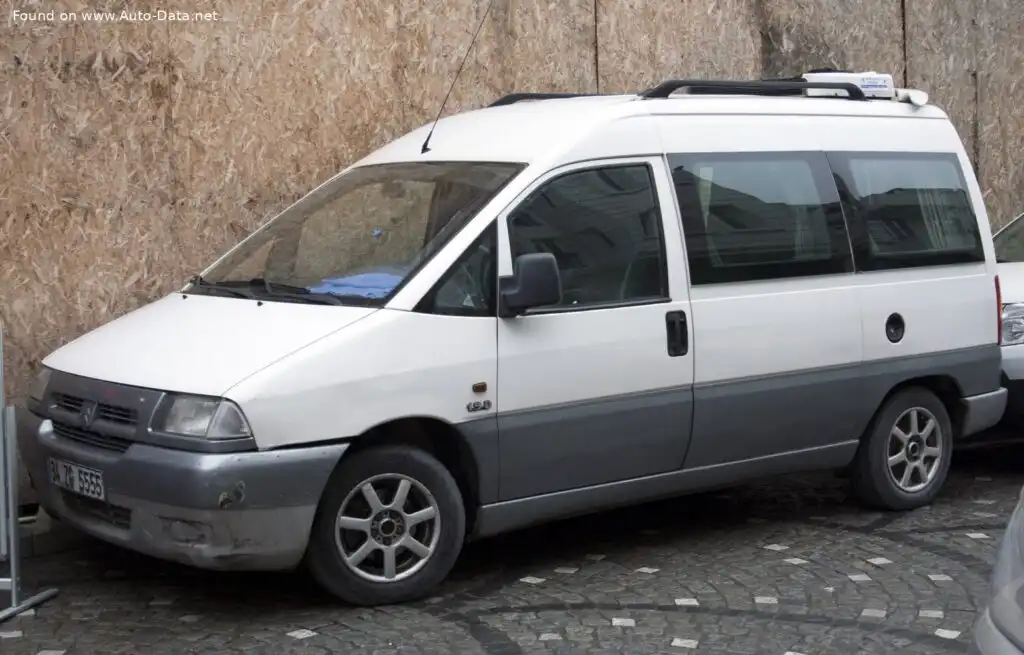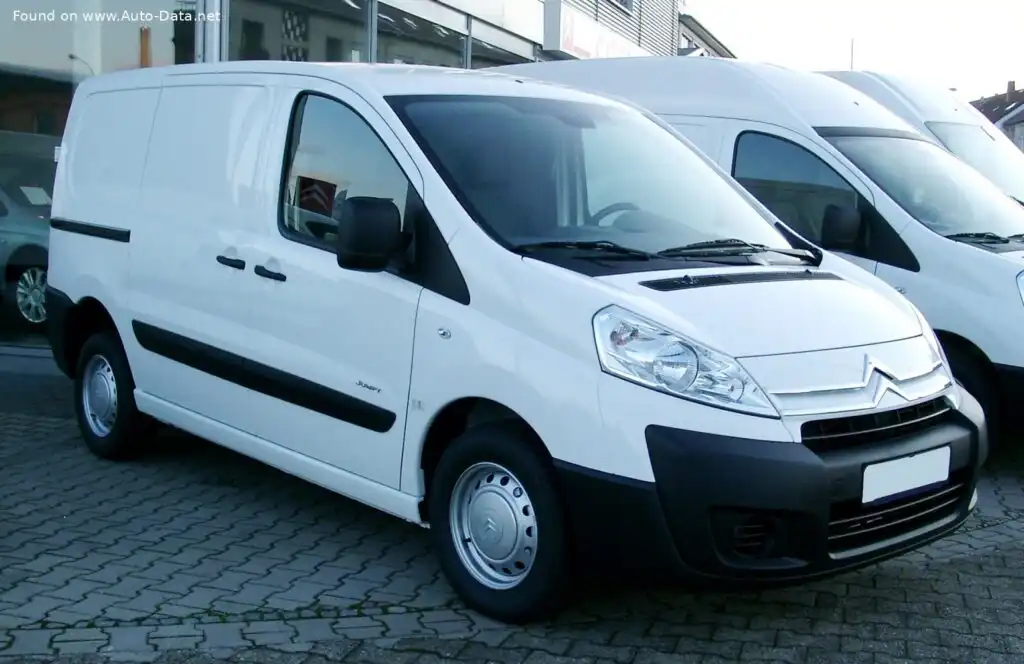
The Citroen Jumpy II 2.0 HDi (120 hp) L2H1 DPF, produced from 2010 to 2011, represents a significant iteration of Citroen’s popular light commercial vehicle. Part of the second generation Jumpy (known as the Dispatch in the UK), this variant occupied a middle ground in the lineup, offering a balance between performance, fuel economy, and practicality for commercial users and families alike. The “L2H1” designation refers to the vehicle’s body length (L2 – medium length) and roof height (H1 – standard roof height). It was primarily marketed in Europe as a versatile panel van, passenger shuttle (Combi), and even a platform cab for specialized conversions.
Technical Specifications
| Brand | Citroen |
| Model | Jumpy |
| Generation | Jumpy II |
| Type | 2.0 HDi (120 Hp) L2H1 DPF |
| Start of production | 2010 |
| End of production | 2011 |
| Powertrain Architecture | Internal Combustion engine |
| Body type | Minivan |
| Seats | 3 |
| Doors | 4 |
| Fuel consumption (urban) | 9.2 l/100 km (25.6 US mpg) |
| Fuel consumption (extra urban) | 6.4 l/100 km (36.8 US mpg) |
| Fuel consumption (combined) | 7.4 l/100 km (31.8 US mpg) |
| CO2 emissions | 196 g/km |
| Fuel Type | Diesel |
| Maximum speed | 160 km/h (99.42 mph) |
| Emission standard | Euro 4 |
| Weight-to-power ratio | 14.5 kg/Hp |
| Weight-to-torque ratio | 5.8 kg/Nm |
| Power | 120 Hp @ 4000 rpm |
| Torque | 300 Nm @ 2000 rpm (221.27 lb.-ft. @ 2000 rpm) |
| Engine layout | Front, Transverse |
| Engine Model/Code | RHK DW10UTED4 |
| Engine displacement | 1997 cm3 (121.86 cu. in.) |
| Number of cylinders | 4 |
| Engine configuration | Inline |
| Cylinder Bore | 85 mm (3.35 in.) |
| Piston Stroke | 88 mm (3.46 in.) |
| Number of valves per cylinder | 4 |
| Fuel injection system | Diesel Commonrail |
| Engine aspiration | Turbocharger, Intercooler |
| Engine oil capacity | 5.25 l (5.55 US qt | 4.62 UK qt) |
| Kerb Weight | 1743 kg (3842.66 lbs.) |
| Max. weight | 2943 kg (6488.2 lbs.) |
| Max load | 1200 kg (2645.55 lbs.) |
| Trunk (boot) space – maximum | 6000 l (211.89 cu. ft.) |
| Fuel tank capacity | 80 l (21.13 US gal | 17.6 UK gal) |
| Max. roof load | 170 kg (374.79 lbs.) |
| Permitted trailer load with brakes (12%) | 1957 kg (4314.45 lbs.) |
| Permitted trailer load without brakes | 750 kg (1653.47 lbs.) |
| Permitted towbar download | 80 kg (176.37 lbs.) |
| Length | 5135 mm (202.17 in.) |
| Width | 1895 mm (74.61 in.) |
| Width with mirrors folded | 1986 mm (78.19 in.) |
| Width including mirrors | 2194 mm (86.38 in.) |
| Height | 1880 mm (74.02 in.) |
| Wheelbase | 3122 mm (122.91 in.) |
| Front track | 1562 mm (61.5 in.) |
| Rear track | 1596 mm (62.83 in.) |
| Front overhang | 975 mm (38.39 in.) |
| Rear overhang | 1038 mm (40.87 in.) |
| Minimum turning circle | 12.6 m (41.34 ft.) |
| Drivetrain | Front wheel drive |
| Number of gears | 6 |
| Gearbox type | Manual transmission |
| Front suspension | Independent, McPherson with coil spring and anti-roll bar |
| Rear suspension | Semi-dependent beam with stabilizer |
| Front brakes | Ventilated discs, 304×28 mm |
| Rear brakes | Disc, 290×14 mm |
| Assisting systems | ABS |
| Steering type | Steering rack and pinion |
| Tires size | 215/60 R16 |
| Wheel rims size | 16 |
INTRODUCTION
The Citroen Jumpy II, launched in 2007, represented a collaborative effort with Peugeot and Fiat (resulting in the Peugeot Expert and Fiat Scudo respectively). This second generation offered improved practicality, safety, and comfort compared to its predecessor. The 2.0 HDi 120 hp variant, specifically the L2H1 configuration, was a popular choice for businesses needing a medium-sized van with reasonable running costs. It served as a workhorse for delivery services, tradespeople, and even as a family vehicle with its multi-seat Combi versions. This engine and body style combination aimed to provide a sweet spot between payload capacity and fuel efficiency.
Powertrain & Engine Architecture
At the heart of the Jumpy II 2.0 HDi 120 is the DW10UTED4 engine, a 1.997-liter, four-cylinder diesel engine. This engine is a member of the PSA Group’s (Peugeot Société Anonyme) HDi family, known for its common-rail direct injection system. The DW10UTED4 utilizes a turbocharger with an intercooler to boost power and torque. The common-rail system, supplied by Bosch, delivers fuel at extremely high pressure, resulting in finer atomization and more efficient combustion. The engine features four valves per cylinder and a single overhead camshaft. The 120 hp output is achieved at 4000 rpm, while the peak torque of 300 Nm (221 lb-ft) is available from just 2000 rpm, providing good low-end grunt for hauling loads. This particular variant was typically paired with a five-speed manual transmission, although a six-speed manual was also available depending on the year and specific market. The transmission is front-wheel drive, contributing to slightly better fuel economy compared to all-wheel-drive options available on other Jumpy II models.
Driving Characteristics
The Jumpy II 2.0 HDi 120 hp, while not a performance vehicle, offers adequate power for most everyday tasks. Acceleration is modest, but the strong low-end torque makes it capable of carrying heavy loads without feeling strained. The five-speed gearbox is well-matched to the engine’s characteristics, providing usable ratios for both city driving and highway cruising. Compared to the more powerful 160 hp HDi version, the 120 hp model feels noticeably slower, especially when fully loaded. However, it compensates with improved fuel economy. The steering is light and precise, making it easy to maneuver in tight spaces. The suspension, while tuned for practicality rather than sportiness, provides a reasonably comfortable ride, even on uneven surfaces. The relatively low weight of the L2H1 configuration contributes to its agility.
Equipment & Trim Levels
The Jumpy II 2.0 HDi 120 L2H1 typically came with a fairly basic level of equipment, reflecting its commercial vehicle origins. Standard features generally included power steering, a driver’s airbag, ABS brakes, and a basic audio system. Higher trim levels, often designated as “Professional” or “Club,” added features such as air conditioning, electric windows, a passenger airbag, and upgraded upholstery. Optional extras included rear parking sensors, a navigation system, and metallic paint. The interior was functional and durable, with hard-wearing plastics and comfortable seats. The Combi passenger versions offered more refined interiors with additional seating configurations.
Chassis & Braking
The Jumpy II utilizes a front-wheel-drive chassis with an independent McPherson strut suspension at the front and a semi-dependent beam axle with a stabilizer bar at the rear. This setup provides a good balance between ride comfort and load-carrying capacity. The front brakes are ventilated discs, while the rear brakes are solid discs. ABS (Anti-lock Braking System) is standard, enhancing safety during emergency braking. The steering is a rack-and-pinion system, providing precise and responsive handling. The L2H1 variant’s relatively compact dimensions and lower weight contribute to its maneuverability.
Market Reception & Comparison
The Citroen Jumpy II 2.0 HDi 120 hp L2H1 was generally well-received by critics and commercial vehicle operators. It was praised for its fuel efficiency, practicality, and reliability. Compared to the more powerful 160 hp version, it offered a lower purchase price and slightly better fuel economy, making it an attractive option for businesses on a budget. However, some critics noted that the 120 hp engine could feel underpowered when fully loaded or when driving on steep inclines. Compared to competitors like the Volkswagen Transporter and Ford Transit, the Jumpy II offered a competitive package in terms of price, features, and running costs.
Legacy
The DW10UTED4 engine, while not without its occasional issues (such as potential turbocharger problems and diesel particulate filter clogging), proved to be a relatively durable and reliable powertrain when properly maintained. The Jumpy II, in general, has established a reputation for being a dependable workhorse. In the used car market, the 2.0 HDi 120 hp L2H1 variant remains a popular choice for businesses and individuals seeking a practical and affordable light commercial vehicle. Its relatively simple mechanicals and readily available parts make it relatively easy and inexpensive to maintain. However, potential buyers should be aware of the potential for DPF issues and ensure that the vehicle has been regularly serviced.