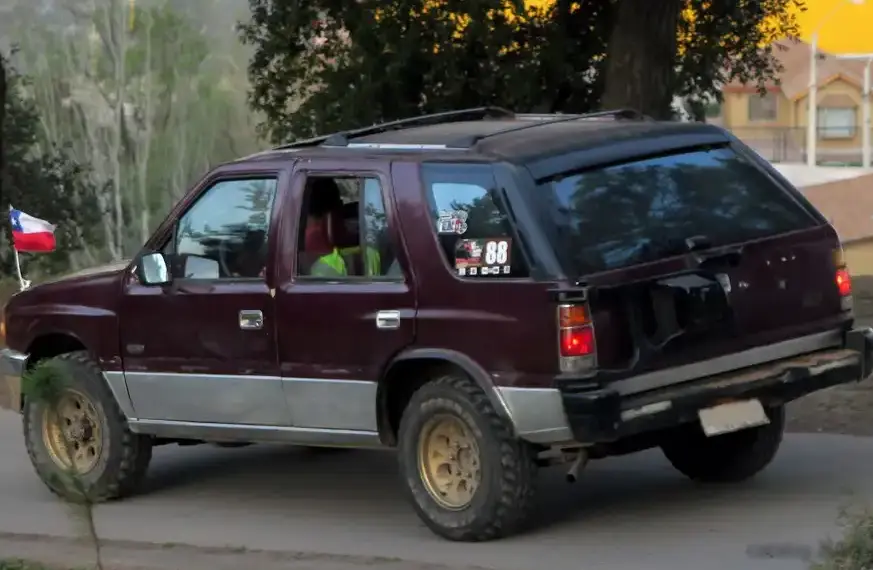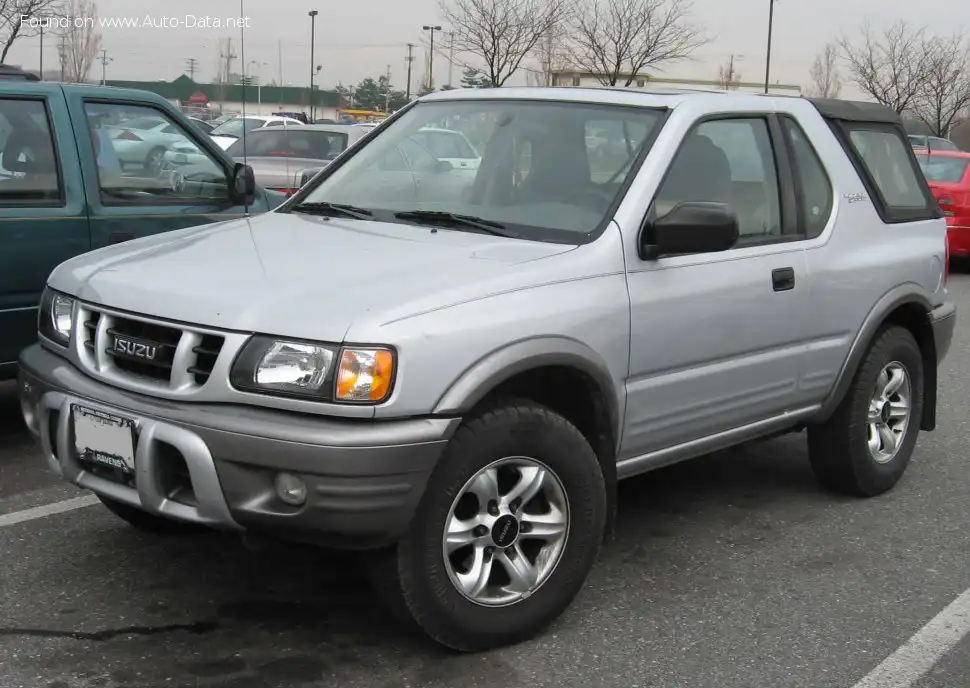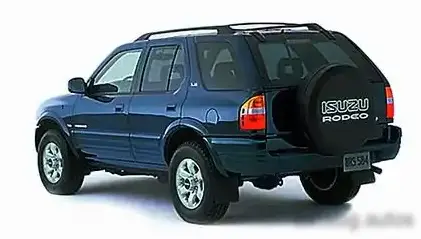
The Isuzu Rodeo (UTS-145) 2.2 i L 2WD, produced between 1998 and 2004, represented a key offering in Isuzu’s lineup during a period of increasing popularity for sport utility vehicles. This particular variant, powered by a 2.2-liter inline-four engine producing 130 horsepower, served as an entry-level option for buyers seeking a capable and affordable SUV. It occupied a position below the more powerful, often four-wheel drive, Rodeo models, targeting customers prioritizing fuel efficiency and basic transportation needs over off-road prowess. The UTS-145 designation refers to the chassis code for this generation of Rodeo, which shared components with the Honda Passport, a result of the ongoing partnership between Isuzu and Honda.
Technical Specifications
| Brand | Isuzu |
| Model | Rodeo |
| Generation | Rodeo (UTS-145) |
| Type (Engine) | 2.2 i L 2WD (130 Hp) |
| Start of production | 1998 |
| End of production | 2004 |
| Powertrain Architecture | Internal Combustion engine |
| Body type | SUV |
| Seats | 5 |
| Doors | 5 |
| Fuel consumption (urban) | 11.2 l/100 km (21 US mpg) |
| Fuel consumption (extra urban) | 9.8 l/100 km (24 US mpg) |
| Fuel Type | Petrol (Gasoline) |
| Weight-to-power ratio | 12.2 kg/Hp |
| Weight-to-torque ratio | 8.1 kg/Nm |
| Power | 130 Hp @ 5200 rpm |
| Power per litre | 59.1 Hp/l |
| Torque | 195 Nm @ 4000 rpm (143.82 lb.-ft. @ 4000 rpm) |
| Engine layout | Front, Longitudinal |
| Engine displacement | 2198 cm3 (134.13 cu. in.) |
| Number of cylinders | 4 |
| Engine configuration | Inline |
| Cylinder Bore | 86 mm (3.39 in.) |
| Piston Stroke | 94.6 mm (3.72 in.) |
| Compression ratio | 9.6:1 |
| Number of valves per cylinder | 2 |
| Fuel injection system | Multi-port manifold injection |
| Engine aspiration | Naturally aspirated |
| Engine oil capacity | 4.5 l (4.76 US qt | 3.96 UK qt) |
| Coolant capacity | 6.9 l (7.29 US qt | 6.07 UK qt) |
| Kerb Weight | 1585 kg (3494.33 lbs.) |
| Max. weight | 2065 kg (4552.55 lbs.) |
| Max load | 480 kg (1058.22 lbs.) |
| Trunk (boot) space – minimum | 933 l (32.95 cu. ft.) |
| Trunk (boot) space – maximum | 2297 l (81.12 cu. ft.) |
| Fuel tank capacity | 80 l (21.13 US gal | 17.6 UK gal) |
| Length | 4510 mm (177.56 in.) |
| Width | 1787 mm (70.35 in.) |
| Height | 1680 mm (66.14 in.) |
| Wheelbase | 2702 mm (106.38 in.) |
| Front track | 1515 mm (59.65 in.) |
| Rear track | 1520 mm (59.84 in.) |
| Drivetrain Architecture | Rear wheel drive |
| Number of gears | 5 |
| Gearbox type | Manual transmission |
| Front suspension | Coil spring |
| Rear suspension | Coil spring |
| Front brakes | Ventilated discs |
| Rear brakes | Disc |
| Assisting systems | ABS (Anti-lock braking system) |
| Power steering | Hydraulic |
| Tires size | 235/75 R15 |
Powertrain & Engine Architecture
The heart of the Rodeo 2.2 i L 2WD is the Isuzu 4ZE1 engine, a 2.2-liter inline-four cylinder gasoline engine. This engine utilizes a single overhead camshaft (SOHC) valvetrain with two valves per cylinder. Fuel delivery is managed by a multi-port fuel injection system, providing a balance between efficiency and performance. The engine’s 9.6:1 compression ratio contributes to its modest power output. The 4ZE1 engine is known for its relative simplicity and durability, though it lacks the sophistication of more modern engine designs. The five-speed manual transmission was the standard offering for this variant, providing direct control over the engine’s power. The transmission’s gear ratios were tuned for everyday driving, prioritizing fuel economy over rapid acceleration.
Driving Characteristics
The 130 horsepower and 195 Nm (144 lb-ft) of torque delivered by the 2.2-liter engine provided adequate, but not exhilarating, performance. Acceleration was best described as leisurely, and overtaking maneuvers required careful planning. Compared to the available V6 engines in the Rodeo lineup, the 2.2L felt noticeably underpowered, particularly when fully loaded or climbing hills. The rear-wheel drive configuration offered a more traditional driving experience, but also limited traction in slippery conditions. The manual transmission allowed for greater driver engagement, but also demanded more effort in stop-and-go traffic. The suspension, tuned for comfort, provided a reasonably smooth ride, but didn’t offer the same level of handling precision as sportier SUVs.
Equipment & Trim Levels
The 2.2 i L 2WD Rodeo typically came with a fairly basic level of equipment. Standard features generally included air conditioning, a basic audio system, cloth upholstery, and power steering. Power windows and locks were often optional extras. The interior design was functional and durable, prioritizing practicality over luxury. Higher trim levels, if selected, could add features like alloy wheels, upgraded audio systems, and more comfortable seating. The overall aesthetic was typical of late 1990s/early 2000s SUVs – functional and utilitarian.
Chassis & Braking
The Rodeo UTS-145 utilized a body-on-frame construction, providing a robust and durable chassis. The front suspension consisted of coil springs, while the rear also employed coil springs. This setup offered a comfortable ride, but wasn’t particularly sporty. The braking system featured ventilated discs at the front and solid discs at the rear. Anti-lock brakes (ABS) were standard, enhancing safety by preventing wheel lockup during hard braking. The rear-wheel drive configuration meant that the Rodeo lacked the all-weather capability of four-wheel drive models.
Market Reception & Comparison
The Isuzu Rodeo 2.2 i L 2WD was generally well-received as an affordable and practical SUV. Critics noted its fuel efficiency and relatively low price point, but also pointed out its lack of power and refinement compared to competitors. Compared to the V6-powered Rodeos, the 2.2L offered significantly lower running costs, but at the expense of performance. It competed with other entry-level SUVs like the Chevrolet Blazer and Ford Explorer, offering a similar blend of affordability and practicality. Reliability was generally considered good, although some owners reported minor issues with the fuel injection system.
Legacy
The Isuzu Rodeo 2.2 i L 2WD has become a relatively common sight in the used car market. Its simple engine and durable construction contribute to its long-term reliability. While not a particularly sought-after model, it represents a viable option for buyers seeking an affordable and dependable SUV. Parts availability is generally good, and maintenance costs are relatively low. However, potential buyers should be aware of the engine’s modest power output and the limitations of the rear-wheel drive configuration. The Rodeo, in its various forms, helped establish Isuzu as a player in the competitive SUV segment, and the 2.2L variant provided an accessible entry point for many buyers.