
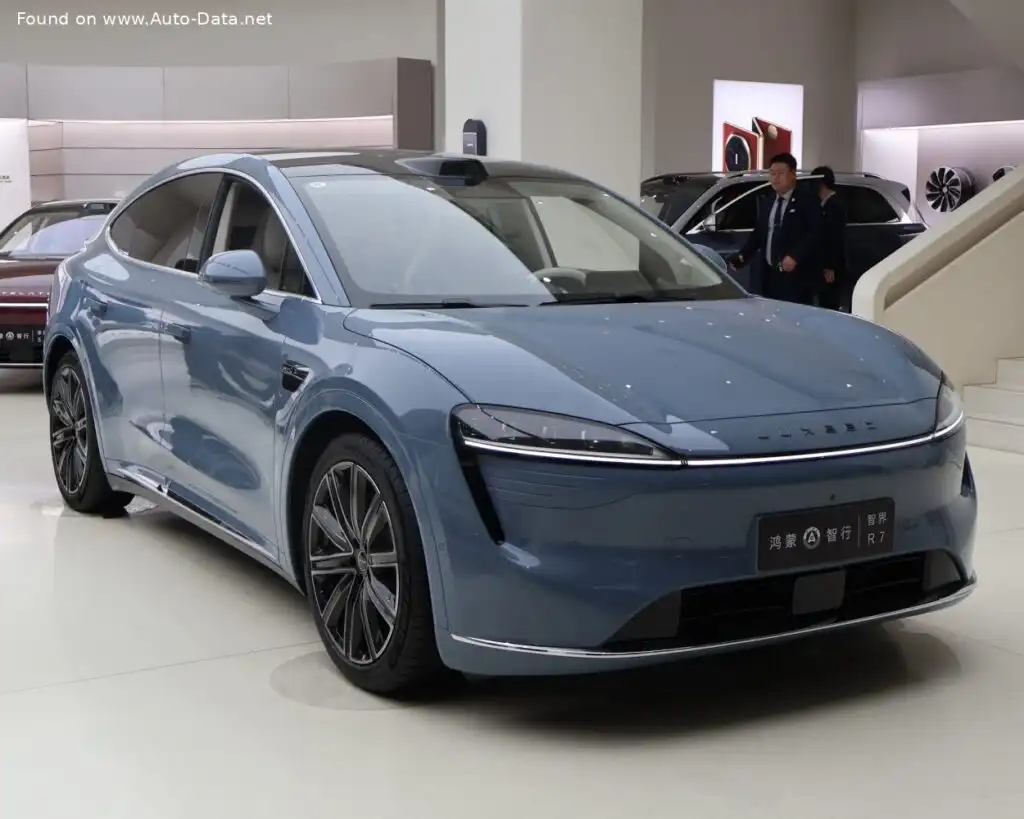
The Luxeed R7 100 kWh (292 Hp) Electric is a battery electric vehicle (BEV) produced by Luxeed, a joint venture between BAIC Group and Huawei, from September 2024 to August 2025. Positioned as a premium coupe SUV, the R7 represents Luxeed’s entry into the rapidly expanding electric vehicle market, leveraging Huawei’s expertise in software and connectivity. It aimed to compete with established players like Tesla and other emerging EV brands, offering a blend of performance, range, and advanced technology. The R7 is built upon a dedicated electric vehicle platform, emphasizing efficiency and a spacious interior.
Technical Specifications
| Brand | Luxeed |
| Model | R7 |
| Generation | R7 |
| Type (Engine) | 100 kWh (292 Hp) Electric |
| Start of production | September, 2024 |
| End of production | August, 2025 |
| Powertrain Architecture | BEV (Electric Vehicle) |
| Body type | Coupe, SUV |
| Seats | 5 |
| Doors | 5 |
| Fuel Type | Electricity |
| Acceleration 0 – 100 km/h | 5.9 sec |
| Acceleration 0 – 62 mph | 5.9 sec |
| Acceleration 0 – 60 mph | 5.6 sec |
| Maximum speed | 200 km/h (124.27 mph) |
| Weight-to-power ratio | 7.5 kg/Hp, 133.9 Hp/tonne |
| Gross battery capacity | 100 kWh |
| Battery voltage | 800 V |
| Battery technology | Lithium nickel manganese cobalt oxides (Li-NMC) |
| Battery location | Below the floor |
| All-electric range (CLTC) | 775-802 km (481.56 – 498.34 mi) |
| Average Energy consumption (CLTC) | 13.2 kWh/100 km (21.24 kWh/100 mi) |
| MPGe | 159 |
| km/kWh | 7.6 |
| mi/kWh | 4.7 |
| Electric motor power | 292 Hp |
| Electric motor model/code | TZ210XYA02 |
| Electric motor location | Rear axle, Transverse |
| Electric motor type | Synchronous |
| System power | 292 Hp |
| Kerb Weight | 2180 kg (4806.08 lbs) |
| Max. weight | 2575 kg (5676.9 lbs) |
| Max load | 395 kg (870.83 lbs) |
| Trunk (boot) space – minimum | 837 l (29.56 cu. ft) |
| Trunk (boot) space – maximum | 2130 l (75.22 cu. ft) |
| Length | 4956 mm (195.12 in) |
| Width | 1981 mm (77.99 in) |
| Height | 1634 mm (64.33 in) |
| Wheelbase | 2950 mm (116.14 in) |
| Front track | 1692 mm (66.61 in) |
| Rear (Back) track | 1695 mm (66.73 in) |
| Drag coefficient (Cd) | 0.219 |
| Minimum turning circle | 11.34 m (37.2 ft) |
| Approach angle | 16° |
| Departure angle | 18° |
| Drivetrain Architecture | One electric motor drives the rear wheels |
| Drive wheel | Rear wheel drive |
| Number of gears | 1 |
| Gearbox type | Automatic transmission |
| Front suspension | Double wishbone, Transverse stabilizer, Air suspension |
| Rear suspension | Independent multi-link suspension, Air suspension, Transverse stabilizer |
| Front brakes | Ventilated discs |
| Rear brakes | Ventilated discs |
| Assisting systems | ABS (Anti-lock braking system) |
| Steering type | Steering rack and pinion |
| Power steering | Electric Steering |
| Tires size | 255/50 R20; 255/45 R21 |
| Wheel rims size | 20; 21 |
Powertrain & Engine Architecture
The Luxeed R7 utilizes a single rear-mounted synchronous electric motor, designated TZ210XYA02, producing 292 horsepower. The powertrain is built around a high-voltage 800V architecture, enabling faster charging times compared to the more common 400V systems. The 100 kWh battery pack employs Lithium Nickel Manganese Cobalt Oxide (Li-NMC) chemistry, offering a balance between energy density, performance, and cost. The battery is positioned under the vehicle floor to optimize weight distribution and maximize interior space. The single-speed automatic transmission is a standard component in most BEVs, providing seamless power delivery. The R7’s powertrain is designed for efficiency, with a CLTC-rated energy consumption of 13.2 kWh per 100 kilometers.
Driving Characteristics
The R7’s rear-wheel-drive configuration and 292 hp output deliver a responsive driving experience. Acceleration from 0 to 100 km/h (0-62 mph) takes approximately 5.9 seconds, and 0-60 mph is achieved in around 5.6 seconds. The single-speed transmission provides instant torque, characteristic of electric vehicles. While not a dedicated performance vehicle, the R7 offers ample power for everyday driving and highway overtaking. The air suspension contributes to a comfortable ride quality, absorbing road imperfections effectively. The rear-wheel-drive setup provides a balanced feel, though it may require careful throttle control in slippery conditions.
Equipment & Trim Levels
The Luxeed R7 100 kWh variant was generally well-equipped, reflecting its positioning as a premium offering. Standard features included a large touchscreen infotainment system powered by Huawei’s HarmonyOS, advanced driver-assistance systems (ADAS) such as adaptive cruise control and lane-keeping assist, a panoramic sunroof, and premium interior materials. Interior upholstery typically consisted of leather or synthetic leather, with options for different color schemes. Optional extras included upgraded audio systems, ventilated and massaging front seats, and a more comprehensive suite of ADAS features. The R7’s interior was designed with a minimalist aesthetic, emphasizing technology and spaciousness.
Chassis & Braking
The R7 features a double wishbone suspension setup at the front and an independent multi-link suspension at the rear, both incorporating air suspension for adjustable ride height and improved comfort. Ventilated disc brakes are used on all four wheels, providing ample stopping power. The electronic stability control (ESC) system and anti-lock braking system (ABS) work in conjunction to enhance safety and control. The R7’s chassis is designed to minimize weight while maximizing rigidity, contributing to its handling characteristics. The air suspension allows for adjustments to ride height, improving both comfort and off-road capability.
Market Reception & Comparison
The Luxeed R7 received generally positive reviews, with critics praising its stylish design, advanced technology, and comfortable ride. The 100 kWh variant’s range of 775-802 km (CLTC) was considered competitive within its segment. However, some reviewers noted that the R7’s price positioned it at the higher end of the market, and its brand recognition was lower than that of established EV manufacturers. Compared to other EVs in its class, the R7 offered a compelling combination of features and performance, but its success depended on building brand awareness and establishing a strong dealer network. The R7’s energy consumption of 13.2 kWh/100km was comparable to other similarly sized EVs.
Legacy
Although production was relatively short-lived, the Luxeed R7 100 kWh represents a significant step in the development of China’s electric vehicle industry. It showcased the potential of combining domestic automotive manufacturing with cutting-edge technology from companies like Huawei. The R7’s 800V architecture and advanced driver-assistance systems set a new standard for EVs in its price range. On the used car market, the R7 is likely to be sought after by tech enthusiasts and those looking for a stylish and well-equipped electric SUV. The long-term reliability of the powertrain remains to be fully assessed, but the use of proven Li-NMC battery technology suggests a reasonable lifespan.

