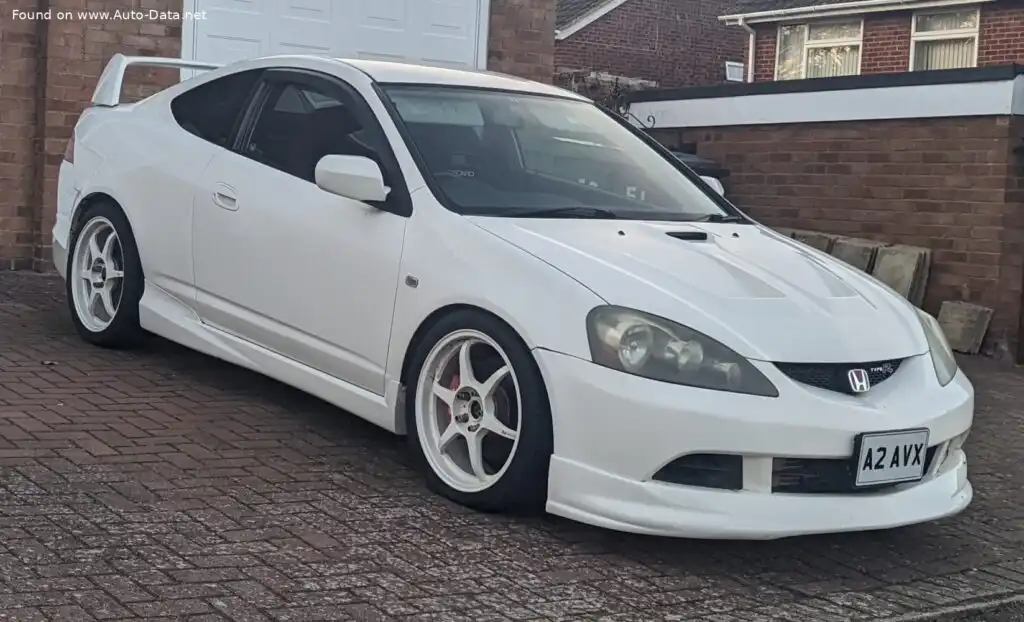
The Honda Integra Type R (DC5), produced from 2001 to 2004, represents the final iteration of the Integra line before its discontinuation in North America and a shift in Honda’s performance strategy. Positioned as the high-performance variant of the DC5 Integra, the Type R was a direct descendant of the revered Integra Type R models that preceded it, continuing a legacy of lightweight, naturally aspirated performance. Built on the Honda Civic platform (though retaining the Integra name in some markets), the DC5 Type R aimed to deliver a pure driving experience, prioritizing handling and driver engagement over outright luxury. It was primarily sold in Japan, with limited exports to other markets including Europe and North America.
Technical Specifications
| Brand | Honda |
| Model | Integra |
| Generation | Integra IV (DC5) |
| Type (Engine) | Type R 2.0 (200 Hp) |
| Start of production | 2001 year |
| End of production | 2004 year |
| Powertrain Architecture | Internal Combustion engine |
| Body type | Liftback |
| Seats | 4 |
| Doors | 3 |
| Fuel Type | Petrol (Gasoline) |
| Weight-to-power ratio | 6 kg/Hp, 168.1 Hp/tonne |
| Weight-to-torque ratio | 6.2 kg/Nm, 162.2 Nm/tonne |
| Power | 200 Hp @ 7400 rpm |
| Power per litre | 100.1 Hp/l |
| Torque | 193 Nm @ 6000 rpm, 142.35 lb.-ft. @ 6000 rpm |
| Engine layout | Front, Transverse |
| Engine Model/Code | K20A2 |
| Engine displacement | 1998 cm3, 121.93 cu. in. |
| Number of cylinders | 4 |
| Engine configuration | Inline |
| Cylinder Bore | 86 mm, 3.39 in. |
| Piston Stroke | 86 mm, 3.39 in. |
| Compression ratio | 11:1 |
| Number of valves per cylinder | 4 |
| Fuel injection system | Multi-port manifold injection |
| Engine aspiration | Naturally aspirated engine |
| Valvetrain | DOHC i-VTEC |
| Engine oil capacity | 4.7 l, 4.97 US qt | 4.14 UK qt |
| Coolant | 6.4 l, 6.76 US qt | 5.63 UK qt |
| Kerb Weight | 1190 kg, 2623.5 lbs |
| Trunk (boot) space – minimum | 321 l, 11.34 cu. ft |
| Fuel tank capacity | 50 l, 13.21 US gal | 11 UK gal |
| Length | 4400 mm, 173.23 in |
| Width | 1725 mm, 67.91 in |
| Height | 1400 mm, 55.12 in |
| Wheelbase | 2570 mm, 101.18 in |
| Ride height (ground clearance) | 149 mm, 5.87 in |
| Minimum turning circle (turning diameter) | 11.4 m, 37.4 ft |
| Drivetrain Architecture | The Internal combustion engine (ICE) drives the front wheels of the vehicle. |
| Drive wheel | Front wheel drive |
| Number of gears and type of gearbox | 6 gears, manual transmission |
| Front suspension | Independent, type McPherson with coil spring and anti-roll bar |
| Rear suspension | Double wishbone, Transverse stabilizer, Coil spring |
| Front brakes | Ventilated discs, 305 mm |
| Rear brakes | Disc, 254 mm |
| Assisting systems | ABS (Anti-lock braking system) |
| Steering type | Steering rack and pinion |
| Power steering | Hydraulic Steering |
| Tires size | 205/55 R16 |
| Wheel rims size | 6.5J x 16 |
Powertrain & Engine Architecture
The heart of the DC5 Integra Type R is the K20A2 engine, a 2.0-liter, naturally aspirated inline-four cylinder powerplant. This engine is a high-revving unit, renowned for its responsiveness and linear power delivery. The K20A2 features a high compression ratio of 11:1, contributing to its impressive output. It utilizes Honda’s i-VTEC (intelligent Variable Timing and Lift Electronic Control) system, which adjusts both valve timing and lift to optimize performance across the rev range. Fuel delivery is managed by a multi-port fuel injection system. The engine’s redline is set at 8,000 rpm, encouraging drivers to exploit its upper limits. The DC5 Type R exclusively came with a close-ratio 6-speed manual transmission, designed to maximize the engine’s potential and provide precise gear changes. This transmission was a key component in the car’s overall driving experience.
Driving Characteristics
The DC5 Integra Type R delivers a distinctly focused driving experience. The combination of the high-revving K20A2 engine and the close-ratio 6-speed manual transmission results in quick acceleration and a rewarding connection between driver and machine. While 200 horsepower might seem modest by modern standards, the car’s lightweight construction (approximately 2623.5 lbs) contributes to a spirited feel. The steering is precise and communicative, providing excellent feedback. The suspension, tuned for performance, offers a firm but controlled ride, minimizing body roll during cornering. Compared to the standard DC5 Integra, the Type R’s suspension was significantly stiffer and its gearing was optimized for track use. The manual transmission, while requiring more driver involvement than an automatic, allowed for complete control over the engine’s power band.
Equipment & Trim Levels
The DC5 Integra Type R was relatively spartan in terms of luxury features, prioritizing performance over comfort. Standard equipment included sport seats with aggressive bolstering, a leather-wrapped steering wheel, and a unique Type R instrument cluster with a high-revving tachometer. Air conditioning and a basic audio system were typically included, but options were limited. The interior trim was generally focused on functionality, with minimal extraneous decoration. Exterior features included a distinctive rear wing, unique alloy wheels, and a more aggressive front bumper. The overall aesthetic was purposeful and understated, reflecting the car’s performance-oriented nature.
Chassis & Braking
The DC5 Integra Type R’s chassis was engineered for rigidity and responsiveness. It features a MacPherson strut front suspension and a double wishbone rear suspension, both optimized for handling. A front and rear stabilizer bar further reduces body roll. Braking duties are handled by ventilated discs at the front and solid discs at the rear, equipped with an Anti-lock Braking System (ABS). The braking system provided ample stopping power for spirited driving, although some critics noted that the rear drums were a potential weak point compared to full disc brakes.
Market Reception & Comparison
The DC5 Integra Type R was widely praised by automotive journalists for its exceptional handling, responsive engine, and engaging driving experience. It was often compared favorably to other performance cars in its class, such as the Acura RSX Type-S (which shared the K20A engine but with a slightly different tune) and various European hot hatches. Critics noted that the Type R’s firm ride might not appeal to all drivers, but appreciated its focus on performance. Fuel economy was reasonable for a performance car, but not a primary selling point. Compared to the standard DC5 Integra, the Type R offered a significantly more rewarding driving experience, but at a higher price point.
Legacy
The Honda Integra Type R (DC5) has become a highly sought-after vehicle among enthusiasts. Its reputation for reliability, combined with its engaging driving dynamics, has ensured its continued popularity in the used car market. The K20A2 engine is considered one of Honda’s finest creations, and is often used as a basis for aftermarket modifications. While finding a completely unmodified example is becoming increasingly difficult, the DC5 Type R remains a benchmark for front-wheel-drive performance cars. Its influence can be seen in subsequent Honda performance models, and it continues to be celebrated as a true driver’s car.