Technical Specifications
| Brand | Citroen |
| Model | Jumpy |
| Generation | Jumpy II |
| Type | 2.0 HDi (136 Hp) L2H1 DPF |
| Start of production | 2007 |
| End of production | 2010 |
| Powertrain Architecture | Internal Combustion engine |
| Body type | Minivan |
| Seats | 3 |
| Doors | 4 |
| Fuel consumption (urban) | 9.2 l/100 km (25.6 US mpg) |
| Fuel consumption (extra urban) | 6.4 l/100 km (36.8 US mpg) |
| Fuel consumption (combined) | 7.4 l/100 km (31.8 US mpg) |
| CO2 emissions | 196 g/km |
| Fuel Type | Diesel |
| Acceleration 0 – 100 km/h | 13.8 sec |
| Acceleration 0 – 62 mph | 13.8 sec |
| Acceleration 0 – 60 mph | 13.1 sec |
| Maximum speed | 170 km/h (105.63 mph) |
| Emission standard | Euro 4 |
| Weight-to-power ratio | 12.8 kg/Hp |
| Weight-to-torque ratio | 5.5 kg/Nm |
| Power | 136 Hp @ 4000 rpm |
| Torque | 320 Nm @ 2000 rpm (236.02 lb.-ft. @ 2000 rpm) |
| Engine layout | Front, Transverse |
| Engine Model/Code | RHR DW10BTED4 |
| Engine displacement | 1997 cm3 (121.86 cu. in.) |
| Number of cylinders | 4 |
| Engine configuration | Inline |
| Cylinder Bore | 85 mm (3.35 in.) |
| Piston Stroke | 88 mm (3.46 in.) |
| Number of valves per cylinder | 4 |
| Fuel injection system | Diesel Commonrail |
| Engine aspiration | Turbocharger, Intercooler |
| Engine oil capacity | 5 l (5.28 US qt | 4.4 UK qt) |
| Kerb Weight | 1746 kg (3849.27 lbs.) |
| Max. weight | 2946 kg (6494.82 lbs.) |
| Max load | 1200 kg (2645.55 lbs.) |
| Trunk (boot) space – maximum | 6000 l (211.89 cu. ft.) |
| Fuel tank capacity | 80 l (21.13 US gal | 17.6 UK gal) |
| Max. roof load | 170 kg (374.79 lbs.) |
| Permitted trailer load with brakes (12%) | 2000 kg (4409.25 lbs.) |
| Permitted trailer load without brakes | 750 kg (1653.47 lbs.) |
| Permitted towbar download | 80 kg (176.37 lbs.) |
| Length | 5135 mm (202.17 in.) |
| Width | 1895 mm (74.61 in.) |
| Width with mirrors folded | 1986 mm (78.19 in.) |
| Width including mirrors | 2194 mm (86.38 in.) |
| Height | 1880 mm (74.02 in.) |
| Wheelbase | 3122 mm (122.91 in.) |
| Front track | 1562 mm (61.5 in.) |
| Rear track | 1596 mm (62.83 in.) |
| Front overhang | 975 mm (38.39 in.) |
| Rear overhang | 1038 mm (40.87 in.) |
| Minimum turning circle | 12.6 m (41.34 ft.) |
| Drivetrain Architecture | Front wheel drive |
| Number of gears | 6 |
| Gearbox type | Manual transmission |
| Front suspension | Independent, McPherson with coil spring and anti-roll bar |
| Rear suspension | Semi-dependent beam with stabilizer |
| Front brakes | Ventilated discs, 304×28 mm |
| Rear brakes | Disc, 290×14 mm |
| Assisting systems | ABS |
| Steering type | Steering rack and pinion |
| Tires size | 215/60 R16 |
| Wheel rims size | 16 |
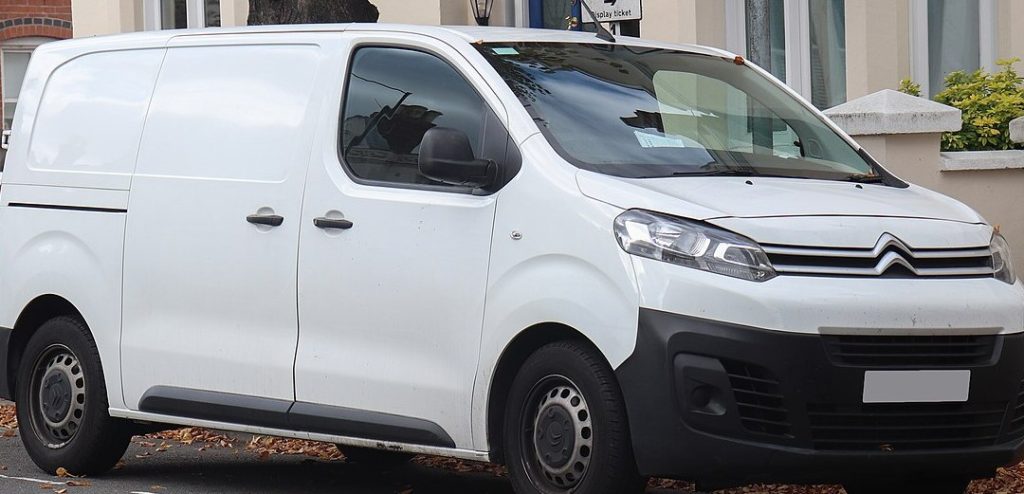
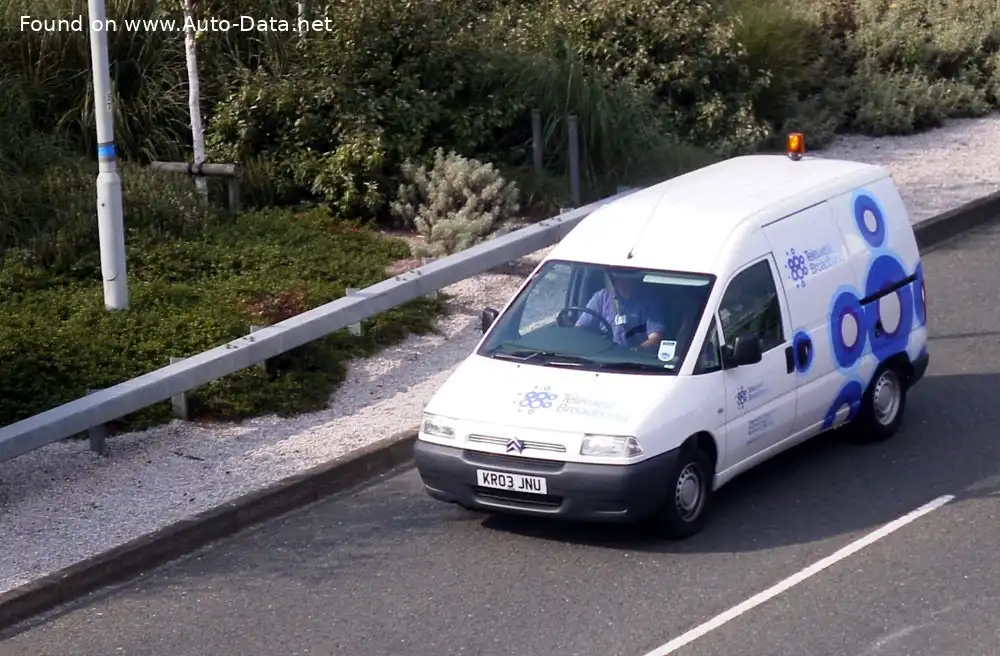
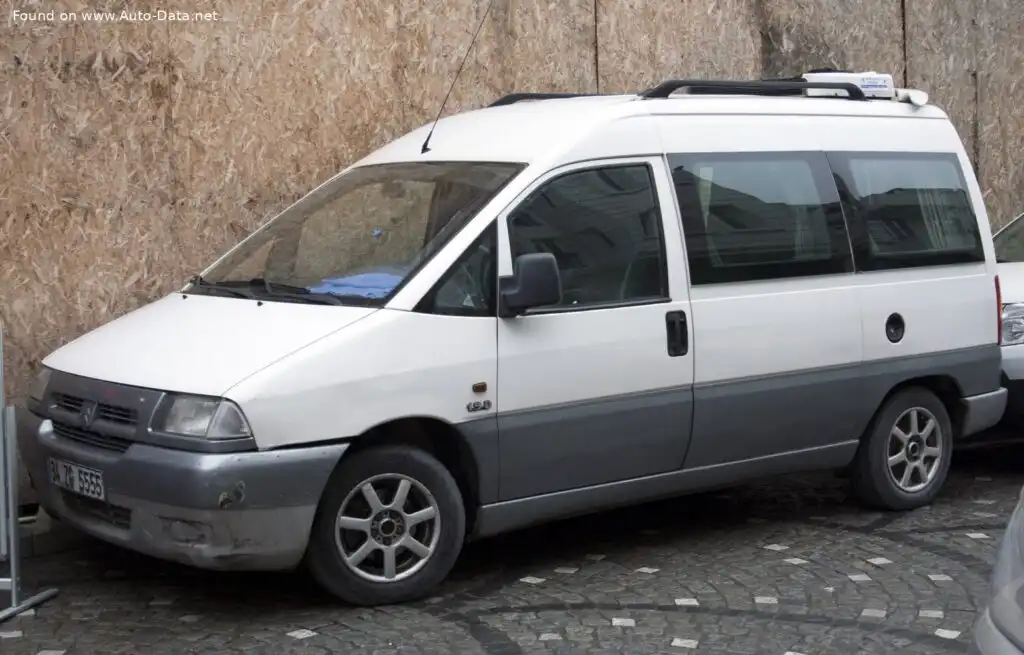
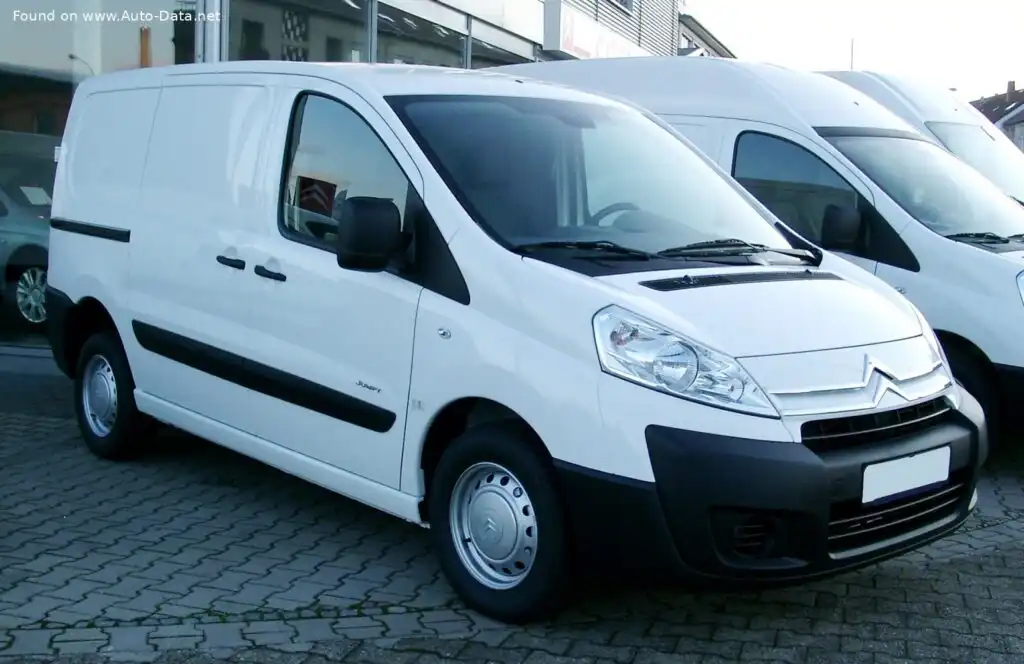
The Citroen Jumpy II 2.0 HDi (136 hp) L2H1 DPF is a light commercial vehicle produced between 2007 and 2010. It represents the second generation of the Jumpy, a popular choice in the European light commercial vehicle (LCV) market. This variant offered a practical blend of efficiency and affordability, serving a diverse range of commercial needs. The “L2H1” designation indicates a medium-length body with a standard roof height. Crucially, the Jumpy II was born from the Sevel joint venture between PSA (Peugeot Société Anonyme) and Fiat, sharing its platform and many components with the Peugeot Expert and Fiat Scudo.
Powertrain & Engine Architecture
The Jumpy II 2.0 HDi was powered by the DW10BTED4 engine, a robust four-cylinder diesel. This engine utilized a common rail direct injection system, delivering fuel at high pressure for optimized combustion and reduced emissions. The 136 horsepower output was achieved through the use of a turbocharger coupled with an intercooler, maximizing air intake and boosting power delivery. The engine’s design prioritized durability and simplicity. A six-speed manual transmission was standard, offering a balance between fuel economy and driver control. The ‘RHR’ engine code signifies compliance with Euro 4 emissions standards, incorporating a Diesel Particulate Filter (DPF) to minimize soot emissions. The DPF, while environmentally beneficial, would later become a point of maintenance consideration for owners.
Driving Characteristics
The 2.0 HDi 136 hp engine, paired with the six-speed manual transmission, provided adequate performance for typical commercial applications. While acceleration wasn’t a priority – achieving 0-60 mph in approximately 13.1 seconds – the engine delivered a substantial 320 Nm (236 lb-ft) of torque, making it well-suited for hauling loads and navigating various terrains. The gear ratios were thoughtfully spaced, allowing for comfortable cruising at highway speeds. Compared to higher-output versions of the 2.0 HDi or the more powerful 2.2 HDi options, this variant prioritized fuel economy. The manual transmission offered greater driver engagement and control, though it demanded more driver input than an automatic. The suspension, designed to handle substantial loads, provided a reasonably comfortable ride even when the cargo area was empty, although it could feel somewhat firm when fully loaded.
Equipment & Trim Levels
The Jumpy II 2.0 HDi L2H1 DPF was generally offered in a basic trim level, reflecting its commercial purpose. Standard features typically included power steering, a driver’s airbag, and essential instrumentation. The interior was functional and durable, utilizing hard-wearing plastics and cloth upholstery. Optional extras could include air conditioning, a radio/CD player, electric windows, and central locking. The L2H1 body style provided a generous cargo volume of 6000 liters (211.89 cu. ft.), making it versatile for a wide array of commercial tasks. The focus was on practicality and value, rather than luxurious appointments.
Chassis & Braking
The Jumpy II employed a front-wheel-drive layout with an independent McPherson strut suspension at the front and a semi-dependent beam axle at the rear. This configuration struck a balance between ride comfort and load-carrying capability. The front brakes were ventilated discs, while the rear brakes were solid discs. Anti-lock Braking System (ABS) was standard, enhancing safety during emergency braking maneuvers. The steering system was a rack and pinion design, providing precise and responsive handling. The vehicle’s weight-to-power ratio of 12.8 kg/Hp underscored its focus on utility over sporty performance.
Market Reception & Comparison
The Citroen Jumpy II 2.0 HDi (136 hp) L2H1 DPF was well-received in the European LCV market. Reviewers consistently praised its fuel efficiency, practicality, and overall reliability. When compared to competitors like the Volkswagen Transporter and Ford Transit, the Jumpy offered a competitive price point and a spacious interior. The 2.0 HDi engine, while not the most powerful available, provided a good compromise between performance and fuel economy. The manual transmission was favored by drivers who valued control and efficiency. The DPF system, while effective in reducing emissions, did require periodic maintenance to prevent potential clogging issues.
Legacy
The Citroen Jumpy II 2.0 HDi (136 hp) L2H1 DPF remains a common sight on European roads today. The DW10 engine, despite its age, is known for its durability and relatively simple maintenance requirements. Spare parts availability is generally good, and the vehicle’s straightforward construction makes it relatively easy to repair. In the used car market, these vans are often sought after by small businesses and tradespeople seeking an affordable and dependable work vehicle. While newer vans offer more advanced features and improved fuel economy, the Jumpy II continues to represent a practical and cost-effective solution for those prioritizing a no-nonsense commercial vehicle.