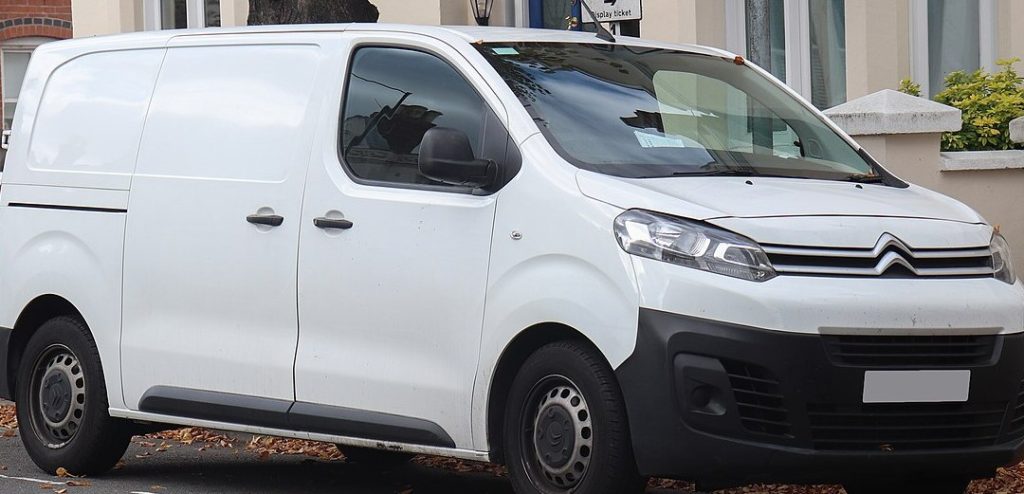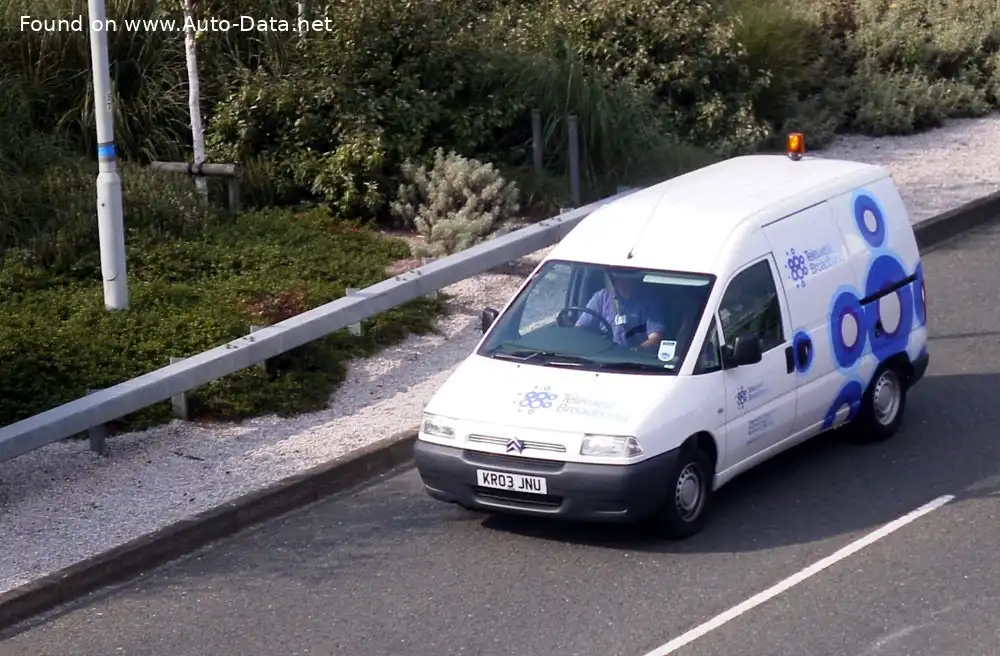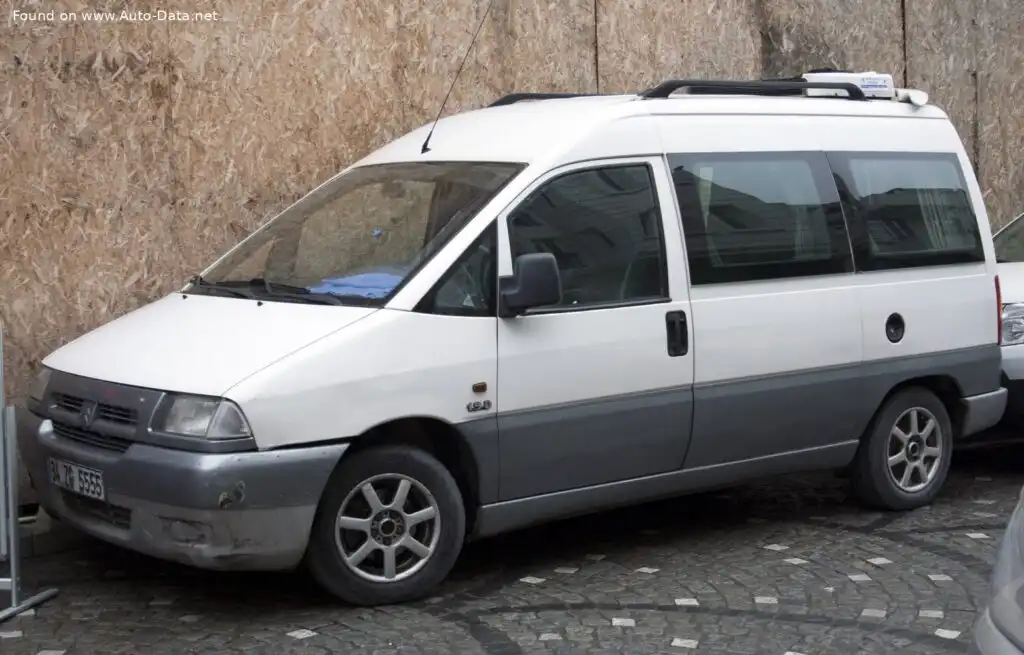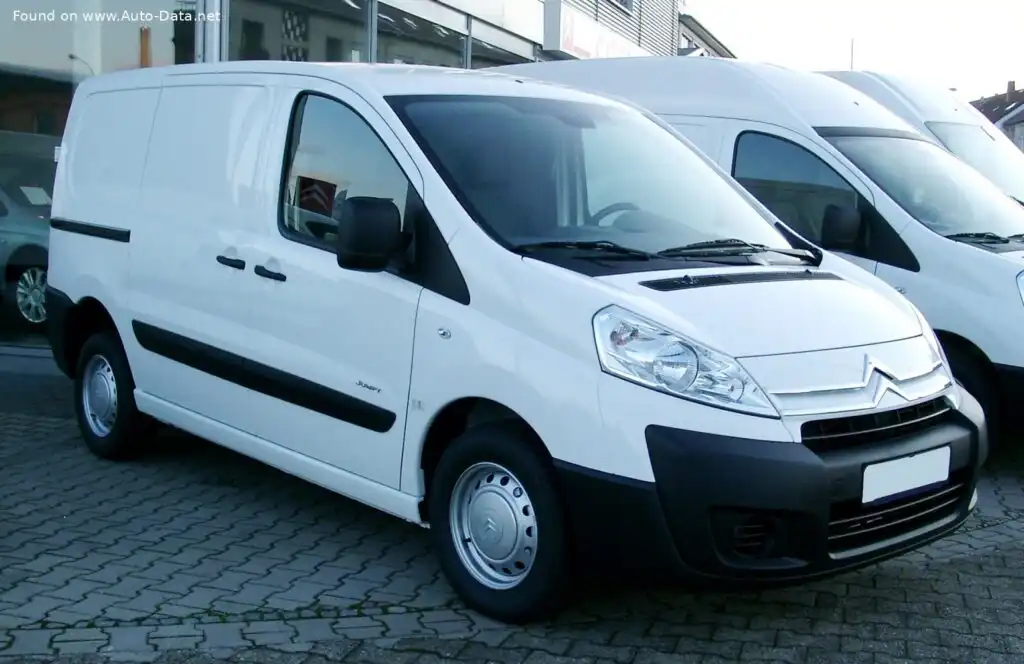
The Citroen Jumpy II 2.0 HDi (163 hp) L2H1 DPF is a commercial vehicle produced between 2010 and 2011. Part of the second generation of the Jumpy line, it served as a popular choice in the European light commercial vehicle (LCV) market, offering a balance of practicality, efficiency, and payload capacity. The “L2H1” designation refers to the vehicle’s body length and roof height – a medium length body with a standard roof. This particular variant, equipped with the 2.0 HDi engine producing 163 horsepower, represented a mid-range offering within the Jumpy II lineup, positioned above the lower-powered diesel options and below the higher-output versions.
Technical Specifications
| Brand | Citroen |
| Model | Jumpy |
| Generation | Jumpy II |
| Type (Engine) | 2.0 HDi (163 Hp) L2H1 DPF |
| Start of production | 2010 |
| End of production | 2011 |
| Powertrain Architecture | Internal Combustion engine |
| Body type | Minivan |
| Seats | 3 |
| Doors | 4 |
| Fuel consumption (urban) | 8.0 l/100 km (29.4 US mpg) |
| Fuel consumption (extra urban) | 6.1 l/100 km (38.6 US mpg) |
| Fuel consumption (combined) | 6.8 l/100 km (34.6 US mpg) |
| CO2 emissions | 179 g/km |
| Fuel Type | Diesel |
| Maximum speed | 170 km/h (105.63 mph) |
| Emission standard | Euro 5 |
| Weight-to-power ratio | 10.8 kg/Hp |
| Weight-to-torque ratio | 5.2 kg/Nm |
| Power | 163 Hp @ 3750 rpm |
| Torque | 340 Nm @ 2000 rpm (250.77 lb.-ft. @ 2000 rpm) |
| Engine layout | Front, Transverse |
| Engine Model/Code | RHH DW10CTED4 |
| Engine displacement | 1997 cm3 (121.86 cu. in.) |
| Number of cylinders | 4 |
| Engine configuration | Inline |
| Cylinder Bore | 85 mm (3.35 in.) |
| Piston Stroke | 88 mm (3.46 in.) |
| Number of valves per cylinder | 4 |
| Fuel injection system | Diesel Commonrail |
| Engine aspiration | Turbocharger, Intercooler |
| Engine oil capacity | 5.5 l (5.81 US qt | 4.84 UK qt) |
| Kerb Weight | 1761 kg (3882.34 lbs.) |
| Max. weight | 2973 kg (6554.34 lbs.) |
| Max load | 1212 kg (2672 lbs.) |
| Trunk (boot) space – maximum | 6000 l (211.89 cu. ft.) |
| Fuel tank capacity | 80 l (21.13 US gal | 17.6 UK gal) |
| Max. roof load | 170 kg (374.79 lbs.) |
| Permitted trailer load with brakes (12%) | 2000 kg (4409.25 lbs.) |
| Permitted trailer load without brakes | 750 kg (1653.47 lbs.) |
| Permitted towbar download | 80 kg (176.37 lbs.) |
| Length | 5135 mm (202.17 in.) |
| Width | 1895 mm (74.61 in.) |
| Width with mirrors folded | 1986 mm (78.19 in.) |
| Width including mirrors | 2194 mm (86.38 in.) |
| Height | 1880 mm (74.02 in.) |
| Wheelbase | 3122 mm (122.91 in.) |
| Front track | 1562 mm (61.5 in.) |
| Rear (Back) track | 1596 mm (62.83 in.) |
| Front overhang | 975 mm (38.39 in.) |
| Rear overhang | 1038 mm (40.87 in.) |
| Minimum turning circle (turning diameter) | 12.6 m (41.34 ft.) |
| Drivetrain Architecture | Front wheel drive |
| Number of gears and type of gearbox | 6 gears, manual transmission |
| Front suspension | Independent, type McPherson with coil spring and anti-roll bar |
| Rear suspension | Semi-dependent beam with stabilizer lateral stability |
| Front brakes | Ventilated discs, 304×28 mm |
| Rear brakes | Disc, 290×14 mm |
| Assisting systems | ABS (Anti-lock braking system) |
| Steering type | Steering rack and pinion |
| Tires size | 215/60 R16 |
| Wheel rims size | 16 |
Powertrain & Engine Architecture
The heart of the Jumpy II 2.0 HDi (163 hp) is the DW10CTED4 engine, a 1.997-liter inline-four cylinder diesel. This engine is a member of the PSA Group’s (Peugeot Citroen) HDi family, known for its fuel efficiency and robust construction. The “CTED4” designation indicates a common rail direct injection system with a turbocharger and intercooler. The common rail system, operating at very high pressures, allows for precise fuel delivery and optimized combustion. The turbocharger, coupled with an intercooler, increases power output by forcing more air into the cylinders. The engine produces 163 horsepower at 3750 rpm and 340 Nm (250.77 lb-ft) of torque at 2000 rpm. This engine is paired with a six-speed manual transmission, delivering power to the front wheels. The transmission’s gear ratios are tuned for a balance of fuel economy and usability, prioritizing torque delivery for hauling and load-carrying.
Driving Characteristics
The Jumpy II 2.0 HDi (163 hp) offers a practical and capable driving experience. While not designed for outright speed, the 163 hp engine provides sufficient power for everyday driving and carrying substantial loads. The torque curve is relatively flat, meaning that ample pulling power is available across a wide range of engine speeds. Compared to the lower-powered 90 hp or 120 hp versions of the Jumpy II, the 163 hp model offers noticeably improved acceleration and the ability to maintain higher speeds when fully loaded. The six-speed manual transmission allows the driver to keep the engine in its optimal power band. However, the vehicle’s high center of gravity and commercial vehicle focus mean that handling is not as sharp or responsive as a passenger car. The suspension is tuned for comfort and load-carrying capacity, resulting in a slightly softer ride.
Equipment & Trim Levels
The Jumpy II 2.0 HDi (163 hp) L2H1 DPF typically came with a relatively basic level of equipment, reflecting its commercial vehicle status. Standard features generally included power steering, a driver’s airbag, ABS brakes, and a basic audio system. The interior was functional and durable, with hard-wearing plastics and cloth upholstery. Higher trim levels, if available, might have added features such as air conditioning, electric windows, and a more advanced audio system. Options often included parking sensors, a rear-view camera, and upgraded seating.
Chassis & Braking
The Jumpy II utilizes a front-wheel-drive layout with an independent McPherson strut suspension at the front and a semi-dependent beam axle at the rear. The front suspension incorporates a stabilizer bar to reduce body roll. The braking system consists of ventilated discs at the front and solid discs at the rear. ABS (Anti-lock Braking System) is standard, providing enhanced braking control in emergency situations. The suspension and braking systems are designed to handle the vehicle’s payload capacity and provide a safe and stable driving experience.
Market Reception & Comparison
The Citroen Jumpy II 2.0 HDi (163 hp) was well-received in the European LCV market. Critics praised its fuel efficiency, practicality, and load-carrying capacity. Compared to the lower-powered Jumpy II models, the 163 hp version offered a significant performance improvement, making it a popular choice for businesses that required a van capable of handling heavier loads or covering longer distances. The Jumpy II competed with other popular LCVs such as the Renault Trafic, Volkswagen Transporter, and Ford Transit. The Jumpy II often offered a competitive price point and a reputation for reliability.
Legacy
The DW10CTED4 engine, found in the Jumpy II 2.0 HDi (163 hp), is generally considered a reliable and durable unit, provided it receives regular maintenance. Common issues can include diesel particulate filter (DPF) clogging, particularly with frequent short trips, and potential problems with the turbocharger. However, these issues are not uncommon in modern diesel engines. Today, used examples of the Jumpy II 2.0 HDi (163 hp) remain a viable option for businesses and individuals seeking a practical and affordable light commercial vehicle. Its robust construction and relatively simple mechanicals make it a relatively easy vehicle to maintain and repair.