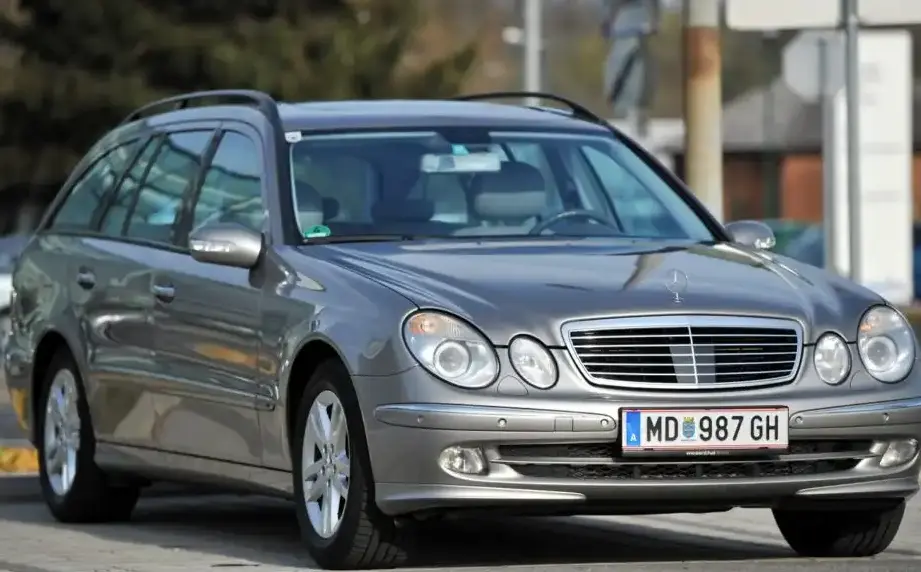
The Mercedes-Benz E-Class T-modell (S211) E 220 CDI, produced between 2003 and 2006, represented a compelling blend of practicality and luxury within the mid-size executive wagon segment. Positioned as a diesel-powered variant of the popular S211 series, it offered a more economical alternative to the gasoline-powered E-Class models while retaining the brand’s reputation for build quality and refinement. This particular configuration, with its 2.2-liter CDI engine producing 150 horsepower, was a common sight in European markets, appealing to buyers needing space and efficiency for long-distance travel or family use. The S211 generation E-Class, built on the W211 platform, aimed to modernize the E-Class line, offering increased space and improved technology compared to its predecessor.
Technical Specifications
| Brand | Mercedes-Benz |
| Model | E-Class |
| Generation | E-Class T-modell (S211) |
| Type (Engine) | E 220 CDI (150 Hp) |
| Start of production | 2003 |
| End of production | 2006 |
| Powertrain Architecture | Internal Combustion engine |
| Body type | Station wagon (estate) |
| Seats | 5 |
| Doors | 5 |
| Fuel consumption (urban) | 9.6 l/100 km (24.5 US mpg) |
| Fuel consumption (extra urban) | 5.3 l/100 km (44.4 US mpg) |
| Fuel consumption (combined) | 6.9 l/100 km (34.1 US mpg) |
| Fuel Type | Diesel |
| Acceleration 0 – 100 km/h | 10.6 sec |
| Acceleration 0 – 62 mph | 10.6 sec |
| Acceleration 0 – 60 mph | 10.1 sec |
| Maximum speed | 208 km/h (129.25 mph) |
| Weight-to-power ratio | 11.9 kg/Hp |
| Weight-to-torque ratio | 5.3 kg/Nm |
| Power | 150 Hp @ 4200 rpm |
| Torque | 340 Nm @ 2000 rpm (250.77 lb.-ft. @ 2000 rpm) |
| Engine layout | Front, Longitudinal |
| Engine Model/Code | OM 646.961 |
| Engine displacement | 2148 cm3 (131.08 cu. in.) |
| Number of cylinders | 4 |
| Engine configuration | Inline |
| Cylinder Bore | 88 mm (3.46 in.) |
| Piston Stroke | 88.3 mm (3.48 in.) |
| Compression ratio | 18:1 |
| Number of valves per cylinder | 4 |
| Fuel injection system | Diesel Commonrail |
| Engine aspiration | Turbocharger, Intercooler |
| Engine oil capacity | 6.5 l (6.87 US qt | 5.72 UK qt) |
| Coolant capacity | 10.2 l (10.78 US qt | 8.97 UK qt) |
| Kerb Weight | 1785 kg (3935.25 lbs.) |
| Max. weight | 2360 kg (5202.91 lbs.) |
| Max load | 575 kg (1267.66 lbs.) |
| Trunk (boot) space – minimum | 690 l (24.37 cu. ft.) |
| Trunk (boot) space – maximum | 1950 l (68.86 cu. ft.) |
| Fuel tank capacity | 70 l (18.49 US gal | 15.4 UK gal) |
| Length | 4850 mm (190.94 in.) |
| Width | 1822 mm (71.73 in.) |
| Height | 1496 mm (58.9 in.) |
| Wheelbase | 2854 mm (112.36 in.) |
| Front track | 1559 mm (61.38 in.) |
| Rear track | 1552 mm (61.1 in.) |
| Drag coefficient (Cd) | 0.31 |
| Drivetrain Architecture | Rear wheel drive |
| Number of gears | 6 |
| Gearbox type | Manual transmission |
| Front suspension | Coil spring |
| Rear suspension | Coil spring |
| Front brakes | Ventilated discs |
| Rear brakes | Disc |
| Assisting systems | ABS (Anti-lock braking system) |
| Steering type | Steering rack and pinion |
| Power steering | Hydraulic Steering |
| Tires size | 225/55 R16 |
| Wheel rims size | 7.5J X 16 |
Powertrain & Engine Architecture
The E 220 CDI utilized the OM 646.961 engine, a 2.2-liter inline-four cylinder diesel engine. This engine was a cornerstone of Mercedes-Benz’s diesel offerings in the early 2000s, known for its relatively quiet operation and good fuel economy. The OM 646 featured common rail direct injection, delivering fuel at extremely high pressure for improved combustion efficiency and reduced emissions. A turbocharger with an intercooler further enhanced performance, boosting power output to 150 hp and 340 Nm (250 lb-ft) of torque. The six-speed manual transmission was standard, providing a good balance between fuel efficiency and driver control. While an automatic transmission was available as an option, the manual was favored by those prioritizing economy and a more engaging driving experience. The engine’s longitudinal mounting allowed for a more balanced weight distribution, contributing to the car’s handling characteristics.
Driving Characteristics
The E 220 CDI T-modell, equipped with the manual transmission, offered a comfortable and refined driving experience. While not a performance-oriented vehicle, the 150 hp engine and 340 Nm of torque provided adequate power for everyday driving and long-distance cruising. Acceleration from 0-60 mph took around 10.1 seconds, which was competitive for a diesel wagon of its time. The six-speed gearbox allowed for efficient cruising at highway speeds, and the engine remained relatively quiet even under load. Compared to the more powerful E 320 CDI or gasoline-powered E-Class variants, the E 220 CDI prioritized fuel economy and lower running costs. The manual transmission offered more driver involvement than the optional automatic, but also required more effort in stop-and-go traffic.
Equipment & Trim Levels
The E 220 CDI T-modell typically came well-equipped, reflecting Mercedes-Benz’s commitment to luxury and comfort. Standard features included automatic climate control, power windows and mirrors, a multi-function steering wheel, and a high-quality audio system. Interior upholstery was typically cloth, with leather options available as an upgrade. Optional extras included a sunroof, navigation system, heated seats, and parking sensors. Trim levels varied depending on the market, but generally offered increasing levels of luxury and technology. The estate body style itself was a premium feature, offering significantly more cargo space than the sedan version.
Chassis & Braking
The S211 E-Class featured a robust chassis with coil spring suspension at all four corners. The rear suspension was independent, contributing to a comfortable ride and good handling. Ventilated disc brakes were fitted to the front wheels, while the rear wheels typically used solid discs. Anti-lock braking system (ABS) was standard, enhancing safety and stability. The E 220 CDI’s weight, around 1785 kg (3935 lbs), was relatively moderate for a wagon of its size, contributing to its manageable handling characteristics. Stabilizer bars were fitted front and rear to reduce body roll during cornering.
Market Reception & Comparison
The E 220 CDI T-modell was well-received in European markets, where diesel wagons were highly popular. Critics praised its fuel efficiency, comfortable ride, and spacious interior. Compared to the more expensive E 320 CDI, the E 220 CDI offered a more affordable entry point into the E-Class range. It also provided a more practical alternative to the E-Class sedan, with its significantly larger cargo capacity. While the manual transmission was praised for its efficiency, some reviewers found it slightly notchy compared to competitors. Fuel economy was a key selling point, with the E 220 CDI achieving around 34.1 US mpg on the combined cycle.
Legacy
The OM 646 engine, found in the E 220 CDI, proved to be a reliable and durable powerplant. With proper maintenance, these engines can accumulate high mileage. Today, the S211 E-Class T-modell E 220 CDI remains a popular choice in the used car market, particularly for those seeking a practical, comfortable, and fuel-efficient wagon. However, potential buyers should be aware of potential issues with the diesel particulate filter (DPF) and the glow plug system, which are common on older diesel engines. The E 220 CDI represents a well-engineered and thoughtfully designed vehicle that continues to offer good value for money.