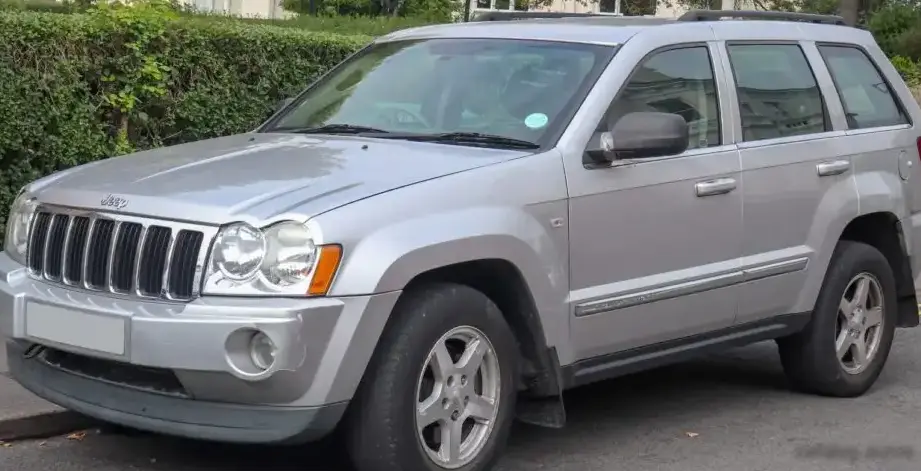
The Jeep Grand Cherokee III (WK) 3.7i V6 Automatic, produced from 2005 to 2010, represented the entry point into the redesigned WK generation of Jeep’s flagship SUV. Positioned as the base model, it offered a more affordable alternative to the higher-trim levels powered by the 4.7L V8 and the potent 3.0L CRD diesel (not available in the US market). The 3.7i variant aimed to provide Grand Cherokee ownership to a broader customer base, prioritizing value and fuel efficiency over outright performance. It was built on the WH platform, a significant departure from its predecessor, offering improved refinement, safety, and on-road manners while retaining Jeep’s legendary off-road capability.
Technical Specifications
| Brand | Jeep |
| Model | Grand Cherokee |
| Generation | Grand Cherokee III (WK) |
| Type (Engine) | 3.7i V6 (214 Hp) Automatic |
| Start of production | 2005 |
| End of production | 2010 |
| Powertrain Architecture | Internal Combustion engine |
| Body type | SUV |
| Seats | 5 |
| Doors | 5 |
| Fuel consumption (urban) | 13.8 l/100 km (17 US mpg, 20.5 UK mpg, 7.2 km/l) |
| Fuel consumption (extra urban) | 10.7 l/100 km (22 US mpg, 26.4 UK mpg, 9.3 km/l) |
| Fuel consumption (combined) | 12.4 l/100 km (19 US mpg, 22.8 UK mpg, 8.1 km/l) |
| Fuel Type | Petrol (Gasoline) |
| Weight-to-power ratio | 9 kg/Hp, 110.9 Hp/tonne |
| Weight-to-torque ratio | 6 kg/Nm, 165.4 Nm/tonne |
| Power | 214 Hp @ 5200 rpm |
| Power per litre | 57.8 Hp/l |
| Torque | 319 Nm @ 4000 rpm (235.28 lb.-ft. @ 4000 rpm) |
| Engine layout | Front, Longitudinal |
| Engine Model/Code | EKG |
| Engine displacement | 3701 cm3 (225.85 cu. in.) |
| Number of cylinders | 6 |
| Engine configuration | V-engine |
| Cylinder Bore | 93 mm (3.66 in.) |
| Piston Stroke | 90.8 mm (3.57 in.) |
| Compression ratio | 9.6:1 |
| Number of valves per cylinder | 2 |
| Fuel injection system | Multi-port manifold injection |
| Engine aspiration | Naturally aspirated engine |
| Valvetrain | SOHC |
| Engine oil capacity | 4.7 l (4.97 US qt | 4.14 UK qt) |
| Coolant capacity | 11.8 l (12.47 US qt | 10.38 UK qt) |
| Kerb Weight | 1929 kg (4252.72 lbs.) |
| Max. weight | 2586 kg (5701.15 lbs.) |
| Max load | 657 kg (1448.44 lbs.) |
| Trunk (boot) space – minimum | 977 l (34.5 cu. ft.) |
| Trunk (boot) space – maximum | 1909 l (67.42 cu. ft.) |
| Fuel tank capacity | 78 l (20.61 US gal | 17.16 UK gal) |
| Length | 4740 mm (186.61 in.) |
| Width | 1862 mm (73.31 in.) |
| Height | 1720 mm (67.72 in.) |
| Wheelbase | 2781 mm (109.49 in.) |
| Front track | 1575 mm (62.01 in.) |
| Rear (Back) track | 1575 mm (62.01 in.) |
| Ride height (ground clearance) | 204 mm (8.03 in.) |
| Drag coefficient (Cd) | 0.41 |
| Minimum turning circle (turning diameter) | 11.3 m (37.07 ft.) |
| Approach angle | 34.1° |
| Departure angle | 27.1° |
| Ramp-over (brakeover) angle | 20.6° |
| Drivetrain Architecture | Rear wheel drive |
| Number of gears and type of gearbox | 5 gears, automatic transmission |
| Front suspension | Coil spring |
| Rear suspension | Coil spring |
| Front brakes | Disc |
| Rear brakes | Disc |
| Assisting systems | ABS (Anti-lock braking system) |
| Steering type | Steering rack and pinion |
| Tires size | 235/65 R17 |
| Wheel rims size | 17 |
Powertrain & Engine Architecture
The heart of the 3.7i Grand Cherokee is the EKG engine, a 3.7-liter (3701 cc) V6. This engine, part of Chrysler’s “Phoenix” V6 family, featured a single overhead camshaft (SOHC) design with two valves per cylinder. It utilized a multi-port fuel injection system, delivering fuel directly into the intake ports. The engine produced 214 horsepower at 5200 rpm and 235 lb-ft of torque at 4000 rpm. The 9.6:1 compression ratio was a compromise between performance and the ability to run on regular unleaded gasoline. Paired with the engine was a 5-speed automatic transmission, providing smooth shifts but prioritizing fuel economy over rapid acceleration. This transmission was a crucial component in making the 3.7i a more accessible option for buyers.
Driving Characteristics
The 3.7i Grand Cherokee offered a comfortable, but not particularly exhilarating, driving experience. The 5-speed automatic transmission was tuned for smooth operation and fuel efficiency, resulting in relatively leisurely acceleration. While adequate for everyday driving, it lacked the punch of the V8 models. The gear ratios were optimized for cruising, making it a capable highway vehicle, but less responsive in city traffic or when needing to pass. The rear-wheel-drive configuration contributed to a balanced feel, but also meant that it wasn’t as capable in slippery conditions as the four-wheel-drive variants. Compared to the 4.7L V8, the 3.7i felt noticeably slower, with a significant difference in both acceleration and towing capacity.
Equipment & Trim Levels
The 3.7i Grand Cherokee typically came standard with features like air conditioning, power windows and locks, a basic audio system, and cloth upholstery. Safety features included ABS brakes and multiple airbags. Optional extras included leather upholstery, a premium sound system, a sunroof, and alloy wheels. The trim level was generally considered the base model, offering a more spartan interior compared to the Limited or Overland trims. The focus was on providing essential features at a competitive price point.
Chassis & Braking
The WK Grand Cherokee featured an independent front suspension with coil springs and a multi-link rear suspension, also utilizing coil springs. This setup provided a comfortable ride and decent handling for a vehicle of its size. The 3.7i models were equipped with disc brakes on all four wheels, providing adequate stopping power for most driving situations. ABS (Anti-lock Braking System) was standard, enhancing safety during emergency braking. The suspension tuning was geared towards on-road comfort, although the Grand Cherokee retained its off-road heritage with respectable ground clearance and approach/departure angles.
Market Reception & Comparison
The 3.7i Grand Cherokee was generally well-received as an affordable entry point into the Grand Cherokee lineup. Critics noted its comfortable ride and improved interior compared to previous generations. However, the engine’s performance was often criticized as being underpowered, especially when compared to the V8 options. Fuel economy was a strong point, offering a noticeable improvement over the larger engines. Compared to competitors like the Toyota 4Runner and Ford Explorer, the 3.7i Grand Cherokee offered a more luxurious interior and a more refined driving experience, but often at the expense of fuel efficiency and outright performance.
Legacy
The 3.7i V6 engine, while not known for its longevity or performance, proved to be reasonably reliable in the Grand Cherokee. Common issues included oil leaks and occasional sensor failures. However, with proper maintenance, these engines could provide years of service. On the used car market, the 3.7i Grand Cherokee represents a relatively affordable option for those seeking a spacious and comfortable SUV. Its lower price point and decent fuel economy make it an attractive choice for budget-conscious buyers, although potential owners should be aware of the engine’s limitations and the importance of regular maintenance.