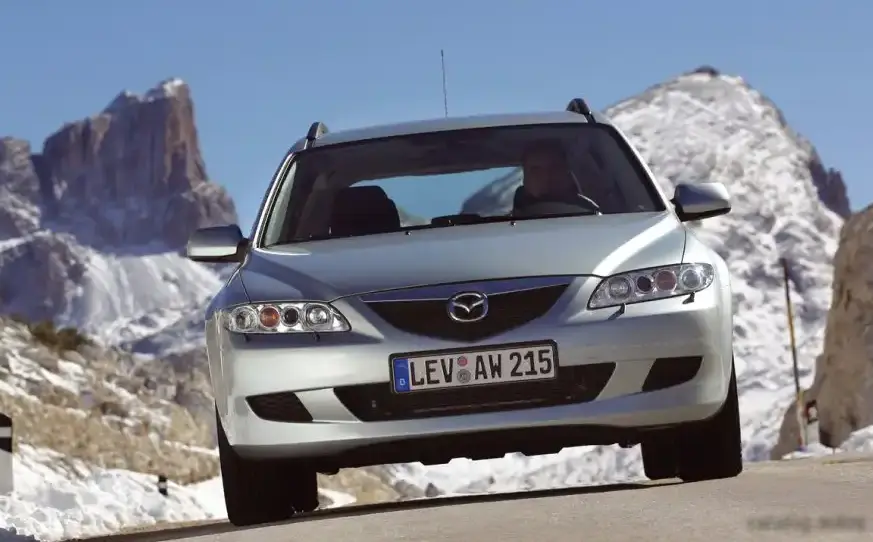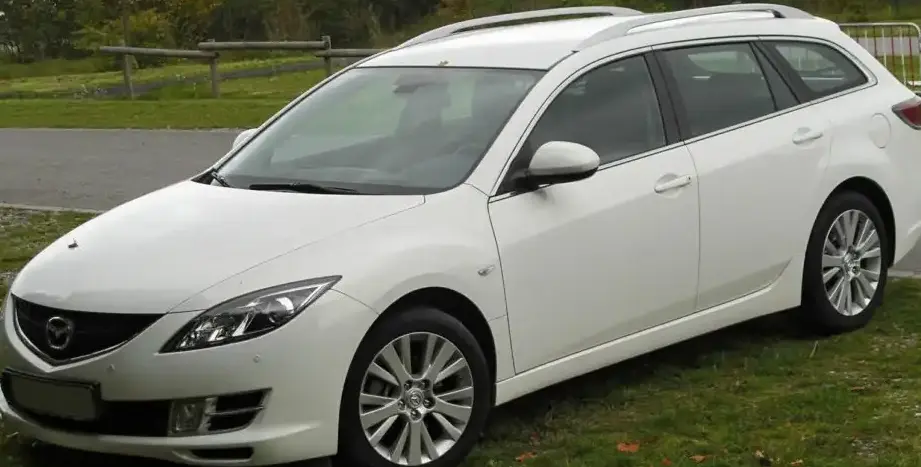
The Mazda 6 II Combi (GH) 2.0, produced between 2007 and 2010, represents a significant iteration of Mazda’s popular mid-size wagon. Positioned as a practical and stylish option within the second-generation 6 lineup (GH platform), this variant offered a balance between fuel efficiency, performance, and cargo capacity. It served as a key model for Mazda in the European and Asian markets, where the station wagon body style remained highly sought after. This specific 2.0-liter engine and six-speed manual transmission combination aimed to appeal to buyers seeking a versatile vehicle for both daily commuting and longer journeys.
Technical Specifications
| Brand | Mazda |
| Model | 6 |
| Generation | 6 II Combi (GH) |
| Type (Engine) | 2.0 (147 Hp) |
| Start of production | 2007 |
| End of production | 2010 |
| Powertrain Architecture | Internal Combustion engine |
| Body type | Station wagon (estate) |
| Seats | 5 |
| Doors | 5 |
| Fuel consumption (economy) – urban (NEDC) | 10 l/100 km (23.5 US mpg, 28.2 UK mpg, 10 km/l) |
| Fuel consumption (economy) – extra urban (NEDC) | 5.6 l/100 km (42 US mpg, 50.4 UK mpg, 17.9 km/l) |
| Fuel consumption (economy) – combined (NEDC) | 7.2 l/100 km (32.7 US mpg, 39.2 UK mpg, 13.9 km/l) |
| CO2 emissions (NEDC) | 171 g/km |
| Fuel Type | Petrol (Gasoline) |
| Acceleration 0 – 100 km/h | 10.3 sec |
| Acceleration 0 – 62 mph | 10.3 sec |
| Acceleration 0 – 60 mph | 9.8 sec |
| Maximum speed | 208 km/h (129.25 mph) |
| Emission standard | Euro 4 |
| Weight-to-power ratio | 9.2 kg/Hp, 108.5 Hp/tonne |
| Weight-to-torque ratio | 7.4 kg/Nm, 135.8 Nm/tonne |
| Power | 147 Hp @ 6500 rpm |
| Power per litre | 73.5 Hp/l |
| Torque | 184 Nm @ 4000 rpm (135.71 lb.-ft. @ 4000 rpm) |
| Engine layout | Front, Transverse |
| Engine Model/Code | LF-DE |
| Engine displacement | 1999 cm3 (121.99 cu. in.) |
| Number of cylinders | 4 |
| Engine configuration | Inline |
| Cylinder Bore | 87.5 mm (3.44 in.) |
| Piston Stroke | 83.1 mm (3.27 in.) |
| Compression ratio | 10:1 |
| Number of valves per cylinder | 4 |
| Fuel injection system | Multi-port manifold injection |
| Engine aspiration | Naturally aspirated engine |
| Valvetrain | DOHC |
| Engine oil capacity | 4.3 l (4.54 US qt, 3.78 UK qt) |
| Coolant | 7.5 l (7.93 US qt, 6.6 UK qt) |
| Kerb Weight | 1355 kg (2987.26 lbs.) |
| Max. weight | 1970 kg (4343.11 lbs.) |
| Max load | 615 kg (1355.84 lbs.) |
| Trunk (boot) space – minimum | 519 l (18.33 cu. ft.) |
| Trunk (boot) space – maximum | 1751 l (61.84 cu. ft.) |
| Fuel tank capacity | 64 l (16.91 US gal, 14.08 UK gal) |
| Max. roof load | 100 kg (220.46 lbs.) |
| Permitted trailer load with brakes (8%) | 1700 kg (3747.86 lbs.) |
| Permitted trailer load with brakes (12%) | 1500 kg (3306.93 lbs.) |
| Permitted towbar download | 75 kg (165.35 lbs.) |
| Length | 4785 mm (188.39 in.) |
| Width | 1795 mm (70.67 in.) |
| Height | 1490 mm (58.66 in.) |
| Wheelbase | 2725 mm (107.28 in.) |
| Front track | 1550-1570 mm (61.02 – 61.81 in.) |
| Rear (Back) track | 1550-1570 mm (61.02 – 61.81 in.) |
| Ride height (ground clearance) | 165 mm (6.5 in.) |
| Minimum turning circle (turning diameter) | 11.4 m (37.4 ft.) |
| Drivetrain Architecture | The Internal combustion engine (ICE) drives the front wheels of the vehicle. |
| Drive wheel | Front wheel drive |
| Number of gears and type of gearbox | 6 gears, manual transmission |
| Front suspension | Double wishbone, Transverse stabilizer |
| Rear suspension | Independent multi-link suspension, Transverse stabilizer |
| Front brakes | Ventilated discs, 299 mm |
| Rear brakes | Disc, 280 mm |
| Assisting systems | ABS (Anti-lock braking system) |
| Steering type | Steering rack and pinion |
| Power steering | Electric Steering |
| Tires size | 205/60 R16; 215/50 R17; 225/45 R18 |
| Wheel rims size | 6.5J x 16; 7J x 17; 7.5J x 18 |
INTRODUCTION
The Mazda 6 II Combi (GH) 2.0 represented a refinement of the first-generation 6, offering increased space, improved build quality, and a more sophisticated driving experience. Introduced in 2007, the GH generation brought a more dynamic design language and a focus on driver engagement. The 2.0-liter variant, producing 147 horsepower, was a popular choice for buyers prioritizing fuel economy and everyday usability over outright performance. It occupied a middle ground in the 6 Combi lineup, positioned below the more powerful 2.5-liter engine options and above the entry-level 1.8-liter models.
Powertrain & Engine Architecture
The heart of this variant is the LF-DE 2.0-liter inline-four cylinder engine. This engine utilizes a naturally aspirated configuration with multi-port fuel injection and a double overhead camshaft (DOHC) valvetrain. The LF-DE engine is known for its relatively smooth operation and decent fuel efficiency. The engine’s 10:1 compression ratio contributes to its power output. Paired with the engine is a six-speed manual transmission, providing precise gear changes and enhancing driver control. This transmission was chosen for its balance of efficiency and responsiveness. The engine’s transverse mounting within the front-wheel-drive configuration optimizes space utilization within the engine bay.
Driving Characteristics
The 2.0-liter engine, while not exceptionally powerful, provided adequate performance for most driving situations. Acceleration from 0-60 mph took approximately 9.8 seconds, and the car could reach a top speed of 208 km/h (129.25 mph). The six-speed manual transmission allowed drivers to keep the engine within its optimal power band, maximizing acceleration and responsiveness. Compared to the higher-output 2.5-liter models, the 2.0-liter felt less strained during highway cruising and offered better fuel economy. However, it lacked the punch for quick overtaking maneuvers. The gear ratios were well-matched for everyday driving, providing a comfortable and predictable driving experience.
Equipment & Trim Levels
The Mazda 6 II Combi 2.0 typically came equipped with a respectable array of standard features. These included air conditioning, power windows and mirrors, a CD player with auxiliary input, and ABS brakes. Higher trim levels offered options such as leather upholstery, a sunroof, automatic climate control, and a premium sound system. Interior upholstery was generally cloth, with higher trims offering partial or full leather options. Dashboard configuration was functional and well-laid-out, with a focus on ergonomics. Optional extras often included parking sensors and a navigation system.
Chassis & Braking
The Mazda 6 II Combi featured a double wishbone front suspension and an independent multi-link rear suspension, providing a comfortable ride and good handling characteristics. Stabilizer bars were included on both axles to reduce body roll during cornering. Braking duties were handled by ventilated discs at the front and solid discs at the rear, providing adequate stopping power. The ABS system enhanced braking performance and stability, particularly in adverse conditions. The suspension tuning was geared towards providing a balance between comfort and handling, making it suitable for both city driving and longer highway journeys.
Market Reception & Comparison
The Mazda 6 II Combi 2.0 was generally well-received by automotive critics. It was praised for its stylish design, spacious interior, and comfortable ride. However, some critics noted that the 2.0-liter engine could feel underpowered when fully loaded or when tackling steep hills. Compared to the 1.8-liter variant, the 2.0-liter offered a noticeable improvement in performance. Compared to the 2.5-liter models, it provided better fuel economy and a lower price point. Fuel economy figures averaged around 7.2 l/100 km (32.7 US mpg), making it a relatively efficient option in its class. Reliability was generally good, with few major issues reported.
Legacy
The Mazda 6 II Combi 2.0 has proven to be a reliable and durable vehicle. The LF-DE engine is known for its longevity, and the six-speed manual transmission is generally robust. In the used car market, these models remain relatively affordable and represent a good value for buyers seeking a practical and stylish station wagon. While not a performance icon, the 2.0-liter variant continues to be appreciated for its balance of fuel efficiency, usability, and overall dependability. Parts availability remains good, making maintenance relatively straightforward and cost-effective.