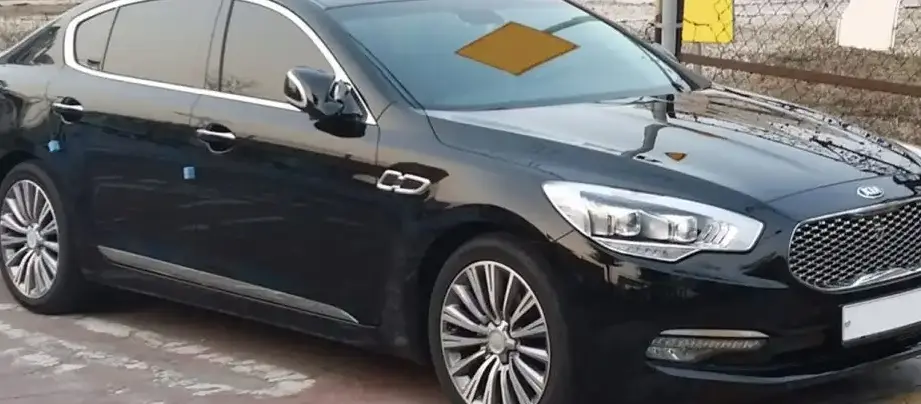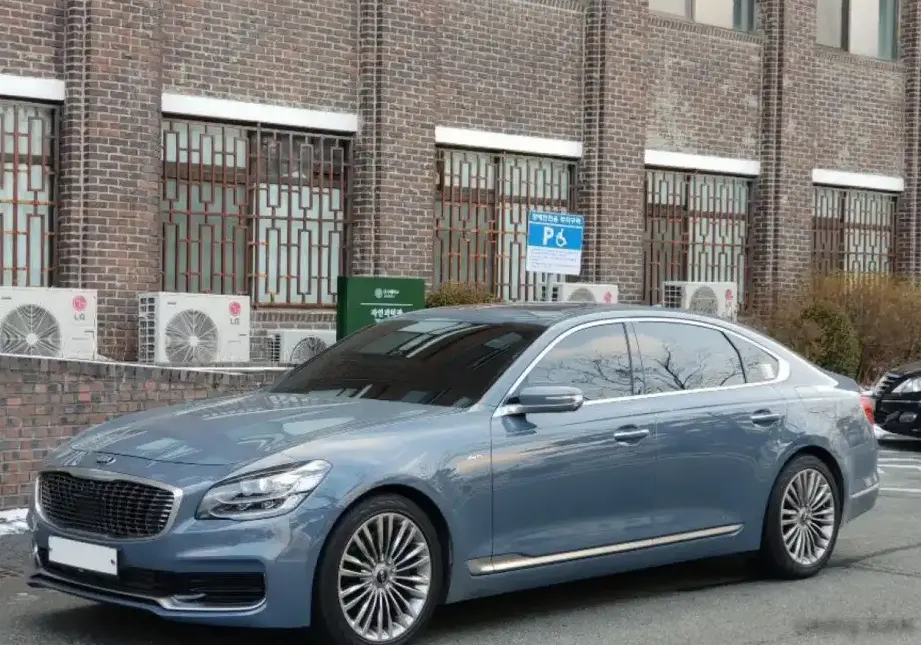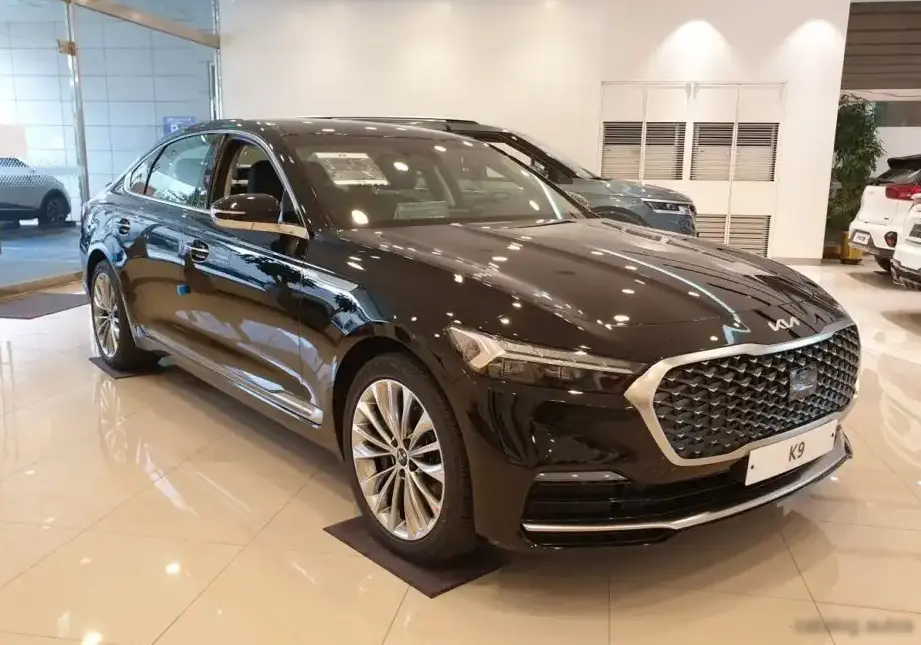
The Kia K9 II (facelift, introduced in May 2021) 3.3 T-GDI V6 represents the top-tier engine option for Kia’s flagship sedan. Positioned as a luxury competitor, the K9 aimed to challenge established brands in the full-size segment, particularly in the Korean domestic market and select export regions. This facelift brought styling revisions and refinements to the already sophisticated K9 II, further emphasizing its premium character. The 3.3 T-GDI variant, producing 370 horsepower, served as the range-topping model, offering a blend of performance and luxury features. It’s important to note that the K9 was never a high-volume seller in the United States, and its presence was largely focused on establishing Kia’s brand image as a capable luxury automaker.
Technical Specifications
| Brand | Kia |
| Model | K9 |
| Generation | K9 II (facelift 2021) |
| Type (Engine) | 3.3 T-GDI V6 (370 Hp) Automatic |
| Start of production | May, 2021 |
| Powertrain Architecture | Internal Combustion engine |
| Body type | Sedan |
| Seats | 5 |
| Doors | 4 |
| Fuel consumption (urban) | 13.5 l/100 km (17.4 US mpg, 20.9 UK mpg, 7.4 km/l) |
| Fuel consumption (extra urban) | 9.2-9.4 l/100 km (25.6 – 25 US mpg, 30.7 – 30.1 UK mpg, 10.9 – 10.6 km/l) |
| Fuel consumption (combined) | 11.5-11.6 l/100 km (20.5 – 20.3 US mpg, 24.6 – 24.4 UK mpg, 8.7 – 8.6 km/l) |
| CO2 emissions | 199-200 g/km |
| Fuel Type | Petrol (Gasoline) |
| Weight-to-power ratio | 5.4 kg/Hp, 184.5 Hp/tonne |
| Weight-to-torque ratio | 3.9 kg/Nm, 254.4 Nm/tonne |
| Power | 370 Hp @ 6000 rpm |
| Power per litre | 110.7 Hp/l |
| Torque | 510 Nm @ 1300-4500 rpm (376.16 lb.-ft. @ 1300-4500 rpm) |
| Engine layout | Front, Longitudinal |
| Engine Model/Code | Lambda II / G6DP |
| Engine displacement | 3342 cm3 (203.94 cu. in.) |
| Number of cylinders | 6 |
| Engine configuration | V-engine |
| Fuel injection system | Direct injection |
| Engine aspiration | Turbocharger, Intercooler |
| Engine systems | Start & Stop System |
| Kerb Weight | 2005 kg (4420.27 lbs.) |
| Fuel tank capacity | 77 l (20.34 US gal | 16.94 UK gal) |
| Length | 5140 mm (202.36 in.) |
| Width | 1915 mm (75.39 in.) |
| Height | 1490 mm (58.66 in.) |
| Wheelbase | 3105 mm (122.24 in.) |
| Front track | 1629-1639 mm (64.13 – 64.53 in.) |
| Rear track | 1639-1659 mm (64.53 – 65.31 in.) |
| Drivetrain Architecture | Rear wheel drive |
| Drive wheel | Rear wheel drive |
| Number of gears | 8 |
| Gearbox type | Automatic transmission |
| Front suspension | Independent multi-link suspension |
| Rear suspension | Independent multi-link suspension |
| Front brakes | Ventilated discs |
| Rear brakes | Ventilated discs |
| Assisting systems | ABS (Anti-lock braking system) |
| Steering type | Steering rack and pinion |
| Tires size | Front: 245/45 R19, Rear: 275/40 R19 |
Powertrain & Engine Architecture
At the heart of the K9 II 3.3 T-GDI lies Kia’s Lambda II V6 engine, specifically the G6DP code. This 3.3-liter engine utilizes direct injection and is augmented by a twin-scroll turbocharger and intercooler to deliver a substantial 370 horsepower and 510 Nm (376 lb-ft) of torque. The direct injection system optimizes fuel delivery for improved efficiency and power output, while the turbocharger provides a broad torque curve peaking from 1300 to 4500 rpm. This engine is longitudinally mounted in the front of the vehicle, driving the rear wheels. The engine is paired with a smooth-shifting, eight-speed automatic transmission. This transmission was designed to provide responsive acceleration and comfortable cruising, with gear ratios optimized for both performance and fuel economy. The inclusion of a Start & Stop system further contributes to improved fuel efficiency in city driving conditions.
Driving Characteristics
The 3.3 T-GDI powertrain delivers a refined and powerful driving experience. The readily available torque from the turbocharger provides strong acceleration in various driving situations. While not a sports sedan, the K9 II offers confident passing power and a composed highway demeanor. Compared to the naturally aspirated 3.8-liter V6 option available in some markets, the 3.3 T-GDI provides a noticeable performance advantage. The eight-speed automatic transmission contributes to a smooth and seamless driving experience, with well-chosen gear ratios that keep the engine in its optimal power band. The rear-wheel-drive configuration enhances handling balance, although it doesn’t offer the all-weather capability of an all-wheel-drive system.
Equipment & Trim Levels
The 3.3 T-GDI variant of the K9 II typically came equipped with a comprehensive suite of luxury features. Standard amenities included leather upholstery, heated and ventilated front seats, a premium audio system (often Lexicon branded), a large infotainment touchscreen with navigation, and a suite of advanced driver-assistance systems (ADAS) such as adaptive cruise control, lane-keeping assist, and blind-spot monitoring. Optional extras could include a rear-seat entertainment system, a panoramic sunroof, and upgraded interior trim materials. The overall interior design focused on creating a comfortable and sophisticated environment, with attention paid to detail and material quality.
Chassis & Braking
The K9 II utilizes an independent multi-link suspension system for both the front and rear axles, designed to provide a comfortable ride and controlled handling. The suspension tuning prioritizes ride comfort, absorbing bumps and imperfections in the road surface effectively. Ventilated disc brakes are employed on all four wheels, providing ample stopping power. The inclusion of ABS (Anti-lock Braking System) and other electronic stability control systems further enhances safety. Stabilizer bars are fitted to both the front and rear suspension to minimize body roll during cornering.
Market Reception & Comparison
The Kia K9 II, even in its facelifted form, faced an uphill battle in the luxury sedan segment. Critics generally praised the K9’s comfortable ride, spacious interior, and generous feature set, but noted that it lacked the brand recognition and prestige of established competitors like the BMW 7 Series, Mercedes-Benz S-Class, and Lexus LS. Fuel economy figures of around 20-24 mpg combined were typical, which is comparable to other vehicles in its class with similar engine displacement and performance. Reliability reports have been generally positive, although long-term ownership data is limited due to the K9’s relatively low sales volume. Compared to lower-trim K9 models with the 3.8L V6, the 3.3 T-GDI offered a significant performance upgrade, but at a higher price point.
Legacy
The Kia K9 II 3.3 T-GDI represents a significant step forward for Kia in terms of engineering and luxury aspirations. While it didn’t achieve widespread commercial success, it served as a showcase for Kia’s capabilities and helped to elevate the brand’s image. On the used car market, the K9 II 3.3 T-GDI offers a compelling value proposition for buyers seeking a spacious, well-equipped, and powerful luxury sedan at a more affordable price point than its European and Japanese rivals. The Lambda II V6 engine, when properly maintained, has proven to be a relatively reliable unit, and the eight-speed automatic transmission is also known for its durability. However, potential buyers should be aware of the higher maintenance costs associated with a luxury vehicle and ensure that the car has been regularly serviced.