
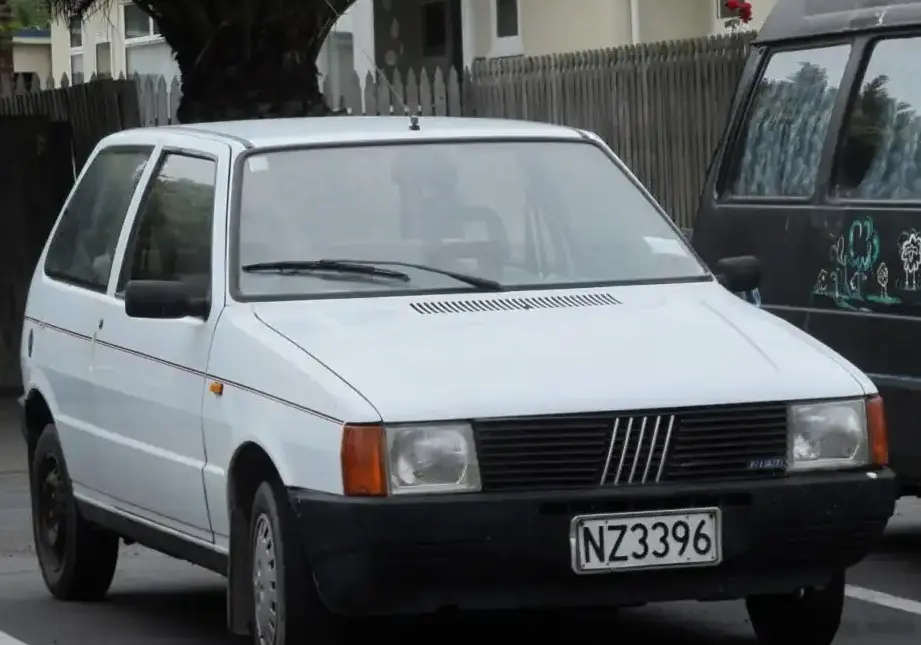
The Fiat Uno 1.3 Turbo i.e., produced between 1989 and 1991, represents a performance-oriented variant within the 146A series of the popular Fiat Uno hatchback. This model, distinguished by its turbocharged 1.3-liter engine, aimed to provide a more engaging driving experience than the standard Uno offerings, particularly in European markets. It occupied a niche position, bridging the gap between the base models and the more utilitarian diesel versions. The 146A Uno was a significant vehicle for Fiat, embodying the company’s commitment to accessible and efficient transportation, and the Turbo i.e. version showcased a willingness to inject some sporting flair into the lineup.
Technical Specifications
| Brand | Fiat |
| Model | UNO |
| Generation | UNO (146A) |
| Type (Engine) | 1.3 Turbo i.e. (101 Hp) |
| Start of production | 1989 |
| End of production | 1991 |
| Powertrain Architecture | Internal Combustion engine |
| Body type | Hatchback |
| Fuel Type | Petrol (Gasoline) |
| Power | 101 Hp |
| Engine Model/Code | 146 A2.246 |
| Engine aspiration | Turbocharger |
| Engine oil capacity | 4.1 l / 4.33 US qt / 3.61 UK qt |
| Coolant capacity | 7 l / 7.4 US qt / 6.16 UK qt |
Powertrain & Engine Architecture
The heart of the Uno 1.3 Turbo i.e. is the 146 A2.246 engine, a 1301cc inline-four cylinder unit. This engine is notable for its use of a turbocharger and electronic fuel injection (hence the “i.e.” designation – *iniezione elettronica* in Italian). The engine utilizes a single overhead camshaft (SOHC) valvetrain with two valves per cylinder. Bosch provided the electronic fuel injection system, a significant upgrade over the carburetors found in earlier Uno models. The turbocharger, a Garrett unit, provided a substantial boost in power output, elevating the engine to 101 horsepower. This was a considerable figure for a car of this size and price point in the late 1980s. The engine’s compression ratio was 8.8:1. While specific transmission options varied by market, the Uno 1.3 Turbo i.e. was typically paired with a five-speed manual gearbox, although a three-speed automatic transmission was also available, albeit less common. The automatic transmission, while offering convenience, did impact performance somewhat.
Driving Characteristics
The Uno 1.3 Turbo i.e. offered a noticeably more spirited driving experience than the standard Uno. The turbocharger provided a surge of power in the mid-range, making overtaking maneuvers easier and more enjoyable. While not a sports car by any means, the Uno Turbo i.e. was surprisingly quick for its class, with a reported 0-60 mph time of around 9.5 seconds. The five-speed manual transmission allowed drivers to keep the engine in its optimal power band. The automatic transmission, while smooth, resulted in slightly slower acceleration and a less engaging driving experience. The car’s relatively light weight (around 1,800 lbs) contributed to its nimble handling. However, the suspension was fairly basic, and the ride could be somewhat firm, especially on uneven road surfaces. The steering was light and responsive, making the car easy to maneuver in urban environments.
Equipment & Trim Levels
The Uno 1.3 Turbo i.e. was generally positioned as a mid-range trim level within the Uno lineup. Standard equipment typically included cloth upholstery, a basic instrument cluster, and manual windows and door locks. Power steering was often an optional extra. Interior trim was functional and durable, reflecting the Uno’s overall focus on practicality. The dashboard layout was simple and straightforward. Optional extras could include a sunroof, upgraded stereo system, and alloy wheels. The exterior styling was largely similar to other Uno models, but the Turbo i.e. often featured a subtle rear spoiler and distinctive badging to differentiate it from the base models. The availability of specific features varied depending on the market.
Chassis & Braking
The Uno 1.3 Turbo i.e. utilized a relatively simple chassis design. It featured independent front suspension with MacPherson struts and a twist-beam rear axle. The braking system consisted of disc brakes on the front wheels and drum brakes on the rear wheels. The brakes were adequate for the car’s performance, but they lacked the stopping power of more modern systems. Stabilizer bars were typically fitted to both the front and rear axles to reduce body roll during cornering. The Uno’s lightweight construction helped to minimize the demands on the suspension and braking systems. Tire size was typically 165/70 R13.
Market Reception & Comparison
The Fiat Uno 1.3 Turbo i.e. was generally well-received by automotive critics. It was praised for its lively performance, nimble handling, and affordable price. However, some critics noted the car’s basic interior and somewhat firm ride. Compared to other small hatchbacks of the time, such as the Peugeot 205 and the Renault Clio, the Uno Turbo i.e. offered a compelling combination of performance and value. It was more powerful than many of its rivals, but it also lacked some of their refinement. Fuel economy was respectable, averaging around 35-40 mpg. Reliability was generally good, although the turbocharger could be a potential source of problems if not properly maintained. Compared to the naturally aspirated 1.0-liter and 1.5-liter Uno models, the Turbo i.e. offered a significant performance boost, but it also came with a higher price tag and slightly increased running costs.
Legacy
The Fiat Uno 1.3 Turbo i.e. remains a fondly remembered model among enthusiasts. Its combination of performance, affordability, and distinctive styling has made it a popular choice among classic car collectors. The 146 A2.246 engine, while not without its quirks, is generally considered to be a robust and reliable unit. Parts availability can be a challenge, but many components are still available from specialist suppliers. In the used car market, well-maintained examples of the Uno 1.3 Turbo i.e. command a premium price. The car represents a significant chapter in Fiat’s history, showcasing the company’s ability to produce fun-to-drive and affordable vehicles. It demonstrated that even small, economical cars could offer a degree of performance and excitement.

