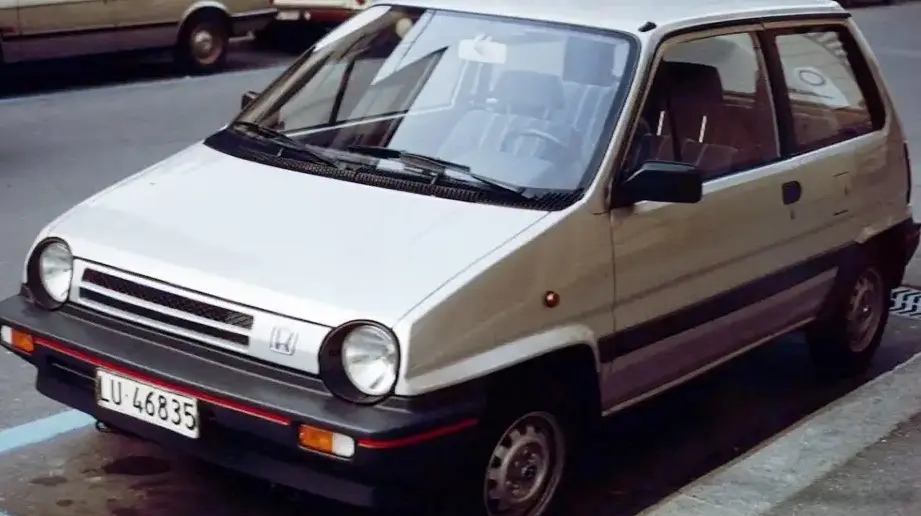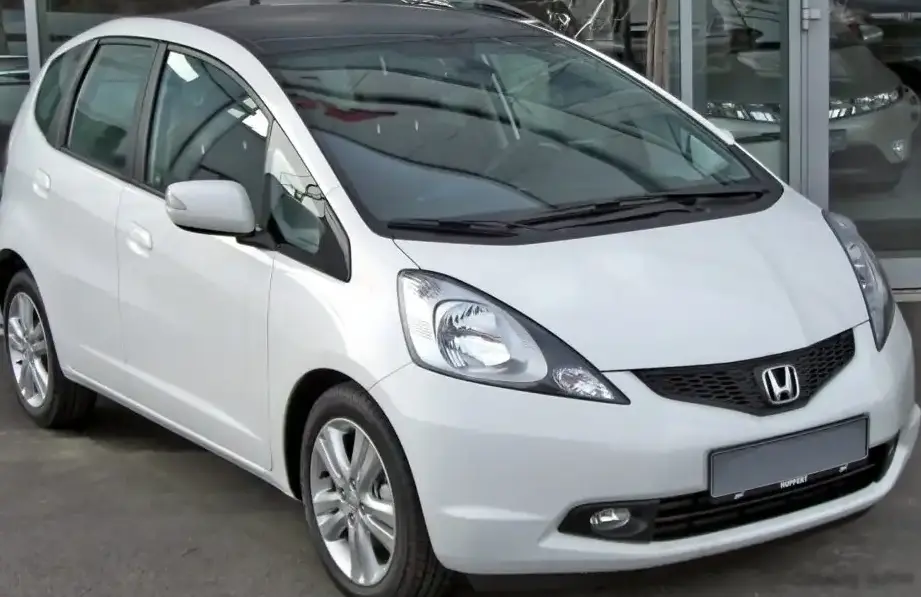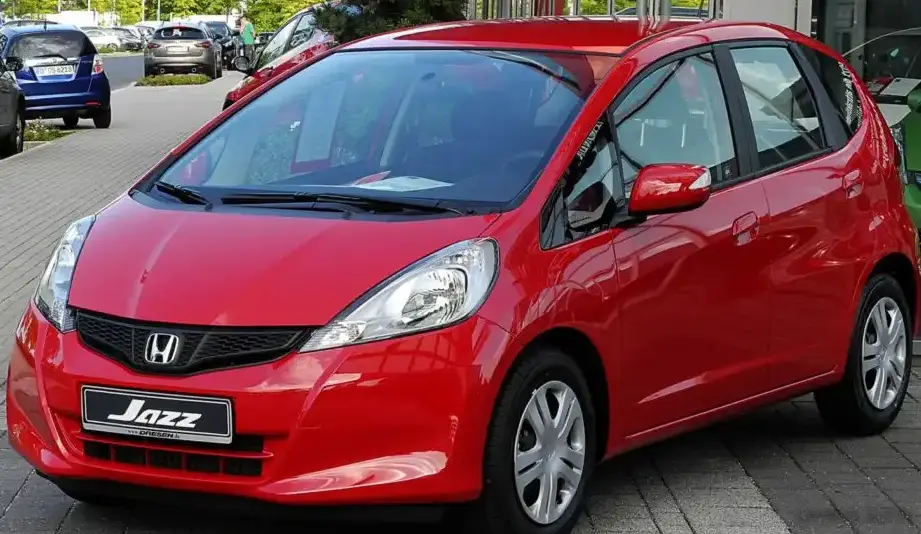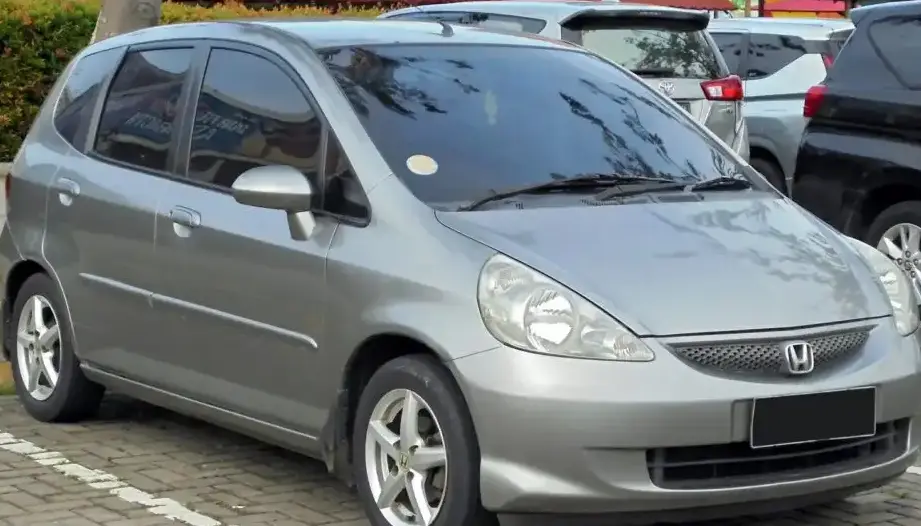
The Honda Jazz, known as the Honda Fit in North America, first arrived in 2002 as a subcompact hatchback designed to maximize interior space and practicality. The 1.4-liter (83 horsepower) variant with a Continuously Variable Transmission (CVT) represented an entry-level offering within the first generation (2002-2008) Jazz lineup, designated as the GD1/GD3 chassis code. This model aimed to provide fuel efficiency and ease of use, targeting urban drivers and those seeking a versatile, economical vehicle. It was primarily sold in Europe, Japan, and other Asian markets, with the Fit arriving in the US in a later generation.
Technical Specifications
| Brand | Honda |
| Model | Jazz |
| Generation | Jazz I |
| Type (Engine) | 1.4 (83 Hp) CVT |
| Start of production | 2002 |
| End of production | 2008 |
| Powertrain Architecture | Internal Combustion engine |
| Body type | Hatchback |
| Seats | 5 |
| Doors | 5 |
| Fuel consumption (urban) | 7.2 l/100 km (32.7 US mpg) |
| Fuel consumption (extra urban) | 5 l/100 km (47 US mpg) |
| Fuel consumption (combined) | 5.5 l/100 km (42.8 US mpg) |
| Fuel Type | Petrol (Gasoline) |
| Acceleration 0 – 100 km/h | 12.4 sec |
| Acceleration 0 – 62 mph | 12.4 sec |
| Acceleration 0 – 60 mph | 11.8 sec |
| Maximum speed | 160 km/h (99.42 mph) |
| Weight-to-power ratio | 11.8 kg/Hp |
| Weight-to-torque ratio | 8.2 kg/Nm |
| Power | 83 Hp @ 5700 rpm |
| Torque | 119 Nm @ 2800 rpm (87.77 lb.-ft. @ 2800 rpm) |
| Engine layout | Front, Transverse |
| Engine Model/Code | L13A5 |
| Engine displacement | 1339 cm3 (81.71 cu. in.) |
| Number of cylinders | 4 |
| Engine configuration | Inline |
| Cylinder Bore | 73 mm (2.87 in.) |
| Piston Stroke | 80 mm (3.15 in.) |
| Compression ratio | 10.8:1 |
| Number of valves per cylinder | 2 |
| Fuel injection system | Multi-port manifold injection |
| Engine aspiration | Naturally aspirated |
| Valvetrain | OHC |
| Engine oil capacity | 3.6 l (3.8 US qt | 3.17 UK qt) |
| Coolant capacity | 3.8 l (4.02 US qt | 3.34 UK qt) |
| Kerb Weight | 980 kg (2160.53 lbs.) |
| Max. weight | 1470 kg (3240.8 lbs.) |
| Max load | 490 kg (1080.27 lbs.) |
| Trunk (boot) space – minimum | 380 l (13.42 cu. ft.) |
| Trunk (boot) space – maximum | 1323 l (46.72 cu. ft.) |
| Fuel tank capacity | 42 l (11.1 US gal | 9.24 UK gal) |
| Length | 3830 mm (150.79 in.) |
| Width | 1675 mm (65.94 in.) |
| Height | 1525 mm (60.04 in.) |
| Wheelbase | 2450 mm (96.46 in.) |
| Front track | 1460 mm (57.48 in.) |
| Rear track | 1445 mm (56.89 in.) |
| Drivetrain Architecture | Front wheel drive |
| Number of gears | 7 (CVT) |
| Front suspension | Spring Strut |
| Rear suspension | Coil spring |
| Front brakes | Ventilated discs |
| Rear brakes | Drum |
| Steering type | Steering rack and pinion |
| Power steering | Hydraulic |
| Tires size | 185/55 R15 |
| Wheel rims size | 15 |
Introduction
The Honda Jazz I 1.4 CVT, produced between 2002 and 2008, was a key component of Honda’s strategy to offer a versatile and affordable subcompact car. Built on the GD platform (shared with the first-generation Honda Fit), the Jazz distinguished itself with its innovative “Ultra Seat” system, allowing for multiple seating configurations and maximizing cargo space. The 1.4-liter engine and CVT combination was positioned as the entry point to the Jazz range, prioritizing fuel economy and ease of driving over outright performance. This variant was particularly popular in European and Asian markets where smaller, fuel-efficient vehicles are highly sought after.
Powertrain & Engine Architecture
The heart of the Jazz 1.4 CVT is the L13A5 engine, a 1.339-liter inline-four cylinder gasoline engine. This engine utilizes a single overhead camshaft (SOHC) valvetrain with two valves per cylinder. Fuel delivery is managed by a multi-point fuel injection system. The L13A5 is a naturally aspirated engine, meaning it doesn’t employ a turbocharger or supercharger. The engine produces 83 horsepower at 5700 rpm and 119 Nm (87.77 lb-ft) of torque at 2800 rpm.
Paired with this engine is a Continuously Variable Transmission (CVT). Honda’s CVT design, at the time, aimed to provide smooth, stepless gear changes, enhancing fuel efficiency and driving comfort. Unlike traditional automatic transmissions with fixed gear ratios, a CVT uses a belt and pulley system to provide an infinite number of gear ratios within its operating range. This allows the engine to operate at its most efficient rpm regardless of vehicle speed.
Driving Characteristics
The 1.4-liter CVT Jazz offered a comfortable and predictable driving experience, but wasn’t designed for spirited acceleration. The CVT, while smooth, resulted in a noticeable “rubber band” effect, where engine rpm would rise quickly under acceleration without a corresponding immediate increase in vehicle speed. 0-60 mph took approximately 11.8 seconds, and top speed was limited to 99.42 mph. Compared to the 1.5-liter manual versions of the Jazz, the 1.4 CVT felt noticeably slower. The manual transmission offered a more direct connection to the engine and quicker acceleration. However, the CVT’s strength lay in its fuel efficiency and ease of use, particularly in congested urban environments.
Equipment & Trim Levels
The 1.4 CVT Jazz typically came with a reasonable level of standard equipment. This included power steering, central locking, electric front windows, and an audio system. Air conditioning was often standard, but could be optional depending on the specific market. Interior upholstery was typically cloth, with a relatively simple dashboard layout. Optional extras included alloy wheels, a sunroof, and upgraded audio systems. Trim levels varied by region, but the 1.4 CVT generally represented the base or near-base trim, focusing on essential features and affordability.
Chassis & Braking
The Jazz I utilized a front-wheel-drive layout with a MacPherson strut suspension in the front and a torsion beam suspension in the rear. The front brakes were ventilated discs, providing adequate stopping power, while the rear brakes were drums. This configuration was typical for vehicles in this weight class and price range. The steering was a hydraulic rack and pinion system, offering reasonable precision and feedback. Stabilizer bars were included to reduce body roll during cornering, but the overall handling was geared towards comfort rather than sporty performance.
Market Reception & Comparison
The Honda Jazz 1.4 CVT was generally well-received by critics for its practicality, fuel efficiency, and innovative interior space. However, the CVT transmission and relatively low power output were often points of criticism. Compared to other subcompact hatchbacks of the time, such as the Ford Fiesta or Volkswagen Polo, the Jazz offered a unique combination of space and versatility. The 1.5-liter Jazz models, while more expensive, provided a more engaging driving experience. Fuel economy was a strong point for the 1.4 CVT, consistently achieving around 42.8 US mpg in combined driving conditions. Reliability was also a key strength, with the L13A5 engine proving to be durable and long-lasting.
Legacy
The Honda Jazz I 1.4 CVT has proven to be a reliable and economical used car. The L13A5 engine is known for its longevity, and the CVT transmission, while requiring occasional maintenance, is generally durable if properly serviced. Today, these vehicles are often sought after by first-time car buyers or those looking for a practical and affordable city car. While not a performance icon, the Jazz 1.4 CVT remains a testament to Honda’s commitment to engineering a versatile and efficient vehicle that prioritized practicality and usability.