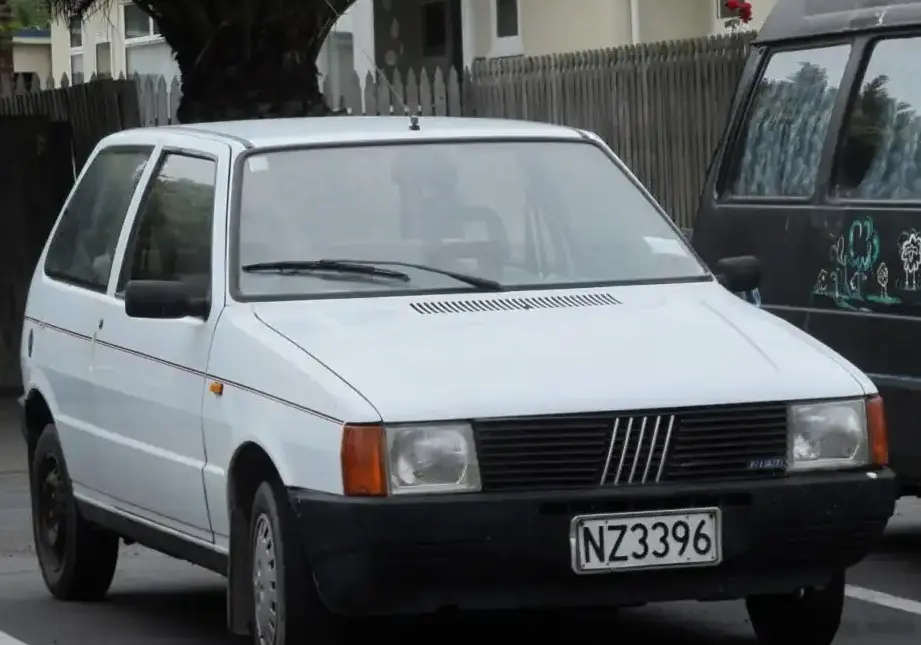
The Fiat UNO 1.4 i Turbo, produced between 1989 and 1993, represented a performance-oriented variant within the popular UNO (146A) series. Positioned as a sporty offering, it aimed to provide a more engaging driving experience than the standard, naturally aspirated models. The UNO, launched in 1983, was a supermini designed to replace the Fiat 127. The 146A generation, and specifically the 1.4 i Turbo, found its primary market in Europe, where small, economical, yet occasionally spirited, hatchbacks were in high demand. This model was a relatively rare sight, offering a significant power upgrade over the base UNO trims.
Technical Specifications
| Brand | Fiat |
| Model | UNO |
| Generation | UNO (146A) |
| Type (Engine) | 1.4 i Turbo (114 Hp) |
| Start of production | 1989 |
| End of production | 1993 |
| Powertrain Architecture | Internal Combustion engine |
| Body type | Hatchback |
| Seats | 5 |
| Doors | 3 |
| Fuel consumption (urban) | 9.8 l/100 km (24 US mpg, 28.8 UK mpg) |
| Fuel consumption (extra urban) | 6 l/100 km (39.2 US mpg, 47.1 UK mpg) |
| Fuel consumption (combined) | 8.2 l/100 km (28.7 US mpg, 34.4 UK mpg) |
| Fuel Type | Petrol (Gasoline) |
| Acceleration 0 – 100 km/h | 8.4 sec |
| Acceleration 0 – 62 mph | 8.4 sec |
| Acceleration 0 – 60 mph | 8 sec |
| Maximum speed | 200 km/h (124.27 mph) |
| Weight-to-power ratio | 8.2 kg/Hp |
| Weight-to-torque ratio | 5.7 kg/Nm |
| Power | 114 Hp @ 6000 rpm |
| Power per litre | 83.1 Hp/l |
| Torque | 165 Nm @ 3500 rpm (121.7 lb.-ft. @ 3500 rpm) |
| Engine layout | Front, Transverse |
| Engine Model/Code | 146 A8.046 |
| Engine displacement | 1372 cm3 (83.72 cu. in.) |
| Number of cylinders | 4 |
| Engine configuration | Inline |
| Cylinder Bore | 80.5 mm (3.17 in.) |
| Piston Stroke | 67.4 mm (2.65 in.) |
| Compression ratio | 7.8:1 |
| Number of valves per cylinder | 2 |
| Fuel injection system | Multi-port manifold injection |
| Engine aspiration | Turbocharger |
| Engine oil capacity | 4.1 l (4.33 US qt | 3.61 UK qt) |
| Coolant capacity | 7.5 l (7.93 US qt | 6.6 UK qt) |
| Kerb Weight | 940 kg (2072.35 lbs.) |
| Max. weight | 1360 kg (2998.29 lbs.) |
| Max load | 420 kg (925.94 lbs.) |
| Trunk (boot) space – minimum | 270 l (9.53 cu. ft.) |
| Trunk (boot) space – maximum | 970 l (34.26 cu. ft.) |
| Fuel tank capacity | 40 l (10.57 US gal | 8.8 UK gal) |
| Length | 3690 mm (145.28 in.) |
| Width | 1560 mm (61.42 in.) |
| Height | 1420 mm (55.91 in.) |
| Wheelbase | 2360 mm (92.91 in.) |
| Front track | 1350 mm (53.15 in.) |
| Rear track | 1310 mm (51.57 in.) |
| Minimum turning circle | 9.8 m (32.15 ft.) |
| Drivetrain Architecture | Front wheel drive |
| Number of gears | 5 |
| Gearbox type | Manual transmission |
| Front suspension | Coil spring |
| Rear suspension | Coil spring |
| Front brakes | Disc |
| Rear brakes | Disc |
| Assisting systems | ABS (Anti-lock braking system) |
| Steering type | Steering rack and pinion |
| Power steering | Hydraulic |
| Tires size | 175/60 R13 |
Powertrain & Engine Architecture
The heart of the UNO 1.4 i Turbo was the 146 A8.046 engine, a 1372cc inline-four cylinder unit. This engine featured a turbocharger, significantly boosting power output compared to the naturally aspirated 1.0L and 1.3L engines available in other UNO models. The engine utilized multi-port fuel injection, a relatively advanced system for its time, contributing to improved fuel efficiency and throttle response. The 7.8:1 compression ratio was a compromise between performance and the need to run on the available fuel grades in European markets. The engine produced 114 horsepower at 6000 rpm and 165 Nm (121.7 lb-ft) of torque at 3500 rpm. The five-speed manual transmission was the only gearbox option offered with this engine, designed to handle the increased power and provide a more engaging driving experience. The transmission’s gear ratios were tuned to maximize acceleration, though it wasn’t without compromise in top-gear cruising comfort.
Driving Characteristics
The 1.4 i Turbo offered a noticeable performance upgrade over the standard UNO. Acceleration to 100 km/h (62 mph) took approximately 8.4 seconds, and it could reach a top speed of 200 km/h (124 mph) – figures that were impressive for a supermini in the early 1990s. The turbocharger provided a distinct boost in power, but turbo lag was present, requiring the driver to downshift to access the engine’s full potential. The handling was generally considered nimble, but the relatively narrow track width and basic suspension setup meant it wasn’t a particularly sophisticated performer. Compared to the slower, more economical UNO variants, the 1.4 i Turbo demanded more driver involvement and offered a more rewarding, albeit less refined, driving experience.
Equipment & Trim Levels
The 1.4 i Turbo typically came with a higher level of standard equipment than the base UNO models. Features included upgraded interior trim, often with sportier seat fabrics, and sometimes included features like a rev counter in the instrument cluster. Power steering was often standard, a welcome addition given the car’s sporty aspirations. Optional extras could include alloy wheels, a sunroof, and upgraded audio systems. The interior, while functional, was still typical of a supermini of the era – basic but durable. The emphasis was on providing a practical and affordable package with a performance edge.
Chassis & Braking
The UNO 1.4 i Turbo utilized a relatively simple chassis design. Both front and rear suspension employed coil springs, providing a reasonable ride quality for a small car. The front brakes were discs, offering better stopping power than the drum brakes found on some lower-spec UNO models. The rear brakes were also discs, a feature that contributed to the car’s improved braking performance. An anti-lock braking system (ABS) was often included as standard equipment, enhancing safety. The steering was a rack and pinion system with hydraulic assistance, providing precise and responsive steering feel.
Market Reception & Comparison
The UNO 1.4 i Turbo was generally well-received by automotive journalists, who praised its performance and affordability. However, some critics noted the presence of turbo lag and the relatively basic interior. Compared to other small, turbocharged hatchbacks of the time, such as the Peugeot 205 GTI, the UNO offered a more affordable alternative, albeit with less refinement. Fuel economy was respectable for a turbocharged engine, averaging around 8.2 l/100 km (28.7 US mpg). Reliability was generally good, although the turbocharger did add a potential point of failure compared to the naturally aspirated engines.
Legacy
The Fiat UNO 1.4 i Turbo remains a fondly remembered model among enthusiasts. Its combination of affordability, performance, and distinctive styling has made it a popular choice for classic car collectors. The 146 A8.046 engine, while not without its quirks, proved to be a relatively durable unit when properly maintained. Today, well-preserved examples of the UNO 1.4 i Turbo are becoming increasingly rare and sought after, representing a unique and enjoyable piece of automotive history. The car’s legacy lies in demonstrating that even small, affordable cars could offer a genuinely engaging driving experience.