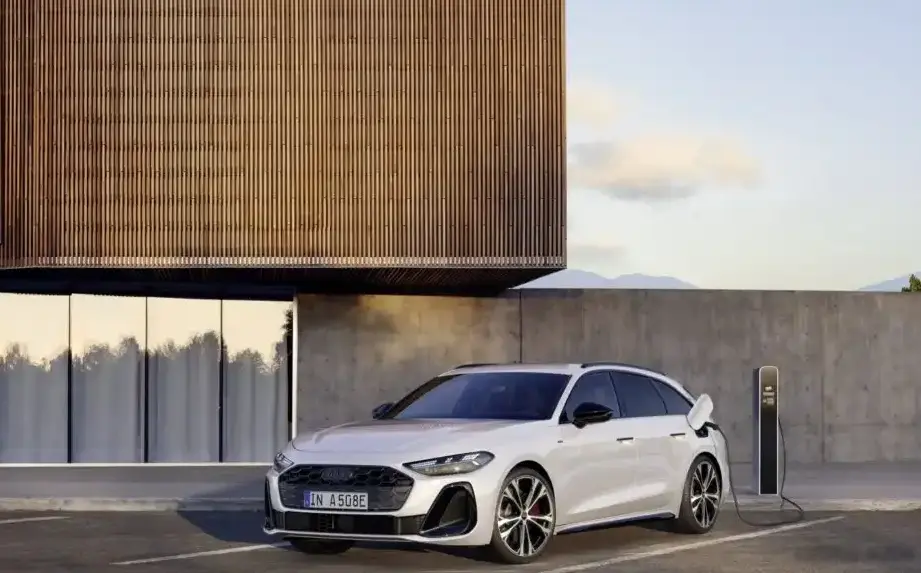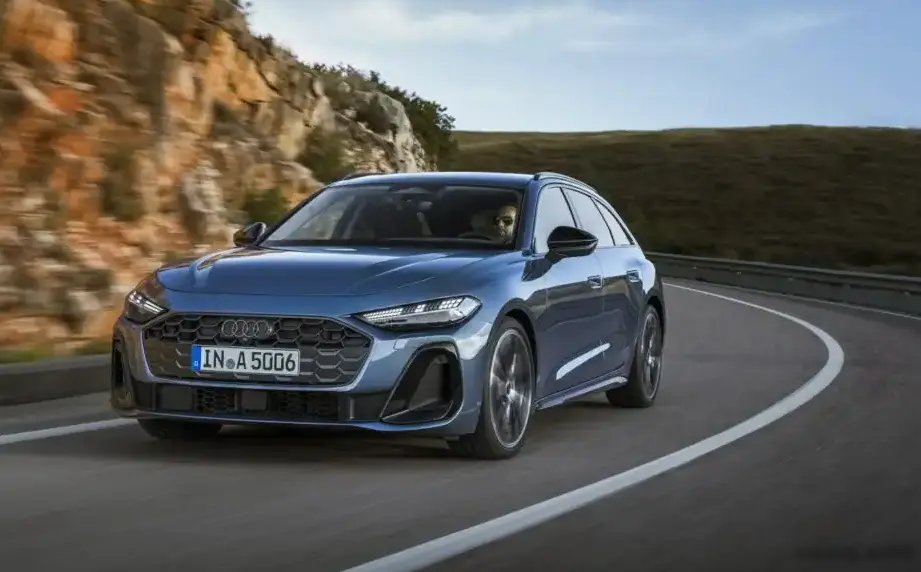
The Audi A5 Avant (B10) 2.0 TFSI 150 hp S tronic is a front-wheel-drive station wagon introduced in July 2024 as part of the B10 A5 family. Positioned as an entry-level offering within the A5 Avant range, it provides a balance of practicality, efficiency, and Audi’s signature refinement. This variant caters to buyers seeking a comfortable and economical daily driver with the added versatility of a wagon body style. It builds upon the foundation of the A5 platform (shared with the A4) and represents Audi’s continued commitment to offering a diverse lineup of vehicles to suit various customer needs.
Technical Specifications
| Brand | Audi |
| Model | A5 |
| Generation | A5 Avant (B10) |
| Type (Engine) | 2.0 TFSI (150 Hp) S tronic |
| Start of production | July, 2024 |
| Powertrain Architecture | Internal Combustion engine |
| Body type | Station wagon (estate) |
| Seats | 5 |
| Doors | 5 |
| Combined fuel consumption (WLTP) | 6.7-7.6 l/100 km |
| Combined fuel consumption (US mpg) | 35.1 – 30.9 |
| Combined fuel consumption (UK mpg) | 42.2 – 37.2 |
| Combined fuel consumption (km/l) | 14.9 – 13.2 |
| CO2 emissions (WLTP) | 153-173 g/km |
| Fuel Type | Petrol (Gasoline) |
| Acceleration 0 – 100 km/h | 9.8 sec |
| Acceleration 0 – 62 mph | 9.8 sec |
| Acceleration 0 – 60 mph | 9.3 sec |
| Maximum speed | 214 km/h (132.97 mph) |
| Emission standard | Euro 6e |
| Weight-to-power ratio | 11.4 kg/Hp |
| Power per tonne | 87.7 Hp/tonne |
| Weight-to-torque ratio | 6.1 kg/Nm |
| Torque per tonne | 163.7 Nm/tonne |
| Power | 150 Hp @ 3900-6000 rpm |
| Power per litre | 75.6 Hp/l |
| Torque | 280 Nm @ 1400-3600 rpm (206.52 lb.-ft. @ 1400-3600 rpm) |
| Engine layout | Front, Longitudinal |
| Engine displacement | 1984 cm3 (121.07 cu. in.) |
| Number of cylinders | 4 |
| Engine configuration | Inline |
| Cylinder Bore | 82.5 mm (3.25 in.) |
| Piston Stroke | 92.8 mm (3.65 in.) |
| Compression ratio | 12.5:1 |
| Number of valves per cylinder | 4 |
| Fuel injection system | Direct injection |
| Engine aspiration | Turbocharger, Intercooler |
| Valvetrain | DOHC |
| Engine oil capacity | 6 l (6.34 US qt | 5.28 UK qt) |
| Coolant capacity | 12.5 l (13.21 US qt | 11 UK qt) |
| Engine systems | Start & Stop System, Particulate filter |
| Kerb Weight | 1710 kg (3769.9 lbs.) |
| Max. weight | 2315 kg (5103.7 lbs.) |
| Max load | 605 kg (1333.8 lbs.) |
| Trunk (boot) space – minimum | 476 l (16.81 cu. ft.) |
| Trunk (boot) space – maximum | 1424 l (50.29 cu. ft.) |
| Fuel tank capacity | 56 l (14.79 US gal | 12.32 UK gal) |
| Max. roof load | 90 kg (198.42 lbs.) |
| Permitted trailer load with brakes (8%) | 1700 kg (3747.86 lbs.) |
| Permitted trailer load with brakes (12%) | 1500 kg (3306.93 lbs.) |
| Permitted trailer load without brakes | 750 kg (1653.47 lbs.) |
| Permitted towbar download | 80 kg (176.37 lbs.) |
| Length | 4829 mm (190.12 in.) |
| Width | 1860 mm (73.23 in.) |
| Width including mirrors | 2099 mm (82.64 in.) |
| Height | 1460 mm (57.48 in.) |
| Wheelbase | 2892 mm (113.86 in.) |
| Front track | 1624 mm (63.94 in.) |
| Rear track | 1611 mm (63.43 in.) |
| Front overhang | 908 mm (35.75 in.) |
| Rear overhang | 1029 mm (40.51 in.) |
| Drag coefficient (Cd) | 0.29 |
| Minimum turning circle | 12.1 m (39.7 ft.) |
| Approach angle | 14.1° |
| Departure angle | 18.5° |
| Drivetrain Architecture | The Internal combustion engine (ICE) drives the front wheels. |
| Drive wheel | Front wheel drive |
| Number of gears and type of gearbox | 7 gears, automatic transmission S tronic |
| Front suspension | Coil spring, Independent multi-link suspension, Transverse stabilizer |
| Rear suspension | Independent multi-link spring suspension with stabilizer |
| Front brakes | Ventilated discs, 323 mm |
| Rear brakes | Disc, 300 mm |
| Assisting systems | ABS (Anti-lock braking system) |
| Steering type | Steering rack and pinion |
| Power steering | Electric Steering |
| Tires size | 205/60 R17; 215/55 R17; 225/55 R17; 235/45 R18; 245/40 R19; 245/35 R20 |
| Wheel rims size | 7J x 17; 7.5J x 17; 8J x 18; 8J x 19; 8.5J x 19; 8.5J x 20 |
Powertrain & Engine Architecture
At the heart of the A5 Avant 2.0 TFSI 150 hp S tronic lies the EA888 1.8-liter turbocharged four-cylinder engine. This engine, often referred to by its engine code, is a longitudinally mounted inline-four. It utilizes direct fuel injection (FSI) and a single turbocharger with an intercooler to deliver a balance of power and efficiency. The engine’s valvetrain features a dual overhead camshaft (DOHC) design with four valves per cylinder, optimizing airflow for improved performance. The S tronic transmission is a seven-speed dual-clutch transmission known for its quick and smooth shifts. This transmission allows for both fully automatic operation and manual gear selection via steering wheel-mounted paddles or the gear selector. The engine also incorporates a start-stop system to further enhance fuel economy and reduce emissions.
Driving Characteristics
The 150 hp output, coupled with the S tronic transmission, provides adequate performance for everyday driving. Acceleration from 0-60 mph takes approximately 9.3 seconds, and the car has a top speed of 133 mph. While not a performance-oriented variant, the engine delivers a respectable amount of torque (280 Nm or 206.52 lb-ft) available from 1400-3600 rpm, providing good responsiveness in typical driving situations. The S tronic transmission contributes to a smooth and efficient driving experience, with quick gear changes and minimal power loss. Compared to higher-output versions of the A5 Avant, such as the 2.0 TFSI with 245 hp, this variant offers a more relaxed and fuel-efficient driving experience. The gear ratios are tuned for optimal fuel economy and comfortable cruising, rather than outright acceleration.
Equipment & Trim Levels
The A5 Avant 2.0 TFSI 150 hp S tronic typically comes standard with features such as Audi’s MMI infotainment system with a touchscreen display, automatic climate control, and a suite of driver-assistance systems including lane departure warning and forward collision warning. Interior upholstery is typically cloth, with options for leather upgrades. Standard exterior features include alloy wheels, LED headlights, and power-adjustable mirrors. Optional extras often include a sunroof, upgraded sound system, navigation system, and parking assistance features. Trim levels may vary depending on the market, but generally, this variant represents a well-equipped entry point into the A5 Avant range.
Chassis & Braking
The A5 Avant utilizes a sophisticated suspension system designed to provide a comfortable ride and precise handling. The front suspension features a coil spring and independent multi-link setup with a transverse stabilizer bar, while the rear suspension employs an independent multi-link spring suspension with a stabilizer bar. The braking system consists of ventilated discs at the front and solid discs at the rear. ABS (Anti-lock Braking System) is standard, providing enhanced braking performance and stability. The chassis is designed to balance comfort and handling, offering a composed ride quality without sacrificing agility.
Market Reception & Comparison
The A5 Avant 2.0 TFSI 150 hp S tronic was generally well-received by automotive critics as a practical and efficient option within the A5 lineup. It was praised for its comfortable ride, refined interior, and fuel economy. Compared to the more powerful A5 variants, it offered a more affordable entry point into the A5 Avant range, making it an attractive option for buyers prioritizing practicality and efficiency over outright performance. Fuel economy figures of 6.7-7.6 l/100 km (35.1-30.9 US mpg) were considered competitive within its class. Reliability reports suggest that the EA888 engine and S tronic transmission are generally reliable, although regular maintenance is crucial.
Legacy
The A5 Avant 2.0 TFSI 150 hp S tronic represents a significant offering in the premium station wagon segment. Its combination of practicality, efficiency, and Audi’s renowned build quality has ensured its continued popularity in the used car market. The EA888 engine has proven to be a durable and reliable powerplant when properly maintained. As a result, well-maintained examples of this variant continue to hold their value and appeal to buyers seeking a comfortable and versatile vehicle.