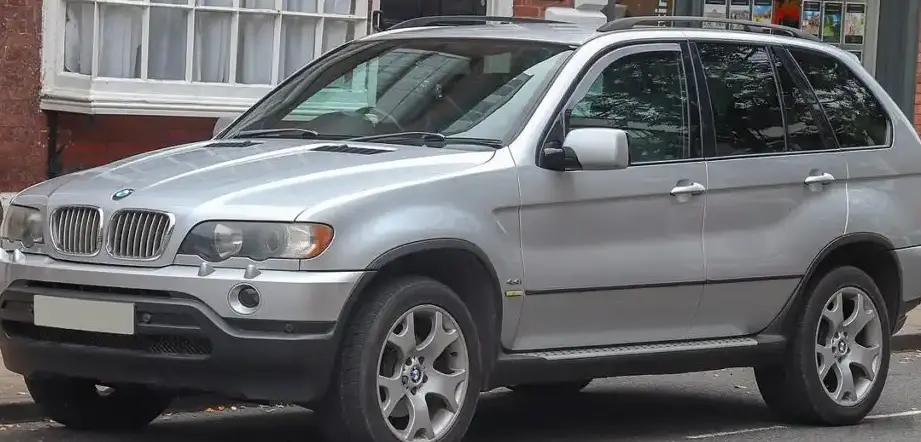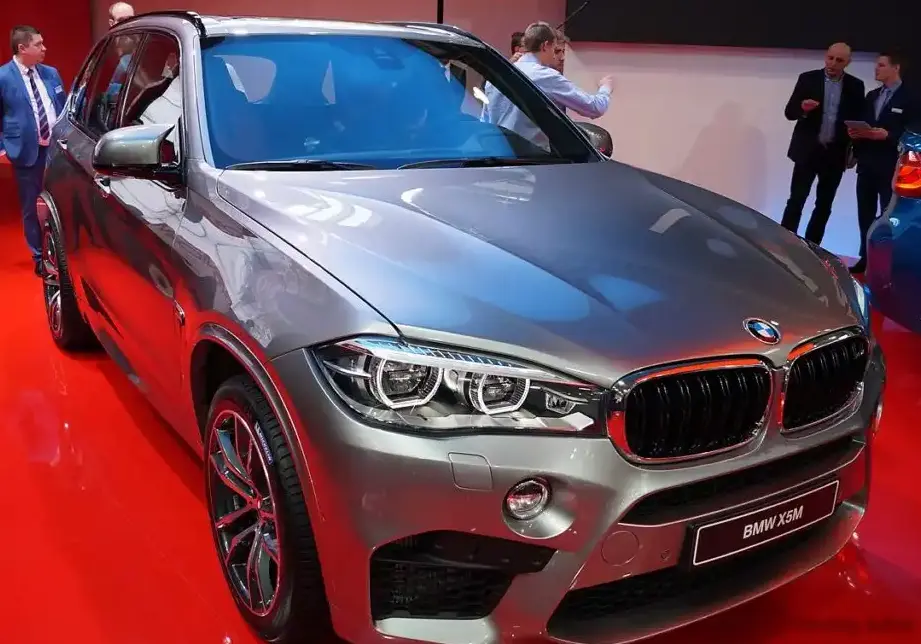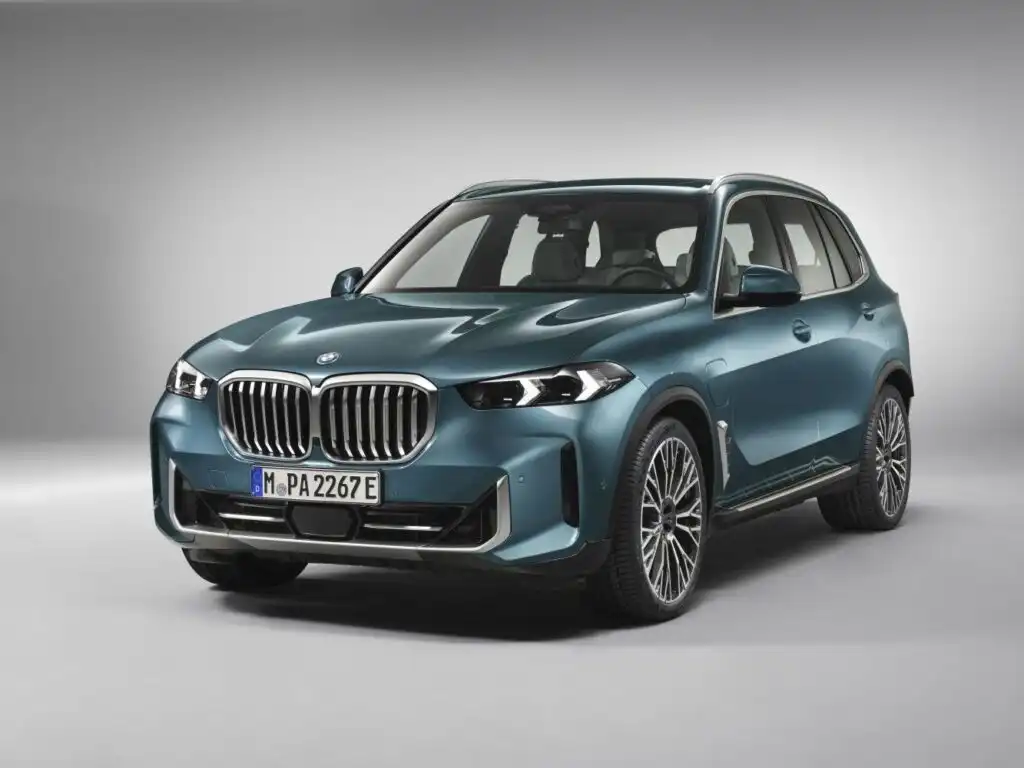
The BMW X5 (G05 LCI), specifically the 30d variant introduced with the 2023 facelift, represents a significant evolution of BMW’s mid-size luxury Sport Activity Vehicle (SAV). Production began in April 2023, and this model occupies a key position in the X5 lineup, offering a balance between performance, efficiency, and technology. The “LCI” designation signifies a Life Cycle Impulse, BMW’s term for a comprehensive mid-cycle refresh. The 30d trim, powered by a mild-hybrid diesel engine, is aimed at buyers prioritizing fuel economy and refined driving experience within the X5 range. It slots below the higher-performance gasoline variants like the xDrive40i and M50i, and above potential future entry-level options.
Technical Specifications
| Brand | BMW |
| Model | X5 |
| Generation | X5 (G05 LCI, facelift 2023) |
| Type (Engine) | 30d (298 Hp) Mild Hybrid xDrive Steptronic |
| Start of production | April, 2023 |
| Powertrain Architecture | MHEV (Mild Hybrid Electric Vehicle) |
| Body type | SAV |
| Seats | 5-7 |
| Doors | 5 |
| Combined fuel consumption (WLTP) | 7.1-8.2 l/100 km (33.1 – 28.7 US mpg, 39.8 – 34.4 UK mpg, 14.1 – 12.2 km/l) |
| CO2 emissions (WLTP) | 186-215 g/km |
| Fuel Type | Diesel |
| Acceleration 0 – 100 km/h | 6.1 sec |
| Acceleration 0 – 62 mph | 6.1 sec |
| Acceleration 0 – 60 mph | 5.8 sec |
| Maximum speed | 233 km/h (144.78 mph) |
| Emission standard | Euro 6d |
| Weight-to-power ratio | 7.4 kg/Hp, 134.2 Hp/tonne |
| Weight-to-torque ratio | 3.3 kg/Nm, 301.8 Nm/tonne |
| Gross battery capacity | 0.4 kWh |
| Battery voltage | 48 V |
| Battery technology | Lithium-ion (Li-Ion) |
| Battery location | Under the front hood |
| Electric motor power | 12 Hp |
| Electric motor Torque | 200 Nm (147.51 lb.-ft.) |
| Electric motor location | Between the combustion engine and the transmission |
| System power | 298 Hp |
| System torque | 670 Nm (494.17 lb.-ft.) |
| Power | 286 Hp @ 4000 rpm |
| Torque | 650 Nm @ 1500-2500 rpm (479.42 lb.-ft. @ 1500-2500 rpm) |
| Engine layout | Front, Longitudinal |
| Engine Model/Code | B57 |
| Engine displacement | 2993 cm3 (182.64 cu. in.) |
| Number of cylinders | 6 |
| Engine configuration | Inline |
| Cylinder Bore | 84 mm (3.31 in.) |
| Piston Stroke | 90 mm (3.54 in.) |
| Compression ratio | 16.5:1 |
| Number of valves per cylinder | 4 |
| Fuel injection system | Diesel Commonrail |
| Engine aspiration | Twin-power turbo, Intercooler |
| Valvetrain | DOHC |
| Kerb Weight | 2220 kg (4894.26 lbs.) |
| Max. weight | 2950 kg (6503.64 lbs.) |
| Max load | 730 kg (1609.37 lbs.) |
| Trunk (boot) space – minimum | 650 l (22.95 cu. ft.) |
| Trunk (boot) space – maximum | 1870 l (66.04 cu. ft.) |
| Fuel tank capacity | 80 l (21.13 US gal, 17.6 UK gal) |
| Max. roof load | 100 kg (220.46 lbs.) |
| Permitted trailer load with brakes (8%) | 3500 kg (7716.18 lbs.) |
| Permitted trailer load with brakes (12%) | 3500 kg (7716.18 lbs.) |
| Permitted trailer load without brakes | 750 kg (1653.47 lbs.) |
| Permitted towbar download | 140 kg (308.65 lbs.) |
| Length | 4935 mm (194.29 in.) |
| Width | 2004 mm (78.9 in.) |
| Width including mirrors | 2218 mm (87.32 in.) |
| Height | 1765 mm (69.49 in.) |
| Wheelbase | 2975 mm (117.13 in.) |
| Front track | 1677 mm (66.02 in.) |
| Rear (Back) track | 1698 mm (66.85 in.) |
| Front overhang | 887 mm (34.92 in.) |
| Rear overhang | 1073 mm (42.24 in.) |
| Ride height (ground clearance) | 214 mm (8.43 in.) |
| Drag coefficient (Cd) | 0.33 |
| Minimum turning circle (turning diameter) | 12.6 m (41.34 ft.) |
| Approach angle | 25.2° |
| Departure angle | 22.3° |
| Ramp-over (brakeover) angle | 20.2° |
| Wading depth | 500 mm (19.69 in.) |
| Drivetrain Architecture | ICE and electric motor drive all four wheels, operating in mixed mode. |
| Drive wheel | All wheel drive (4×4) |
| Number of gears and type of gearbox | 8 gears, automatic transmission Steptronic |
| Front suspension | Double wishbone, Air Suspension – Optional |
| Rear suspension | Independent multi-link suspension, Air Suspension – Optional |
| Front brakes | Ventilated discs |
| Rear brakes | Ventilated discs |
| Assisting systems | ABS (Anti-lock braking system) |
| Steering type | Steering rack and pinion |
| Power steering | Electric Steering |
| Tires size (Front) | 265/50 R19, 275/45 R20, 275/40 R21, 275/35 R22 |
| Tires size (Rear) | 265/50 R19, 305/40 R20, 315/35 R21, 315/30 R22 |
| Wheel rims size (Front) | 9J x 19, 9J x 20, 9.5J x 21, 9.5J x 22 |
| Wheel rims size (Rear) | 9J x 19, 10.5J x 20, 10.5J x 21, 10.5J x 22 |
Powertrain & Engine Architecture
The heart of the X5 30d is the BMW B57D30 inline-six diesel engine. This 3.0-liter (2993 cc) engine benefits from BMW’s extensive diesel technology, including a common-rail direct fuel injection system operating at extremely high pressures. The B57 features a single twin-scroll turbocharger with variable geometry turbine (VGT) technology, enhancing both low-end torque and high-end power. The mild-hybrid system incorporates a 48V starter-generator, providing an additional 12 horsepower and 200 Nm (147.51 lb-ft) of torque. This system enables features like smoother start-stop operation, extended coasting, and a slight power boost during acceleration. The engine is paired with BMW’s eight-speed Steptronic automatic transmission, known for its quick and smooth shifts. This transmission is specifically tuned to complement the diesel engine’s torque characteristics, optimizing fuel efficiency and responsiveness.
Driving Characteristics
The X5 30d delivers a refined and comfortable driving experience. The 670 Nm (494.17 lb-ft) of torque available from 1500-2500 rpm provides strong acceleration in everyday driving situations. While not as overtly sporty as the gasoline-powered X5 variants, the 30d offers a 0-60 mph time of around 5.8 seconds, which is more than adequate for most drivers. The eight-speed automatic transmission contributes to relaxed highway cruising, with well-spaced gear ratios. The mild-hybrid system further enhances smoothness, particularly during stop-start transitions. Compared to the xDrive40i, the 30d prioritizes fuel economy and torque over outright horsepower. The manual transmission is not offered on this variant in the US market.
Equipment & Trim Levels
The X5 30d typically comes well-equipped as standard. Key features include BMW’s iDrive infotainment system with a large touchscreen display, navigation, Apple CarPlay and Android Auto compatibility, a premium sound system, leather upholstery, power-adjustable front seats, and a panoramic sunroof. Optional extras include upgraded leather options, ventilated and massaging front seats, a head-up display, advanced driver-assistance systems (such as adaptive cruise control and lane-keeping assist), and air suspension for an even more comfortable ride. Trim levels beyond the base model often add cosmetic enhancements, such as unique exterior trim and interior accents.
Chassis & Braking
The X5 30d utilizes a robust chassis with a double-wishbone front suspension and an independent multi-link rear suspension. Air suspension is available as an option, providing adjustable ride height and improved comfort. The braking system consists of ventilated discs on all four wheels, offering strong stopping power. Standard safety features include ABS, stability control, and a suite of airbags. The X5’s suspension is tuned to balance comfort and handling, providing a stable and controlled ride even when fully loaded.
Market Reception & Comparison
The X5 30d has been generally well-received by automotive critics, praised for its fuel efficiency, comfortable ride, and refined powertrain. It offers a compelling alternative to gasoline-powered X5 models for buyers who prioritize economy and low-end torque. Compared to the X5 xDrive40i, the 30d delivers comparable performance in everyday driving but with significantly better fuel economy. The 30d’s diesel engine may require more diligent maintenance than a gasoline engine, including regular diesel particulate filter (DPF) regeneration. However, BMW’s modern diesel engines are generally reliable.
Legacy
The B57 engine family has proven to be remarkably durable and reliable, and the X5 30d’s powertrain is expected to offer long-term dependability. On the used car market, well-maintained X5 30d models are likely to hold their value due to their fuel efficiency and reputation for reliability. The integration of mild-hybrid technology represents a step towards greater electrification, positioning the X5 30d as a transitional model in BMW’s evolving lineup. As emissions regulations become stricter, the demand for efficient diesel engines like the B57 may continue to grow, ensuring the X5 30d remains a relevant and desirable vehicle for years to come.