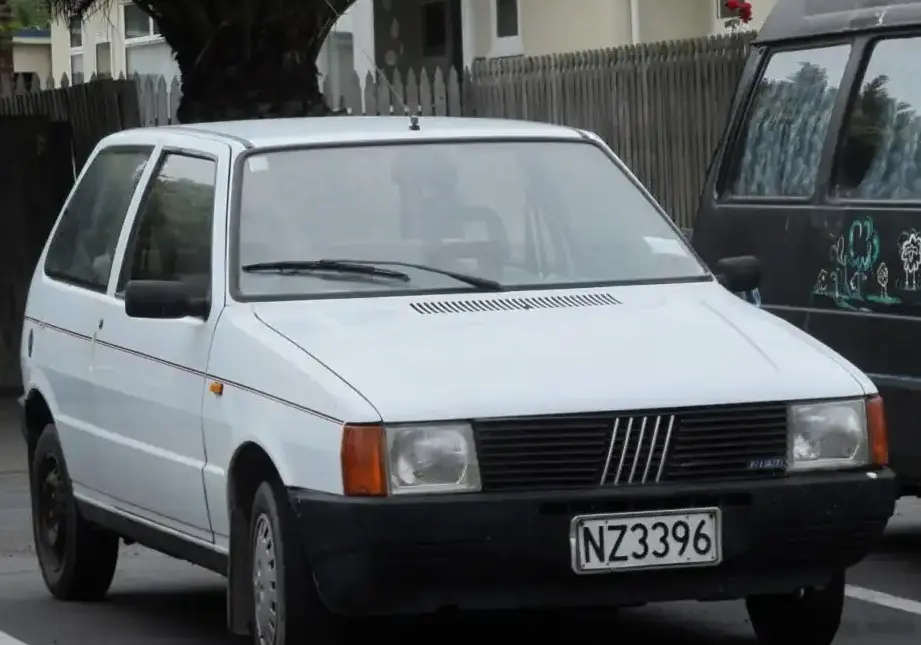
The Fiat UNO (146A) 1.4 TD, produced from 1986 to 1993, represented a significant offering in the European small car market. This variant, powered by a 1.4-liter turbocharged diesel engine producing 72 horsepower, occupied a unique position within the UNO lineup, appealing to buyers seeking fuel efficiency and reasonable performance in a compact package. The UNO, designed by Giorgetto Giugiaro, was a revolutionary vehicle for Fiat, employing a space-saving design and innovative manufacturing techniques. The 1.4 TD model was particularly popular in countries where diesel fuel was more affordable and where long-distance driving was common.
Technical Specifications
| Brand | Fiat |
| Model | UNO |
| Generation | UNO (146A) |
| Type (Engine) | 1.4 TD (72 Hp) |
| Start of production | 1986 |
| End of production | 1993 |
| Powertrain Architecture | Internal Combustion engine |
| Body type | Hatchback |
| Seats | 5 |
| Doors | 3-5 |
| Fuel consumption (urban) | 7.5 l/100 km (31.4 US mpg) |
| Fuel consumption (extra urban) | 4.2 l/100 km (56 US mpg) |
| Fuel consumption (combined) | 6 l/100 km (39.2 US mpg) |
| Fuel Type | Diesel |
| Acceleration 0 – 100 km/h | 12.4 sec |
| Acceleration 0 – 62 mph | 12.4 sec |
| Acceleration 0 – 60 mph | 11.8 sec |
| Maximum speed | 165 km/h (102.53 mph) |
| Weight-to-power ratio | 12.6 kg/Hp |
| Weight-to-torque ratio | 6.9 kg/Nm |
| Power | 72 Hp @ 4800 rpm |
| Torque | 131 Nm @ 2500 rpm (96.62 lb.-ft. @ 2500 rpm) |
| Engine layout | Front, Transverse |
| Engine Model/Code | 146 B3.000 |
| Engine displacement | 1367 cm3 (83.42 cu. in.) |
| Number of cylinders | 4 |
| Engine configuration | Inline |
| Cylinder Bore | 78 mm (3.07 in.) |
| Piston Stroke | 71.5 mm (2.81 in.) |
| Compression ratio | 20:1 |
| Number of valves per cylinder | 2 |
| Fuel injection system | Precombustion chamber injection |
| Engine aspiration | Turbocharger |
| Engine oil capacity | 4.9 l (5.18 US qt | 4.31 UK qt) |
| Coolant capacity | 8.9 l (9.4 US qt | 7.83 UK qt) |
| Kerb Weight | 910 kg (2006.21 lbs.) |
| Max. weight | 1360 kg (2998.29 lbs.) |
| Max load | 450 kg (992.08 lbs.) |
| Trunk (boot) space – minimum | 270 l (9.53 cu. ft.) |
| Trunk (boot) space – maximum | 970 l (34.26 cu. ft.) |
| Fuel tank capacity | 40 l (10.57 US gal | 8.8 UK gal) |
| Length | 3690 mm (145.28 in.) |
| Width | 1560 mm (61.42 in.) |
| Height | 1420 mm (55.91 in.) |
| Wheelbase | 2360 mm (92.91 in.) |
| Front track | 1340 mm (52.76 in.) |
| Rear track | 1300 mm (51.18 in.) |
| Minimum turning circle | 9.8 m (32.15 ft.) |
| Drivetrain | Front wheel drive |
| Number of gears | 5 gears, manual transmission |
| Front suspension | Coil spring |
| Rear suspension | Coil spring |
| Front brakes | Disc |
| Rear brakes | Drum |
| Assisting systems | ABS (Anti-lock braking system) |
| Steering type | Steering rack and pinion |
| Power steering | Hydraulic Steering |
| Tires size | 155/70 R13 |
Powertrain & Engine Architecture
The heart of the UNO 1.4 TD was the 146 B3.000 engine, a 1.4-liter inline-four cylinder diesel. This engine utilized a precombustion chamber injection system, a common design for diesel engines of the era. This system involved injecting fuel into a small precombustion chamber within the cylinder head, where it would ignite and then ignite the main charge in the cylinder. The engine was turbocharged, which significantly boosted power output compared to naturally aspirated diesel engines of similar displacement. The turbocharger provided approximately 72 horsepower at 4800 rpm and 131 Nm (96.62 lb.-ft.) of torque at 2500 rpm. The engine featured a relatively high compression ratio of 20:1, typical for diesel engines, contributing to its efficiency. The 5-speed manual transmission was the only gearbox option available with this engine, prioritizing fuel economy over outright performance.
Driving Characteristics
The UNO 1.4 TD offered a practical and economical driving experience. While not particularly fast – achieving 0-60 mph in around 11.8 seconds and a top speed of 102.53 mph – it provided sufficient power for everyday driving. The turbocharger did introduce a degree of turbo lag, meaning there was a slight delay between pressing the accelerator and feeling the power deliver. However, once the turbo spooled up, the engine provided a useful surge of torque, making it capable of handling inclines and overtaking maneuvers. The gear ratios were optimized for fuel efficiency, with higher gears providing relaxed cruising at highway speeds. Compared to the gasoline-powered UNO variants, the 1.4 TD offered significantly better fuel economy, making it a popular choice for drivers covering long distances.
Equipment & Trim Levels
The UNO 1.4 TD was generally positioned as a mid-range trim level within the UNO lineup. Standard equipment typically included basic features such as cloth upholstery, a simple dashboard layout, and manual windows and door locks. ABS (Anti-lock braking system) was often included as standard or an optional extra, enhancing safety. Optional extras could include upgraded interior trim, a radio/cassette player, and central locking. The interior was functional and durable, reflecting the UNO’s focus on practicality and affordability. The 3-door and 5-door body styles were both available with the 1.4 TD engine.
Chassis & Braking
The UNO 1.4 TD featured a relatively simple chassis design. Both front and rear suspension utilized coil springs, providing a comfortable ride quality. The front brakes were disc brakes, offering better stopping power than the drum brakes used on the rear wheels. The steering was a rack and pinion system with hydraulic power assistance, making it relatively easy to maneuver. The tires were typically 155/70 R13 size, providing a good balance of grip and fuel efficiency. The relatively lightweight construction of the UNO – around 910 kg (2006.21 lbs.) – contributed to its nimble handling.
Market Reception & Comparison
The Fiat UNO 1.4 TD was well-received in European markets, particularly in countries where diesel fuel was favored. Critics praised its fuel efficiency, practicality, and affordability. Compared to other small cars of the era, such as the Peugeot 205 and Renault 5, the UNO offered a competitive package, especially in terms of fuel economy. The 1.4 TD variant was often seen as a more sensible alternative to the higher-performance gasoline-powered UNO models, appealing to buyers who prioritized economy over outright speed. However, some critics noted the engine’s relatively noisy operation and the presence of turbo lag.
Legacy
The Fiat UNO 1.4 TD has proven to be a relatively reliable and durable vehicle. The 146 B3.000 diesel engine, while not known for its refinement, is generally considered to be robust and long-lasting. Today, the UNO 1.4 TD is a popular choice among classic car enthusiasts and collectors, particularly those seeking an affordable and economical vintage vehicle. Parts availability can be a challenge, but many components are still available through specialist suppliers. The UNO 1.4 TD remains a testament to Fiat’s innovative design and engineering, and its legacy as a practical and fuel-efficient small car endures.