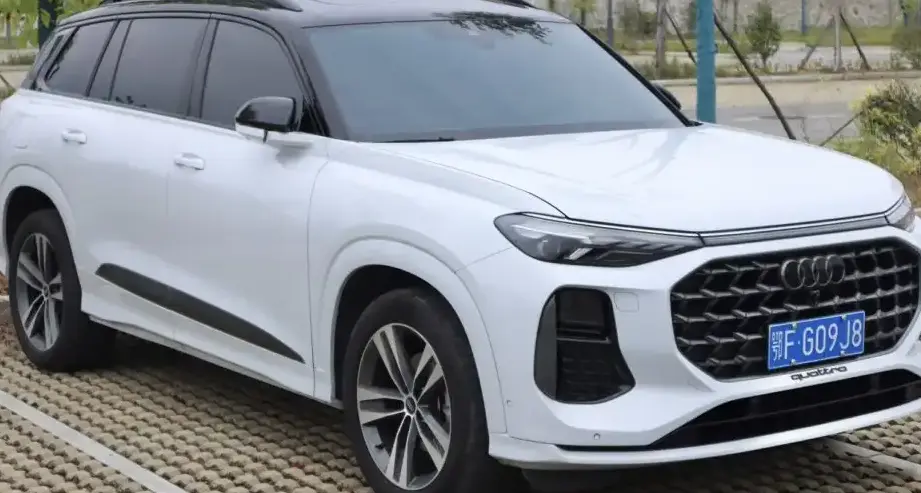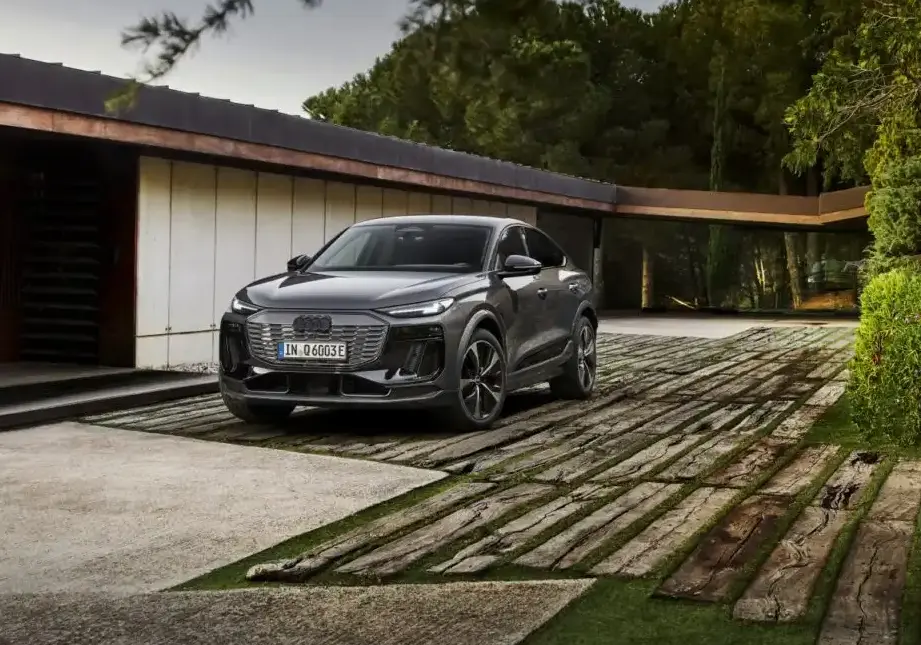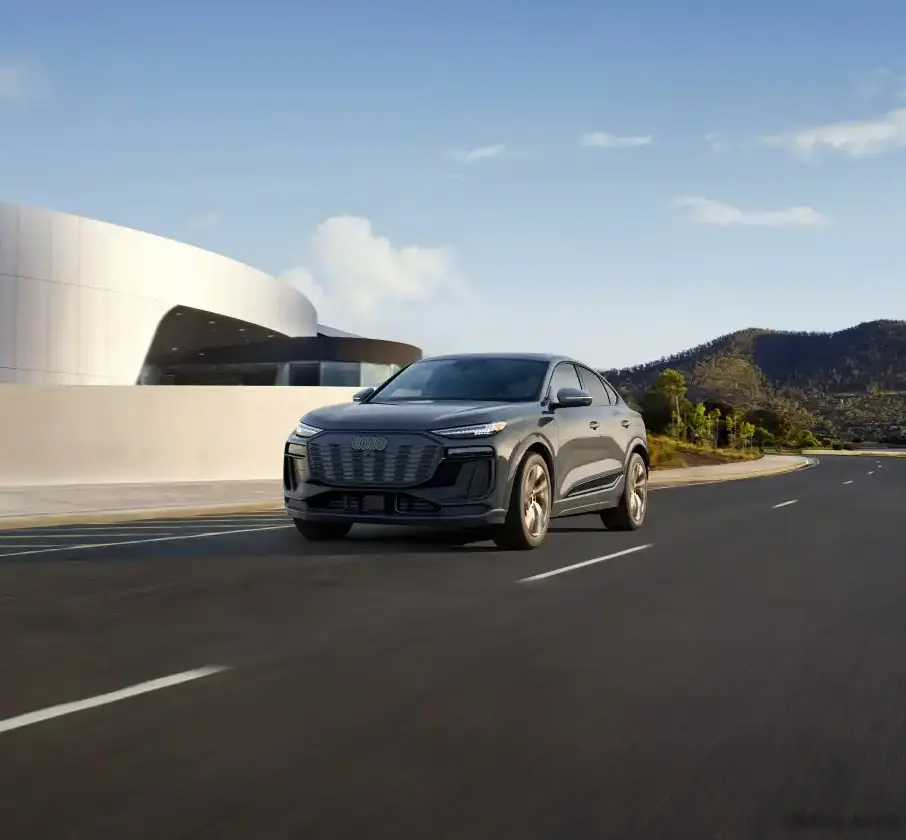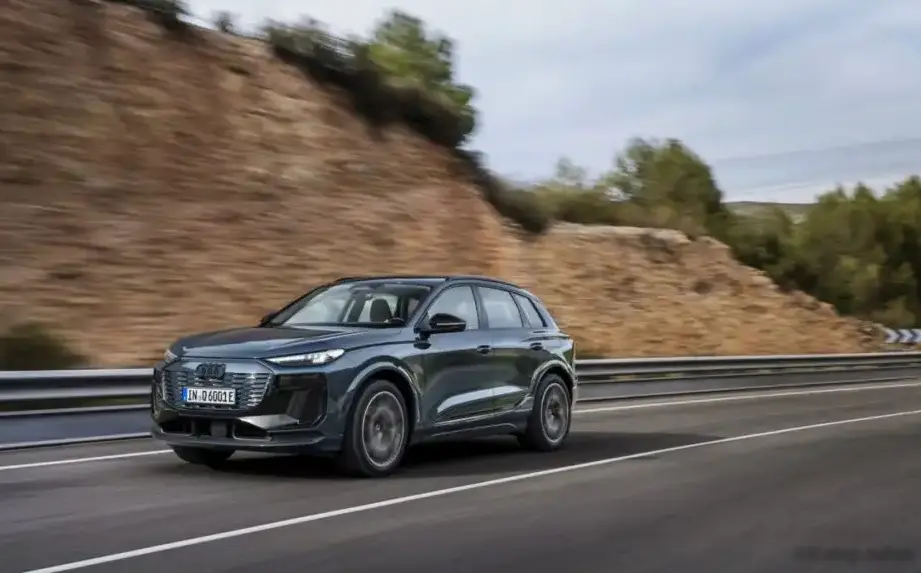
The Audi Q6 e-tron, specifically the GF variant equipped with the 100 kWh battery pack and dual-motor quattro all-wheel drive system producing 456 horsepower, represents Audi’s entry into the mid-size premium all-electric SUV segment. Production commenced in September 2024, positioning it between the Q4 e-tron and the larger Q8 e-tron in Audi’s expanding EV lineup. Built on the Premium Platform Electric (PPE) architecture co-developed with Porsche, the Q6 e-tron aims to deliver a blend of performance, range, and luxury characteristic of the Audi brand, while embracing the benefits of a dedicated electric vehicle platform.
Technical Specifications
| Brand | Audi |
| Model | Q6 e-tron |
| Generation | Q6 e-tron (GF) |
| Type (Engine) | 100 kWh (456 Hp) quattro |
| Start of production | September, 2024 |
| Powertrain Architecture | BEV (Electric Vehicle) |
| Body type | SUV |
| Seats | 5 |
| Doors | 5 |
| Fuel Type | Electricity |
| Acceleration 0 – 100 km/h | 5.1 sec |
| Acceleration 0 – 62 mph | 5.1 sec |
| Acceleration 0 – 60 mph | 4.9 sec |
| Maximum speed | 210 km/h (130.49 mph) – Electronically limited |
| Emission standard | ZEV |
| Weight-to-power ratio | 5.2 kg/Hp, 190.8 Hp/tonne |
| Gross battery capacity | 100 kWh |
| Net (usable) battery capacity | 94.4 kWh |
| Battery voltage | 800 V |
| Battery technology | Lithium nickel manganese cobalt oxides (Li-NMC) |
| Battery location | Below the floor |
| Recuperation output | 220 kW |
| All-electric range (EPA) | 494 km (306.96 mi) |
| Average Energy consumption (EPA) | 21.2 kWh/100 km (34.12 kWh/100 mi) |
| Energy consumption (MPGe) | 99 MPGe |
| Energy consumption (km/kWh) | 4.7 km/kWh |
| Energy consumption (mi/kWh) | 2.9 mi/kWh |
| Electric motor 1 location | Rear axle, Transverse |
| Electric motor 1 type | Synchronous |
| Electric motor 2 location | Front axle, Transverse |
| Electric motor 2 type | Asynchronous |
| System power | 456 Hp |
| Kerb Weight | 2390 kg (5269.05 lbs) |
| Trunk (boot) space – minimum | 526 l (18.58 cu. ft) |
| Trunk (boot) space – maximum | 1529 l (54 cu. ft) |
| Permitted trailer load with brakes (12%) | 1996 kg (4400.43 lbs) |
| Permitted towbar download | 181 kg (399.04 lbs) |
| Length | 4771 mm (187.83 in) |
| Width | 1939 mm (76.34 in) |
| Width including mirrors | 2193 mm (86.34 in) |
| Height | 1692 mm (66.61 in) |
| Wheelbase | 2889 mm (113.74 in) |
| Ride height (ground clearance) | 211 mm (8.31 in) |
| Drag coefficient (Cd) | 0.33 |
| Minimum turning circle | 12.1 m (39.7 ft) |
| Number of gears and type of gearbox | 1 gears, automatic transmission |
Powertrain & Engine Architecture
The Q6 e-tron utilizes a dual-motor, all-wheel drive (quattro) powertrain. The rear motor is a permanently excited synchronous motor, known for its high efficiency and power density. The front motor employs asynchronous technology, offering a cost-effective solution for providing additional traction and performance. The 100 kWh battery pack, utilizing lithium-nickel-manganese-cobalt (Li-NMC) chemistry, is positioned low in the vehicle floor to optimize the center of gravity. A key feature of the PPE platform is its 800-volt architecture, enabling significantly faster DC fast-charging times – capable of adding approximately 80 miles of range in just 10 minutes at a compatible charging station. The battery management system is sophisticated, actively monitoring and controlling temperature and cell balance to maximize longevity and performance. The single-speed automatic transmission delivers power to all four wheels, providing seamless acceleration.
Driving Characteristics
The 456 horsepower and instant torque delivery of the dual-motor setup result in brisk acceleration, with a 0-60 mph time of around 4.9 seconds. While not as overtly sporty as some performance-focused EVs, the Q6 e-tron offers a refined and confident driving experience. The quattro all-wheel drive system provides excellent traction in various conditions. The single-speed transmission contributes to smooth, linear acceleration. Compared to potential future higher-performance variants, this 100 kWh version prioritizes a balance between power and efficiency. The regenerative braking system is adjustable, allowing drivers to tailor the level of deceleration when lifting off the throttle, contributing to increased range and a more engaging driving experience.
Equipment & Trim Levels
The Q6 e-tron, in its initial configuration, comes well-equipped with standard features including a dual-screen infotainment system (a 14.5-inch touchscreen and an 8.8-inch digital instrument cluster), premium upholstery, a panoramic sunroof, and a comprehensive suite of advanced driver-assistance systems (ADAS) such as adaptive cruise control, lane keeping assist, and automatic emergency braking. Optional extras include upgraded audio systems, massaging seats, and a head-up display. Interior trim options range from aluminum and wood accents to carbon fiber elements, allowing for a degree of personalization. The standard interior color schemes lean towards dark, sophisticated tones, with lighter options available as upgrades.
Chassis & Braking
The Q6 e-tron features an independent multi-link suspension at both the front and rear axles, tuned for a comfortable ride without sacrificing handling precision. The low center of gravity, thanks to the battery pack’s placement, contributes to reduced body roll during cornering. Ventilated disc brakes are employed on all four wheels, providing ample stopping power. The electronic stability control (ESC) system is integrated with the all-wheel drive system to optimize traction and stability. Steering is electrically assisted, offering a balance between light effort for city driving and increased weighting at higher speeds.
Market Reception & Comparison
Early reviews of the Q6 e-tron have praised its comfortable ride, spacious interior, and fast-charging capabilities. Critics have noted that while the performance is strong, it doesn’t quite match the outright acceleration of some competitors like the Tesla Model Y Performance or the Porsche Taycan. However, the Q6 e-tron is positioned as a more luxurious and refined alternative, emphasizing comfort and build quality. Compared to the Q4 e-tron, the Q6 e-tron offers a larger interior, longer range, and more powerful powertrain. Fuel economy, expressed as MPGe, is estimated at 99 MPGe, and energy consumption is around 21.2 kWh per 100 kilometers, placing it competitively within its segment.
Legacy
As a relatively new model, the long-term reliability of the Q6 e-tron remains to be seen. However, Audi’s reputation for build quality and engineering suggests a high level of durability. The 800-volt architecture and advanced battery management system are expected to contribute to long battery life. In the used car market, the Q6 e-tron is anticipated to hold its value well, particularly among buyers seeking a premium electric SUV with a blend of performance, luxury, and technology. The PPE platform, underpinning the Q6 e-tron, is expected to serve as the foundation for numerous future Audi and Porsche electric models, solidifying its importance in the transition to electric mobility.