
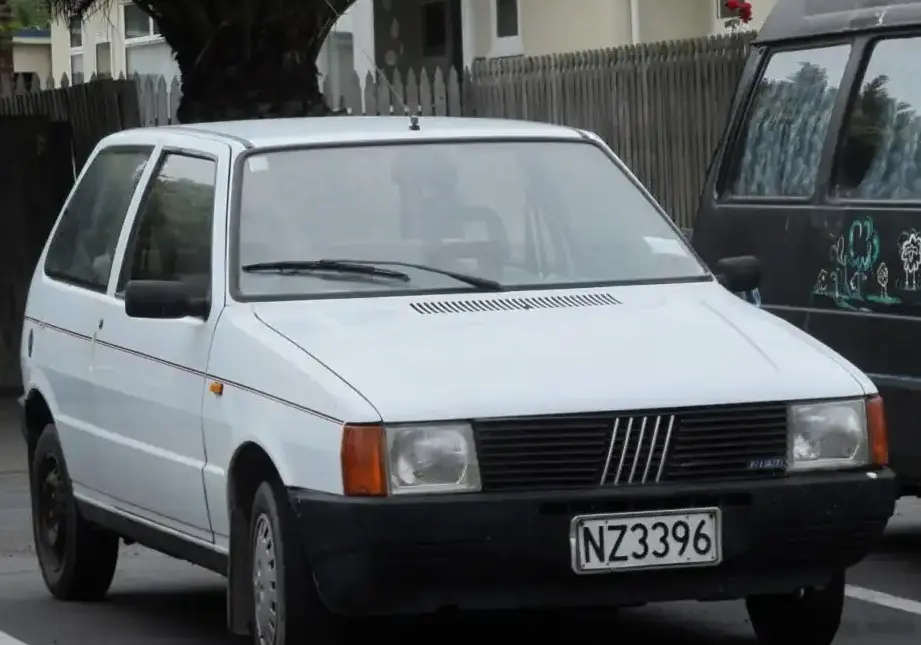
The Fiat UNO (146A) 1.7 D, produced between 1989 and 1993, represented a pragmatic and economical offering within the broader UNO range. Positioned as a diesel-powered variant, it catered to buyers prioritizing fuel efficiency and durability over outright performance. The UNO, launched in 1983, was a supermini designed to replace the aging Fiat 127. The 146A series, representing the first generation, was a significant success for Fiat, particularly in Europe and South America, offering a modern and spacious interior for its class. The 1.7 D model, while not the most powerful in the lineup, provided a cost-effective transportation solution, especially appealing in markets where diesel fuel was readily available and affordable.
Technical Specifications
| Brand | Fiat |
| Model | UNO |
| Generation | UNO (146A) |
| Type (Engine) | 1.7 D (58 Hp) |
| Start of production | 1989 |
| End of production | 1993 |
| Powertrain Architecture | Internal Combustion engine |
| Body type | Hatchback |
| Seats | 5 |
| Doors | 3-5 |
| Fuel consumption (urban) | 6 l/100 km (39.2 US mpg, 47.1 UK mpg, 16.7 km/l) |
| Fuel consumption (extra urban) | 4.4 l/100 km (53.5 US mpg, 64.2 UK mpg, 22.7 km/l) |
| Fuel consumption (combined) | 6.2 l/100 km (37.9 US mpg, 45.6 UK mpg, 16.1 km/l) |
| Fuel Type | Diesel |
| Acceleration 0 – 100 km/h | 15.9 sec |
| Acceleration 0 – 62 mph | 15.9 sec |
| Acceleration 0 – 60 mph | 15.1 sec |
| Maximum speed | 155 km/h (96.31 mph) |
| Weight-to-power ratio | 15 kg/Hp, 66.7 Hp/tonne |
| Weight-to-torque ratio | 8.7 kg/Nm, 114.9 Nm/tonne |
| Power | 58 Hp @ 4600 rpm |
| Power per litre | 34.2 Hp/l |
| Torque | 100 Nm @ 2900 rpm (73.76 lb.-ft. @ 2900 rpm) |
| Engine layout | Front, Transverse |
| Engine Model/Code | 146 B2.000 |
| Engine displacement | 1698 cm3 (103.62 cu. in.) |
| Number of cylinders | 4 |
| Engine configuration | Inline |
| Cylinder Bore | 82.6 mm (3.25 in.) |
| Piston Stroke | 79.2 mm (3.12 in.) |
| Compression ratio | 20:1 |
| Number of valves per cylinder | 2 |
| Fuel injection system | Precombustion chamber injection |
| Engine aspiration | Naturally aspirated |
| Engine oil capacity | 4.1 l (4.33 US qt | 3.61 UK qt) |
| Coolant capacity | 8.9 l (9.4 US qt | 7.83 UK qt) |
| Kerb Weight | 870 kg (1918.02 lbs.) |
| Max. weight | 1320 kg (2910.1 lbs.) |
| Max load | 450 kg (992.08 lbs.) |
| Trunk (boot) space – minimum | 270 l (9.53 cu. ft.) |
| Trunk (boot) space – maximum | 970 l (34.26 cu. ft.) |
| Fuel tank capacity | 40 l (10.57 US gal | 8.8 UK gal) |
| Length | 3690 mm (145.28 in.) |
| Width | 1560 mm (61.42 in.) |
| Height | 1420 mm (55.91 in.) |
| Wheelbase | 2360 mm (92.91 in.) |
| Front track | 1340 mm (52.76 in.) |
| Rear track | 1300 mm (51.18 in.) |
| Minimum turning circle | 9.8 m (32.15 ft.) |
| Drivetrain Architecture | Front wheel drive |
| Number of gears | 5 |
| Gearbox type | Manual transmission |
| Front suspension | Coil spring |
| Rear suspension | Spring Strut |
| Front brakes | Disc |
| Rear brakes | Drum |
| Assisting systems | ABS (Anti-lock braking system) |
| Steering type | Steering rack and pinion |
| Power steering | Hydraulic |
| Tires size | 155/70 R13 |
Powertrain & Engine Architecture
The heart of the UNO 1.7 D was the 146 B2.000 engine, a 1.7-liter inline-four diesel. This engine utilized a precombustion chamber injection system, a common design for diesel engines of the era. This system involved injecting fuel into a small precombustion chamber connected to the main cylinder, where it was partially ignited before entering the main combustion chamber. This aided in cold starting and reduced engine noise. The engine featured a relatively low compression ratio of 20:1, contributing to its durability. The engine produced 58 horsepower at 4600 rpm and 100 Nm (73.76 lb-ft) of torque at 2900 rpm. The five-speed manual transmission was the only gearbox option available with this engine, prioritizing fuel economy and simplicity over sporty driving dynamics.
Driving Characteristics
The UNO 1.7 D was not known for its blistering acceleration. With a 0-60 mph time of around 15.1 seconds and a top speed of 155 km/h (96.31 mph), it was geared towards practical transportation rather than performance. The engine’s torque, however, was reasonably accessible, making it suitable for navigating city streets and handling moderate inclines. Compared to the gasoline-powered UNO variants, the 1.7 D offered significantly better fuel economy, but at the expense of responsiveness. The manual transmission, while basic, provided a direct connection to the engine, allowing drivers to maximize the available power. The gear ratios were spaced to prioritize fuel efficiency, meaning frequent shifting was often necessary to maintain momentum.
Equipment & Trim Levels
The UNO 1.7 D was typically offered in fairly basic trim levels, reflecting its position as an affordable option. Standard equipment generally included cloth upholstery, a simple dashboard layout, and basic instrumentation. Power steering was often included, but air conditioning and other comfort features were typically optional extras. Interior plastics were durable but utilitarian. The focus was on providing a functional and reliable vehicle at a low price point. Higher trim levels might have included features like upgraded seat fabrics, a more comprehensive instrument cluster, and body-colored bumpers.
Chassis & Braking
The UNO 1.7 D featured a relatively simple chassis design. Front suspension utilized coil springs, while the rear employed a spring strut setup. Front brakes were discs, providing adequate stopping power, while the rear brakes were drums, a cost-saving measure common in vehicles of this class. ABS (Anti-lock braking system) was available as an option, enhancing safety. The vehicle’s relatively light weight (870 kg / 1918.02 lbs) helped to offset the engine’s modest power output. Stabilizer bars were typically absent or minimal, contributing to a somewhat pronounced body roll during cornering.
Market Reception & Comparison
The Fiat UNO 1.7 D was generally well-received in markets where fuel economy and affordability were paramount. Critics praised its spacious interior for its size and its robust diesel engine. However, its lack of performance and basic interior appointments were often noted. Compared to other superminis of the era, such as the Peugeot 205 or the Renault Clio, the UNO 1.7 D offered a more practical and economical alternative, albeit with less refinement. Its fuel economy was a key selling point, often exceeding that of its gasoline-powered competitors. Reliability was generally good, although maintenance costs could be higher due to the diesel engine’s more complex fuel injection system.
Legacy
The Fiat UNO 1.7 D, while not a performance icon, remains a significant vehicle in Fiat’s history. Its robust diesel engine and economical operation made it a popular choice for budget-conscious buyers. Today, well-maintained examples are becoming increasingly sought after by classic car enthusiasts. The 146 B2.000 engine, while relatively simple by modern standards, is known for its durability and longevity. However, finding parts can be challenging, and maintenance requires specialized knowledge. The UNO 1.7 D represents a bygone era of automotive engineering, where practicality and affordability were prioritized over luxury and performance.

