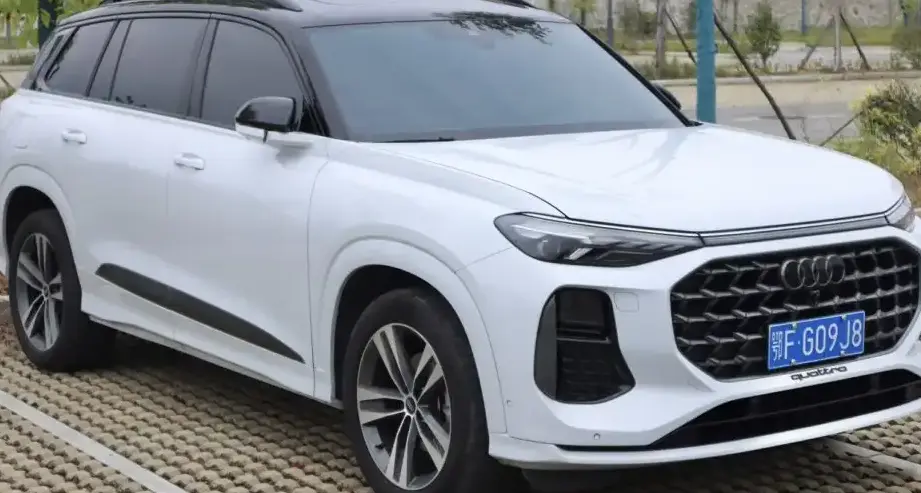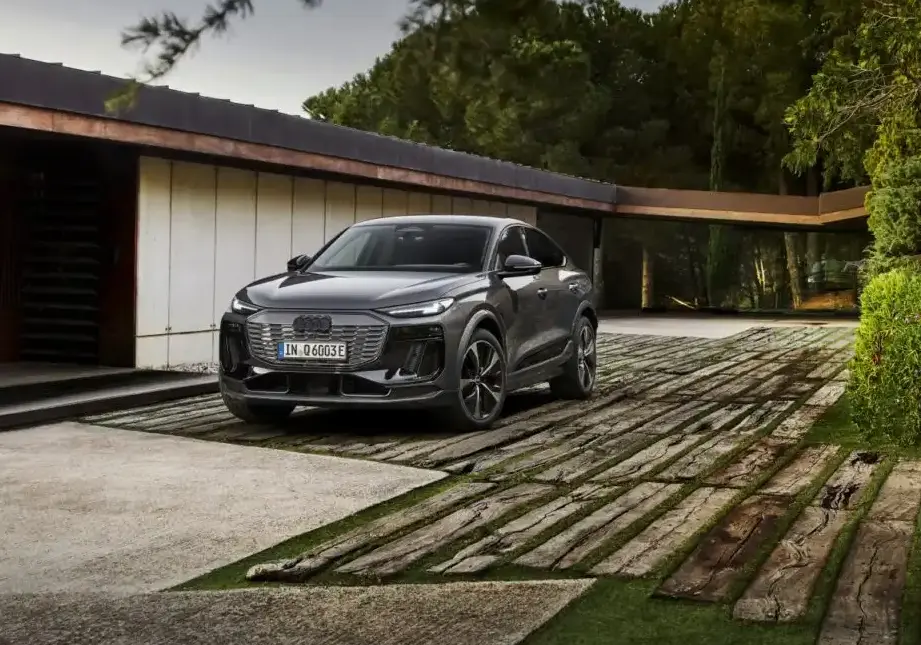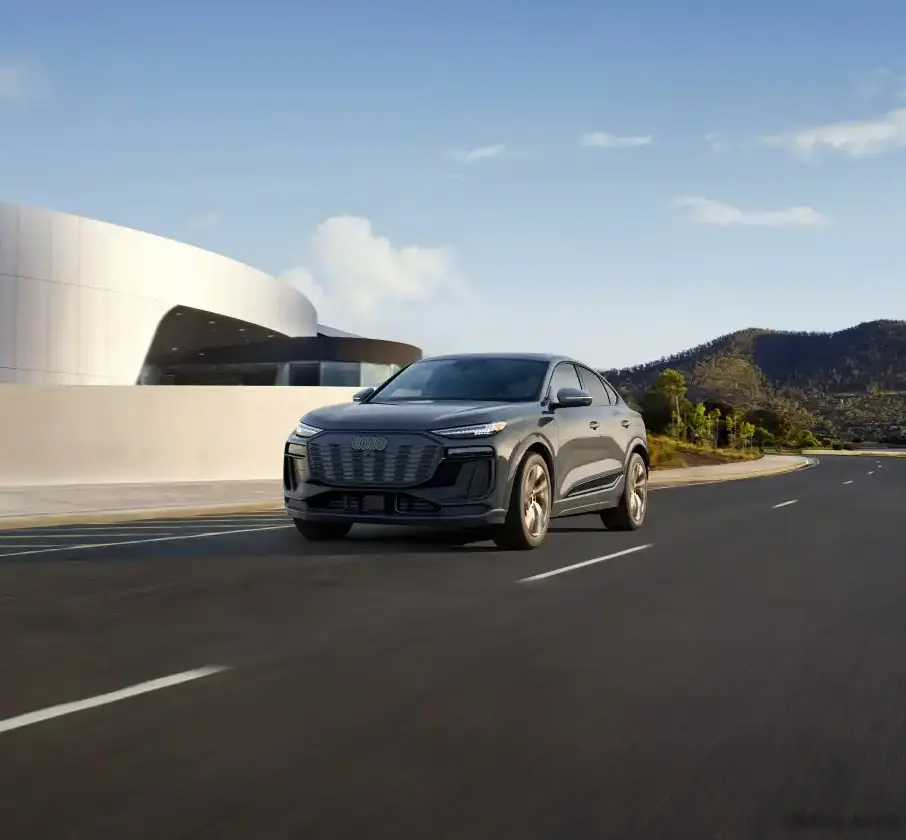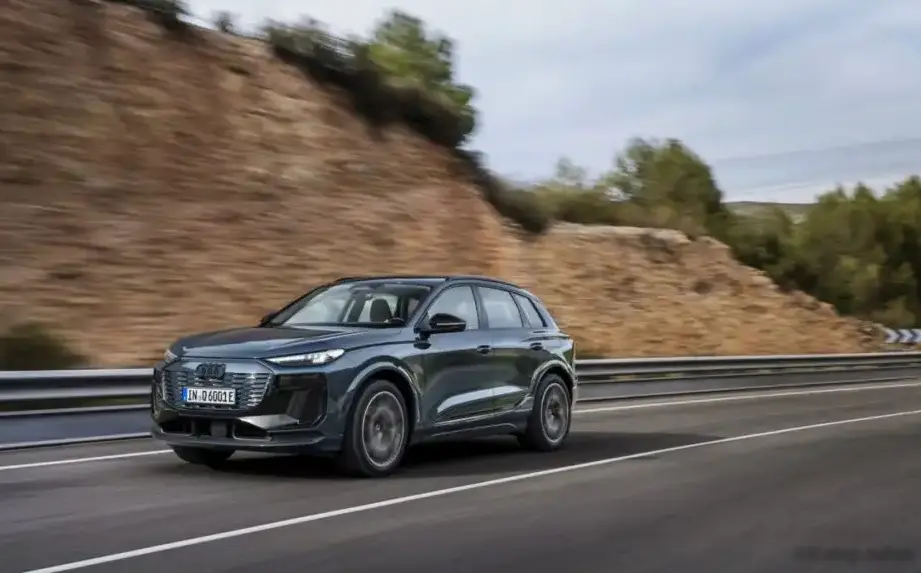
The Audi Q6 e-tron performance, launched in May 2024, represents Audi’s entry into the mid-size premium all-electric SUV segment. Built on the Premium Platform Electric (PPE) architecture co-developed with Porsche, the Q6 e-tron aims to bridge the gap between the Q4 e-tron and the larger Q8 e-tron, offering a balance of performance, range, and luxury. The “performance” variant, equipped with a 100 kWh battery pack and a single rear-mounted electric motor producing 326 horsepower, is positioned as the top-tier offering within the initial Q6 e-tron lineup, emphasizing quicker acceleration and a more dynamic driving experience compared to base models. It’s designed to compete directly with vehicles like the BMW iX3, Mercedes-Benz EQE SUV, and Tesla Model Y.
Technical Specifications
| Brand | Audi |
| Model | Q6 e-tron |
| Generation | Q6 e-tron (GF) |
| Type (Engine) | performance 100 kWh (326 Hp) |
| Start of production | May, 2024 |
| Powertrain Architecture | BEV (Electric Vehicle) |
| Body type | SUV |
| Seats | 5 |
| Doors | 5 |
| Fuel Type | Electricity |
| Acceleration 0 – 100 km/h | 6.6 sec |
| Acceleration 0 – 62 mph | 6.6 sec |
| Acceleration 0 – 60 mph | 6.3 sec |
| Maximum speed | 210 km/h (130.49 mph) |
| Weight-to-power ratio | 6.7 kg/Hp, 148.2 Hp/tonne |
| Weight-to-torque ratio | 4.5 kg/Nm, 220.5 Nm/tonne |
| Gross battery capacity | 100 kWh |
| Net (usable) battery capacity | 94.9 kWh |
| Battery voltage | 800 V |
| Battery technology | Lithium nickel manganese cobalt oxides (Li-NMC) |
| Battery location | Below the floor |
| All-electric range (WLTP) | 552-641 km (343 – 398.3 mi) |
| Average Energy consumption (WLTP) | 16.5-19.2 kWh/100 km (26.55 – 30.9 kWh/100 mi) |
| Average Energy consumption (MPGe) | 127 – 109 |
| Average Energy consumption (km/kWh) | 6.1 – 5.2 |
| Average Energy consumption (mi/kWh) | 3.8 – 3.2 |
| Electric motor power | 326 Hp |
| Electric motor Torque | 485 Nm (357.72 lb.-ft.) |
| Electric motor location | Rear axle, Transverse |
| Electric motor type | Synchronous |
| System power | 326 Hp |
| System torque | 485 Nm (357.72 lb.-ft.) |
| Kerb Weight | 2200 kg (4850.17 lbs.) |
| Max. weight | 2815 kg (6206.01 lbs.) |
| Max load | 615 kg (1355.84 lbs.) |
| Trunk (boot) space – minimum | 526 l (18.58 cu. ft.) |
| Trunk (boot) space – maximum | 1529 l (54 cu. ft.) |
| Max. roof load | 75 kg (165.35 lbs.) |
| Permitted trailer load with brakes (8%) | 2000 kg (4409.25 lbs.) |
| Permitted trailer load with brakes (12%) | 2000 kg (4409.25 lbs.) |
| Permitted trailer load without brakes | 750 kg (1653.47 lbs.) |
| Permitted towbar download | 100 kg (220.46 lbs.) |
| Length | 4771 mm (187.83 in.) |
| Width | 1939 mm (76.34 in.) |
| Width including mirrors | 2193 mm (86.34 in.) |
| Height | 1685 mm (66.34 in.) |
| Wheelbase | 2889 mm (113.74 in.) |
| Front track | 1661 mm (65.39 in.) |
| Rear (Back) track | 1640 mm (64.57 in.) |
| Front overhang | 906 mm (35.67 in.) |
| Rear overhang | 976 mm (38.43 in.) |
| Drag coefficient (Cd) | 0.31 |
| Minimum turning circle (turning diameter) | 12.1 m (39.7 ft.) |
| Approach angle | 18° |
| Departure angle | 25.7° |
| Drivetrain Architecture | One electric motor drives the rear wheels. |
| Drive wheel | Rear wheel drive |
| Number of gears and type of gearbox | 1 gears, automatic transmission |
| Front suspension | Independent multi-link suspension, Transverse stabilizer, Air Suspension – Optional |
| Rear suspension | Independent multi-link suspension, Transverse stabilizer, Air Suspension – Optional |
| Front brakes | Ventilated discs, 350 mm |
| Rear brakes | Ventilated discs, 330 mm |
| Steering type | Steering rack and pinion |
| Power steering | Electric Steering |
| Front wheel tires | 235/65 R18; 235/60 R19; 255/50 R20; 255/45 R21 |
| Rear wheel tires | 255/60 R18; 255/55 R19; 285/45 R20; 285/40 R21 |
| Front wheel rims | 8J x 18; 8J x 19; 8.5J x 20; 9J x 21 |
| Rear wheel rims | 9J x 18; 9J x 19; 10J x 20; 10J x 21 |
Powertrain & Engine Architecture
The Q6 e-tron performance utilizes a permanently excited synchronous motor (PSM) located on the rear axle. This motor design is known for its high efficiency and power density. The 100 kWh battery pack, utilizing 800-volt architecture, allows for exceptionally fast DC charging speeds – capable of adding approximately 150 miles of range in around 10 minutes at a compatible charging station. The battery’s thermal management system is sophisticated, employing liquid cooling to maintain optimal operating temperatures for both performance and longevity. The single-speed automatic transmission is integrated directly with the electric motor, providing seamless and immediate torque delivery. The 800V architecture is a key differentiator, enabling faster charging times compared to many competitors still utilizing 400V systems.
Driving Characteristics
The rear-wheel-drive configuration of the Q6 e-tron performance contributes to a balanced and engaging driving experience. With 326 horsepower and 485 lb-ft of torque available instantly, acceleration is brisk, achieving 0-60 mph in approximately 6.3 seconds. While not as aggressively tuned as some performance-focused EVs, the Q6 e-tron offers a comfortable yet responsive ride. The single-speed transmission provides linear power delivery, and the regenerative braking system can be adjusted to suit driver preference, offering one-pedal driving capability. Compared to potential future dual-motor all-wheel-drive variants, the rear-wheel-drive performance model prioritizes efficiency and a slightly more traditional driving feel.
Equipment & Trim Levels
The Q6 e-tron performance trim comes standard with a comprehensive suite of features, including Audi’s virtual cockpit digital instrument cluster, a dual-screen infotainment system with navigation, premium upholstery (typically leather or a high-quality synthetic alternative), and a panoramic sunroof. Standard safety features include adaptive cruise control, lane keeping assist, and automatic emergency braking. Optional extras include upgraded audio systems (Bang & Olufsen), massaging front seats, and a head-up display. The interior design emphasizes a minimalist aesthetic with high-quality materials and a focus on user-friendly technology.
Chassis & Braking
The Q6 e-tron features an independent multi-link suspension at both the front and rear axles. While steel coil springs are standard, an optional air suspension system is available, providing adjustable ride height and enhanced comfort. The braking system consists of ventilated discs on all four wheels, with larger rotors at the front to handle the majority of the braking force. Anti-lock braking (ABS) and electronic stability control (ESC) are standard features. The vehicle’s low center of gravity, due to the battery pack’s placement, contributes to stable handling and reduced body roll.
Market Reception & Comparison
Initial reviews of the Q6 e-tron performance have been largely positive, with critics praising its comfortable ride, spacious interior, and fast charging capabilities. The single-motor configuration offers competitive range and efficiency compared to dual-motor alternatives. However, some reviewers have noted that the rear-wheel-drive layout may not appeal to drivers seeking the added traction and performance of all-wheel drive. Compared to the Tesla Model Y, the Q6 e-tron offers a more luxurious interior and a more refined driving experience, but the Tesla benefits from a more extensive charging network. Against the BMW iX3 and Mercedes-Benz EQE SUV, the Q6 e-tron positions itself as a strong contender in terms of technology and overall build quality.
Legacy
As a relatively new model, the long-term reliability of the Q6 e-tron performance remains to be seen. However, Audi has a strong reputation for building durable and well-engineered vehicles. The 800-volt battery technology is expected to provide excellent longevity and maintain high charging performance over time. In the used car market, the Q6 e-tron performance is likely to hold its value well, particularly among buyers seeking a premium electric SUV with fast charging capabilities and a comfortable driving experience. The PPE platform it’s built on will likely underpin many future Audi and Porsche models, solidifying its importance in the brand’s electric vehicle strategy.