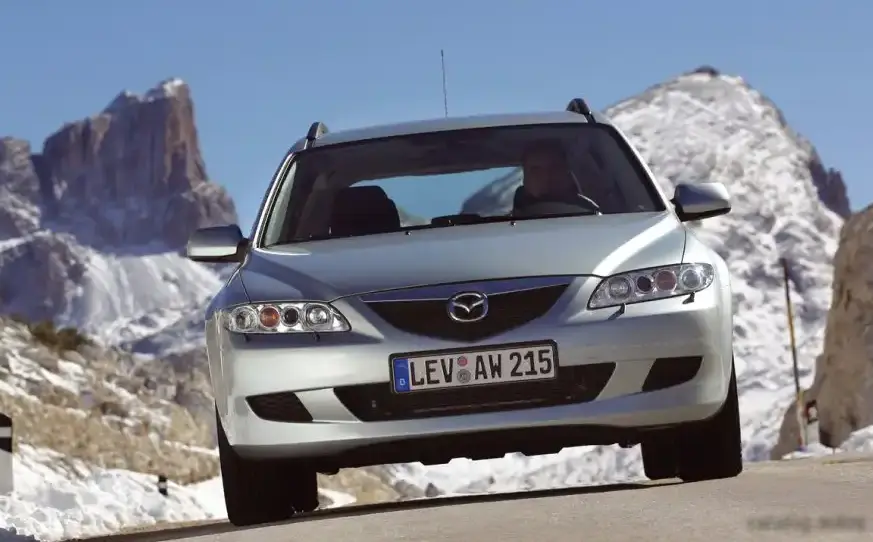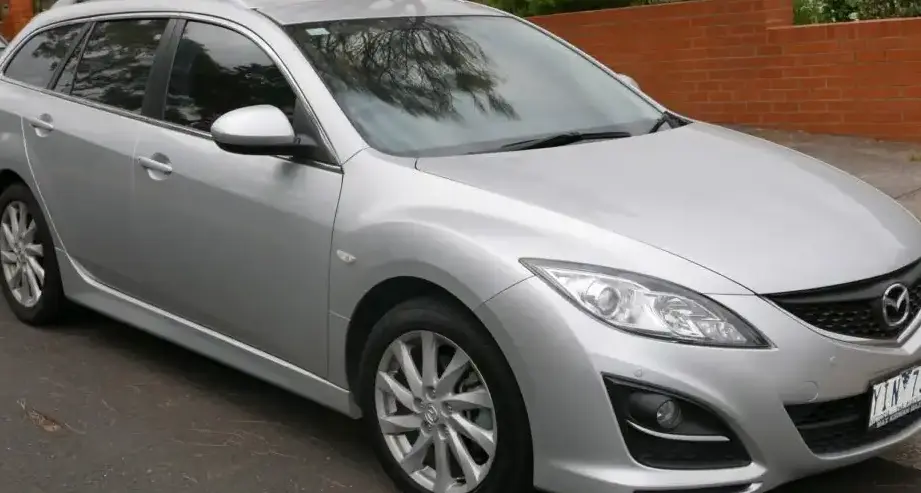
The Mazda 6 II Combi (GH series, post-facelift 2010) 2.2 CD, producing 180 horsepower, represents a significant offering within Mazda’s lineup during its production run from 2010 to 2012. This variant of the second-generation Mazda 6, a station wagon (estate) body style, was primarily aimed at the European market, where demand for practical and fuel-efficient vehicles remained strong. The facelift brought styling updates and refinements to the existing GH platform, enhancing its appeal. This specific engine and transmission combination positioned itself as a mid-range option, balancing performance with economy for drivers needing space and capability.
Technical Specifications
| Brand | Mazda |
| Model | 6 |
| Generation | 6 II Combi (GH, facelift 2010) |
| Type (Engine) | 2.2 CD (180 Hp) |
| Start of production | 2010 |
| End of production | 2012 |
| Powertrain Architecture | Internal Combustion engine |
| Body type | Station wagon (estate) |
| Seats | 5 |
| Doors | 5 |
| Fuel consumption (urban) | 6.8 l/100 km (34.6 US mpg, 41.5 UK mpg, 14.7 km/l) |
| Fuel consumption (extra urban) | 4.5 l/100 km (52.3 US mpg, 62.8 UK mpg, 22.2 km/l) |
| Fuel consumption (combined) | 5.3 l/100 km (44.4 US mpg, 53.3 UK mpg, 18.9 km/l) |
| CO2 emissions | 141 g/km |
| Fuel Type | Diesel |
| Acceleration 0 – 100 km/h | 8.7 sec |
| Acceleration 0 – 62 mph | 8.7 sec |
| Acceleration 0 – 60 mph | 8.3 sec |
| Maximum speed | 216 km/h (134.22 mph) |
| Emission standard | Euro 5 |
| Weight-to-power ratio | 8.3 kg/Hp, 120 Hp/tonne |
| Weight-to-torque ratio | 3.8 kg/Nm, 266.7 Nm/tonne |
| Power | 180 Hp @ 3500 rpm |
| Power per litre | 82.5 Hp/l |
| Torque | 400 Nm @ 1800 rpm (295.02 lb.-ft. @ 1800 rpm) |
| Engine layout | Front, Transverse |
| Engine displacement | 2183 cm3 (133.21 cu. in.) |
| Number of cylinders | 4 |
| Engine configuration | Inline |
| Cylinder Bore | 86 mm (3.39 in.) |
| Piston Stroke | 94 mm (3.7 in.) |
| Compression ratio | 16.3:1 |
| Number of valves per cylinder | 4 |
| Fuel injection system | Diesel Commonrail |
| Engine aspiration | Turbocharger, Intercooler |
| Valvetrain | DOHC |
| Engine oil capacity | 4.7 l (4.97 US qt | 4.14 UK qt) |
| Coolant capacity | 9 l (9.51 US qt | 7.92 UK qt) |
| Kerb Weight | 1500 kg (3306.93 lbs.) |
| Max. weight | 2145 kg (4728.92 lbs.) |
| Max load | 645 kg (1421.98 lbs.) |
| Trunk (boot) space – minimum | 519 l (18.33 cu. ft.) |
| Trunk (boot) space – maximum | 1751 l (61.84 cu. ft.) |
| Fuel tank capacity | 64 l (16.91 US gal | 14.08 UK gal) |
| Max. roof load | 100 kg (220.46 lbs.) |
| Permitted trailer load (braked) | 1600 kg (3527.4 lbs.) |
| Permitted trailer load (unbraked) | 550 kg (1212.54 lbs.) |
| Length | 4785 mm (188.39 in.) |
| Width | 1795 mm (70.67 in.) |
| Height | 1490 mm (58.66 in.) |
| Wheelbase | 2725 mm (107.28 in.) |
| Front track | 1550-1570 mm (61.02 – 61.81 in.) |
| Rear track | 1550-1570 mm (61.02 – 61.81 in.) |
| Ride height | 165 mm (6.5 in.) |
| Turning circle | 11.8 m (38.71 ft.) |
| Drivetrain | Front wheel drive |
| Number of gears | 6 |
| Gearbox type | Manual |
| Front suspension | Double wishbone, Transverse stabilizer |
| Rear suspension | Independent multi-link suspension, Transverse stabilizer |
| Front brakes | Ventilated discs, 299 mm |
| Rear brakes | Disc, 280 mm |
| Assisting systems | ABS (Anti-lock braking system) |
| Steering type | Steering rack and pinion |
| Power steering | Electric |
| Tires size | 205/60 R16; 215/50 R17; 225/45 R18 |
| Wheel rims size | 6.5J x 16; 7J x 17; 7.5J x 18 |
INTRODUCTION
The Mazda 6 II Combi 2.2 CD (180 Hp) is a front-wheel-drive station wagon that formed part of the second generation (GH) Mazda 6 range, specifically the facelifted version introduced in 2010. Built on the 1HX0/A3 platform, this model aimed to provide a practical and efficient option for families and individuals requiring ample cargo space. The 2.2-liter diesel engine was a key component of Mazda’s efforts to offer a balance between performance and fuel economy, catering to the demands of the European market where diesel engines were, and continue to be, popular. This variant sat comfortably in the mid-range of the 6 Combi lineup, offering more power and refinement than the lower-spec models while remaining more accessible than the top-of-the-line trims.
Powertrain & Engine Architecture
At the heart of the 2.2 CD variant lies the Mazda SH-VPTS engine, a 2.2-liter four-cylinder diesel engine. This engine utilizes a common-rail direct injection system, delivering fuel at extremely high pressure for optimized combustion. The engine code often seen is SHVPTS. The engine benefits from a turbocharger with an intercooler, boosting power output and torque. The DOHC (Double Overhead Camshaft) valvetrain, with four valves per cylinder, further enhances breathing and efficiency. The 180 horsepower peak is achieved at 3500 rpm, while the substantial 400 Nm (295 lb-ft) of torque is available from just 1800 rpm, providing strong pulling power. The engine features a relatively high compression ratio of 16.3:1, typical for diesel engines, contributing to its efficiency. The engine is transversely mounted in the front of the vehicle. The 6-speed manual transmission was standard, providing well-spaced gear ratios for both efficient cruising and responsive acceleration.
Driving Characteristics
The 180 hp 2.2 CD powertrain delivers a composed and capable driving experience. The readily available torque makes overtaking and highway cruising effortless. While not a sports car, the 6 Combi 2.2 CD offers respectable acceleration, achieving 0-60 mph in approximately 8.3 seconds. The manual transmission allows for precise control, and the gear ratios are well-matched to the engine’s powerband. Compared to the lower-powered 1.8-liter gasoline versions, the 2.2 CD provides significantly more punch and a more relaxed driving experience, especially when fully loaded. Compared to higher-output diesel variants (like those exceeding 200 hp), this version offers a more balanced feel, prioritizing fuel economy and everyday usability over outright performance. The suspension setup provides a comfortable ride, absorbing bumps and imperfections in the road effectively.
Equipment & Trim Levels
The Mazda 6 II Combi 2.2 CD typically came equipped with a reasonable level of standard features. These included air conditioning, power windows, power mirrors, a CD/MP3 stereo system, and ABS brakes. Higher trim levels, such as the ‘Sport’ or ‘Touring’ variants, added features like alloy wheels, automatic climate control, a sunroof, and upgraded upholstery. Interior upholstery was generally cloth, with leather options available on higher trims. The dashboard layout was functional and well-designed, with clear instrumentation. Optional extras included a navigation system, parking sensors, and a premium sound system.
Chassis & Braking
The Mazda 6 II Combi features a double wishbone front suspension and an independent multi-link rear suspension, providing a good balance between ride comfort and handling. Stabilizer bars are fitted to both the front and rear axles to reduce body roll during cornering. The braking system consists of ventilated discs on the front wheels and solid discs on the rear. ABS (Anti-lock Braking System) is standard, enhancing safety and control during emergency braking. The steering is rack and pinion with electric power assistance, providing a responsive and precise feel.
Market Reception & Comparison
The Mazda 6 II Combi 2.2 CD was generally well-received by automotive critics. It was praised for its fuel efficiency, comfortable ride, and spacious interior. The diesel engine was noted for its refinement and strong performance. Compared to competitors like the Ford Mondeo, Volkswagen Passat, and Peugeot 407, the Mazda 6 offered a more engaging driving experience and a stylish design. Fuel economy figures of around 44.4 US mpg (combined) were competitive for its class. Reliability was generally good, although some owners reported issues with the diesel particulate filter (DPF) system, a common concern with modern diesel engines.
Legacy
The Mazda 6 II Combi 2.2 CD remains a popular choice in the used car market. The SH-VPTS engine, when properly maintained, is known for its durability and longevity. However, potential buyers should be aware of the potential for DPF issues and ensure that the vehicle has been regularly serviced. The combination of practicality, fuel efficiency, and a relatively engaging driving experience continues to make this variant an attractive option for those seeking a versatile and reliable station wagon. Parts availability is generally good, and the Mazda 6 benefits from a strong reputation for build quality.