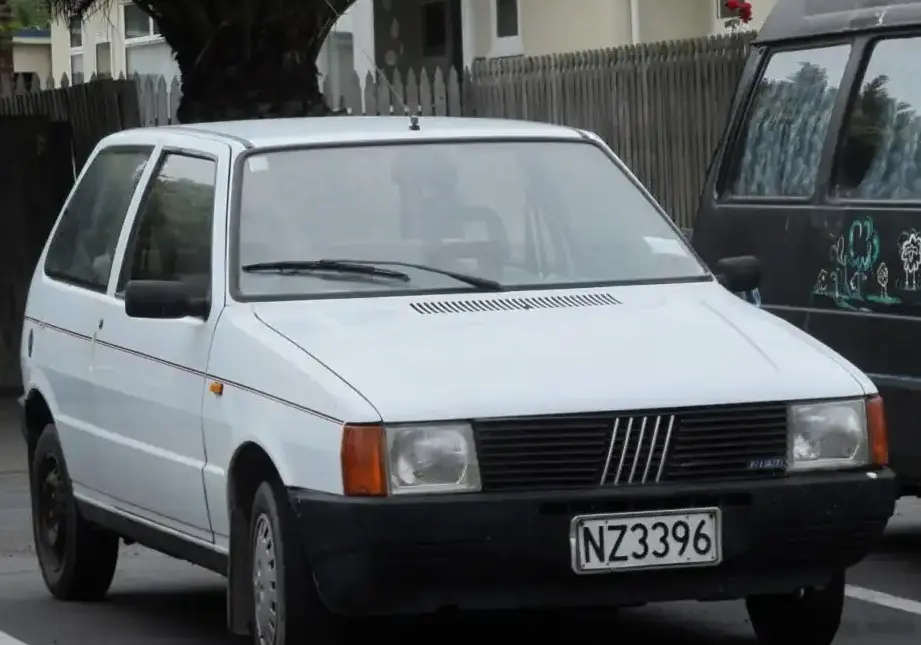
The Fiat Uno 45 1.0, designated internally as 146A.ED, was a foundational variant of the Fiat Uno (146A) model range, produced from 1986 to 1993. This entry-level model played a crucial role in establishing the Uno as a popular and affordable hatchback, particularly in European and South American markets. The Uno, designed by Giorgetto Giugiaro, represented a significant departure from Fiat’s previous small car offerings, emphasizing space efficiency and modern design. The 45 1.0 served as the gateway to the Uno lineup, offering basic transportation with a focus on economy and practicality.
Technical Specifications
| Brand | Fiat |
| Model | UNO |
| Generation | UNO (146A) |
| Type (Engine) | 45 1.0 (146A.ED) (44 Hp) |
| Start of production | 1986 |
| End of production | 1993 |
| Powertrain Architecture | Internal Combustion engine |
| Body type | Hatchback |
| Fuel Type | Petrol (Gasoline) |
| Power | 44 Hp |
| Engine Model/Code | 156 A2.100 |
| Engine aspiration | Naturally aspirated engine |
| Engine oil capacity | 3.75 l / 3.96 US qt / 3.3 UK qt |
Powertrain & Engine Architecture
The Fiat Uno 45 1.0 was powered by the 156 A2.100 engine, a 999cc inline-four cylinder petrol engine. This engine was a relatively simple design, featuring a single overhead camshaft (SOHC) operating two valves per cylinder. The engine utilized a Bosch Mono-Jetronic fuel injection system, a single-point injection system that was common in European cars of the era. While not as sophisticated as multi-point injection, Mono-Jetronic provided a balance between cost and improved fuel efficiency compared to carburetors. The engine’s modest 44 horsepower output was achieved through a relatively low compression ratio and conservative engine tuning, prioritizing reliability and fuel economy over outright performance. The engine block was constructed from cast iron, while the cylinder head was made of aluminum alloy. The 45 1.0 was exclusively offered with a four-speed manual transmission, reflecting its focus on affordability and simplicity. The transmission was a standard, non-synchronized gearbox, typical for vehicles in this price range during the 1980s.
Driving Characteristics
The driving experience of the Uno 45 1.0 was characterized by its light weight and nimble handling. With a curb weight of around 780 kg (1720 lbs), the Uno felt surprisingly agile, especially in urban environments. However, the 44 horsepower engine meant that acceleration was leisurely. 0 to 60 mph times were in the region of 16-18 seconds, and overtaking required careful planning. The four-speed gearbox had relatively long gear ratios, further emphasizing fuel economy over performance. The Uno’s suspension, consisting of independent front suspension with MacPherson struts and a twist-beam rear axle, provided a comfortable ride, although it wasn’t particularly sporty. The steering was light and easy to use, making it well-suited for city driving. Compared to higher-spec Uno models with larger engines (like the 1.3 or 1.4), the 45 1.0 felt significantly slower and less refined. However, it offered a more economical and accessible entry point into the Uno range.
Equipment & Trim Levels
The Uno 45 1.0 was the base model, and as such, it came with a fairly minimal level of equipment. Standard features typically included cloth upholstery, basic instrumentation (speedometer, fuel gauge, and temperature gauge), and a steering wheel. Power steering, central locking, and electric windows were not typically offered on this trim level. The interior was functional and durable, with hard-wearing plastics used throughout. Optional extras were limited, but could include a radio, rear window wiper, and upgraded seat fabrics. The dashboard layout was simple and straightforward, prioritizing ease of use over aesthetics. The exterior featured steel wheels with hubcaps, black plastic bumpers, and minimal chrome trim. The overall impression was one of practicality and affordability.
Chassis & Braking
The Fiat Uno 45 1.0 utilized a monocoque chassis construction, providing a good balance of strength and weight. The front suspension featured independent MacPherson struts with a stabilizer bar, while the rear suspension employed a simple twist-beam axle. This setup provided a reasonably comfortable ride, although it wasn’t particularly sophisticated. The braking system consisted of front disc brakes and rear drum brakes. The brakes were adequate for the car’s performance, but lacked the stopping power of more powerful Uno variants. The steering was a rack-and-pinion system, providing light and precise steering feel. The Uno’s relatively small size and light weight contributed to its nimble handling characteristics.
Market Reception & Comparison
The Fiat Uno 45 1.0 was generally well-received by critics as an affordable and practical city car. It was praised for its fuel efficiency, nimble handling, and spacious interior for its size. However, it was also criticized for its lack of power and basic equipment level. Compared to other small cars of the era, such as the Renault 5 and the Peugeot 205, the Uno offered a competitive price point and a more modern design. The 45 1.0 was significantly more economical than higher-spec Uno models, but it also offered considerably less performance. The 1.3-liter and 1.4-liter Uno variants provided a more refined driving experience, but at a higher cost. In terms of reliability, the Uno 45 1.0 proved to be a relatively dependable vehicle, although the Mono-Jetronic fuel injection system could occasionally require maintenance.
Legacy
The Fiat Uno 45 1.0 played a significant role in establishing the Uno as a successful model for Fiat. Its affordability and practicality made it a popular choice for first-time car buyers and those seeking economical transportation. The 146A platform proved to be remarkably durable, and many Uno 45 1.0 models are still on the road today. While the engine isn’t known for its high performance, it’s relatively simple design makes it relatively easy to maintain. In the used car market, the Uno 45 1.0 remains an affordable and accessible classic, appealing to enthusiasts and those seeking a simple, reliable, and economical vehicle. Its impact on the small car segment in Europe and South America is undeniable, paving the way for future generations of Fiat hatchbacks.