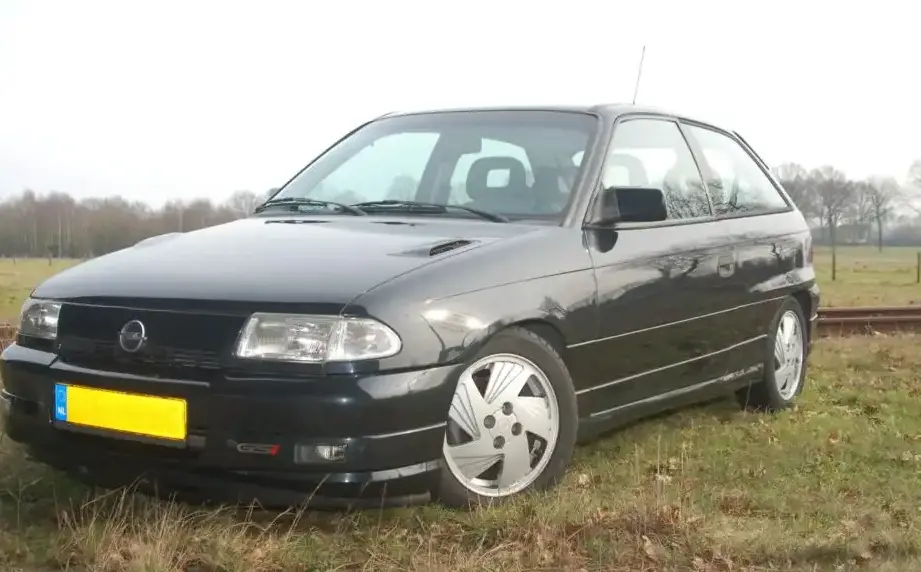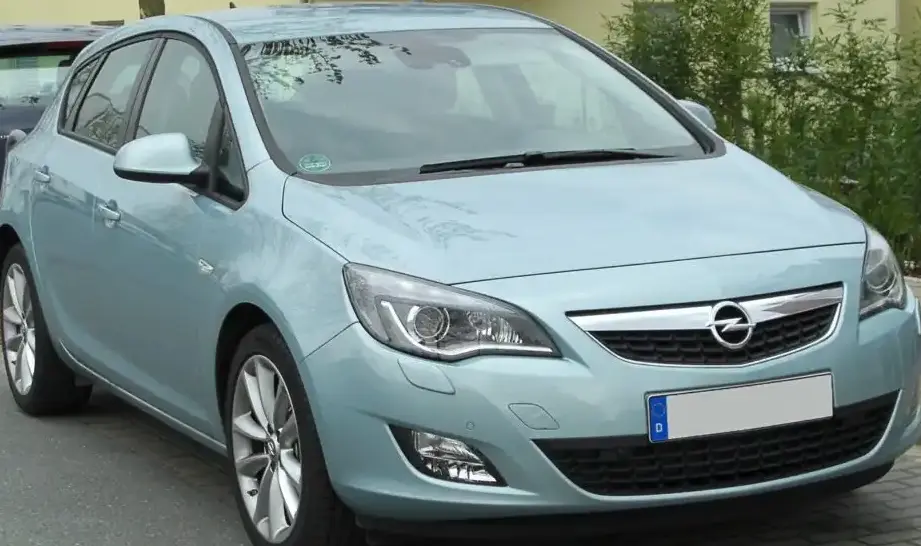
The Opel Astra J 2.0 CDTI, producing 160 horsepower, was a significant variant within the broader Astra J range (2009-2015). Positioned as a mid-range offering, it bridged the gap between the more economical base engines and the performance-oriented trims. This model, primarily sold in Europe, represented Opel’s attempt to balance fuel efficiency with respectable performance in the competitive compact hatchback segment. It was a key player in a market increasingly demanding diesel options due to their lower running costs and suitability for long-distance driving.
Technical Specifications
| Brand | Opel |
| Model | Astra |
| Generation | Astra J |
| Type (Engine) | 2.0 CDTI (160 Hp) |
| Start of production | 2009 |
| End of production | 2012 |
| Powertrain Architecture | Internal Combustion engine |
| Body type | Hatchback |
| Seats | 5 |
| Doors | 5 |
| Fuel consumption (urban) | 6.4 l/100 km (36.8 US mpg) |
| Fuel consumption (extra urban) | 4.1 l/100 km (57.4 US mpg) |
| Fuel consumption (combined) | 4.9 l/100 km (48 US mpg) |
| CO2 emissions | 129 g/km |
| Fuel Type | Diesel |
| Acceleration 0 – 100 km/h | 9 sec |
| Acceleration 0 – 62 mph | 9 sec |
| Acceleration 0 – 60 mph | 8.6 sec |
| Maximum speed | 215 km/h (133.59 mph) |
| Emission standard | Euro 5 |
| Weight-to-power ratio | 9.5 kg/Hp |
| Weight-to-torque ratio | 4.3 kg/Nm |
| Power | 160 Hp @ 4000 rpm |
| Torque | 350 Nm @ 1750-2500 rpm (258.15 lb.-ft.) |
| Engine layout | Front, Transverse |
| Engine Model/Code | A20DTH |
| Engine displacement | 1956 cm3 (119.36 cu. in.) |
| Number of cylinders | 4 |
| Engine configuration | Inline |
| Cylinder Bore | 83 mm (3.27 in.) |
| Piston Stroke | 90.4 mm (3.56 in.) |
| Compression ratio | 18:1 |
| Number of valves per cylinder | 4 |
| Fuel injection system | Diesel Commonrail |
| Engine aspiration | Turbocharger, Intercooler |
| Engine oil capacity | 4.5 l (4.76 US qt | 3.96 UK qt) |
| Coolant capacity | 6.9 l (7.29 US qt | 6.07 UK qt) |
| Kerb Weight | 1515 kg (3340 lbs.) |
| Max. weight | 2065 kg (4552.55 lbs.) |
| Max load | 550 kg (1212.54 lbs.) |
| Trunk (boot) space – minimum | 370 l (13.07 cu. ft.) |
| Trunk (boot) space – maximum | 1235 l (43.61 cu. ft.) |
| Fuel tank capacity | 56 l (14.79 US gal | 12.32 UK gal) |
| Length | 4419 mm (173.98 in.) |
| Width | 1814 mm (71.42 in.) |
| Width including mirrors | 2013 mm (79.25 in.) |
| Height | 1510 mm (59.45 in.) |
| Wheelbase | 2685 mm (105.71 in.) |
| Front track | 1541 mm (60.67 in.) |
| Rear (Back) track | 1581 mm (62.24 in.) |
| Ride height (ground clearance) | 160 mm (6.3 in.) |
| Drag coefficient (Cd) | 0.31 |
| Minimum turning circle | 11.4 m (37.4 ft.) |
| Drivetrain Architecture | Front wheel drive |
| Number of gears | 6 |
| Gearbox type | Manual transmission |
INTRODUCTION
The Opel Astra J 2.0 CDTI (160 Hp) was produced between 2009 and 2012 as part of the Astra J generation (2009-2015). Built on the GM Delta platform (often referred to as the 1HX0/A3 platform), it aimed to provide a more refined and efficient driving experience compared to its predecessor. This variant was particularly popular in European markets where diesel engines held a significant share of the compact car segment. It offered a balance between performance, fuel economy, and practicality, making it a versatile choice for both urban commuters and long-distance travelers.
Powertrain & Engine Architecture
At the heart of the Astra J 2.0 CDTI was the A20DTH engine, a 1.956-liter inline-four cylinder diesel. This engine utilized a common rail direct injection system, delivering fuel at extremely high pressure for optimized combustion. The A20DTH featured a variable geometry turbocharger (VGT) and an intercooler, enhancing both power and torque output. The engine also incorporated four valves per cylinder and a double overhead camshaft (DOHC) configuration. The 160 horsepower and 350 Nm (258 lb-ft) of torque were respectable figures for a compact diesel, providing adequate acceleration and pulling power. The engine was typically paired with a six-speed manual transmission, although an automatic option was also available, albeit less common. The automatic transmission was a traditional torque converter type, prioritizing smooth shifts over outright performance.
Driving Characteristics
The 2.0 CDTI 160 hp variant offered a noticeable step up in performance compared to the lower-powered Astra J diesel models. Acceleration from 0-60 mph took around 8.6 seconds, and the car felt responsive in everyday driving situations. The turbocharger provided a good surge of power in the mid-range, making overtaking maneuvers relatively effortless. However, it wasn’t a particularly sporty engine; the focus was more on providing usable torque for comfortable cruising. The six-speed manual transmission allowed drivers to keep the engine in its optimal power band, while the automatic transmission, while smooth, could feel somewhat sluggish at times. Compared to the petrol versions, the diesel offered significantly better fuel economy, but at the expense of some refinement and engine noise.
Equipment & Trim Levels
The Astra J 2.0 CDTI 160 hp was typically offered in mid-range trim levels, such as ‘Sport’ or ‘Enjoy’ depending on the specific market. Standard equipment generally included air conditioning, electric front windows, a CD/radio system, and alloy wheels. Higher trim levels added features like climate control, parking sensors, cruise control, and upgraded upholstery. Optional extras included a panoramic sunroof, leather seats, and a more advanced infotainment system. Interior materials were generally of good quality for the class, with a focus on durability and practicality. The dashboard layout was clean and functional, with intuitive controls.
Chassis & Braking
The Astra J featured a MacPherson strut front suspension and a torsion beam rear suspension. This setup provided a good balance between ride comfort and handling. The steering was precise and well-weighted, offering a decent level of feedback. Braking systems varied depending on the trim level, with lower trims typically equipped with front disc brakes and rear drum brakes, while higher trims featured disc brakes all around. Anti-lock Braking System (ABS) was standard across the range. Stabilizer bars were fitted to both the front and rear axles to reduce body roll during cornering.
Market Reception & Comparison
The Astra J 2.0 CDTI 160 hp received generally positive reviews from automotive critics. It was praised for its fuel efficiency, comfortable ride, and spacious interior. However, some critics noted that the engine could be somewhat noisy and that the handling wasn’t as sharp as some of its rivals, such as the Ford Focus. Compared to the 1.7 CDTI engine offered in the Astra J range, the 2.0 CDTI provided significantly more power and torque, but at a slightly higher price point. Against competitors like the Volkswagen Golf and Peugeot 308, the Astra J 2.0 CDTI offered a competitive package in terms of price, features, and running costs.
Legacy
The A20DTH engine proved to be a relatively reliable unit, although like all diesel engines, it was susceptible to issues related to the diesel particulate filter (DPF) if not properly maintained. Regular servicing and the use of high-quality diesel fuel were crucial for ensuring long-term reliability. Today, used Astra J 2.0 CDTI models represent a relatively affordable and practical option for buyers looking for a fuel-efficient and comfortable compact hatchback. The engine’s durability and readily available parts contribute to its continued appeal in the used car market. However, potential buyers should be aware of the potential costs associated with DPF maintenance and ensure that the vehicle has been properly serviced throughout its life.