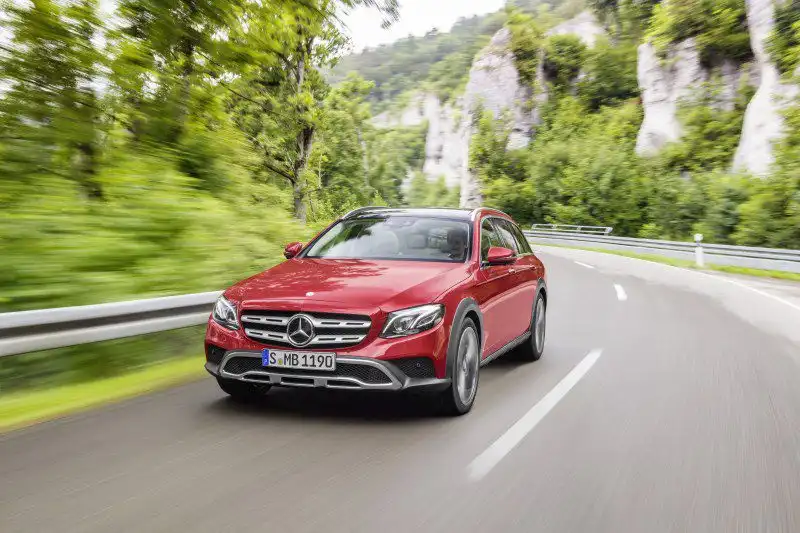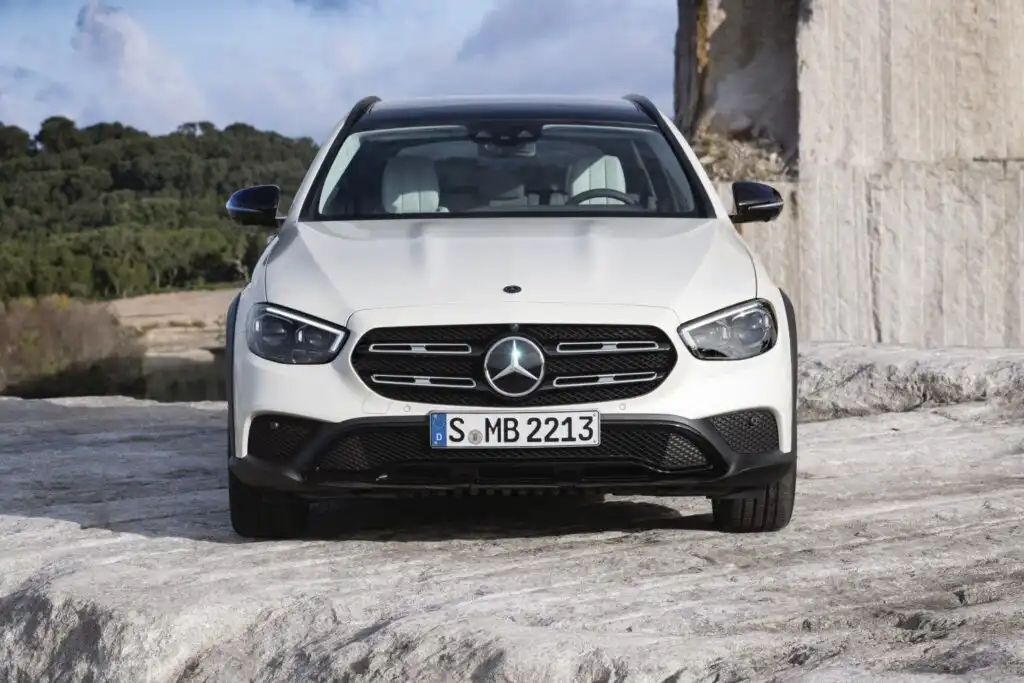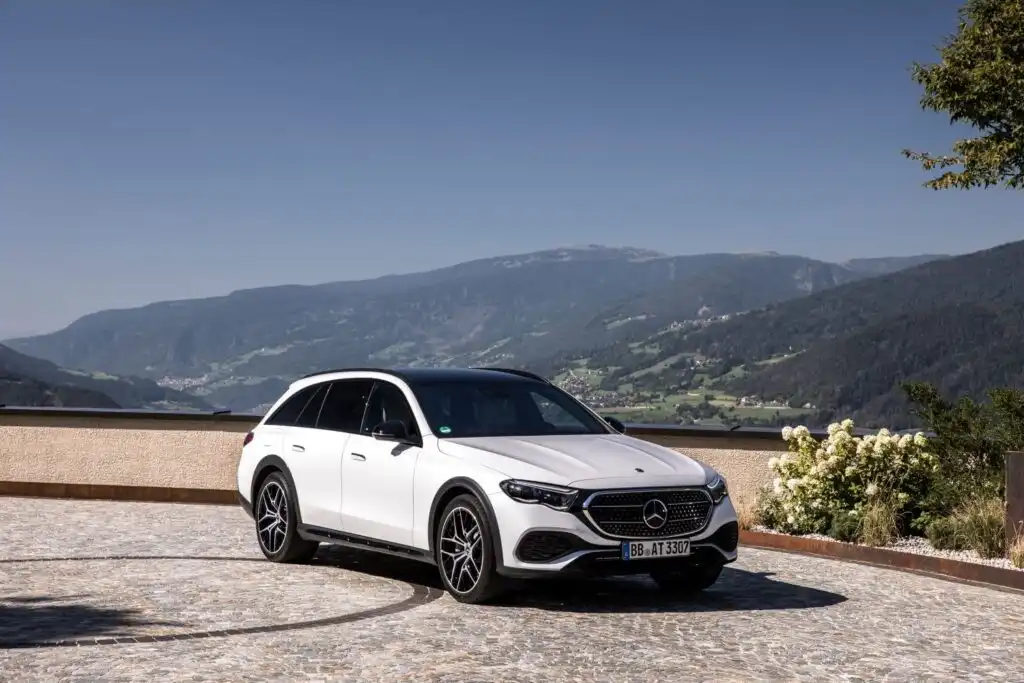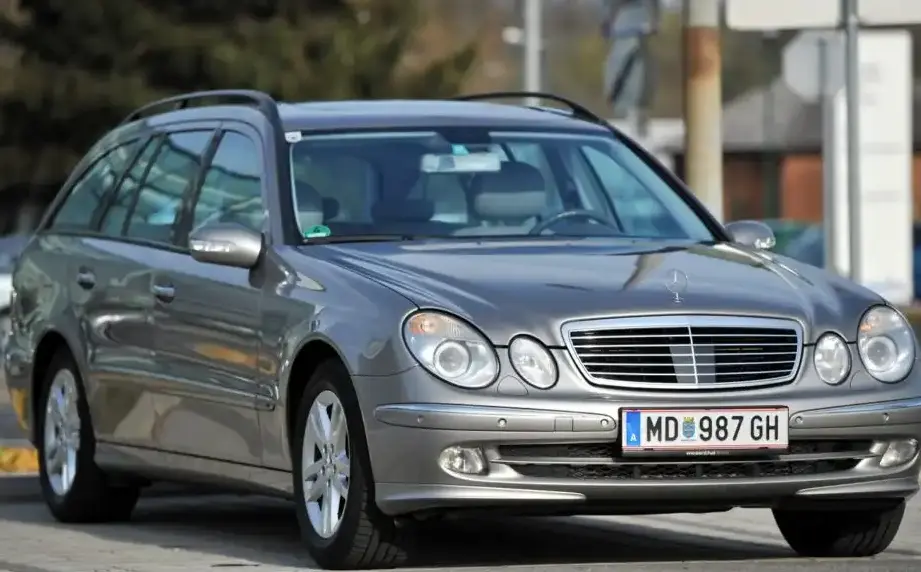
The Mercedes-Benz E 320 T-modell (S211), produced from 2003 to 2004, represented a compelling blend of luxury, practicality, and performance within the E-Class range. As part of the S211 generation, the T-modell – Mercedes’ designation for a station wagon or estate – offered a spacious and versatile alternative to the sedan, maintaining the brand’s reputation for refinement. This particular variant, equipped with the M112.949 3.2-liter V6 engine and the 5G-TRONIC automatic transmission, occupied a mid-to-upper position in the E-Class lineup, appealing to buyers seeking a balance between spirited driving and everyday usability. It was positioned above the base E 240 and E 280 models, but below the higher-performance E 500 and AMG variants.
Technical Specifications
| Brand | Mercedes-Benz |
| Model | E-class |
| Generation | E-class T-modell (S211) |
| Type (Engine) | E 320 V6 (224 Hp) 5G-TRONIC |
| Start of production | 2003 |
| End of production | 2004 |
| Powertrain Architecture | Internal Combustion engine |
| Body type | Station wagon (estate) |
| Seats | 5 |
| Doors | 5 |
| Fuel consumption (economy) – urban (NEDC) | 15.7 l/100 km (15 US mpg, 18 UK mpg, 6.4 km/l) |
| Fuel consumption (economy) – extra urban (NEDC) | 7.6 l/100 km (30.9 US mpg, 37.2 UK mpg, 13.2 km/l) |
| Fuel consumption (economy) – combined (NEDC) | 10.6 l/100 km (22.2 US mpg, 26.6 UK mpg, 9.4 km/l) |
| CO2 emissions (NEDC) | 254 g/km |
| Fuel Type | Petrol (Gasoline) |
| Acceleration 0 – 100 km/h | 8.5 sec |
| Acceleration 0 – 62 mph | 8.5 sec |
| Acceleration 0 – 60 mph | 8.1 sec |
| Maximum speed | 233 km/h (144.78 mph) |
| Emission standard | Euro 4 |
| Weight-to-power ratio | 7.6 kg/Hp, 131 Hp/tonne |
| Weight-to-torque ratio | 5.4 kg/Nm, 184.2 Nm/tonne |
| Power | 224 Hp @ 5600 rpm |
| Power per litre | 70 Hp/l |
| Torque | 315 Nm @ 3000-4800 rpm (232.33 lb.-ft. @ 3000-4800 rpm) |
| Engine layout | Front, Longitudinal |
| Engine Model/Code | M 112.949 |
| Engine displacement | 3199 cm3 (195.21 cu. in.) |
| Number of cylinders | 6 |
| Engine configuration | V-engine |
| Cylinder Bore | 89.9 mm (3.54 in.) |
| Piston Stroke | 84 mm (3.31 in.) |
| Compression ratio | 10:1 |
| Number of valves per cylinder | 3 |
| Fuel injection system | Multi-port manifold injection |
| Engine aspiration | Naturally aspirated engine |
| Valvetrain | SOHC |
| Engine oil capacity | 8 l (8.45 US qt, 7.04 UK qt) |
| Coolant | 9.5 l (10.04 US qt, 8.36 UK qt) |
| Kerb Weight | 1710 kg (3769.9 lbs.) |
| Max. weight | 2360 kg (5202.91 lbs.) |
| Max load | 650 kg (1433 lbs.) |
| Trunk (boot) space – minimum | 690 l (24.37 cu. ft.) |
| Trunk (boot) space – maximum | 1950 l (68.86 cu. ft.) |
| Fuel tank capacity | 80 l (21.13 US gal, 17.6 UK gal) |
| Max. roof load | 100 kg (220.46 lbs.) |
| Permitted trailer load with brakes (12%) | 2100 kg (4629.71 lbs.) |
| Permitted trailer load without brakes | 750 kg (1653.47 lbs.) |
| Permitted towbar download | 84 kg (185.19 lbs.) |
| Length | 4850 mm (190.94 in.) |
| Width | 1822 mm (71.73 in.) |
| Width including mirrors | 1990 mm (78.35 in.) |
| Height | 1495 mm (58.86 in.) |
| Wheelbase | 2854 mm (112.36 in.) |
| Front track | 1559 mm (61.38 in.) |
| Rear (Back) track | 1552 mm (61.1 in.) |
| Drag coefficient (Cd) | 0.30 |
| Minimum turning circle (turning diameter) | 11.4 m (37.4 ft.) |
| Drivetrain Architecture | The Internal combustion engine (ICE) drives the rear wheels of the vehicle. |
| Drive wheel | Rear wheel drive |
| Number of gears and type of gearbox | 5 gears, automatic transmission G-TRONIC |
| Front suspension | Coil spring, Double wishbone, Transverse stabilizer |
| Rear suspension | Independent multi-link suspension, Air suspension, Transverse stabilizer |
| Front brakes | Ventilated discs |
| Rear brakes | Disc |
| Assisting systems | ABS (Anti-lock braking system) |
| Steering type | Steering rack and pinion |
| Power steering | Hydraulic Steering |
| Tires size | 225/55 R16 |
| Wheel rims size | 7.5J X 16 |
Powertrain & Engine Architecture
The heart of the E 320 T-modell was the M112.949 3.2-liter naturally aspirated V6 engine. This engine was a significant departure from earlier Mercedes-Benz inline-six designs, offering improved smoothness and packaging. The M112 featured all-aluminum construction, including the cylinder heads and block, contributing to a lighter overall weight. It employed a SOHC (Single Overhead Camshaft) valvetrain with three valves per cylinder (two intake, one exhaust), optimized for broad torque delivery. Fuel delivery was handled by a multi-port fuel injection system, precisely metering fuel into the intake ports. The engine produced 224 horsepower at 5600 rpm and 315 Nm (232.33 lb-ft) of torque between 3000 and 4800 rpm. This power was channeled through the 5G-TRONIC automatic transmission, a five-speed unit known for its smooth shifts and adaptive learning capabilities. The transmission could be operated in comfort or sport modes, adjusting shift points to suit the driver’s preferences.
Driving Characteristics
The E 320 T-modell with the 5G-TRONIC transmission offered a refined and comfortable driving experience. While not as overtly sporty as some of its competitors or even higher-trim E-Class models, the V6 provided ample power for everyday driving and confident highway cruising. Acceleration from 0 to 60 mph took approximately 8.1 seconds, and the car could reach a top speed of 233 km/h (144.78 mph). The automatic transmission, while smooth, did result in a slight reduction in responsiveness compared to the available manual transmission. The gear ratios were tuned for fuel efficiency and comfort, prioritizing smooth transitions over aggressive acceleration. Compared to the E 280, the E 320 offered noticeably more power and torque, making it feel more effortless in various driving situations. However, it lacked the outright performance of the E 500.
Equipment & Trim Levels
The E 320 T-modell came standard with a comprehensive list of features, reflecting Mercedes-Benz’s commitment to luxury and safety. Standard equipment typically included leather upholstery, automatic climate control, power-adjustable front seats with memory function, a premium audio system, and a sunroof. Safety features included ABS, traction control, and multiple airbags. Optional extras included navigation system, upgraded audio systems, rear seat entertainment, and various cosmetic enhancements. The interior trim could be customized with different wood veneers and upholstery colors. The T-modell also benefited from the estate’s inherent practicality, offering a generous cargo capacity of 690 liters (24.37 cu. ft.) with the rear seats up, expanding to 1950 liters (68.86 cu. ft.) with the seats folded down.
Chassis & Braking
The S211 E-Class T-modell featured a robust chassis designed for both comfort and handling. The front suspension utilized coil springs and a double wishbone setup with a transverse stabilizer bar, while the rear suspension employed an independent multi-link system with air suspension and another transverse stabilizer. The air suspension, particularly on higher-spec models, provided a remarkably smooth ride and allowed for self-leveling, maintaining a consistent ride height regardless of load. Braking duties were handled by ventilated discs at the front and solid discs at the rear, coupled with an ABS (Anti-lock Braking System) to enhance stopping power and stability. The steering was a rack-and-pinion system with hydraulic power assistance, offering precise and responsive control.
Market Reception & Comparison
The E 320 T-modell was generally well-received by automotive critics, who praised its blend of luxury, practicality, and performance. The V6 engine was considered a strong performer, and the 5G-TRONIC transmission offered smooth and refined shifts. Fuel economy, however, was a point of criticism, with the combined fuel consumption of 10.6 l/100 km (22.2 US mpg) being relatively high for its class. Compared to the E 280, the E 320 offered a noticeable performance upgrade, justifying the higher price tag for buyers prioritizing power. However, the E 320’s fuel consumption was higher than the E 280, and it lacked the ultimate performance of the E 500.
Legacy
The M112 engine family, including the M112.949 found in the E 320, is generally regarded as a reliable and durable powertrain. While maintenance costs can be higher than some competitors due to the Mercedes-Benz brand, the engine is known for its longevity when properly maintained. Today, the E 320 T-modell (S211) represents a compelling option in the used car market for buyers seeking a spacious, comfortable, and well-equipped station wagon. Its combination of luxury, practicality, and relatively strong performance continues to appeal to enthusiasts and families alike. Common issues include wear and tear on suspension components, particularly the air suspension system, and potential for oil leaks as the engine ages. However, with regular maintenance and attention to detail, these cars can provide many years of reliable service.