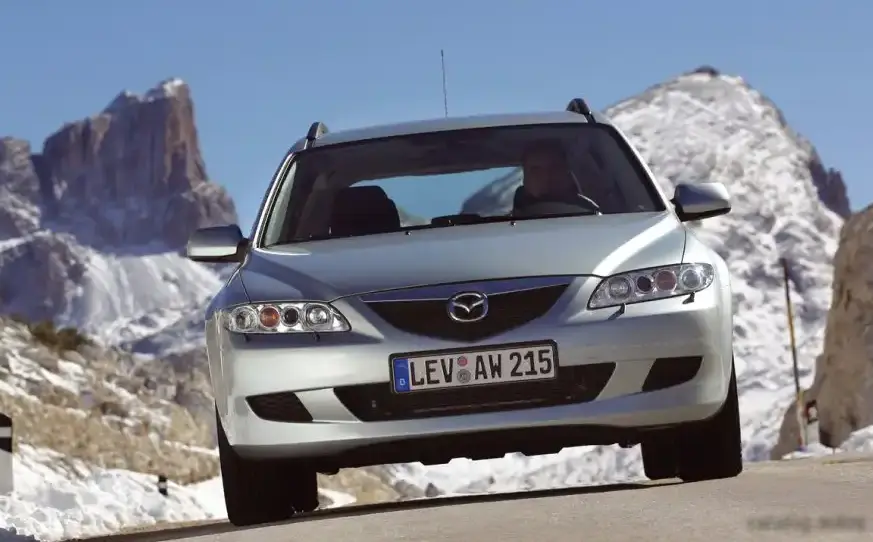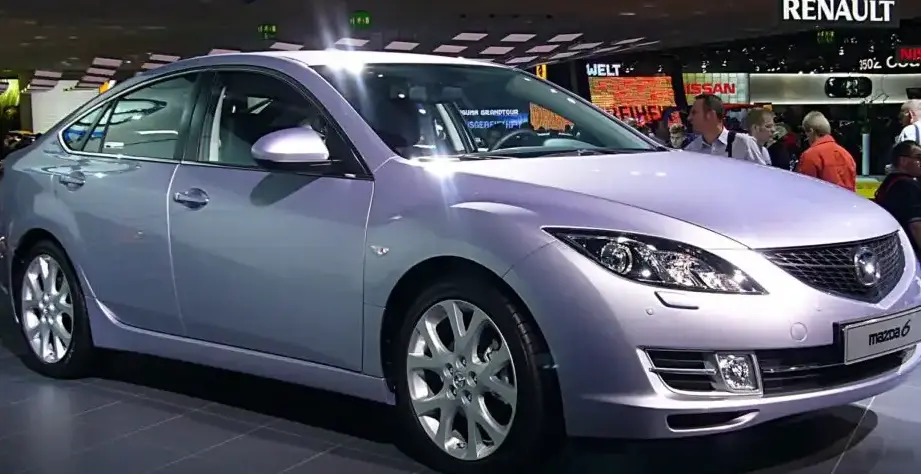
The Mazda 6 II Hatchback (GH) 2.0 (147 Hp) Activematic, produced between 2007 and 2010, represented a key offering in Mazda’s lineup during the second generation of the popular 6 model. Positioned as a mid-range trim, it aimed to balance performance, fuel efficiency, and practicality for the European and global markets. This variant combined a 2.0-liter naturally aspirated gasoline engine with Mazda’s proprietary 5-speed Activematic automatic transmission, offering a comfortable and convenient driving experience. The GH generation Mazda 6, available as a sedan, wagon, and hatchback, was a significant step forward in Mazda’s design and engineering, emphasizing a more refined and sporty character compared to its predecessor.
Technical Specifications
| Brand | Mazda |
| Model | 6 |
| Generation | 6 II Hatchback (GH) |
| Type (Engine) | 2.0 (147 Hp) Activematic |
| Start of production | 2007 |
| End of production | 2010 |
| Powertrain Architecture | Internal Combustion engine |
| Body type | Hatchback |
| Seats | 5 |
| Doors | 5 |
| Fuel consumption (economy) – urban (NEDC) | 11.1 l/100 km (21.2 US mpg, 25.4 UK mpg, 9 km/l) |
| Fuel consumption (economy) – extra urban (NEDC) | 5.7 l/100 km (41.3 US mpg, 49.6 UK mpg, 17.5 km/l) |
| Fuel consumption (economy) – combined (NEDC) | 7.7 l/100 km (30.5 US mpg, 36.7 UK mpg, 13 km/l) |
| CO2 emissions (NEDC) | 182 g/km |
| Fuel Type | Petrol (Gasoline) |
| Acceleration 0 – 100 km/h | 11.1 sec |
| Acceleration 0 – 62 mph | 11.1 sec |
| Acceleration 0 – 60 mph | 10.5 sec |
| Maximum speed | 202 km/h (125.52 mph) |
| Emission standard | Euro 4 |
| Weight-to-power ratio | 9.2 kg/Hp, 108.5 Hp/tonne |
| Weight-to-torque ratio | 7.4 kg/Nm, 135.8 Nm/tonne |
| Power | 147 Hp @ 6500 rpm |
| Power per litre | 73.5 Hp/l |
| Torque | 184 Nm @ 4000 rpm (135.71 lb.-ft. @ 4000 rpm) |
| Engine layout | Front, Transverse |
| Engine Model/Code | LF-DE |
| Engine displacement | 1999 cm3 (121.99 cu. in.) |
| Number of cylinders | 4 |
| Engine configuration | Inline |
| Cylinder Bore | 87.5 mm (3.44 in.) |
| Piston Stroke | 83.1 mm (3.27 in.) |
| Compression ratio | 10:1 |
| Number of valves per cylinder | 4 |
| Fuel injection system | Multi-port manifold injection |
| Engine aspiration | Naturally aspirated engine |
| Valvetrain | DOHC |
| Engine oil capacity | 4.3 l (4.54 US qt | 3.78 UK qt) |
| Coolant | 7.5 l (7.93 US qt | 6.6 UK qt) |
| Kerb Weight | 1355 kg (2987.26 lbs.) |
| Max. weight | 1975 kg (4354.13 lbs.) |
| Max load | 620 kg (1366.87 lbs.) |
| Trunk (boot) space – minimum | 510 l (18.01 cu. ft.) |
| Trunk (boot) space – maximum | 1702 l (60.11 cu. ft.) |
| Fuel tank capacity | 64 l (16.91 US gal | 14.08 UK gal) |
| Max. roof load | 100 kg (220.46 lbs.) |
| Permitted trailer load with brakes (8%) | 1700 kg (3747.86 lbs.) |
| Permitted trailer load with brakes (12%) | 1500 kg (3306.93 lbs.) |
| Permitted towbar download | 75 kg (165.35 lbs.) |
| Length | 4755 mm (187.2 in.) |
| Width | 1795 mm (70.67 in.) |
| Height | 1440 mm (56.69 in.) |
| Wheelbase | 2725 mm (107.28 in.) |
| Front track | 1550-1570 mm (61.02 – 61.81 in.) |
| Rear (Back) track | 1550-1570 mm (61.02 – 61.81 in.) |
| Ride height (ground clearance) | 165 mm (6.5 in.) |
| Minimum turning circle (turning diameter) | 11.4 m (37.4 ft.) |
| Drivetrain Architecture | The Internal combustion engine (ICE) drives the front wheels of the vehicle. |
| Drive wheel | Front wheel drive |
| Number of gears and type of gearbox | 5 gears, automatic transmission Activematic |
| Front suspension | Double wishbone, Transverse stabilizer |
| Rear suspension | Independent multi-link suspension, Transverse stabilizer |
| Front brakes | Ventilated discs, 299 mm |
| Rear brakes | Disc, 280 mm |
| Assisting systems | ABS (Anti-lock braking system) |
| Steering type | Steering rack and pinion |
| Power steering | Electric Steering |
| Tires size | 205/60 R16; 215/50 R17; 225/45 R18 |
| Wheel rims size | 6.5J x 16; 7J x 17; 7.5J x 18 |
INTRODUCTION
The Mazda 6 II Hatchback 2.0 (147 Hp) Activematic, launched in 2007, was a crucial variant within the GH series. It aimed to provide a more accessible entry point into the Mazda 6 range while still offering the stylish design and respectable performance that characterized the model. Built on the 1HX0 platform (shared with the Ford Mondeo Mk III), the GH generation represented a significant evolution in Mazda’s design language, moving towards a more sophisticated and dynamic aesthetic. The hatchback body style, particularly popular in Europe, offered increased practicality and versatility compared to the sedan version. This specific 2.0-liter Activematic configuration was designed to appeal to buyers prioritizing comfort and ease of use over outright performance.
Powertrain & Engine Architecture
At the heart of the 2.0-liter variant lies the LF-DE engine, a 1999cc inline-four cylinder gasoline engine. This engine utilizes a multi-port fuel injection system and a double overhead camshaft (DOHC) valvetrain, contributing to its relatively efficient operation. The LF-DE engine is known for its smooth power delivery and reasonable reliability. The Activematic transmission is a 5-speed automatic gearbox developed by Mazda. It features a torque converter and electronically controlled shifts, designed to provide smooth and responsive gear changes. While not as sporty as a manual transmission, the Activematic offered a more relaxed driving experience, particularly in urban environments. The transmission’s gear ratios were tuned for a balance of acceleration and fuel economy, with a focus on comfortable cruising.
Driving Characteristics
The 147 hp and 184 Nm of torque produced by the 2.0-liter engine, coupled with the Activematic transmission, resulted in a driving experience that prioritized comfort and ease of use. Acceleration from 0-60 mph took around 10.5 seconds, which was adequate for everyday driving but noticeably slower than the manual transmission or higher-output 2.5-liter variants. The Activematic transmission, while smooth, could sometimes feel hesitant during quick acceleration or downshifts. The gear ratios were optimized for fuel efficiency, meaning the engine often operated at lower RPMs during cruising, contributing to a quieter and more relaxed ride. Compared to the more powerful versions of the Mazda 6, this variant offered a less engaging driving experience, but it was well-suited for drivers who valued comfort and convenience.
Equipment & Trim Levels
The 2.0 Activematic trim typically included standard features such as air conditioning, power windows, power mirrors, a CD player with auxiliary input, and ABS brakes. Higher trim levels offered additional features like alloy wheels, a sunroof, leather upholstery, and a more advanced audio system. The interior of the 2.0 Activematic was generally well-appointed, with a focus on practicality and comfort. The dashboard layout was clean and functional, with easy-to-read gauges and intuitive controls. Optional extras included navigation systems and parking sensors.
Chassis & Braking
The Mazda 6 II Hatchback featured a double wishbone front suspension and an independent multi-link rear suspension, providing a comfortable and controlled ride. Stabilizer bars were fitted to both the front and rear axles to reduce body roll during cornering. The braking system consisted of ventilated discs on the front wheels and solid discs on the rear wheels. ABS (Anti-lock Braking System) was standard, enhancing safety and stability during emergency braking. The suspension tuning was geared towards providing a balance of comfort and handling, making the car suitable for both city driving and longer journeys.
Market Reception & Comparison
The Mazda 6 II Hatchback 2.0 Activematic received generally positive reviews from automotive critics. It was praised for its stylish design, comfortable ride, and well-equipped interior. However, some critics noted that the 2.0-liter engine and Activematic transmission combination lacked the performance and engagement of the manual transmission or higher-output engine options. Compared to the 2.5-liter variants, the 2.0 Activematic offered lower running costs and a more relaxed driving experience, making it a popular choice for drivers who prioritized fuel economy and comfort. The 1.8L models were even more economical but offered significantly less power, while the diesel variants (like the 2.2L) provided better fuel economy but a different driving character.
Legacy
The Mazda 6 II Hatchback 2.0 (147 Hp) Activematic has proven to be a relatively reliable vehicle, with the LF-DE engine generally considered durable and long-lasting. The Activematic transmission, while not without its quirks, has also demonstrated reasonable reliability with proper maintenance. In the used car market, this variant represents a good value proposition, offering a stylish and comfortable hatchback at an affordable price. Common maintenance issues include wear and tear on suspension components and occasional problems with the Activematic transmission’s electronic control unit. Overall, the 2.0 Activematic remains a popular choice for buyers seeking a practical and reliable family hatchback.