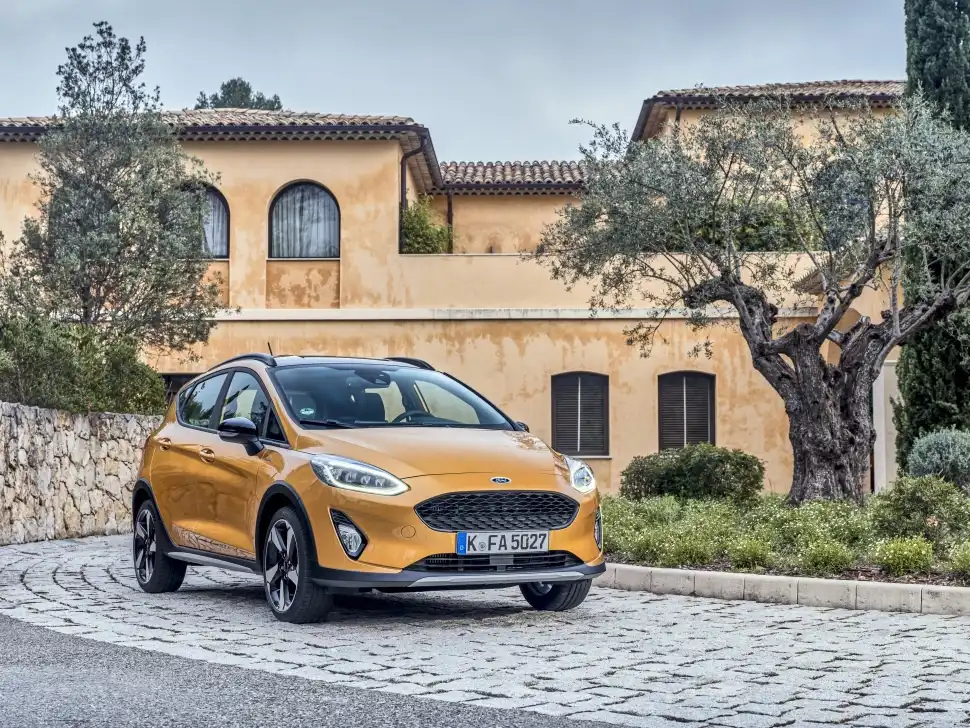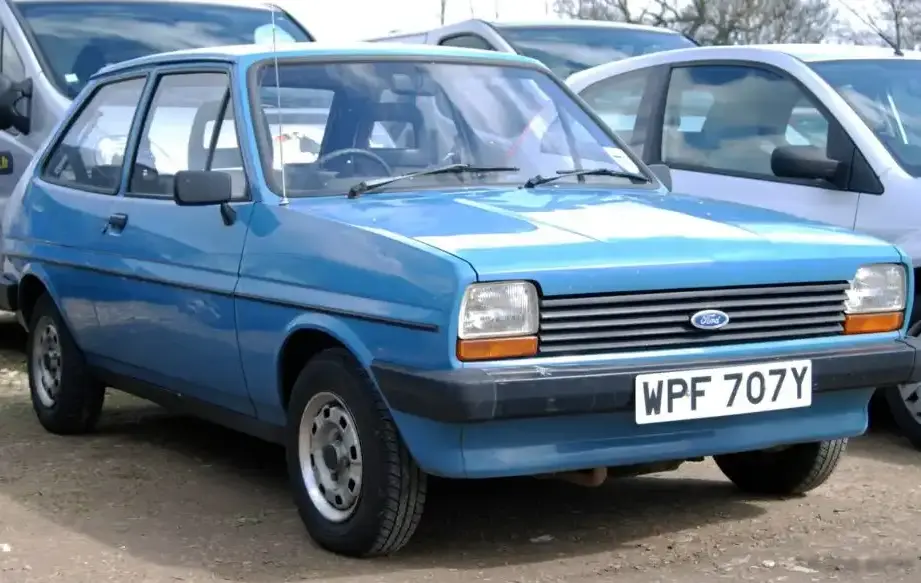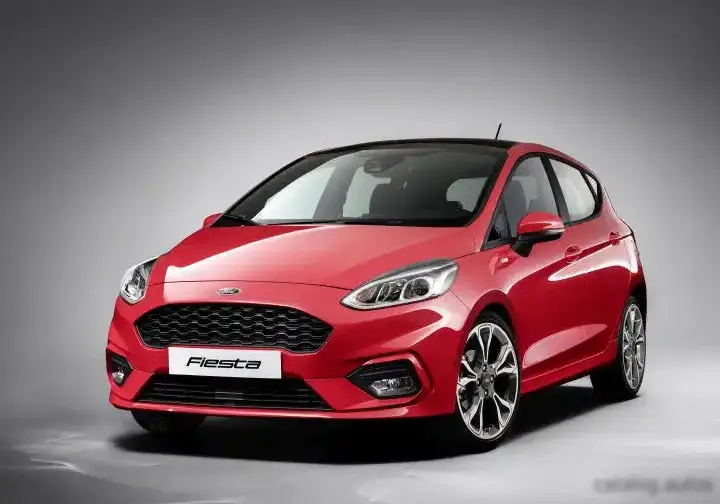
The Ford Fiesta Mk8, launched in July 2017, represented a significant evolution for Ford’s long-running supermini. The 1.1-liter 70 horsepower variant, available as a five-door hatchback, served as the entry point into the Mk8 Fiesta range in many European markets. Produced through October 2019, this model aimed to provide affordable and efficient transportation, prioritizing fuel economy and ease of driving over outright performance. It was positioned as a direct competitor to vehicles like the Volkswagen Polo, Opel Corsa, and Renault Clio in the subcompact segment. This specific configuration was primarily aimed at new drivers, urban commuters, and those seeking a low-cost-of-ownership vehicle.
Technical Specifications
| Brand | Ford |
| Model | Fiesta |
| Generation | Fiesta VIII (Mk8) 5 door |
| Type (Engine) | 1.1 (70 Hp) |
| Start of production | July, 2017 |
| End of production | October, 2019 |
| Powertrain Architecture | Internal Combustion engine |
| Body type | Hatchback |
| Seats | 5 |
| Doors | 5 |
| Fuel consumption (urban) | 6.1 l/100 km (38.6 US mpg, 46.3 UK mpg, 16.4 km/l) |
| Fuel consumption (extra urban) | 3.9 l/100 km (60.3 US mpg, 72.4 UK mpg, 25.6 km/l) |
| Fuel consumption (combined) | 4.7 l/100 km (50 US mpg, 60.1 UK mpg, 21.3 km/l) |
| CO2 emissions | 107 g/km |
| Fuel Type | Petrol (Gasoline) |
| Acceleration 0 – 100 km/h | 14.9 sec |
| Acceleration 0 – 62 mph | 14.9 sec |
| Acceleration 0 – 60 mph | 14.2 sec |
| Maximum speed | 160 km/h (99.42 mph) |
| Emission standard | Euro 6 |
| Weight-to-power ratio | 16.1 kg/Hp, 61.9 Hp/tonne |
| Weight-to-torque ratio | 10.3 kg/Nm, 97.3 Nm/tonne |
| Power | 70 Hp @ 5000-6500 rpm |
| Power per litre | 64.6 Hp/l |
| Torque | 110 Nm @ 3500 rpm (81.13 lb.-ft. @ 3500 rpm) |
| Engine layout | Front, Transverse |
| Engine Model/Code | XPJA, XPJB, XPJC, XPJD |
| Engine displacement | 1084 cm3 (66.15 cu. in.) |
| Number of cylinders | 3 |
| Engine configuration | Inline |
| Cylinder Bore | 73 mm (2.87 in.) |
| Piston Stroke | 86.3 mm (3.4 in.) |
| Compression ratio | 12:1 |
| Number of valves per cylinder | 4 |
| Fuel injection system | Direct injection |
| Engine aspiration | Naturally aspirated engine |
| Valvetrain | DOHC, Ti-VCT |
| Engine oil capacity | 4.1 l (4.33 US qt | 3.61 UK qt) |
| Coolant | 5.5 l (5.81 US qt | 4.84 UK qt) |
| Kerb Weight | 1130 kg (2491.22 lbs.) |
| Max. weight | 1625-1635 kg (3582.51 – 3604.56 lbs.) |
| Max load | 495-505 kg (1091.29 – 1113.33 lbs.) |
| Trunk (boot) space – minimum | 303 l (10.7 cu. ft.) |
| Trunk (boot) space – maximum | 984 l (34.75 cu. ft.) |
| Fuel tank capacity | 42 l (11.1 US gal | 9.24 UK gal) |
| Max. roof load | 50 kg (110.23 lbs.) |
| Permitted trailer load with brakes (12%) | 750 kg (1653.47 lbs.) |
| Permitted trailer load without brakes | 565 kg (1245.61 lbs.) |
| Permitted towbar download | 65 kg (143.3 lbs.) |
| Length | 4040-4065 mm (159.06 – 160.04 in.) |
| Width | 1735 mm (68.31 in.) |
| Width with mirrors folded | 1783 mm (70.2 in.) |
| Width including mirrors | 1941 mm (76.42 in.) |
| Height | 1466-1476 mm (57.72 – 58.11 in.) |
| Wheelbase | 2493 mm (98.15 in.) |
| Drag coefficient (Cd) | 0.32 |
| Drivetrain Architecture | The Internal combustion engine (ICE) drives the front wheels of the vehicle. |
| Drive wheel | Front wheel drive |
| Number of gears and type of gearbox | 5 gears, manual transmission |
| Front suspension | Independent, type McPherson with coil spring and anti-roll bar |
| Rear suspension | Semi-independent, coil spring, Elastic beam |
| Front brakes | Ventilated discs |
| Rear brakes | Drum |
| Assisting systems | ABS (Anti-lock braking system) |
| Steering type | Steering rack and pinion |
| Power steering | Electric Steering |
| Tires size | 195/60 R15; 195/55 R16; 205/45 R17; 205/40 R18 |
| Wheel rims size | 6J x 15; 6.5J x 16; 7J x 17; 7J x 18 |
Powertrain & Engine Architecture
The heart of this Fiesta variant is the Ford 1.1-liter Duratec three-cylinder petrol engine, specifically the XPJA, XPJB, XPJC, or XPJD engine code depending on the specific market and emissions regulations. This engine is a member of Ford’s Dragon family, known for its compact design and efficiency. It utilizes direct fuel injection, a technology that improves fuel economy and reduces emissions by injecting fuel directly into the combustion chamber. The engine features a double overhead camshaft (DOHC) valvetrain with Twin Independent Variable Camshaft Timing (Ti-VCT), allowing for optimized valve timing for improved performance and efficiency across the rev range. The engine produces 70 horsepower at 5000-6500 rpm and 110 Nm (81.13 lb-ft) of torque at 3500 rpm. The engine is transversely mounted at the front of the vehicle. The Fiesta 1.1 was typically paired with a five-speed manual transmission, although a six-speed automatic option was available in some markets, though less common.
Driving Characteristics
The 1.1-liter Fiesta, with its 70 horsepower, offers modest performance. Acceleration from 0-60 mph takes approximately 14.2 seconds, and the top speed is around 99.42 mph. The engine feels adequate for urban driving and short commutes, but can feel strained when fully loaded or attempting to overtake on the highway. The five-speed manual transmission provides a reasonable spread of gears, but the engine’s limited torque means frequent downshifts are often necessary, especially when climbing hills. Compared to the more powerful 1.0 EcoBoost variants, the 1.1 feels significantly slower. However, the lighter engine weight contributes to nimble handling and a relatively comfortable ride. The automatic transmission, when equipped, further softens the driving experience, prioritizing smoothness over responsiveness.
Equipment & Trim Levels
The 1.1-liter Fiesta typically came in base trim levels, such as ‘Style’ or ‘Zetec’ depending on the market. Standard equipment generally included air conditioning, power front windows, a basic audio system with Bluetooth connectivity, and stability control. Higher trim levels offered options like alloy wheels, a touchscreen infotainment system, cruise control, and parking sensors. Interior upholstery was typically cloth, with a functional but basic design. The dashboard layout was clean and straightforward, prioritizing ease of use. Optional extras included a rear-view camera, heated front seats, and upgraded audio systems.
Chassis & Braking
The Fiesta Mk8 utilizes a McPherson strut front suspension and a semi-independent elastic beam rear suspension. This setup provides a good balance between ride comfort and handling. The front brakes are ventilated discs, while the rear brakes are drums, a cost-saving measure common in entry-level models. Anti-lock Braking System (ABS) is standard. The steering is electric power-assisted, providing light and precise steering feel. The relatively lightweight nature of the 1.1-liter engine contributes to a well-balanced chassis.
Market Reception & Comparison
The 1.1-liter Fiesta was generally well-received as an affordable and economical city car. Critics praised its fuel efficiency, nimble handling, and comfortable ride. However, the engine’s lack of power was a common criticism. Compared to the 1.0 EcoBoost variants, the 1.1 offered lower running costs but significantly less performance. The 1.0 EcoBoost, while more expensive, provided a more engaging driving experience and better fuel economy in real-world conditions. The 1.1’s simplicity also translated to potentially lower maintenance costs, making it an attractive option for budget-conscious buyers.
Legacy
The 1.1-liter Fiesta Mk8 has proven to be a reliable and durable vehicle. The Duratec engine, while not particularly powerful, is known for its robustness and longevity. Common issues are relatively minor, often related to wear and tear on components like the clutch and suspension. On the used car market, these models represent a good value proposition for those seeking an affordable and economical supermini. While not a performance icon, the 1.1-liter Fiesta Mk8 played an important role in making the Mk8 Fiesta accessible to a wider range of buyers, solidifying its position as one of Europe’s best-selling cars.