
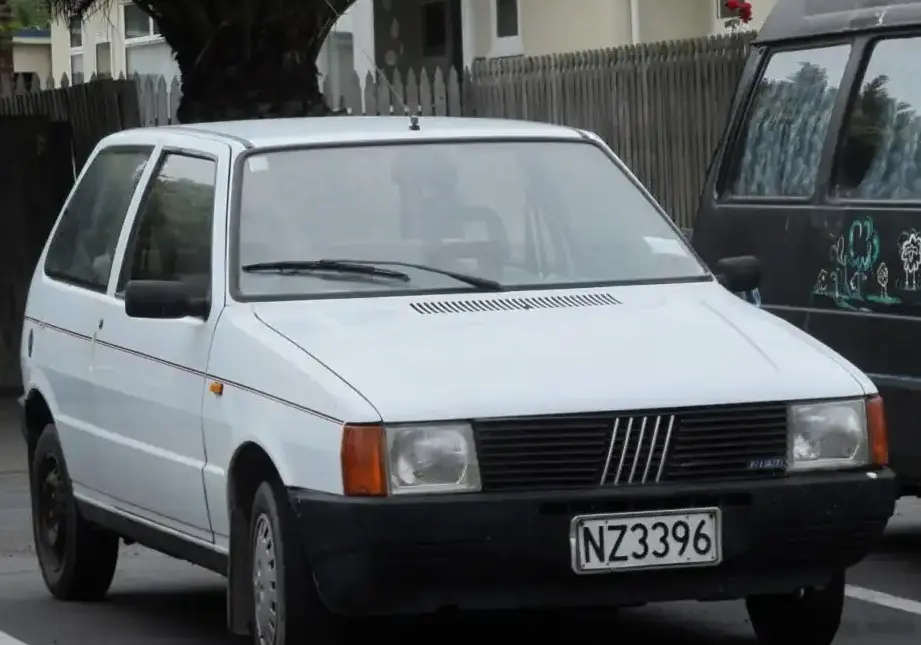
The Fiat Uno 55 1.1, produced between 1983 and 1989, represents the entry-level variant of the 146A series, a supermini that played a crucial role in revitalizing Fiat’s lineup and becoming a significant player in the European city car market. This model, characterized by its 1.1-liter engine producing 54 horsepower, was designed to offer affordable and economical transportation, particularly appealing to first-time car buyers and those seeking a practical urban vehicle. The Uno 146A, launched as a replacement for the Fiat 127, was a radical departure in design and engineering for Fiat, embracing a space-efficient layout and a focus on lightweight construction. The 55 1.1 served as the foundation of the range, providing a base upon which more powerful and better-equipped models were built.
Technical Specifications
| Brand | Fiat |
| Model | UNO |
| Generation | UNO (146A) |
| Type (Engine) | 55 1.1 (54 Hp) |
| Start of production | 1983 |
| End of production | 1989 |
| Powertrain Architecture | Internal Combustion engine |
| Body type | Hatchback |
| Fuel Type | Petrol (Gasoline) |
| Power | 54 Hp |
| Engine Model/Code | 138 B.000 |
| Engine aspiration | Naturally aspirated engine |
| Engine oil capacity | 4 l (4.23 US qt | 3.52 UK qt) |
Powertrain & Engine Architecture
The heart of the Uno 55 1.1 is the 138 B.000 engine, a 1.1-liter (1043 cc) inline-four cylinder petrol engine. This engine is a naturally aspirated unit, meaning it doesn’t employ a turbocharger or supercharger. It features a single overhead camshaft (SOHC) operating two valves per cylinder. The engine utilizes a Bosch carburetor for fuel delivery, a common feature for vehicles of this era aiming for cost-effectiveness. The carburetor system, while simple and reliable, is less efficient and produces higher emissions compared to fuel injection systems. The engine’s modest power output of 54 horsepower at 5500 rpm and 65 lb-ft of torque at 3000 rpm is a direct result of its small displacement and carburetor-based fuel system. The engine is paired with a four-speed manual transmission as standard, although a three-speed automatic transmission was offered as an option, albeit less common. The automatic transmission, while providing convenience, further reduced acceleration and fuel economy.
Driving Characteristics
The Uno 55 1.1’s driving experience is defined by its simplicity and focus on practicality. Acceleration is leisurely, taking approximately 16 seconds to reach 60 mph. The four-speed manual transmission offers a reasonable spread of gears, but the engine lacks the torque to provide strong acceleration in higher gears. The optional three-speed automatic transmission exacerbates this, resulting in even slower acceleration and a noticeable lack of responsiveness. The car’s lightweight construction (around 1,700 lbs) helps to mitigate the engine’s lack of power, making it feel reasonably nimble in city driving. The suspension, consisting of independent front suspension with MacPherson struts and a twist-beam rear axle, provides a comfortable ride, absorbing bumps and imperfections in the road surface effectively. Steering is light and easy, making maneuvering in tight spaces effortless. Compared to the more powerful 70 hp and 90 hp versions of the Uno, the 55 1.1 feels significantly slower and less capable on the open road. However, its simplicity and low running costs made it a popular choice for urban commuters.
Equipment & Trim Levels
The Uno 55 1.1 was positioned as the entry-level model, and as such, it came with a relatively basic level of equipment. Standard features typically included cloth upholstery, vinyl floor covering, and a simple dashboard layout. The instrumentation consisted of a speedometer, fuel gauge, and warning lights. Power steering and central locking were not typically included as standard equipment on this base model. Optional extras included a radio, upgraded upholstery, and occasionally, a sunroof. The interior was designed with practicality in mind, offering a surprisingly spacious cabin for a car of its size. The rear seats could be folded down to increase luggage capacity, further enhancing the Uno’s versatility. The trim level was largely defined by the exterior color and the presence of any optional extras.
Chassis & Braking
The Uno 146A featured a monocoque chassis construction, contributing to its lightweight design. The front suspension utilized independent MacPherson struts, providing a comfortable ride and decent handling. The rear suspension employed a simple twist-beam axle, which was cost-effective and space-efficient. Braking on the Uno 55 1.1 typically consisted of front disc brakes and rear drum brakes. The braking system was adequate for the car’s performance, but lacked the stopping power of more modern vehicles. The steering was a rack and pinion system, providing light and precise steering feel. The Uno’s relatively small size and lightweight construction contributed to its agility and ease of handling.
Market Reception & Comparison
The Fiat Uno 55 1.1 was generally well-received by critics as an affordable and practical city car. Its low purchase price, combined with its fuel efficiency (around 45-50 mpg), made it an attractive option for budget-conscious buyers. However, its lack of power and basic equipment level were often criticized. Compared to its siblings, such as the Uno 70 and Uno 90, the 55 1.1 offered significantly less performance. The Uno 70, with its slightly larger engine, provided a noticeable improvement in acceleration and overall drivability. The Uno 90, featuring a more powerful engine and often better equipped, was aimed at buyers seeking a more refined and capable supermini. In terms of reliability, the Uno 55 1.1 proved to be a relatively dependable vehicle, although the carburetor-based fuel system required periodic maintenance. Fuel economy was a strong point, making it a cost-effective choice for daily commuting.
Legacy
The Fiat Uno 55 1.1, while not the most powerful or luxurious version of the 146A, played a vital role in establishing the Uno as a successful and popular supermini. Its affordability and practicality made it a popular choice for first-time car buyers and urban dwellers. Today, the Uno 55 1.1 is a relatively rare sight on the roads, but it remains a popular choice among classic car enthusiasts. The 138 B.000 engine, while simple in design, proved to be reasonably durable and reliable. Parts availability can be a challenge, but many components are still available through specialist suppliers. The Uno 55 1.1 represents a significant chapter in Fiat’s history, showcasing the company’s ability to produce affordable and practical vehicles that met the needs of a wide range of customers. Its influence can be seen in subsequent generations of Fiat superminis, which continued to prioritize space efficiency, affordability, and practicality.

