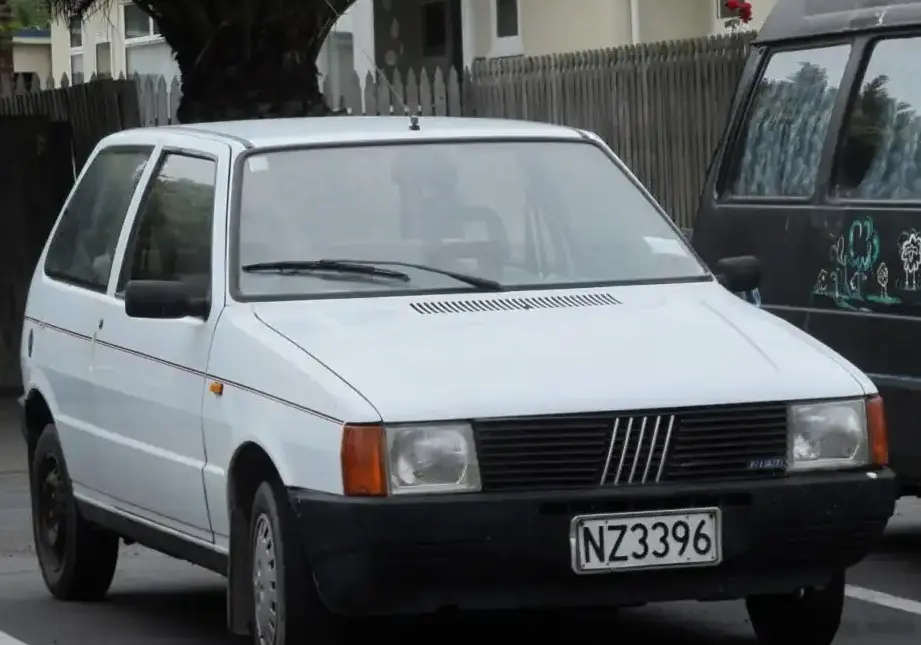
The Fiat Uno 60 1.1 (146A.EG), produced from 1985 to 1989, represents the entry-level variant of the groundbreaking Fiat Uno (146A) series. Launched as a replacement for the Fiat 127, the Uno was a radical departure in design and engineering for Fiat, emphasizing space efficiency, lightweight construction, and affordability. The 60 1.1 model, with its modest 58 horsepower, served as the foundation of the Uno lineup, targeting budget-conscious buyers and those seeking a practical, economical city car. It played a crucial role in establishing the Uno as a popular choice in Europe, particularly in Italy, France, and Spain, where it competed with rivals like the Renault 5 and Peugeot 205.
Technical Specifications
| Brand | Fiat |
| Model | UNO |
| Generation | UNO (146A) |
| Type (Engine) | 60 1.1 (146A.EG) (58 Hp) |
| Start of production | 1985 |
| End of production | 1989 |
| Powertrain Architecture | Internal Combustion engine |
| Body type | Hatchback |
| Fuel Type | Petrol (Gasoline) |
| Power | 58 Hp |
| Engine Model/Code | 146 A4.048 |
| Engine aspiration | Naturally aspirated engine |
| Engine oil capacity | 4 l (4.23 US qt | 3.52 UK qt) |
Powertrain & Engine Architecture
The Fiat Uno 60 1.1 is powered by the 146 A4.048 engine, a 1.1-liter (1089 cc) inline-four cylinder petrol engine. This engine is a naturally aspirated unit, meaning it doesn’t employ a turbocharger or supercharger. It features a single overhead camshaft (SOHC) valvetrain operating two valves per cylinder. Fuel delivery is managed by a single-point fuel injection system, a relatively simple and cost-effective technology for the time. This system injects fuel into the intake manifold, rather than directly into the cylinders, contributing to the engine’s modest power output. The engine’s design prioritized fuel efficiency and reliability over outright performance. The 146 A4.048 engine produces 58 horsepower (43 kW) at 5500 rpm and 65 Nm (48 lb-ft) of torque at 3000 rpm. The engine is paired with a four-speed manual transmission as standard, although a three-speed automatic transmission was offered as an option, albeit less commonly selected due to its impact on fuel economy and performance. The automatic transmission was a conventional hydraulic automatic, known for its smooth but relatively slow shifts.
Driving Characteristics
The Uno 60 1.1, particularly in its manual transmission guise, offered a surprisingly nimble driving experience for a small, budget-oriented car. However, the 58 horsepower engine meant acceleration was leisurely. 0 to 60 mph times were in the region of 14-16 seconds, making it unsuitable for rapid overtaking. The three-speed automatic version further diminished acceleration, with noticeable “hunting” for gears on inclines. The gear ratios were optimized for fuel economy rather than performance. First gear was relatively short, providing decent initial acceleration, while higher gears were spaced to keep engine speeds low during cruising. The Uno’s lightweight construction (around 780 kg or 1720 lbs) helped to mitigate the lack of power, making it feel more responsive than its specifications might suggest. Steering was light and precise, making it easy to maneuver in urban environments. The suspension, while simple, provided a comfortable ride on most road surfaces.
Equipment & Trim Levels
The Uno 60 1.1 was deliberately spartan in its standard equipment. It was designed to be an affordable car, and as such, luxuries were kept to a minimum. Standard features typically included cloth upholstery, basic instrumentation (speedometer, fuel gauge, and temperature gauge), and a steering wheel. Power steering, central locking, and electric windows were not typically offered on this base model. The interior plastics were durable but basic in appearance. Optional extras included a radio, upgraded seat fabrics, and occasionally, a sunroof. The dashboard layout was functional and straightforward, prioritizing ease of use over aesthetics. The trim level was largely defined by the exterior paint color and the presence or absence of optional extras. The Uno 60 1.1 was positioned as the entry point to the Uno range, with the more powerful 70 and 90 variants offering more features and performance.
Chassis & Braking
The Fiat Uno featured a monocoque chassis construction, contributing to its lightweight design. The front suspension utilized independent coil springs and MacPherson struts, while the rear suspension employed a twist-beam axle with trailing arms and coil springs. This setup provided a reasonable balance between ride comfort and handling. Braking on the Uno 60 1.1 typically consisted of front disc brakes and rear drum brakes. The braking system was adequate for the car’s performance, but lacked the stopping power of more modern vehicles. Anti-lock braking (ABS) was not available on this base model. The Uno’s steering was a rack-and-pinion system, providing light and precise steering feel. Tire size was typically 135/80 R13, reflecting the car’s modest power output and focus on fuel efficiency.
Market Reception & Comparison
The Fiat Uno 60 1.1 was generally well-received by critics as a practical and affordable city car. Its fuel efficiency was a major selling point, particularly in Europe where fuel prices were high. However, its lack of power and basic equipment levels were often criticized. Compared to the higher-spec Uno variants, such as the 70 and 90 models, the 60 1.1 offered significantly less performance and refinement. The 70 model, with its slightly larger engine, provided a noticeable improvement in acceleration, while the 90 model offered even more power and a more sophisticated driving experience. The Uno 60 1.1 was often seen as a sensible choice for first-time car buyers or those seeking a reliable and economical runabout. Its simplicity and robust construction contributed to its relatively good reliability record.
Legacy
The Fiat Uno 60 1.1, while not a performance icon, played a significant role in establishing the Uno as a successful and popular model. The 146 A4.048 engine proved to be a durable and reliable unit, and many examples are still on the road today. In the used car market, the Uno 60 1.1 remains an affordable and accessible classic, appealing to enthusiasts and those seeking a simple, economical vehicle. Its legacy lies in its innovative design, space-efficient packaging, and its contribution to making motoring accessible to a wider audience. The Uno’s influence can be seen in subsequent Fiat models and in the broader trend towards smaller, more fuel-efficient cars.